
Dolichoderus goudiei
- Sci. Name
- Dolichoderus goudiei
- Tribe
- Dolichoderini
- Subfamily
- Dolichoderinae
- Author
- Clark, 1930
- Distribution
- Found in 2 countries
Introduction
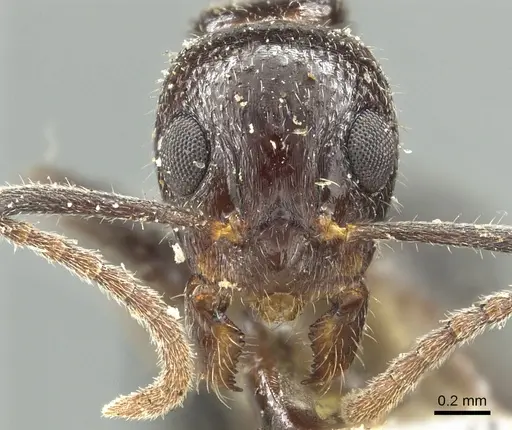
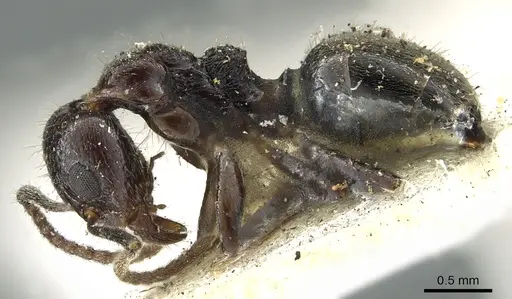
Dolichoderus goudiei is a small ant species native to south-eastern Australia, ranging from the ACT to south-eastern South Australia. Workers are small, with body size inferred from the Dolichoderus genus to be approximately 2-3 mm [inferred]. They have a reddish-brown to black head, no spines on the pronotum or propodeum, and the first segment of their abdomen features elongated erect hairs and fine silvery flat-lying hairs . These ants inhabit dry sclerophyll and savannah woodlands, where they forage on low vegetation and tree trunks . They are diurnal and form visible foraging columns, tending aphids for honeydew as general scavengers .
Quick Summary
- Difficulty: Medium
- Origin & Habitat: South-eastern Australia (ACT to south-eastern South Australia) in dry sclerophyll and savannah woodlands [1][3]
- Colony Type: Based on Dolichoderus patterns, likely monogyne (single queen colonies)
- Size & Growth:
- Queen: Unconfirmed, likely around 4-5 mm based on Dolichoderus genus patterns
- Worker: Body size data unavailable, inferred from Dolichoderus genus to be approximately 2-3 mm
- Colony: Unknown for this species
- Growth: Moderate, inferred from small size and genus patterns
- Development: Estimated 6-10 weeks at optimal temperature based on related Dolichoderus species (Development timeline not directly studied, estimates based on genus patterns)
- Antkeeping:
- Temperature: Keep at room temperature, roughly 22-26°C, based on their temperate range
- Humidity: Keep nest substrate consistently moist but not waterlogged, as they nest in soil under rocks or in rotten wood [3]
- Diapause: Likely required for temperate species, provide 2-3 months at reduced temperatures during winter
- Nesting: Soil-nesting species, prefer nests with moist soil and hiding spots like rocks or rotten wood [3]
- Behavior: These ants are diurnal and form distinct foraging columns on the ground and vegetation. They are general scavengers with a strong preference for honeydew from aphids [3]. Workers are small but agile, and while not aggressive, they may bite if threatened. Their tiny size means escape prevention is critical [2].
- Common Issues: tiny size means escapes are likely without fine mesh barriers and tight-fitting lids, slow founding, queens may take months to produce first workers, patience is essential, colonies can be slow to grow, which may lead to overfeeding or excessive disturbance, wild-caught colonies may carry parasites that can devastate captive colonies, dry conditions will cause colony decline, monitor substrate moisture regularly
Housing and Setup
For a newly caught queen, a simple test tube setup works well. Fill a test tube about one-third with water, plug the water end with a cotton ball, and place the queen in the dry portion. This maintains humidity while reducing stress. Once workers emerge, you can continue in the test tube or transition to a small formicarium. Because these ants are tiny, any formicarium should have small chambers and narrow passages scaled to their size. A naturalistic setup with moist soil and a piece of flat stone or rotten wood on top mimics their natural nesting under rocks in soil [3]. Always use excellent escape prevention: apply fluon to rim edges and use fine mesh on ventilation holes.
Feeding and Diet
In the wild, Dolichoderus goudiei are general scavengers but strongly prefer honeydew from aphids and other Hemiptera [3]. In captivity, offer sugar water or honey diluted 50/50 with water constantly. For protein, provide small prey like fruit flies or pinhead crickets 2-3 times per week. Remove uneaten food after 24 hours to prevent mold. Fresh water should always be available.
Temperature and Seasonal Care
Maintain temperatures around 22-26°C for optimal development, based on their temperate range. During winter, consider a diapause period at 10-15°C for 2-3 months to mimic natural cycles. Reduce feeding during this period.
Colony Founding
Founding behavior is unconfirmed for this species. Do not disturb a founding queen, as stress can cause her to eat eggs. After nanitics emerge, ensure food is available but avoid overfeeding.
Behavior and Observation
These ants are diurnal and form foraging columns, following pheromone trails to food sources [3]. They are active during daylight hours and show a preference for sweet liquids. Their small size requires careful handling to avoid crushing them.
Frequently Asked Questions
How long does it take for Dolichoderus goudiei to produce first workers?
Estimated 6-10 weeks from egg to first worker under optimal conditions, based on related species.
Can I keep multiple Dolichoderus goudiei queens together?
This is unconfirmed for this species. Combining unrelated queens may lead to fighting, so house them separately until colonies are established.
What do Dolichoderus goudiei eat?
They are general scavengers with a strong preference for sugar. Offer sugar water or honey constantly, and protein like small insects 2-3 times per week [3].
Are Dolichoderus goudiei good for beginners?
They are moderate difficulty due to their small size and escape risk. Their generalist diet makes them rewarding, but beginners should be prepared for slower growth.
Do Dolichoderus goudiei need hibernation?
Likely yes, as a temperate species. Provide a 2-3 month diapause at reduced temperatures during winter.
When should I move my colony to a formicarium?
Once the colony has 20-30 workers and the test tube is crowded, transition to a small formicarium with appropriately sized chambers.
Why are my Dolichoderus goudiei dying?
Common causes include escapes through tiny gaps, dry conditions, mold from overfeeding, or stress from disturbance. Wild-caught colonies may carry parasites.
How big do Dolichoderus goudiei colonies get?
The maximum colony size is unknown for this species. Based on related Dolichoderus, expect colonies of several hundred workers at maturity.
Report an Issue
The current care sheet is based fully on literature. See inconsistencies, or something that's incorrect? Please , it will be resolved after review from an admin. Contributing to the blogs tab also helps providing information, to make us be able to further improve the caresheets. Thank you for your support!
References

This caresheet is licensed under CC BY-SA 4.0 .
Community Blogs
ANTWEB1008169
View on AntWeb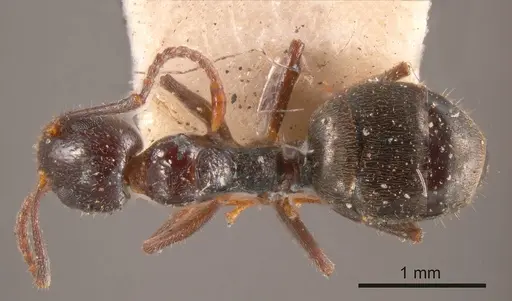
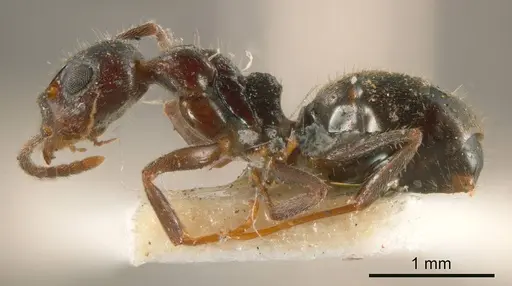
CASENT0902981
View on AntWeb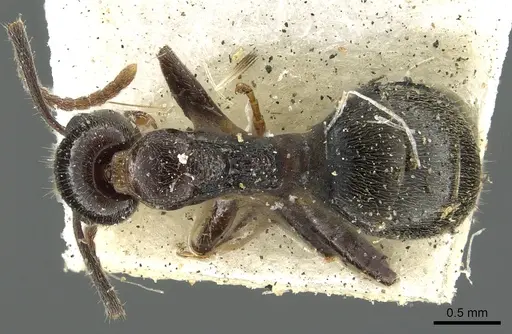
Literature
Loading distribution map...Loading products...