
Dolichoderus curvilobus
- Sci. Name
- Dolichoderus curvilobus
- Tribe
- Dolichoderini
- Subfamily
- Dolichoderinae
- Author
- Lattke, 1987
- Distribution
- Found in 4 countries
Introduction
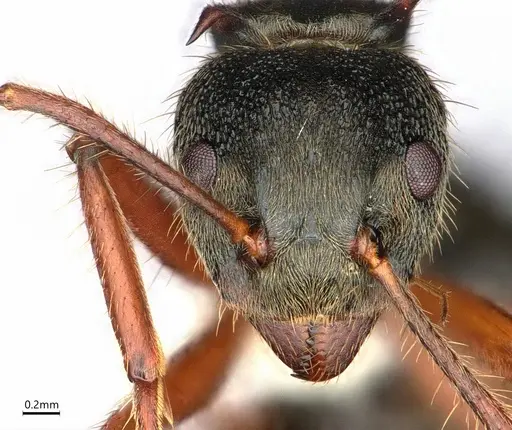
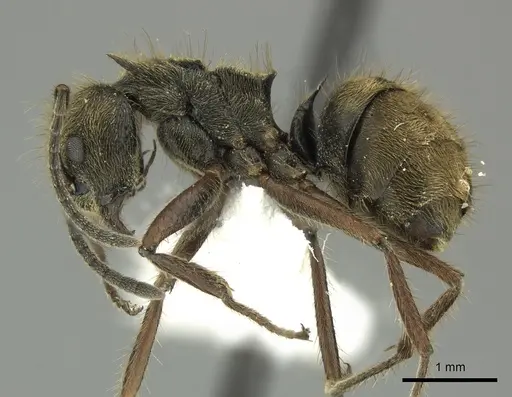
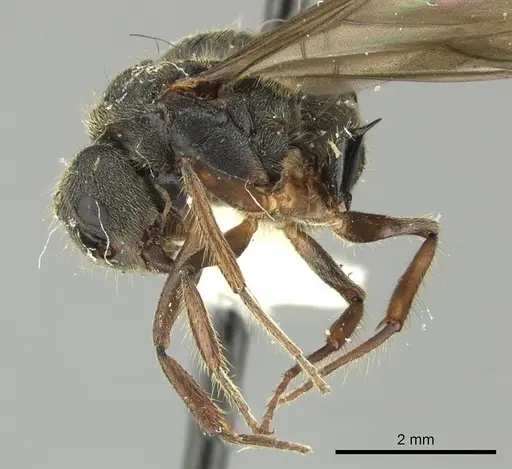
Dolichoderus curvilobus is a Neotropical ant species native to Costa Rica and Colombia. Workers are black with abundant yellow pubescence giving them a velvety appearance. They have distinctive erect setae on their scapes and mesosomal dorsum, and their propodeum has a well-defined transverse flange separating the dorsal and posterior faces. The petiole has a unique spine-like projection that tapers laterally rather than being truncate. This species is morphologically very similar to Dolichoderus validus, with which it has a parapatric distribution [AntWiki]. They build large carton nests made of very loosely woven plant fibers, a trait shared with their close relative D. validus [AntWiki].
Quick Summary
- Difficulty: Medium
- Origin & Habitat: Found in Costa Rica and Colombia, specifically in the departments of Antioquia, Santander, and Valle del Cauca. They are arboreal ants that inhabit tropical forest canopies and build large carton nests made of loosely woven plant fibers [2][3][4][1].
- Colony Type: Colony structure is not well-documented in scientific literature.
- Size & Growth:
- Queen: Size data unavailable, queen described by Mackay (1993) but specific measurements not provided in available literature [1]
- Worker: Size data unavailable, worker described by Lattke (1987) but specific measurements not provided in available literature [1]
- Colony: Likely moderate-sized colonies based on carton nesting habits, estimated several hundred workers [1]
- Growth: Moderate, typical for tropical Dolichoderinae
- Development: Estimated 6-8 weeks at tropical temperatures based on genus-level data for related Dolichoderus species (Development timeline is not directly studied for this species.)
- Antkeeping:
- Temperature: Keep at 24-28°C. These are tropical ants from Costa Rica and Colombia, so they need warm, stable temperatures.
- Humidity: Moderate to high humidity. Being arboreal carton-nesters, they prefer humid conditions but not saturated.
- Diapause: No, being a tropical species, they do not require hibernation or winter rest.
- Nesting: These are arboreal ants that build carton nests in nature. In captivity, they do well in Y-tong (AAC) nests or plaster nests with good ventilation. Provide climbing structures and branches since they prefer elevated nesting sites.
- Behavior: Dolichoderus curvilobus is an arboreal species that forages in the canopy and upper levels of the terrarium. They will defend their nest if threatened. Workers are active foragers and will explore their environment. They build distinctive carton nests which are airy structures made of plant fibers, this reflects their arboreal lifestyle. They are good climbers, so ensure smooth barriers to prevent escapes.
- Common Issues: Tropical temperature requirements mean they cannot tolerate cool temperatures, keep them warm, Being arboreal, they need vertical space and climbing structures, horizontal-only setups may cause stress, Carton-nesting behavior means they prefer airy, ventilated nests rather than tight, humid test tubes, Wild-caught colonies may have parasites or diseases that can cause colony failure in captivity, Limited availability in the antkeeping hobby means this species is rarely kept, care information is sparse
Natural History and Nesting
Dolichoderus curvilobus is an arboreal ant species found in the Neotropical forests of Costa Rica and Colombia. In the wild, they build large carton nests made of very loosely woven plant fibers, a distinctive nesting behavior shared with their close relative Dolichoderus validus. These carton nests are airy structures that provide excellent ventilation, which is important for an arboreal species. The nests are typically constructed in elevated locations, often in the forest canopy or on high branches. This arboreal lifestyle means they are adapted to foraging at various heights and need climbing structures in captivity. Their distribution spans from Costa Rica through Colombia, with documented records in Antioquia, Santander, and Valle del Cauca departments in Colombia [2][3][4].
Housing and Enclosure Setup
Because D. curvilobus is arboreal, your setup should emphasize vertical space rather than just floor space. A tall formicarium or a converted terrarium with branches, cork bark, and other climbing structures works best. They do not do well in simple test tube setups, the carton-nesting behavior indicates they need more space and better ventilation. Y-tong (AAC) nests or plaster nests with chambers scaled to their size can work, but you must provide plenty of climbing opportunities in the outworld. Use a water tube for humidity and mist the outworld occasionally. The nest area should be kept humid but not wet, with good air flow to mimic their airy carton nests. Smooth barriers like fluon on the upper edges of the outworld help prevent escapes since they are good climbers.
Feeding and Diet
Like other Dolichoderus species, D. curvilobus likely has an omnivorous diet. They probably feed on honeydew from aphids and scale insects, plus small insects and nectar. In captivity, offer a mix of sugar water or honey as an energy source, and protein sources like small crickets, mealworms, or fruit flies. Since they are arboreal foragers, place food at various heights in the enclosure rather than just on the floor. Feed protein 2-3 times per week and keep a constant sugar source available. Remove uneaten prey after 24 hours to prevent mold.
Temperature and Seasonal Care
These are tropical ants that require warm temperatures year-round. Keep the nest area at 24-28°C. They cannot tolerate cool temperatures, if your room is below this range, use a heating cable or heat mat on one side of the nest to create a warm zone. Unlike temperate species, they do not require diapause or hibernation. Temperature stability is more important than exact numbers, avoid sudden fluctuations.
Behavior and Colony Dynamics
Dolichoderus curvilobus workers are active foragers that will explore their environment thoroughly. They will defend their nest if threatened. The distinctive carton nest-building behavior is one of their most interesting traits, in captivity, they may attempt to build similar structures using available materials. Colonies likely grow to several hundred workers over time, though exact colony size is not well-documented. Their arboreal nature means they are comfortable at various heights and will readily climb branches and other structures.
Frequently Asked Questions
Is Dolichoderus curvilobus a good beginner ant?
This species is not ideal for complete beginners. It has specific arboreal requirements, needs tropical temperatures, and requires more complex housing than ground-nesting species. The limited availability and sparse care information also makes it challenging.
What do Dolichoderus curvilobus ants eat?
They are omnivorous. Offer sugar water or honey as a constant energy source, plus protein like small crickets, mealworms, or fruit flies 2-3 times per week. Place food at various heights since they are arboreal foragers.
How long does it take for first workers to appear?
Estimated 6-8 weeks from egg to worker at tropical temperatures (24-28°C). This is based on genus-level data for related Dolichoderus species, as specific development timing is not documented for this species.
Can I keep Dolichoderus curvilobus in a test tube?
No, test tubes are not recommended. These are arboreal ants that build airy carton nests and need vertical space with climbing structures. Use a formicarium or terrarium with branches and good ventilation.
What temperature do they need?
Keep them at 24-28°C. They are tropical ants from Costa Rica and Colombia and cannot tolerate cool temperatures.
Do they need hibernation?
No, they do not require hibernation. Being a tropical species, they need consistent warmth year-round. Do not expose them to temperatures below 20°C for extended periods.
How big do colonies get?
Based on related species and their carton-nesting habits, colonies likely reach several hundred workers. Exact maximum size is not documented in scientific literature.
Where is Dolichoderus curvilobus found in the wild?
They are native to Costa Rica and Colombia, specifically the departments of Antioquia, Santander, and Valle del Cauca. They are arboreal, living in forest canopies and building carton nests in trees [2][3].
Why do they build carton nests?
Carton nests are made of loosely woven plant fibers and provide excellent ventilation, important for arboreal ants living in humid tropical forests. The airy structure helps regulate humidity and temperature within the nest [1].
Report an Issue
The current care sheet is based fully on literature. See inconsistencies, or something that's incorrect? Please , it will be resolved after review from an admin. Contributing to the blogs tab also helps providing information, to make us be able to further improve the caresheets. Thank you for your support!
References

This caresheet is licensed under CC BY-SA 4.0 .
Community Blogs
CASENT0249650
View on AntWeb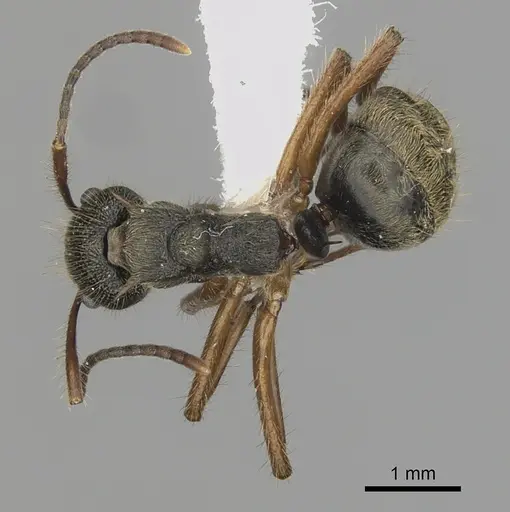
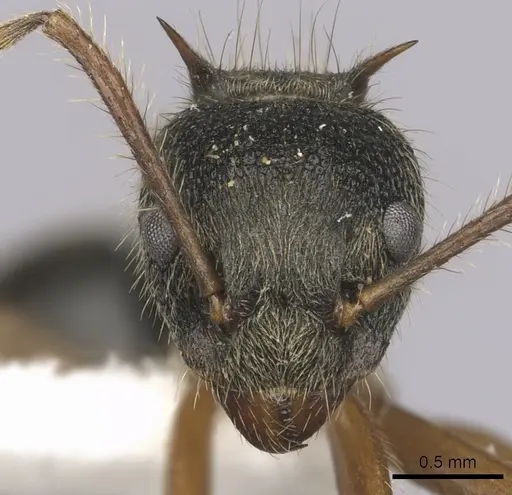
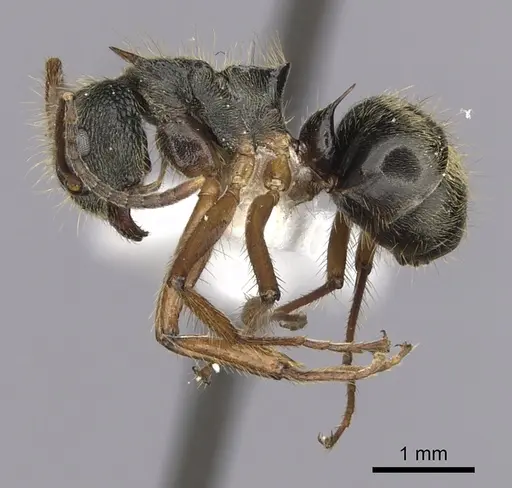
CASENT0843333
View on AntWeb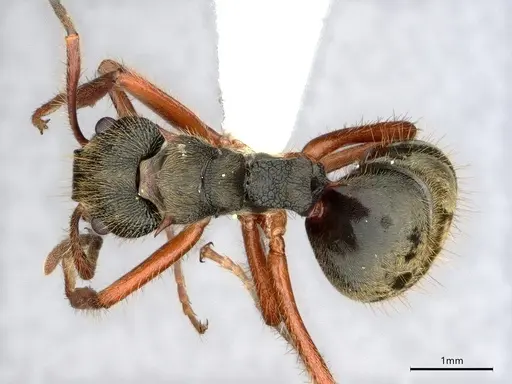
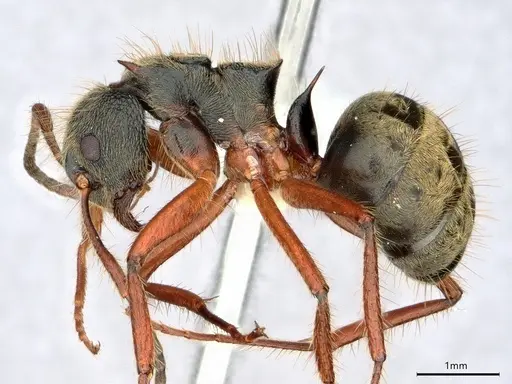
JTLC000003263
View on AntWeb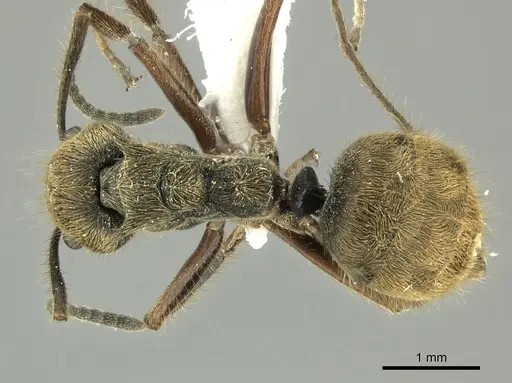
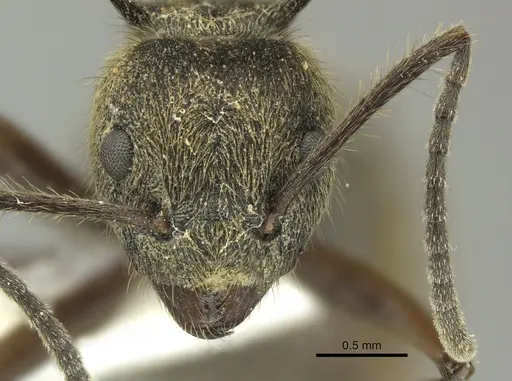
JTLC000003267
View on AntWeb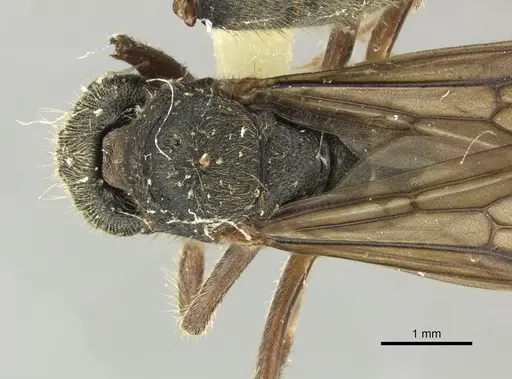
Literature
Loading distribution map...Loading products...