
Discothyrea venus
- Sci. Name
- Discothyrea venus
- Tribe
- Proceratiini
- Subfamily
- Proceratiinae
- Author
- Hita-Garcia & Lieberman, 2019
- Distribution
- Found in 7 countries
Introduction
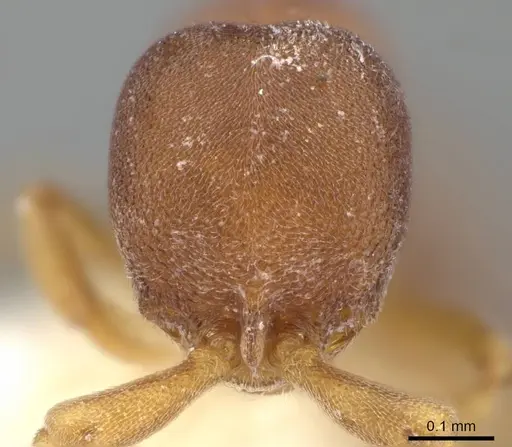
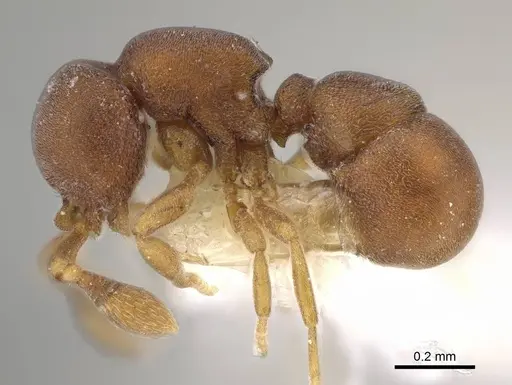
Discothyrea venus is an exceptionally tiny ant species native to Equatorial Africa, found in lowland rainforests across Ivory Coast, Ghana, Cameroon, Angola, and Uganda . Workers are testaceous-orange in color and possess one of the most unusual morphological features in the ant world: an extremely enlarged, bulbous fourth abdominal segment that is 1.6-1.8 times longer than the third segment - this dramatic feature gives the species its name after Venus Kallipygos, the Roman goddess known for her beautiful buttocks . Eyes are absent or extremely minute, and the mandibles are toothless. The species is patchily distributed, with most localities at elevations of 30-650m, except Kibale Forest in Uganda at 1500m .
Quick Summary
- Difficulty: Hard
- Origin & Habitat: Equatorial Africa, lowland rainforests in Ivory Coast, Ghana, Cameroon, Angola, and Uganda at elevations of 30-650m (Kibale Forest Uganda at 1500m) [1]
- Colony Type: Unconfirmed, colony structure has not been documented in scientific literature
- Size & Growth:
- Queen: Unknown, queen caste not described in original description [1]
- Worker: ~2-3 mm total length, inferred from Discothyrea genus (tiny ants typically 2-4mm)
- Colony: Unknown, no colony size data available
- Growth: Unknown
- Development: Unconfirmed, no development data available for this species (Development timeline unknown due to lack of captive breeding studies)
- Antkeeping:
- Temperature: Keep warm at 24-28°C based on lowland African rainforest origin. Provide a temperature gradient allowing workers to self-regulate.
- Humidity: High humidity required, keep nest substrate consistently moist but not waterlogged, mimicking damp rainforest floor conditions.
- Diapause: Unknown, no documented hibernation or diapause behavior. Given the tropical origin, likely no true diapause but may show reduced activity during cooler periods.
- Nesting: Inferred: In nature they likely nest in rotting wood, dead trunks, or moist soil in primary forest. In captivity, a small test tube setup with moist substrate or a Y-tong (AAC)/plaster nest with tight chambers scaled to their tiny size works well. Their minute size requires excellent escape prevention, use fine mesh barriers.
- Behavior: These ants are extremely small and likely cryptic. Proceratiinae ants are typically predators or omnivores, and Discothyrea species are known to specialize on spider eggs. Workers likely forage individually in the leaf litter layer. They are not aggressive and pose no threat to keepers. Escape prevention is critical due to their minute size, they can squeeze through the tiniest gaps.
- Common Issues: escape prevention is critical, they are among the smallest ants and can squeeze through standard barrier gaps, lack of captive breeding data means founding and development are poorly understood, extreme humidity requirements can lead to mold issues if ventilation is inadequate, tiny size makes feeding difficult, prey items must be appropriately sized, no established husbandry protocols exist for this species in the antkeeping hobby
Housing and Escape Prevention
Housing Discothyrea venus presents unique challenges due to their extremely small size. Workers are only about 2-3mm in total length, smaller than many springtails commonly used as feeders. Standard test tube setups can work but require careful attention to barrier quality. Use fluon (liquid PTFE) on rim edges and ensure all connections are sealed. If using formicariums, fine mesh with openings less than 0.5mm is essential. The nest chamber should be appropriately scaled, tiny chambers with narrow connections help the ants feel secure. Avoid tall, open spaces that can disorient these minute foragers. A naturalistic setup with moist soil and hiding structures mimics their natural leaf litter environment. [1]
Feeding and Diet
Based on genus-level knowledge of Proceratiinae, D. venus likely accepts small live prey such as springtails, micro-arthropods, and spider eggs, Discothyrea species are known egg predators. Their tiny size means prey must be appropriately scaled, even baby crickets are too large. Offer small live prey items and observe acceptance. Sugar sources may be accepted but are not a primary food source for this genus. Feed small prey items every few days, removing uneaten prey to prevent mold. Due to their cryptic nature, feeding behavior may be difficult to observe directly. [1][2]
Temperature and Humidity
As a lowland African rainforest species, D. venus requires warm and humid conditions. Maintain temperatures in the range of 24-28°C, with a slight gradient allowing workers to move between warmer and cooler areas. A heating cable on one side of the nest can create this gradient, place it on top of the nest to avoid drying. Humidity should be high. Keep the nest substrate consistently moist but not waterlogged, the substrate should feel damp to the touch. Poor humidity leads to desiccation in these tiny ants. Use a water reservoir setup (test tube water reservoir) to maintain moisture levels. Adequate ventilation is necessary to prevent mold while maintaining humidity. [1]
Colony Establishment
Colony founding behavior for D. venus has not been documented in scientific literature. The original description only covers worker morphology, and queen caste information is lacking [1]. Based on Proceratiinae genus patterns, founding is likely claustral, the queen seals herself in a small chamber and raises the first workers on stored body reserves. However, this is an inference, not a confirmed fact. If you obtain a founding queen, provide a small, humid chamber with moist substrate and leave her undisturbed. Expect a long development time given the tiny size of the species, first workers (nanitics) will be very small. Do not attempt to combine unrelated queens as no data exists on pleometrosis (multiple queen founding) for this species. [1]
Unique Morphology
The most distinctive feature of Discothyrea venus is the dramatically enlarged fourth abdominal segment, which is 1.6-1.8 times longer than the third segment [1]. This feature is not approximated by any other known Discothyrea species and makes D. venus one of the most recognizable ants in the Afrotropical region. The species also lacks functional eyes entirely or has only extremely minute eye spots [1]. The mandibles are essentially toothless, which is unusual among ants. These morphological adaptations likely relate to their specialized lifestyle in the leaf litter layer of rainforests. The robust, stocky mesosoma gives them a distinctive appearance compared to other tiny ants. [1]
Frequently Asked Questions
How long does it take for Discothyrea venus to produce first workers?
The egg-to-worker development timeline is unconfirmed for this species. Based on typical Proceratiinae patterns and their tiny size, expect development to take several months. The lack of captive breeding data makes accurate timelines impossible. [1]
What do Discothyrea venus ants eat?
Based on genus-level knowledge, they likely accept small live prey such as springtails, micro-arthropods, and spider eggs. Their tiny size means prey must be appropriately scaled, even small fruit flies may be too large. Sugar sources may be accepted but are not a primary food source. [1][2]
Can I keep Discothyrea venus in a test tube setup?
Yes, a test tube setup can work, but escape prevention must be excellent due to their extremely small size. Use fluon on the rim and ensure all connections are sealed. The tube should have a water reservoir to maintain humidity. Keep the setup warm (24-28°C) and humid. [1]
Do Discothyrea venus ants sting?
Given their extremely small size and the Proceratiinae subfamily, any sting would be negligible to humans. They are not considered dangerous to keepers. Their primary defense is likely cryptic behavior rather than aggression. [1][2]
Are Discothyrea venus good for beginners?
No, Discothyrea venus is not recommended for beginners. There is virtually no captive husbandry information available, they require extremely high humidity and precise escape prevention, and their tiny size makes feeding and observation difficult. They are best suited for experienced antkeepers interested in keeping rare species. [1]
What temperature do Discothyrea venus need?
Based on their lowland African rainforest origin, keep them warm at 24-28°C. Provide a temperature gradient so workers can self-regulate. A heating cable on one side of the nest can create this gradient. Avoid temperatures below 20°C or above 32°C. [1]
Do Discothyrea venus need hibernation?
Diapause requirements are unknown. Given their tropical African origin, they likely do not require a true hibernation period. They may show reduced activity during cooler periods, but no documented overwintering behavior exists. [1]
How big do Discothyrea venus colonies get?
Colony size is unknown, no colony size data exists in scientific literature. Based on their tiny size and the genus, colonies are likely small, possibly under 100 workers. [1]
Why are my Discothyrea venus dying?
Common issues include: escape through tiny gaps, desiccation from low humidity, mold from excessive moisture with poor ventilation, and inappropriate prey size. Their extreme humidity requirements and tiny size make them difficult to keep. Ensure excellent escape prevention, maintain high humidity, and provide appropriately sized live prey. [1]
Can I keep multiple Discothyrea venus queens together?
Not recommended, combining unrelated queens of this species has not been documented. Colony structure (monogyne vs polygyne) is unconfirmed for D. venus. Without data, keeping multiple unrelated queens together risks aggression and colony failure. [1]
Report an Issue
The current care sheet is based fully on literature. See inconsistencies, or something that's incorrect? Please , it will be resolved after review from an admin. Contributing to the blogs tab also helps providing information, to make us be able to further improve the caresheets. Thank you for your support!
References

This caresheet is licensed under CC BY-SA 4.0 .
Community Blogs
CASENT0247017
View on AntWeb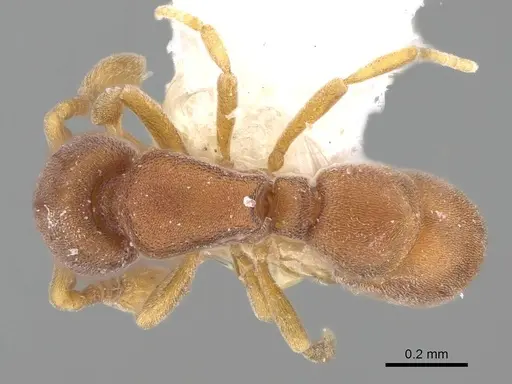
Literature
Loading distribution map...Loading products...