
Discothyrea oculata
- Sci. Name
- Discothyrea oculata
- Tribe
- Proceratiini
- Subfamily
- Proceratiinae
- Author
- Emery, 1901
- Distribution
- Found in 11 countries
Introduction
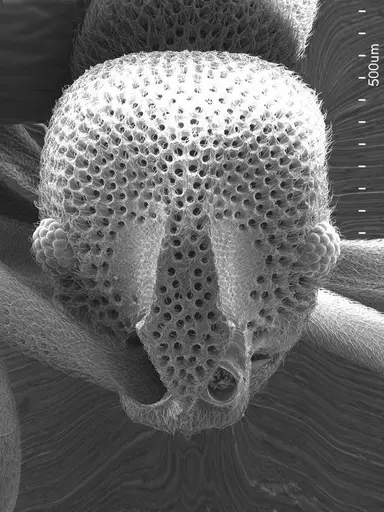
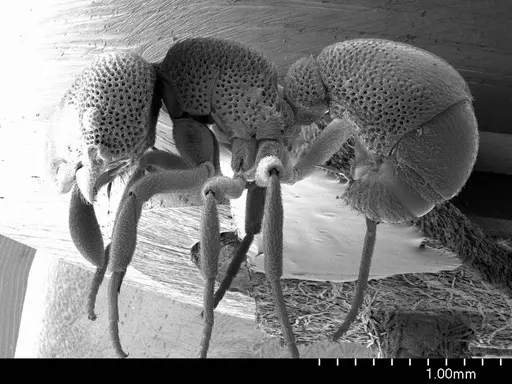
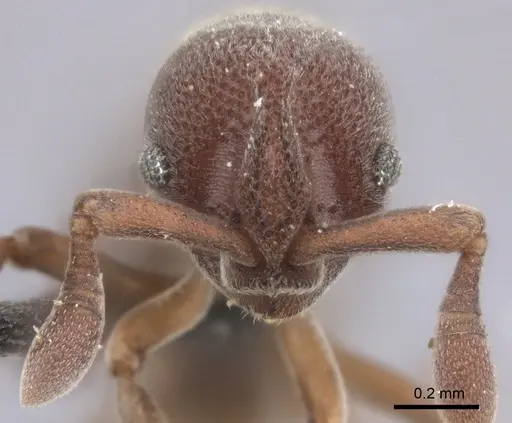
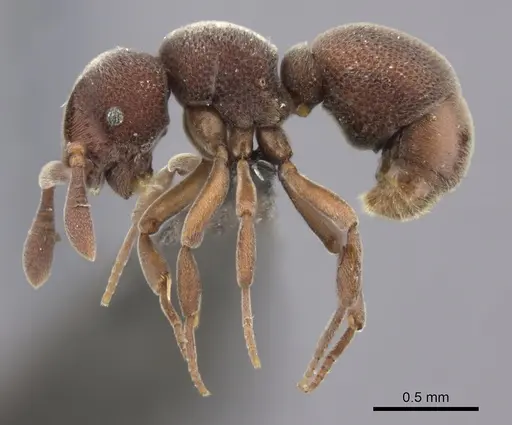
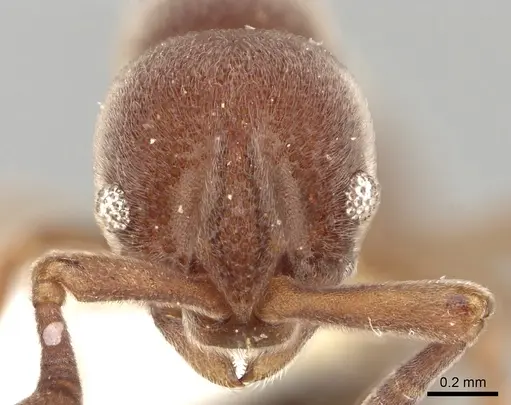
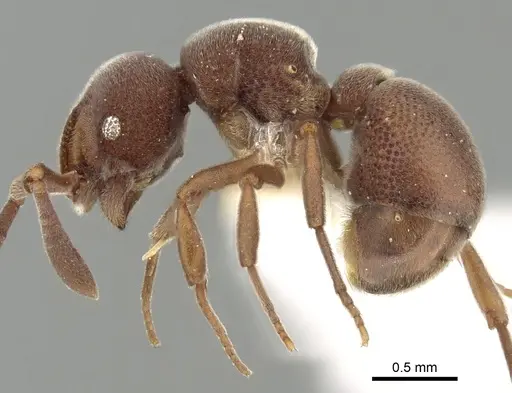
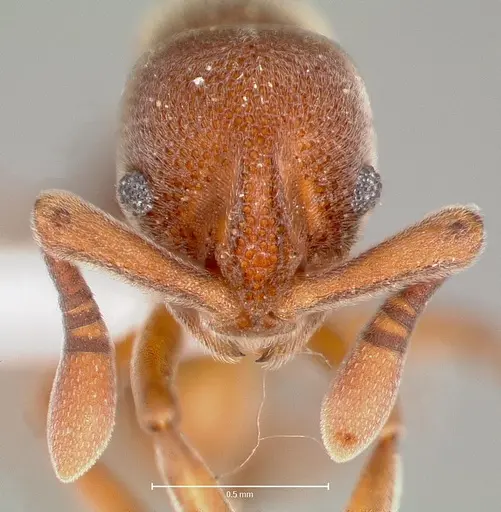
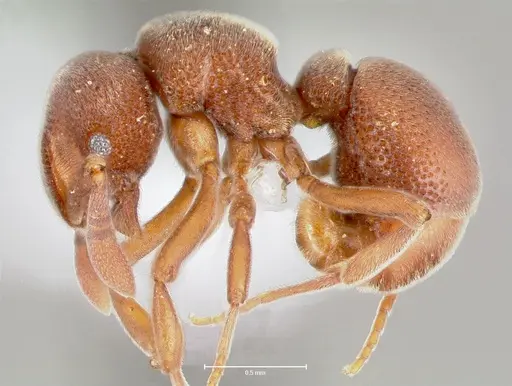
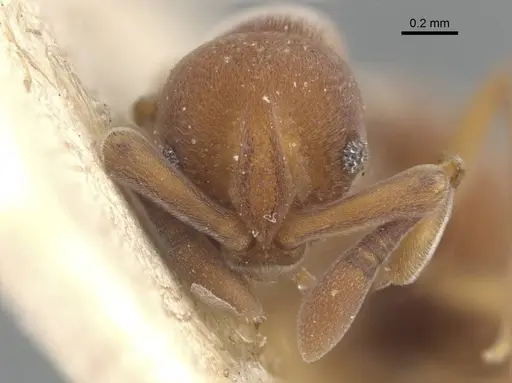
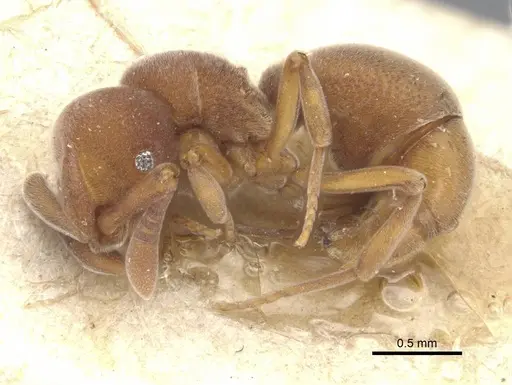
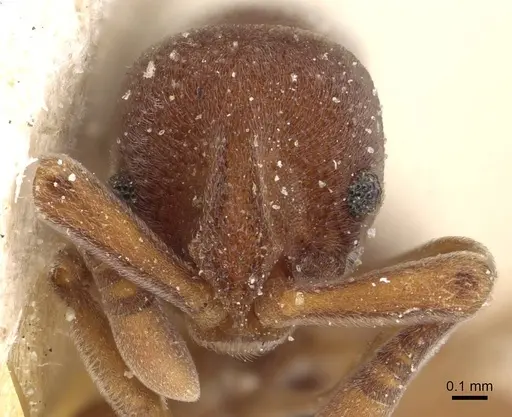
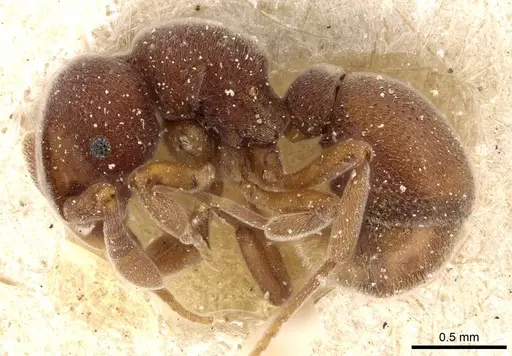
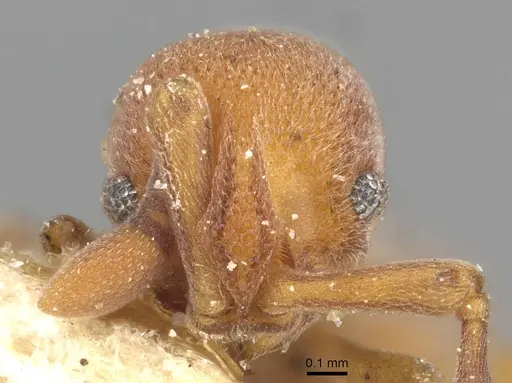
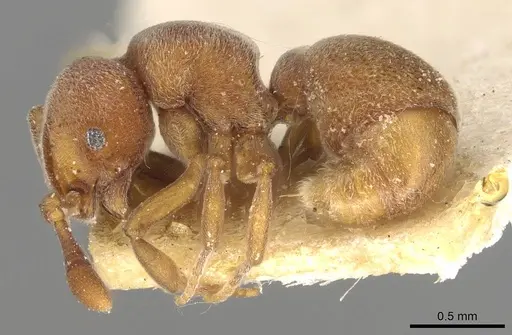
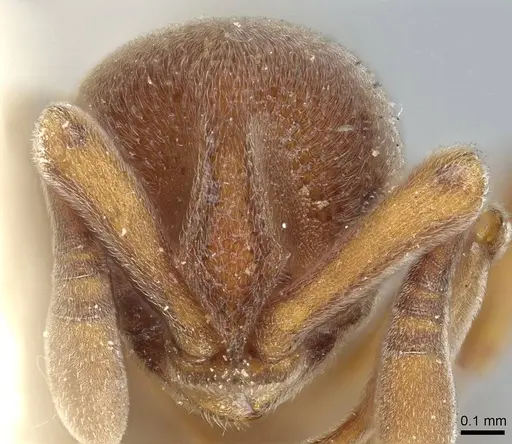
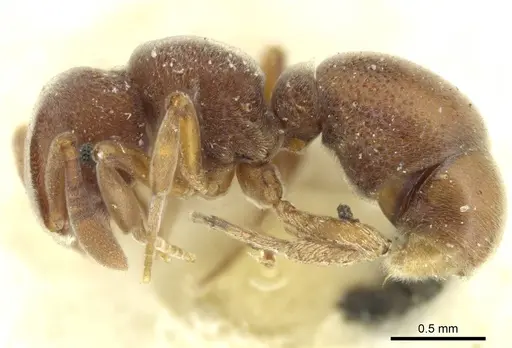
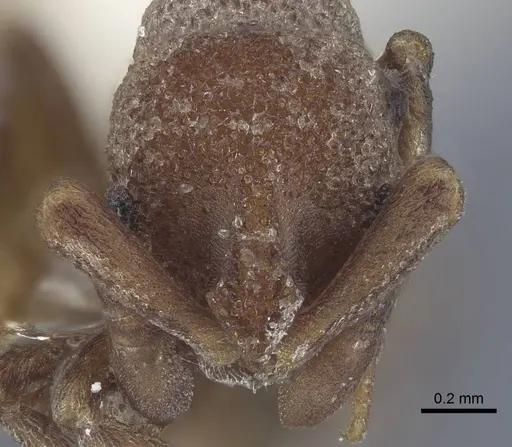
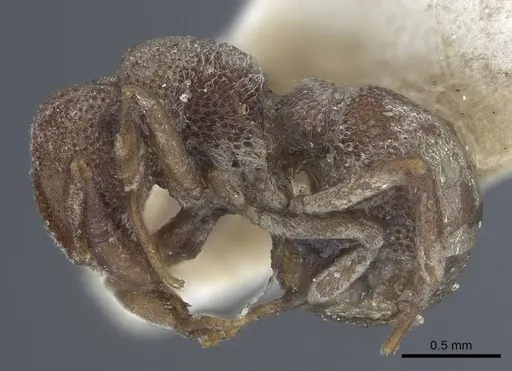
Discothyrea oculata is a tiny Afrotropical ant belonging to the subfamily Proceratiinae. Total body length is not formally documented, but the mesosoma (thorax) length ranges from 0.75–0.90 mm, indicating an extremely small species . They have distinctive large eyes with about 30 ommatidia that protrude from the head, and their reddish-iron to orange coloration helps them blend into leaf litter . This ant has an extremely specialized diet, it is one of the few species known to prey almost exclusively on spider eggs, using its unique forelegs equipped with parallel claws and a comb-shaped tibial spur to crack open spider egg sacs (oothecae) . In the wild, colonies nest inside the silk egg sacs of segestriid spiders of the genus Ariadna, where they find both shelter and a ready food source .
Quick Summary
- Difficulty: Hard
- Origin & Habitat: Afrotropical region, found across central to eastern Africa including Cameroon, Democratic Republic of Congo, Ghana, Guinea, Ivory Coast, Kenya, Mozambique, Nigeria, Tanzania, and Zimbabwe. Preferred habitats are drier, more open areas at lower elevations: open forest patches, dry coastal forest, and even grassland [1][2].
- Colony Type: Monogyne (single-queen colonies). Queens establish nests inside spider egg sacs (oothecae), a behavior termed 'claustral lestobiosis' where the queen seals herself in and raises the first brood on spider eggs without foraging outside [1][6].
- Size & Growth:
- Queen: Size data unavailable
- Worker: Total body length not recorded, mesosoma length 0.75–0.90 mm [1] indicates extremely small ants
- Colony: Unknown, likely small colonies, probably under 100 workers given their specialized lifestyle
- Growth: Unknown, likely slow due to specialized diet
- Development: Unconfirmed, no direct data available (Given the unusual founding strategy inside spider egg sacs, early development may be fast within the protected environment, but no published timeline exists.)
- Antkeeping:
- Temperature: No specific data available, but as a tropical Afrotropical species, provide warm conditions around 24–28°C. Use a heat mat on one side to create a gradient.
- Humidity: Moderate humidity, target 60–80%. The nest should have access to moisture but avoid waterlogging. Since they naturally inhabit drier, open areas, provide a humidity gradient with a slightly drier zone [2].
- Diapause: No, as a tropical species, they do not require hibernation. Keep temperatures stable year-round.
- Nesting: This is the most challenging aspect. In the wild, they nest inside spider egg sacs. In captivity, provide test tube setups with small pieces of spider egg sac material or artificial silk structures. Use Y-tong (AAC) or 3D-printed nests with extremely narrow chambers matching their tiny size. Never use acrylic nests.
- Behavior: These ants are specialized spider egg predators. Workers have unique foreleg adaptations, parallel claws and a comb-shaped tibial spur, that allow them to open spider egg cases [3][4]. They are not aggressive toward humans and likely cannot sting effectively given their tiny size. Workers manipulate silk from egg sacs to line and seal their nesting cavities [1]. Escape prevention is critical, at well under 3 mm total length, they can squeeze through tiny gaps. Use fine mesh barriers and tight-fitting lids.
- Common Issues: specialized diet is extremely hard to maintain, they only accept spider eggs and spiderlings in captivity, tiny size makes escape prevention very difficult, use fine mesh and inspect all connections regularly, providing suitable nesting material (spider egg sacs) is a major challenge, slow growth and specialized requirements can frustrate beginners, maintaining a regular supply of spider eggs requires either culturing spiders or frequent field collection, wild colonies may be difficult to locate despite being locally common [1]
Housing and Nest Setup
Housing Discothyrea oculata is unique. In the wild, colonies live inside the silk egg sacs (oothecae) of segestriid spiders in the genus Ariadna [1]. A field study in southern Cameroon observed nearly 200 colonies inside Ariadna oothecae [1]. In captivity, you can simulate this by providing a test tube setup with small pieces of spider egg sac material for the ants to manipulate. The nest chambers should be extremely narrow, these ants are very small. Tight-fitting connections are essential. You can also use small Y-tong (AAC) nests or 3D-printed nests with chambers scaled to their size, but always include some spider silk material they can work with. A small water reservoir connected to the nest helps maintain humidity without flooding the tiny chambers. The ants will use the silk to line and seal their nests, just as they do in nature [1].
Feeding and Diet, The Spider Egg Specialist
Feeding is the most critical part of keeping Discothyrea oculata. Research shows they are extreme specialists, in foraging experiments, they only accepted spiderlings and spider eggs, ignoring all other potential prey [1][3]. Both founding queens and workers can open spider oothecae using their unique forelegs equipped with parallel claws and a comb-shaped tibial spur [4]. To keep this species, you will need a steady supply of spider eggs. You can collect spider egg sacs from the wild (segestriid spiders build distinctive tube-shaped webs in dark corners) or culture common house spiders that produce similar egg cases. Freshly hatched spiderlings are also readily accepted. The ants manipulate the silk from the egg sacs to line and seal their nests, so providing some silk material is beneficial [1]. This specialized diet makes D. oculata unsuitable for beginners or anyone unwilling to maintain a spider egg supply.
Temperature and Humidity
As an Afrotropical species from central to eastern Africa, Discothyrea oculata requires warm, stable temperatures. Aim for 24–28°C in the nest area. Use a heating cable placed on top of the nest (never underneath, where it could dry out the nest) to create a gentle thermal gradient. Monitor with a thermometer at nest level. For humidity, target 60–80% relative humidity. They naturally inhabit drier, more open areas than their relative D. mixta, so avoid overly damp conditions that could cause mold. However, some moisture is necessary for brood development. A small water tube connected to the nest provides a moisture source without waterlogging. Ensure good ventilation to prevent stagnant air while maintaining humidity. [1][2]
Colony Founding
The founding behavior of D. oculata is unique. Research describes it as 'claustral lestobiosis', queens locate silken egg sacs of spiders and establish their nests inside them [1]. The queen seals herself in, just like a claustral queen, but she does so inside the spider egg sac rather than in a soil chamber. This provides her with immediate shelter and abundant food, the spider eggs themselves, to feed her first brood without ever leaving to forage [6]. Successful foundresses did not produce a typical generation of nanitics (the first, often smaller workers), leading researchers to call this a 'highly derived form of colony foundation' [1]. If you obtain a founding queen, provide her with spider egg material in a test tube setup and keep her warm and undisturbed.
Behavior and Temperament
Discothyrea oculata workers are specialized predators with fascinating adaptations. Their forelegs have parallel claws and a comb-shaped tibial spur opposite a brush-like zone on the first tarsal article, these structures allow them to tear open spider egg cases that would be impenetrable to most ants [3][4]. The ants manipulate silk from spider egg cases to line and seal their nesting cavities, a behavior observed in laboratory colonies [1]. They are not known to be aggressive toward humans, and given their tiny size, pose no threat. Their small size means excellent escape prevention is essential, they can slip through gaps invisible to the naked eye. Use fine mesh barriers and check all connections regularly.
Frequently Asked Questions
Can I keep Discothyrea oculata in a test tube?
Yes, test tubes work but with modifications. Provide a small test tube with a tight-fitting cotton plug and add small pieces of spider egg sac material for them to work with. The chambers should be tiny since ants are very small. Keep the tube horizontal with a small water reservoir section.
What do Discothyrea oculata eat?
They are extreme specialists, they only eat spider eggs and spiderlings. In experiments, they ignored all other prey [1][3]. You will need to collect spider egg sacs from wild segestriid spiders or culture house spiders to provide a continuous food source. This makes them one of the most difficult ants to keep.
How long does it take for first workers to appear?
The exact timeline is unconfirmed for this species. Based on related Discothyrea species and tropical ant development patterns, expect 6–10 weeks at optimal temperatures (24–28°C), but no published data exists for D. oculata.
Are Discothyrea oculata good for beginners?
No. This species is expert-level due to its extremely specialized diet. They require a constant supply of spider eggs, which is difficult to maintain. Most antkeepers cannot provide their natural food source. Consider starting with more adaptable species like Lasius or Camponotus.
Do Discothyrea oculata ants sting?
They likely have a stinger, but it is too small to penetrate human skin effectively. Given their tiny size and specialized predatory lifestyle, they pose no danger to keepers.
Can I keep multiple queens together?
This species is thought to be monogyne, single-queen colonies. There is no evidence they can form multi-queen colonies. Each colony has one queen that establishes her nest inside a spider egg sac.
How big do Discothyrea oculata colonies get?
Colony size is not well documented. Given their specialized lifestyle and small body size, colonies are likely relatively small, probably under 100 workers. They may remain small even when established.
Do they need hibernation?
No. As a tropical Afrotropical species, they do not require diapause. Keep temperatures stable year-round in the 24–28°C range. Sudden temperature drops could stress or kill the colony.
Why are my Discothyrea oculata dying?
The most likely cause is diet, they will starve without spider eggs. Also check that escape prevention is adequate (they are tiny), temperatures are warm enough (24–28°C), and humidity is appropriate (not too wet or dry). Stress from disturbance during founding can also cause queen death.
Where can I get spider eggs to feed them?
You can collect spider egg sacs from the wild, segestriid spiders build distinctive tube-shaped webs in dark corners. You can also culture common house spiders that produce egg cases. Handle egg sacs gently as the eggs inside are delicate. Provide fresh eggs regularly.
Report an Issue
The current care sheet is based fully on literature. See inconsistencies, or something that's incorrect? Please , it will be resolved after review from an admin. Contributing to the blogs tab also helps providing information, to make us be able to further improve the caresheets. Thank you for your support!
References

This caresheet is licensed under CC BY-SA 4.0 .
Community Blogs
ANTWEB1008518
View on AntWeb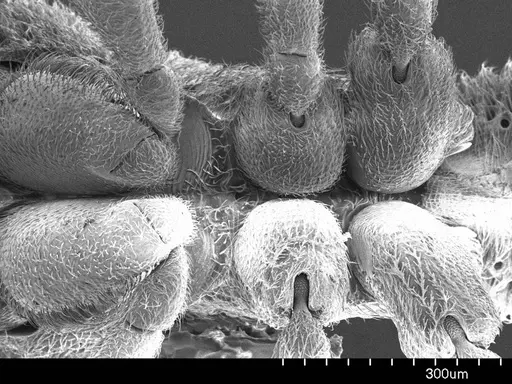
CASENT0235467
View on AntWeb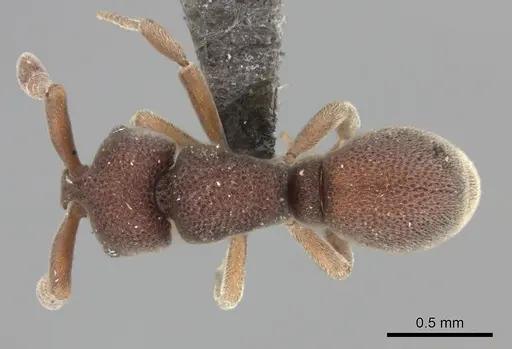
CASENT0249259
View on AntWeb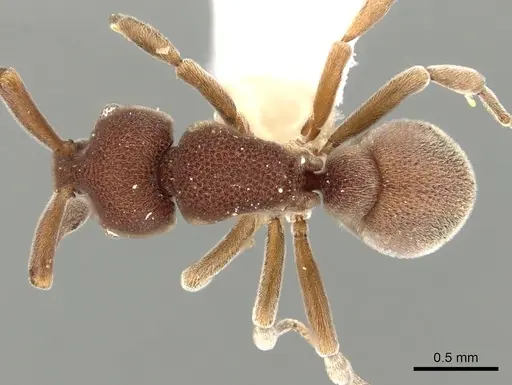
CASENT0400109
View on AntWeb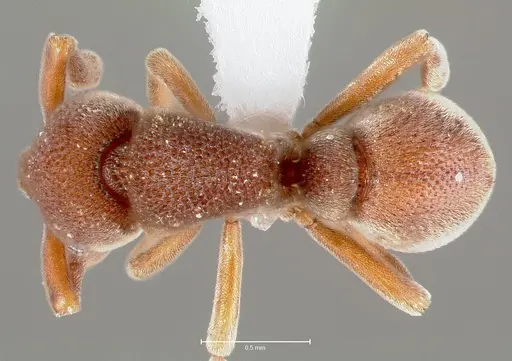
CASENT0903856
View on AntWeb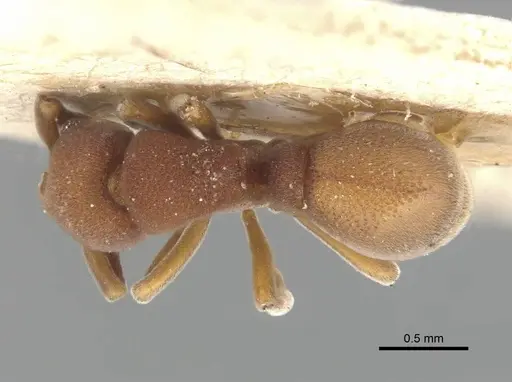
CASENT0915307
View on AntWeb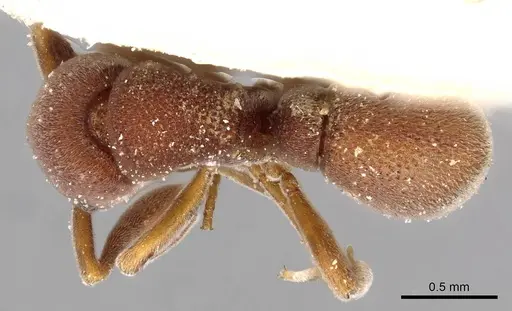
CASENT0915308
View on AntWeb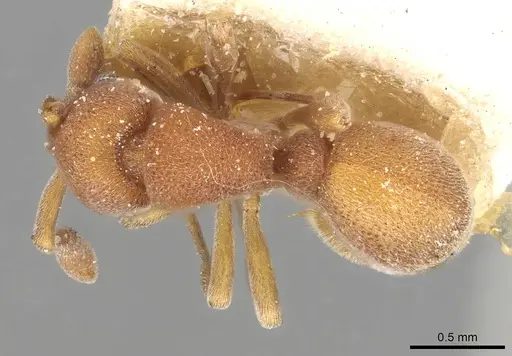
CASENT0915934
View on AntWeb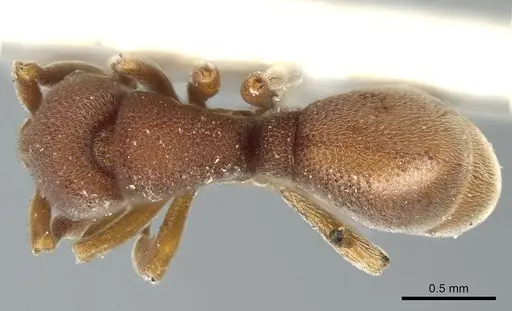
CASENT0916810
View on AntWeb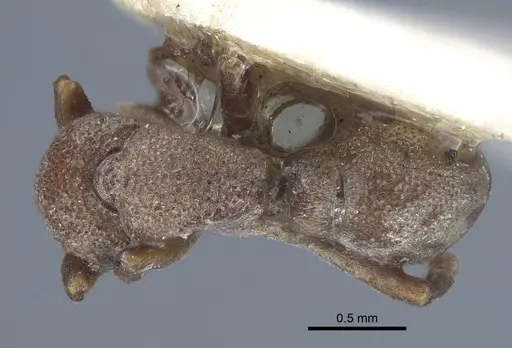
Literature
Loading distribution map...Loading products...