
Discothyrea banna
- Sci. Name
- Discothyrea banna
- Tribe
- Proceratiini
- Subfamily
- Proceratiinae
- Author
- Xu <i>et al.</i>, 2014
- Distribution
- Found in 2 countries
Introduction
Discothyrea banna is a tiny proceratiine ant native to southern Yunnan Province, China. Workers measure 2.5-2.9mm in total length, making them among the smaller ants available in the antkeeping hobby. They have a distinctive reddish-brown body with yellowish-brown legs and antennae, and their 9-segmented antennae and high, triangular petiolar node help distinguish them from related species . These ants are known only from the worker caste - queens have never been described. They live in closed forests at elevations of 900-1212m in Xishuangbanna Prefecture, where they occur alongside the related species Discothyrea diana . This is a habitat specialist found only in secondary forest patches, not in primary forest or rubber plantations .
Quick Summary
- Difficulty: Expert
- Origin & Habitat: Xishuangbanna, Yunnan Province, China, specifically Mengla County at 900-1212m elevation in semi-evergreen monsoon forest [1][2]. This is a habitat specialist restricted to secondary forest [2].
- Colony Type: Unknown, only worker caste has been described. No queen or reproductive caste has been documented [1]. Colony structure is unconfirmed.
- Size & Growth:
- Queen: Unknown, queens have not been described [1]
- Worker: 2.5-2.9mm (total length) [1]
- Colony: Unknown, no colony size data available
- Growth: Unknown, no development data exists for this species
- Development: Estimated several months based on typical proceratiine development patterns. (No published data on egg-to-worker timeline exists for this species. Related proceratiine ants typically develop slowly due to small colony sizes.)
- Antkeeping:
- Temperature: Estimated 22-26°C based on their tropical/subtropical origin in Yunnan. The Xishuangbanna region is warm year-round. Provide a gentle thermal gradient if possible.
- Humidity: Estimated moderate to high humidity based on their forest floor habitat at 900-1212m elevation. Keep the nest substrate consistently damp but not waterlogged.
- Diapause: Unknown, no research on seasonal behavior exists. Yunnan has mild winters, so they may not require a true diapause. Observe colony activity patterns and adjust accordingly.
- Nesting: Estimated soil-nesting based on collection methods. Collected from soil samples and ground litter using Berlese extraction and bark spray methods [1]. They likely nest in soil or under stones in the topsoil layer. A naturalistic setup with moist soil or a small nest with tight chambers would suit their tiny size.
- Behavior: Behavior is unstudied in scientific literature. Discothyrea ants are typically cryptic, slow-moving, and docile. They are likely nocturnal or crepuscular foragers based on their moderately large eyes. Their small size and ground-nesting habits suggest they may be predators on tiny arthropods or feed on honeydew. Escape prevention is critical, at 2.5-2.9mm, they can easily slip through standard barriers. Use fine mesh and tight-fitting lids.
- Common Issues: only worker caste known, no documented queen means captive breeding from wild colonies is extremely difficult., tiny size makes escape likely without fine mesh barriers and careful setup., no dietary information exists, their exact food requirements are unknown., habitat specialist from secondary forest, may have specific substrate and humidity needs that are difficult to replicate., no hibernation or diapause research exists, seasonal care requirements are unknown.
Discovery and Distribution
Discothyrea banna was described in 2014 by Xu, Burwell, and Nakamura, making it one of the more recently discovered ant species available in the hobby. It is named after 'Banna', the common abbreviation for Xishuangbanna Prefecture where it is found [1]. The species is known only from Mengla County in southern Yunnan Province, China, at elevations between 900 and 1212 meters. It has been collected in semi-evergreen monsoon forest and rainforest habitats, often using specialized collection methods like Berlese extraction of leaf litter and soil samples. Notably, it is sympatric with Discothyrea diana, the two species have even been collected together in the same 20-meter survey plot [1]. This extremely limited distribution makes wild collection difficult and makes captive breeding particularly valuable for conservation of this species.
Identification and Morphology
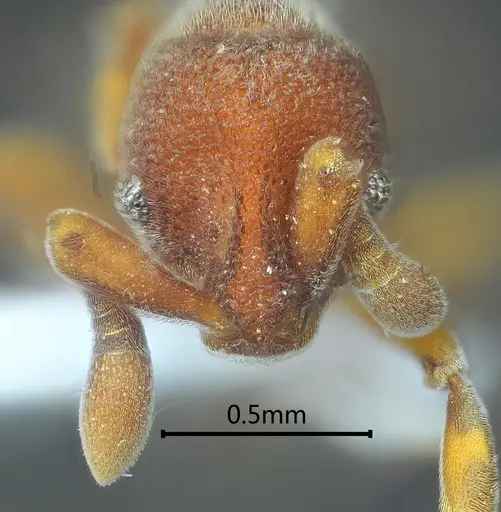
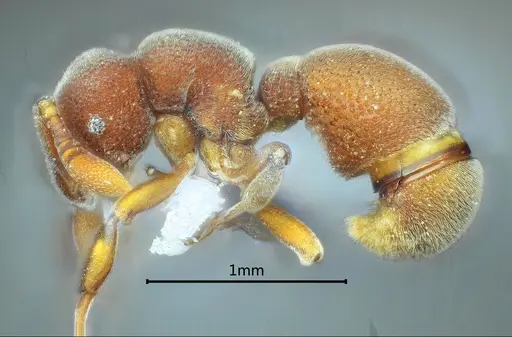
Workers of Discothyrea banna are tiny at just 2.5-2.9mm total length. They have a distinctive appearance with a reddish-brown body and yellowish-brown legs, antennae, and gaster tip. Their eyes are black and moderately large with about 6 ommatidia. The antennae are 9-segmented, which helps distinguish them from some relatives. The petiolar node is notably high and triangular, with a height-to-length ratio of approximately 1.7:1. The head is longer than broad and roughly trapezoidal when viewed from the front. The body is densely punctured, giving it a coarse texture, and is covered in short, dense pubescence without standing hairs [1]. These morphological details are important for distinguishing them from similar species like Discothyrea kamiteta and Discothyrea bryanti.
Habitat and Ecology
This species is a habitat specialist restricted to secondary forest in the Xishuangbanna region [2]. Research shows it occupies secondary forest but has not been found in primary forest or rubber plantations [2]. This makes it somewhat unusual among forest ants, as many species prefer primary forest. The elevation range of 900-1212m suggests they prefer cooler conditions than true lowland tropical ants. They have been collected using multiple methods including ground sampling, soil sampling, Berlese extraction, and bark spray, suggesting they live in the soil layer and leaf litter interface [1]. The sympatric occurrence with Discothyrea diana indicates similar ecological requirements.
Keeping Considerations
Keeping Discothyrea banna presents significant challenges due to the lack of basic biological information. No queen has ever been described, meaning wild colony collection is your only option, and even workers are rarely encountered due to their cryptic habits and tiny size. If you obtain workers, housing them requires attention to scale: chambers and passages must be tiny to prevent them from getting lost or stressed in oversized spaces. Use a naturalistic setup with fine substrate or a small nest with appropriately scaled chambers. Temperature should be warm (22-26°C) given their subtropical origin, and humidity should be moderate to high to match their forest floor habitat. Escape prevention is critical, at under 3mm, they can squeeze through gaps that larger ants cannot. Feed trial small live prey like springtails or fruit flies, as their diet in the wild is unstudied but likely consists of tiny arthropods. [1]
Future Research Needs
Much remains unknown about Discothyrea banna, making it a species for advanced antkeepers interested in contributing to scientific knowledge. Key unknowns include: queen morphology and colony structure, founding behavior, exact dietary requirements, development timeline from egg to worker, seasonal behavior and whether they require any dormancy period, and colony size in established nests. If you successfully maintain a colony, careful observation and documentation of any reproductive behavior would be scientifically valuable. This species represents an opportunity to potentially document biology that has never been observed in the scientific literature.
Frequently Asked Questions
Can I keep Discothyrea banna in a test tube?
A test tube setup could work for a small group, but the chambers must be very small and the water reservoir appropriately sized. Their tiny size means they may get lost in standard test tube setups. Consider a small nest or naturalistic setup with appropriately scaled chambers.
How long until first workers appear?
This is unknown, no published data exists on development time for this species. Related proceratiine ants typically have slow development due to small colony sizes. Expect several months minimum, but this is an estimate.
Can I keep multiple queens together?
Unknown, no queen has ever been described for this species, so colony structure is unconfirmed. Do not attempt combining unrelated queens without evidence they can coexist.
Do Discothyrea banna ants sting?
Proceratiine ants have a functional sting, but at their tiny size (under 3mm), they are unlikely to penetrate human skin or cause any pain. They are not considered dangerous to keepers.
What do Discothyrea banna eat?
Diet is unconfirmed in scientific literature. Based on related species, they likely prey on tiny arthropods like springtails, mites, and micro-arthropods. Offer small live prey and occasional honey or sugar water as a trial.
Are Discothyrea banna good for beginners?
No. This species is rated Expert difficulty due to: only worker caste known (no queen for captive breeding), tiny size requiring specialized setups, completely unconfirmed care requirements, and habitat specialist needs. This is a species for experienced keepers interested in documenting new biology.
Do Discothyrea banna need hibernation?
Unknown, no research exists on seasonal behavior. Their native range in Yunnan has mild winters. Observe your colony's activity patterns. A mild cool period during winter months may be appropriate, but true diapause may not be necessary.
Why are my Discothyrea banna dying?
Without basic biological data, mortality causes are speculative. Likely issues include: incorrect humidity (too dry or too wet), temperature stress, escape and desiccation, inappropriate prey size, or disease from wild-collected colonies. Document conditions carefully and adjust incrementally.
When should I move them to a formicarium?
Move to a more permanent setup only after the colony is established and you understand their preferences. A small nest or naturalistic setup with tiny chambers works best. Do not move until you have a stable, feeding colony.
Report an Issue
The current care sheet is based fully on literature. See inconsistencies, or something that's incorrect? Please , it will be resolved after review from an admin. Contributing to the blogs tab also helps providing information, to make us be able to further improve the caresheets. Thank you for your support!
References

This caresheet is licensed under CC BY-SA 4.0 .
Community Blogs
ANTWEB1060495
View on AntWeb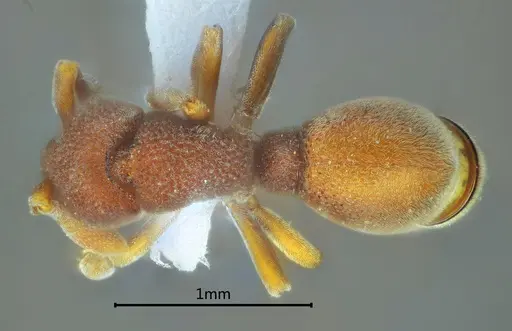
Literature
Loading distribution map...Loading products...