
Dilobocondyla chapmani
- Sci. Name
- Dilobocondyla chapmani
- Tribe
- Crematogastrini
- Subfamily
- Myrmicinae
- Author
- Wheeler, 1924
- Distribution
- Found in 1 countries
Introduction
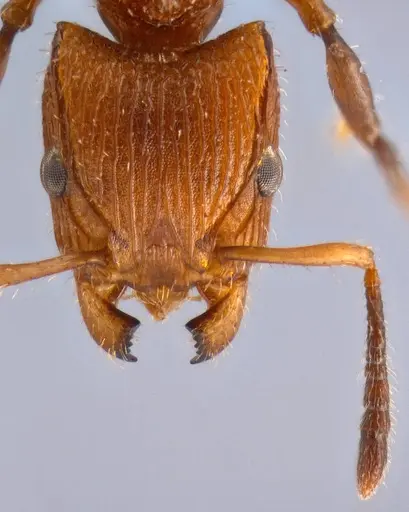
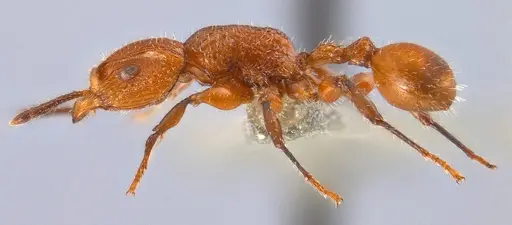
Dilobocondyla chapmani is a small to medium-sized Myrmicine ant native to the Philippines, found on the islands of Negros, Cebu, and Mindanao . Workers measure 3.2–5.2 mm, with a range depending on the population . They have a rusty ferruginous body with yellow markings on the head, clypeus, and gaster . Their head has strong frontal carinae that reach the posterior corners, and the thorax has a nearly straight dorsal profile . These ants nest in living tree branches in tropical forests, making them an arboreal nesting species . This species is closely related to Dilobocondyla cataulacoidea but can be told apart by its non-sinuate mandibular borders, more distinct frontal area, longer pronotum, and different body sculpture .
Quick Summary
- Difficulty: Medium
- Origin & Habitat: Philippines (Negros, Cebu, Mindanao) – tropical forest environment, nesting in living tree branches [1][2][3]
- Colony Type: Colony structure is unconfirmed – likely single-queen based on typical genus patterns, but no direct studies exist for this species.
- Size & Growth:
- Queen: 5.4–5.7 mm (gynes) [2]
- Worker: 3.2–5.2 mm [3][2]
- Colony: Unknown – likely small to moderate based on typical Dilobocondyla patterns.
- Growth: Moderate – estimated from related Myrmicinae.
- Development: 6–10 weeks – estimated from related Myrmicinae at tropical temperatures. (Development time is estimated based on typical Myrmicinae patterns in tropical conditions (25–28°C).)
- Antkeeping:
- Temperature: Keep at 24–28°C – this tropical species from the Philippines requires warm conditions. A gentle gradient works well so workers can self‑regulate.
- Humidity: Keep the nest substrate slightly moist but not waterlogged. Provide a water tube for drinking water.
- Diapause: No – tropical species does not require hibernation. Maintain consistent warm temperatures year‑round.
- Nesting: Arboreal nester – in nature they nest in living tree branches [3]. In captivity, use a Y‑tong (AAC) nest or plaster nest with narrow chambers. Provide some vertical space and climbing structures. Avoid fully horizontal layouts.
- Behavior: Workers are moderately active and forage on surfaces. They are not especially aggressive but will defend the nest. Their defense mechanism is smearing – they use a modified, flattened stinger to wipe venom onto attackers (common to the Crematogastrini tribe). Escape risk is moderate because workers are 3–5 mm – use standard barrier methods (Fluon or talc on the outworld walls).
- Common Issues: tropical species requires consistent warmth – cold temperatures can slow or stop brood development., arboreal nesting means they prefer vertical space – horizontal‑only nests may not be ideal., small colony size at founding means founding colonies are fragile and need minimal disturbance., wild‑caught colonies may carry parasites or diseases that can cause colony failure., escape prevention needed due to small worker size – seal all gaps.
Nest Preferences and Housing
Dilobocondyla chapmani is an arboreal nesting species [3] – in the wild they nest inside living tree branches [3]. In captivity, Y‑tong (AAC) nests or plaster nests work well. The nest should have chambers scaled to their worker size (3–5 mm), and providing some vertical orientation or climbing structures mimics their natural arboreal habitat. Avoid completely horizontal formicarium layouts – a mix of horizontal chambers with vertical climbing space is ideal. The nest material should retain some moisture but never become waterlogged. Test tube setups work for founding colonies, but move to a more structured nest once the colony reaches 20–30 workers. Like many tropical ants, they do best with moderate humidity inside the nest area while having access to a dry outworld.
Feeding and Diet
Like other Myrmicinae ants, Dilobocondyla chapmani is likely omnivorous. Accept sugar sources (honey, sugar water) and protein foods. In nature they probably tend aphids and other honeydew‑producing insects, so offering sugar water or honey water is recommended. For protein, offer small insects like fruit flies, small mealworms, or cricket pieces. Feed protein 2–3 times per week and keep sugar water available constantly. Prey items should be very small so workers can handle them. Fresh water should always be available. The exact dietary preferences of this species haven’t been studied, so some experimentation may help find preferred foods.
Temperature and Seasonal Care
As a tropical species from the Philippines [2], Dilobocondyla chapmani requires warm conditions year‑round. Keep the nest area at 24–28°C for optimal brood development. Temperatures below 20°C can slow or stop brood development, and prolonged cold exposure can be harmful. A heating cable or mat on one side of the nest creates a temperature gradient, so workers can self‑regulate. Place the heating element on top of the nest to avoid drying out the nest too quickly. Unlike temperate species, these ants do not need a diapause or hibernation period. Maintain consistent temperatures throughout the year. Room temperature (20–24°C) may be slightly cool – consider a small heater or heating setup if your room runs cooler.
Colony Founding and Growth
The colony founding behavior of Dilobocondyla chapmani has not been directly documented. Based on typical Myrmicinae patterns, the queen likely seals herself in a chamber (claustral founding) and lives off her stored fat reserves until the first workers emerge. The first workers (nanitics) will be smaller than mature workers. Colony growth is expected to be moderate – Myrmicinae colonies typically take several months to a year to reach significant numbers. Expect the founding stage to last 6–10 weeks before first workers emerge, depending on temperature. Once workers arrive, the colony will gradually expand. Colonies likely remain relatively small (under 500 workers) based on typical Dilobocondyla patterns. Patience is key during the founding phase – avoid disturbing the queen or moving the nest during this critical period.
Behavior and Temperament
Dilobocondyla chapmani workers are moderately active and will forage in the outworld. They are not known to be especially aggressive but will defend the nest if threatened. Their defense mechanism involves smearing venom – they use a modified, flattened stinger to wipe venom onto enemies (a trait common to the Crematogastrini tribe). Workers likely use chemical trails to recruit nestmates to food sources, similar to other Myrmicinae. Escape risk is moderate – their 3–5 mm size means they can fit through small gaps. Use standard barrier methods (Fluon, talcum powder barrier) on the outworld. They are likely diurnal foragers, hunting small prey and collecting honeydew. Provide an outworld with enough foraging space and ensure connections between nest and outworld are secure.
Frequently Asked Questions
How long does it take for Dilobocondyla chapmani to produce first workers?
Based on typical Myrmicinae development, expect 6–10 weeks from egg to first worker at optimal temperatures (24–28°C). The exact timeline for this species hasn’t been documented, so some variation is possible.
What temperature do Dilobocondyla chapmani ants need?
Keep them at 24–28°C. This tropical species from the Philippines [2] requires warm conditions year‑round. Temperatures below 20°C can slow or stop brood development.
Do Dilobocondyla chapmani ants need hibernation?
No, they do not require hibernation. As a tropical species, they need consistent warm temperatures year‑round. Do not expose them to cold temperatures.
What do Dilobocondyla chapmani ants eat?
They are omnivorous like other Myrmicinae. Offer sugar water or honey constantly, and protein sources (small insects like fruit flies, mealworms) 2–3 times per week. They likely also collect honeydew in nature.
How big do Dilobocondyla chapmani colonies get?
Colony size is not documented for this species, but based on typical Dilobocondyla patterns, colonies likely reach a few hundred workers at most. They are not known for forming supercolonies.
Can I keep multiple Dilobocondyla chapmani queens together?
The colony structure of this species is not documented. Based on typical Myrmicinae patterns, single‑queen colonies are most likely. Combining unrelated queens is not recommended without documented evidence that they can found colonies pleometrotically.
What size nest should I use for Dilobocondyla chapmani?
Use a nest with chambers scaled to their 3–5 mm worker size. Y‑tong (AAC) nests or plaster nests work well. They are arboreal nesters [3], so providing some vertical space or climbing structures helps.
Do Dilobocondyla chapmani ants sting?
Myrmicinae ants have stingers, but Dilobocondyla chapmani is not known for painful stings. Given their small size, any sting would likely be very mild and not penetrate human skin significantly. Their main defensive behavior is smearing venom rather than piercing.
Are Dilobocondyla chapmani good for beginners?
This species is rated as Medium difficulty. While not the most challenging ant, the lack of documented care information and their arboreal nesting requirements make them better suited for antkeepers with some experience. Their tropical warmth needs require attention year‑round.
Where is Dilobocondyla chapmani found in the wild?
This species is endemic to the Philippines, specifically found on the islands of Negros, Cebu, and Mindanao [1][2]. They live in tropical forest environments and nest in living tree branches [3].
Report an Issue
The current care sheet is based fully on literature. See inconsistencies, or something that's incorrect? Please , it will be resolved after review from an admin. Contributing to the blogs tab also helps providing information, to make us be able to further improve the caresheets. Thank you for your support!
References

This caresheet is licensed under CC BY-SA 4.0 .
Community Blogs
ANTWEB1008115
View on AntWeb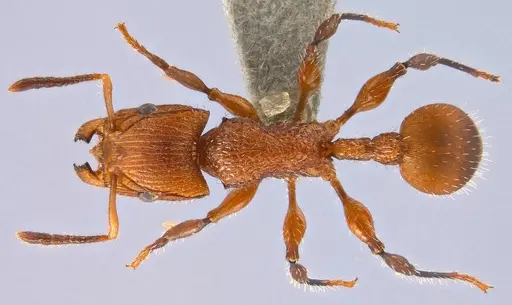
Literature
Loading distribution map...Loading products...