
Diacamma viridipurpureum
- Sci. Name
- Diacamma viridipurpureum
- Tribe
- Ponerini
- Subfamily
- Ponerinae
- Author
- Emery, 1893
- Distribution
- Found in 1 countries
Introduction
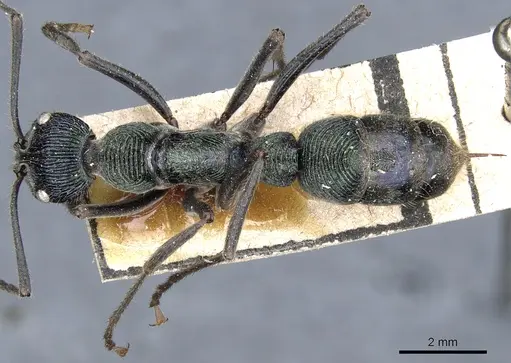
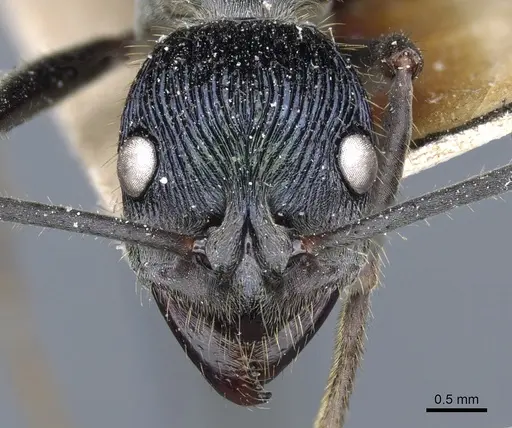
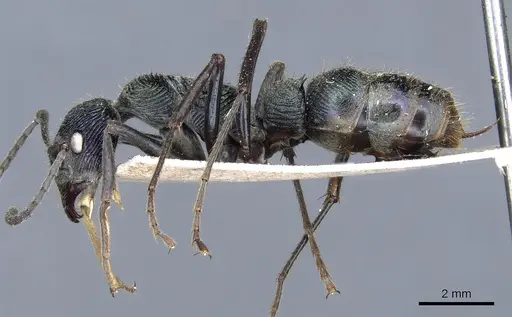
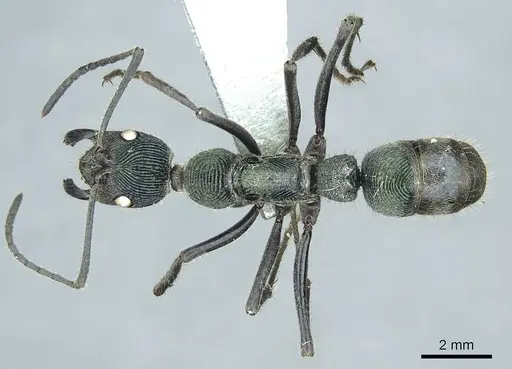
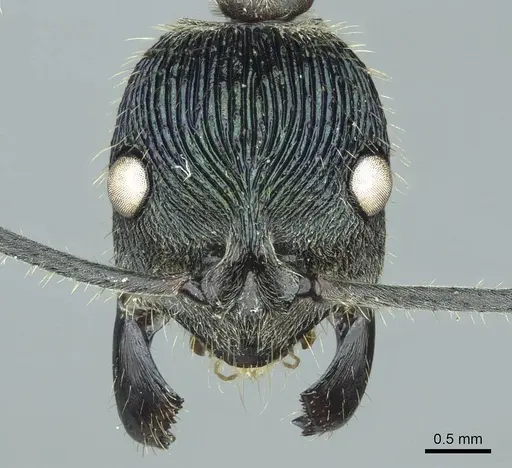
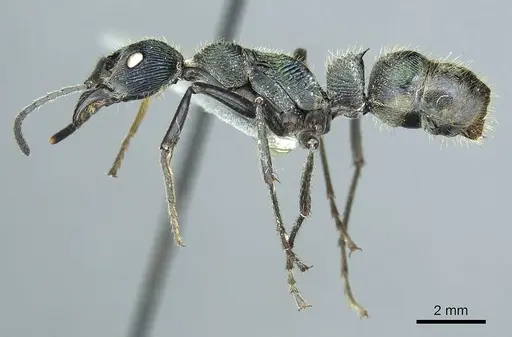
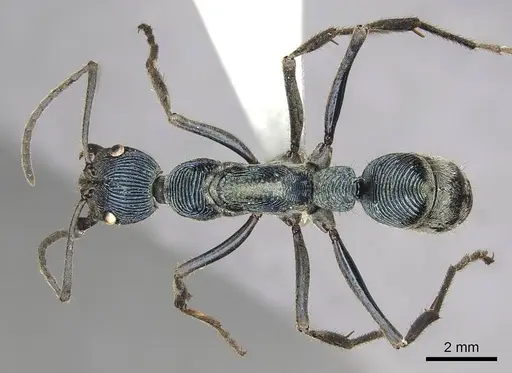
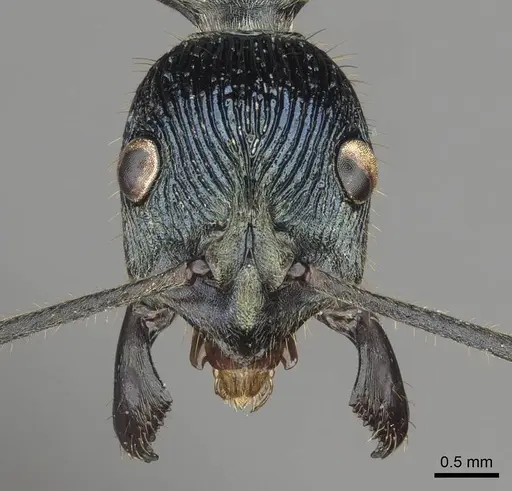
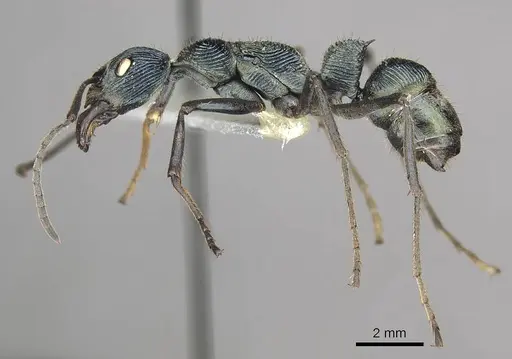
Diacamma viridipurpureum is a large ant species native to the Philippines, particularly Luzon Island. Workers measure 12.8-13.8mm and display a metallic shimmer with dark greenish and purple colors dominating the body . The head, mesosoma, and gaster are heavily striated (grooved), and the mandibles, antennae, and legs are dark brown to black . This species has a robust petiole (the narrow 'waist' segment) with short spines and a distinctive subpetiolar process with long oblique hairs . Found in the Luzon region including Pampanga, Manila, Rizal, and Laguna provinces, these ants inhabit elevations from around 250m to nearly 800m in mountainous areas like Mount Banahaw . As a Ponerine ant, they have a functional stinger for defense and prey capture.
Quick Summary
- Difficulty: Medium
- Origin & Habitat: Philippines (Luzon Island), tropical forest environments, typically nesting under stones or in soil at elevations from 250-800m [1][2]
- Colony Type: Queenless, no distinct queen caste, reproduction by gamergates (reproductive workers).
- Queen Status: Queenless Colony
- Size & Growth:
- Queen: Queenless species, reproduction by gamergate (reproductive worker) instead of a distinct queen caste.
- Worker: 12.8-13.8mm [1]
- Colony: Unknown, no colony size data exists for this species. Related Diacamma species typically form colonies of several hundred workers.
- Growth: Unknown, no development data available for this species
- Development: Unconfirmed, no direct measurements exist. Based on typical Ponerine development, estimate 6-10 weeks at tropical temperatures (25-28°C). (Development timeline is unconfirmed. Ponerine ants generally develop slower than many common pet ants, possibly taking 2-3 months from egg to first worker.)
- Antkeeping:
- Temperature: Likely 24-28°C based on tropical Philippine habitat. Provide a warm area in the nest around 26°C with a slight gradient.
- Humidity: Moderate to high, tropical forest species. Keep nest substrate moist but not waterlogged, with some drier areas available.
- Diapause: Unlikely, being a tropical species from the Philippines, diapause is probably not required. However, some seasonal slowdown may occur during cooler months.
- Nesting: Natural nesting involves underground chambers or nests under stones. In captivity, a naturalistic setup with soil or a Y-tong (aerated autoclaved concrete) or plaster nest works well. Provide damp substrate and minimal disturbance during founding.
- Behavior: Temperament is likely defensive, Ponerine ants are typically more aggressive and possess functional stingers. Workers are likely to be active foragers, hunting small invertebrates. Escape risk is moderate due to their large size, but standard barrier methods should suffice. The presence of gamergates (reproductive workers) in the related genus suggests complex social dynamics where workers may compete for reproductive status, though this is unconfirmed for this species.
- Common Issues: limited availability, this species is rarely available in the antkeeping hobby, tropical temperature requirements requiring stable heating, defensive behavior and stinger making handling riskier than with typical ants, slow development may frustrate beginners expecting fast colony growth, wild-caught colonies may be difficult to establish in captivity
Appearance and Identification
Diacamma viridipurpureum is one of the larger ant species you'll encounter in the hobby, with workers measuring 12.8-13.8mm [1]. Their bodies shimmer with dark greenish and purple metallic hues [1]. The entire body is heavily grooved (striated) from the cheeks (genae) to the first gaster segment, giving a textured appearance [1]. Mandibles, antennae, and legs are dark brown to black, contrasting with the iridescent body. The petiole (the narrow waist segment) is notably stout with short spines, and there is a distinctive patch of long oblique hairs on the underside. These are large, robust ants.
Natural Distribution and Habitat
This species is endemic to the Philippines, specifically Luzon Island, where it is found in several provinces including Pampanga, Manila, Rizal, and Laguna [1]. The type locality is Antipolo in Rizal Province, though this area is now heavily populated adjacent to metropolitan Manila, making additional field collection difficult [1]. Additional specimens have been collected from higher elevations (643-788m) on the northern slopes of Mount Banahaw in Quezon and Laguna provinces [2]. In their natural habitat, they likely nest in soil or under stones in forested areas, typical of Ponerine ants. The tropical climate of their range means they experience warm temperatures year-round with moderate to high humidity.
Social Structure and Reproduction
While specific colony structure for Diacamma viridipurpureum has not been documented, the Diacamma genus as a whole is known for having gamergates, workers that can become reproductive and lay eggs, functioning as replacement queens. This creates a more complex social hierarchy than in typical ants
Report an Issue
The current care sheet is based fully on literature. See inconsistencies, or something that's incorrect? Please , it will be resolved after review from an admin. Contributing to the blogs tab also helps providing information, to make us be able to further improve the caresheets. Thank you for your support!
References

This caresheet is licensed under CC BY-SA 4.0 .
Community Blogs
Literature
Loading distribution map...Loading products...