
Cyphomyrmex vorticis
- Sci. Name
- Cyphomyrmex vorticis
- Tribe
- Attini
- Subfamily
- Myrmicinae
- Author
- Weber, 1940
- Distribution
- Found in 5 countries
Introduction
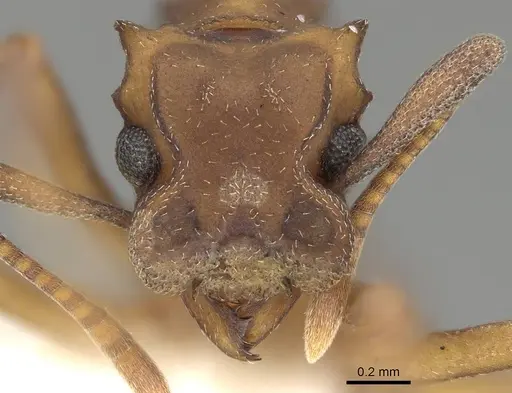
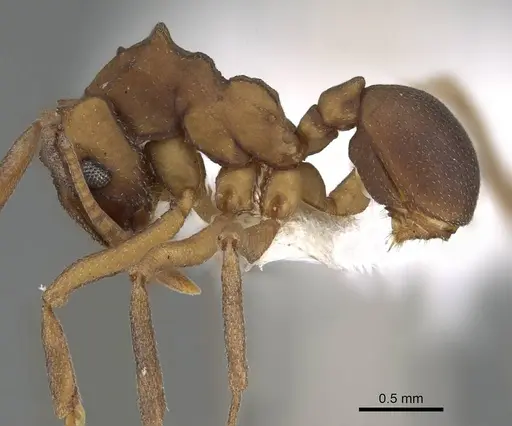
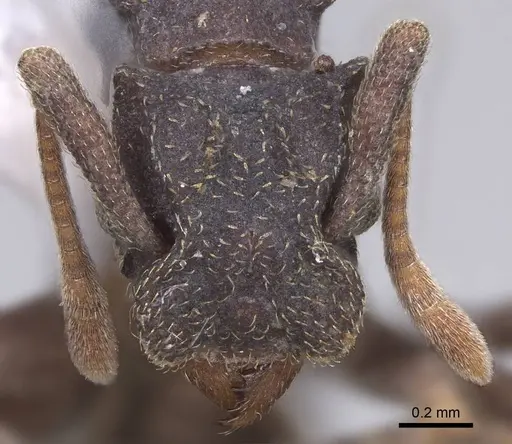
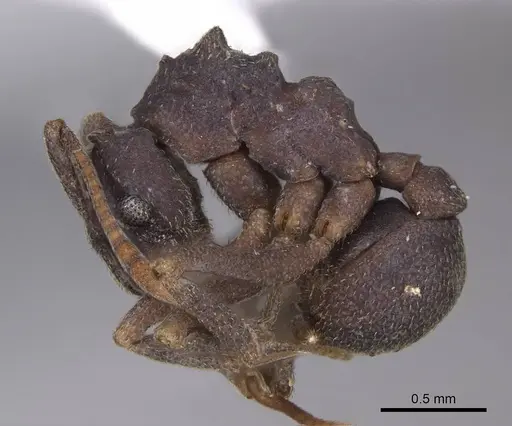
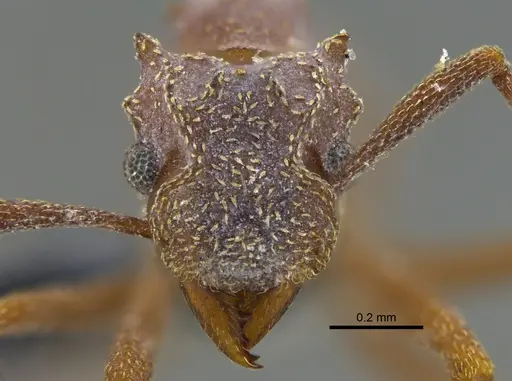
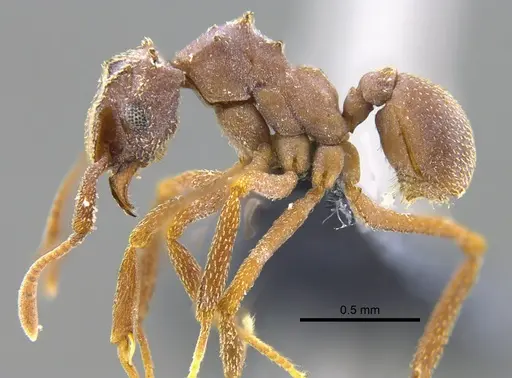
Cyphomyrmex vorticis is a small Neotropical fungus-growing ant in the tribe Attini. Workers measure approximately 3.8mm in total length and are medium brown with darker ferruginous hues on the head, antennae, legs, and gaster. The integument is opaque and densely punctate-granulate. This species belongs to the rimosus group within Cyphomyrmex, characterized by broadly expanded frontal lobes and distinctive head tubercles and carinae. C. vorticis is known from Bolivia, Brazil, Colombia, Costa Rica, Ecuador, and Venezuela, typically found in lowland to mid-elevation tropical forests [AntWiki]. Almost nothing is known about the specific biology of this species. Queens and males remain undescribed, and no observations exist about colony structure, founding behavior, or fungus cultivation details. What we know comes from museum specimens and occasional ecological surveys that capture workers in leaf litter samples [AntWiki].
Quick Summary
- Difficulty: Expert
- Origin & Habitat: Neotropical region including Bolivia, Brazil, Colombia, Costa Rica, Ecuador, and Venezuela. Found in lowland to mid-elevation tropical forests, typically in leaf litter at elevations around 500-1500m [3][1][4].
- Colony Type: Unknown, no data exists on colony structure or queen number.
- Size & Growth:
- Queen: Undescribed, queens have not been scientifically described [2]
- Worker: Approximately 3.8mm total length [2]
- Colony: Unknown, likely small colonies based on genus patterns
- Growth: Unknown
- Development: Unknown, no species-specific data exists (Development timeline is unstudied for this species.)
- Antkeeping:
- Temperature: Keep warm, roughly 24-28°C, typical for Neotropical lowland species.
- Humidity: High humidity required, damp tropical forest floor conditions. Keep the nest substrate consistently moist but not waterlogged.
- Diapause: Unlikely, as a Neotropical species from tropical forests, they probably do not require a diapause period.
- Nesting: In nature they likely nest in soil or rotting wood within leaf litter. A naturalistic setup with moist substrate works best.
- Behavior: No specific behavioral observations exist for this species. As a Cyphomyrmex, they are likely relatively docile and not aggressive. They are cryptic leaf-litter ants that probably forage slowly within their territory.
- Common Issues: no species-specific biological data exists, all care advice is inferred from genus patterns, fungus cultivation is complex and fundamentally different from standard ant keeping, small colony sizes mean colonies are fragile and slow to recover, wild-caught colonies may have parasites or diseases with no documented treatment, humidity must be carefully balanced, too dry kills the fungus, too wet causes mold, difficulty is set to expert because this is a poorly understood species with no established husbandry protocols
Understanding Fungus-Growing Ants
Cyphomyrmex vorticis belongs to the Attini tribe, a group of ants that evolved a unique agricultural symbiosis. Unlike most ants that feed on sugar from honeydew or protein from prey, Attini ants cultivate specialized fungi in underground gardens. The ants feed their fungus bits of plant material, and the fungus becomes their primary food source. This makes keeping Cyphomyrmex fundamentally different from keeping typical ants, you are essentially keeping two organisms that depend on each other. If the fungus dies, the colony starves. Fungus-growing ants are considered advanced species to keep because you need to understand both ant husbandry and basic fungus cultivation principles. [2]
Distribution and Habitat
This species is known from multiple countries in northern South America. Specimens have been recorded from Bolivia, Brazil, Colombia, Costa Rica, Ecuador, and Venezuela. In Colombia, it has been found in Antioquia, Chocó, Cauca, Putumayo, Quindío, and Valle del Cauca departments [4][1]. In the Brazilian Atlantic Forest region, it was recorded in 3 of 6 forest fragments sampled, with only 4 individuals collected across all samples, indicating it is rare and cryptic [5]. In Antioquia, Colombia, it was found at 515m elevation in a lowland forest site [3]. This species appears to be a rare, forest-dwelling species that is difficult to detect in standard surveys.
Housing and Nest Setup
For Cyphomyrmex vorticis, a naturalistic setup is essential. These ants live in leaf litter and soil in nature, so a terrarium-style formicarium with several centimeters of moist substrate works best. The substrate should hold moisture well without becoming waterlogged, a mix of soil and rotting wood fragments mimics their natural environment. Because they are small and cryptic, they do not need large spaces. A nest area of roughly 10x10cm with surrounding foraging area is sufficient. Keep the entire setup humid and provide a water reservoir. Avoid test tube setups, they do not allow for the substrate conditions this species needs. [2]
Feeding and the Fungus Garden
This is the most critical and challenging aspect of keeping C. vorticis. Instead of feeding the ants directly, you must cultivate their fungus garden. Provide small pieces of plant material, dried leaves, flower petals, small twigs, or grass blades work well. Place these near the nest area where the ants can transport them to their fungus chamber. The ants will process this material and the fungus will grow on it. Never feed standard ant foods like honey water or insects directly, this can harm or kill the fungus. The colony will first establish a small fungus garden before expanding it. Expect slow progress initially. If you see white fungal growth on the plant material the ants are tending, you are on the right track. [2]
Temperature and Humidity
As a Neotropical species from lowland forests, C. vorticis needs warm and humid conditions. Keep temperatures in the 24-28°C range, use a heating cable or mat if your room is cooler. Humidity is critical: the substrate should feel consistently moist but never soggy. Mist occasionally but rely on a water reservoir to maintain stable humidity. The fungus will die if conditions become too dry. At the same time, poor ventilation leading to stagnant, overly wet conditions causes mold that can destroy the fungus garden. Aim for damp but with some air movement. [2]
Colony Development and Expectations
Given the complete lack of biological data for this species, you must have realistic expectations. Colony growth will be slow, fungus-growing ants do not produce workers as quickly as species like Lasius or Camponotus. A founding queen may take months to produce her first workers, and the colony may remain small for its first year or more. Do not overfeed, excess plant material that decays before the fungus can colonize it causes mold problems. Patience is essential. If your colony produces workers that tend a small white fungal mass, you are succeeding. [2]
Frequently Asked Questions
How do I keep Cyphomyrmex vorticis ants?
This is an advanced species requiring specialized care. You need a naturalistic setup with moist substrate, temperatures around 24-28°C, and most importantly, you must cultivate a fungus garden by providing small plant material for the ants to tend. Standard ant keeping approaches will fail. [2]
What do Cyphomyrmex vorticis eat?
They do not eat conventional ant food. As fungus-growing ants, they cultivate fungi that they feed with plant material. Provide dried leaves, flower petals, small twigs, or grass blades, the ants will use these to grow their fungus garden, which is their actual food source. [2]
How long does it take for first workers to appear?
Unknown for this specific species. No data exists on development timeline. Expect the process to be slow, fungus growers typically take longer than typical ants to produce first workers. [2]
Are Cyphomyrmex vorticis good for beginners?
No. This species is not recommended for beginners. Almost no species-specific biological data exists, and fungus-growing ants require understanding a completely different husbandry model than typical ants. The fungus garden can easily fail, killing the colony. [2]
Can I keep multiple queens together?
Unknown, no data exists on colony structure for this species. Do not attempt combining unrelated queens without documented evidence this works. [2]
What size colony does Cyphomyrmex vorticis reach?
Unknown, no colony size data exists. Based on genus patterns, they likely form small colonies. They are not large colony species. [2]
Do they need hibernation?
Unlikely, as a Neotropical species from tropical forests, they probably do not require a diapause period. However, they may show reduced activity during cooler seasons in captivity. [2]
Why are my ants dying?
Common causes include: fungus garden collapse from too dry, too wet, or mold, incorrect temperature, poor ventilation, or stress from disturbance. Fungus growers are extremely sensitive to environmental conditions. [2]
When should I move them to a formicarium?
Do not move them from a naturalistic setup once established. If starting from a wild-caught colony, set them up directly in a naturalistic terrarium-style enclosure with appropriate substrate from the beginning. [2]
Report an Issue
The current care sheet is based fully on literature. See inconsistencies, or something that's incorrect? Please , it will be resolved after review from an admin. Contributing to the blogs tab also helps providing information, to make us be able to further improve the caresheets. Thank you for your support!
References

This caresheet is licensed under CC BY-SA 4.0 .
Community Blogs
CASENT0281768
View on AntWeb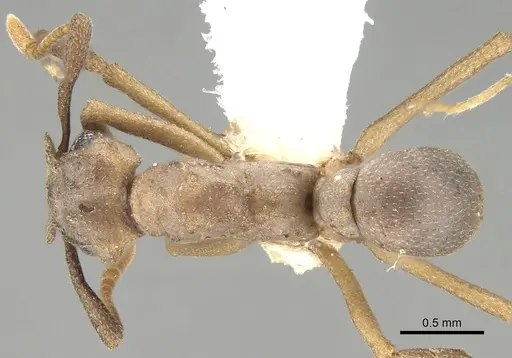
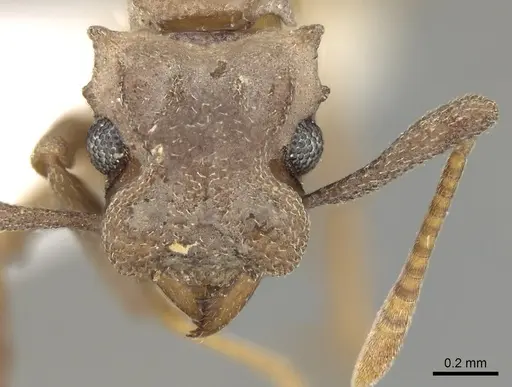
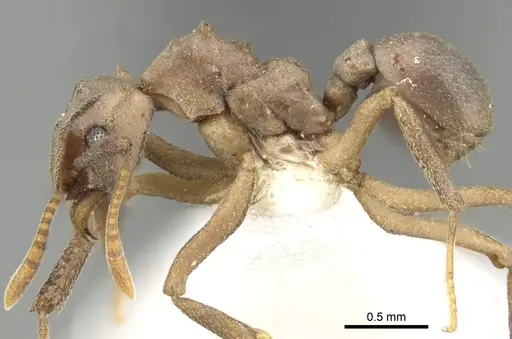
CASENT0922145
View on AntWeb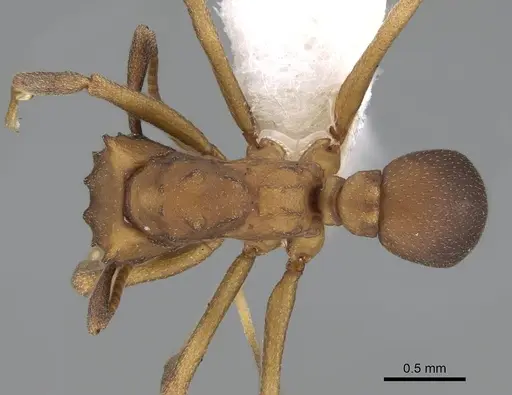
CASENT0923107
View on AntWeb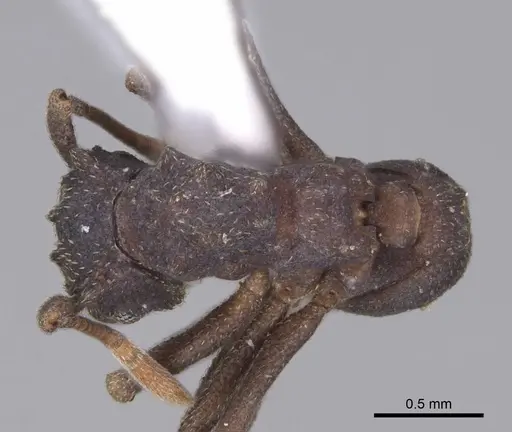
IAVH-E-263212
View on AntWeb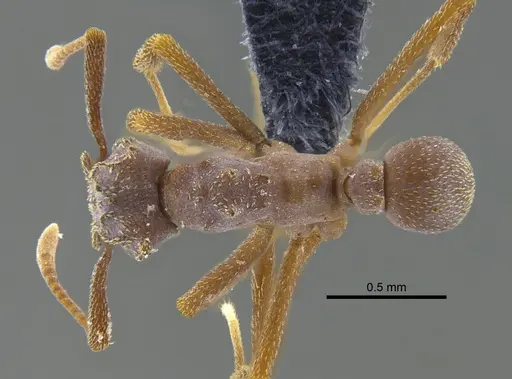
Literature
Loading distribution map...Loading products...