
Cylindromyrmex striatus
- Sci. Name
- Cylindromyrmex striatus
- Subfamily
- Dorylinae
- Author
- Mayr, 1870
- Distribution
- Found in 3 countries
Introduction
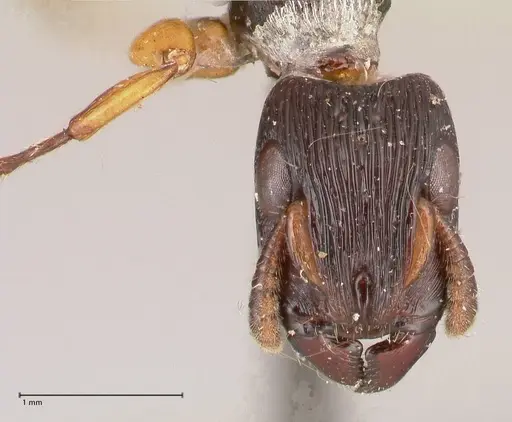
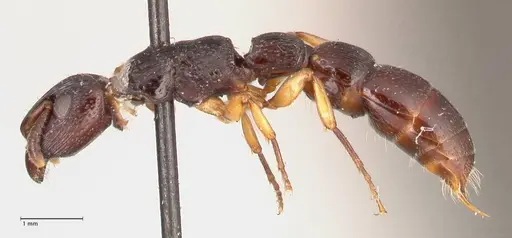
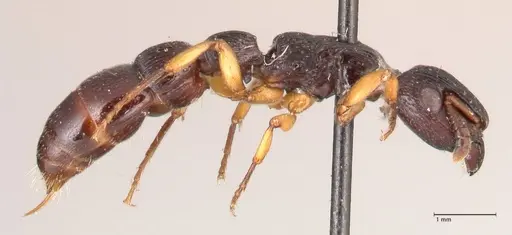
Cylindromyrmex striatus is a rare predatory ant from the Dorylinae subfamily (army ant relatives), found only in northern South America. Workers measure 6.2-6.6mm and are black with a distinctive striated (grooved) pattern on their head and body. Queens are larger at 7.5-7.7mm. This species is a specialized termite predator - it nests directly inside termite mounds (Nasutitermes species) and hunts termites as its primary food source. They are closely related to army ants but are more stationary, nesting within termite colonies rather than nomadic. This is one of the rarest ants in the hobby with no documented captive colonies.
Quick Summary
- Difficulty: Expert
- Origin & Habitat: Northern South America (Brazil, French Guiana, Guyana, Suriname, Venezuela, Peru). Found in tropical lowland forests, specifically inside nests of Nasutitermes termites [1][2].
- Colony Type: Unknown colony structure. Only a handful of specimens have ever been collected. Likely single-queen based on related Dorylinae patterns, but unconfirmed.
- Size & Growth:
- Queen: 7.5-7.7mm [1]
- Worker: 6.2-6.6mm [1]
- Colony: Unknown, only a few dozen specimens have ever been collected in the wild [1]
- Growth: Unknown
- Development: Unknown, no captive breeding has ever been documented (This species has never been kept in captivity. Development timeline cannot be estimated from related species due to unique termite-predatory lifestyle.)
- Antkeeping:
- Temperature: Unknown, likely 24-28°C based on tropical rainforest origin. Recommend starting in the mid-70s°F (24-26°C) and monitoring colony activity.
- Humidity: Unknown, in the wild they live inside termite mounds which maintain high humidity. Recommend 70-80% humidity using moist substrate.
- Diapause: Unknown, tropical species may not require hibernation, but no biological data exists.
- Nesting: Natural nesting: inside termite mounds (Nasutitermes sp.). Captive options: This is extremely challenging. A naturalistic setup with live termite colony or termite nest material would be required. Most antkeepers cannot provide this.
- Behavior: Specialized termite predator. Workers hunt and kill termites individually rather than in swarms like true army ants. They are rarely seen above ground. Escape risk is moderate, workers are 6mm so standard formicarium barriers work. Temperament is likely defensive when guarding nest. No documented sting potency available.
- Common Issues: This species has never been documented in the antkeeping hobby, there is no care information, They require live termites as primary food source, which is extremely difficult to provide, They nest inside live termite colonies, replicating this in captivity is nearly impossible, Extremely rare, virtually no wild colonies have ever been collected for study, Even if you acquire a colony, the specialized predatory lifestyle makes long-term survival unlikely
Species Overview and Rarity
Cylindromyrmex striatus is one of the rarest ant species in the world. Since its description in 1870,only a handful of specimens have ever been collected from the wild. The entire genus Cylindromyrmex contains only about 10 species, all of which are specialized predators. This species is known from only a few locations in northern South America: Suriname, French Guiana, Brazil (Manaus and Pará regions), Guyana, Venezuela, and Peru. The reason for their rarity is their lifestyle, they live inside termite colonies and are rarely seen outside. The few specimens that exist in museum collections were almost all collected from within termite nests [1][2].
Natural History and Termite Predation
This species is a specialized termite predator. In the wild, Cylindromyrmex striatus colonies live directly inside the nests of Nasutitermes termites (specifically N. sp. and N. surinamensis). Unlike true army ants that raid in large swarms, this species appears to be a more stationary predator that hunts termites individually within the host colony. This is a unique ecological niche, they are essentially 'guests' in the termite mound that also prey on the termites themselves. The relationship is not fully parasitic (they don't rely on the termites for shelter alone) but rather predatory with a specialized hunting strategy [1][3][4].
Why This Species Is Not Suitable for Most Antkeepers
This caresheet must be very clear: Cylindromyrmex striatus should NOT be kept by anyone except professional researchers with specific facilities. There are several critical reasons. First, they require live termites as their primary food source, not insects in general, but specifically Nasutitermes termites which must be cultured or continuously supplied. Second, they naturally nest inside live termite colonies, replicating this in captivity would require maintaining both the ant colony AND a live termite colony in close association. Third, no one has ever documented successfully keeping this species in captivity. The few hobbyists who have obtained specimens have failed to maintain them. Fourth, they are virtually unavailable, no dealers sell them because they cannot be cultivated. If you somehow obtain specimens, expect them to die within weeks without proper termite prey [3][5].
Taxonomy and Classification
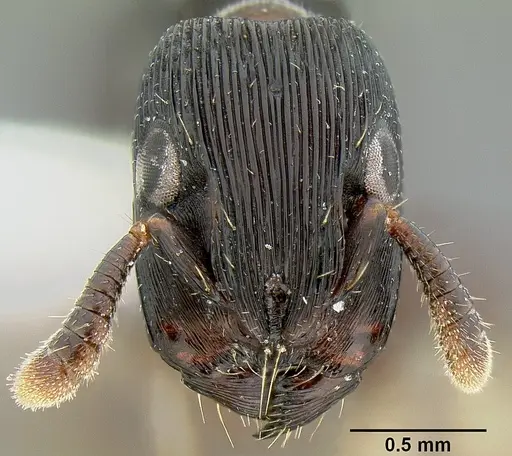
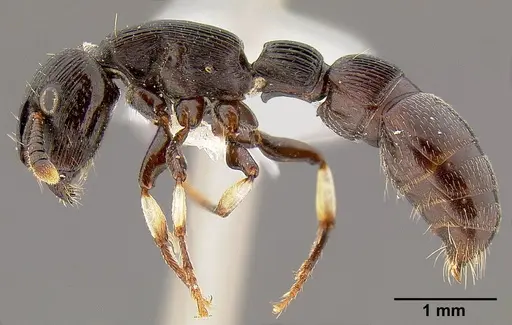
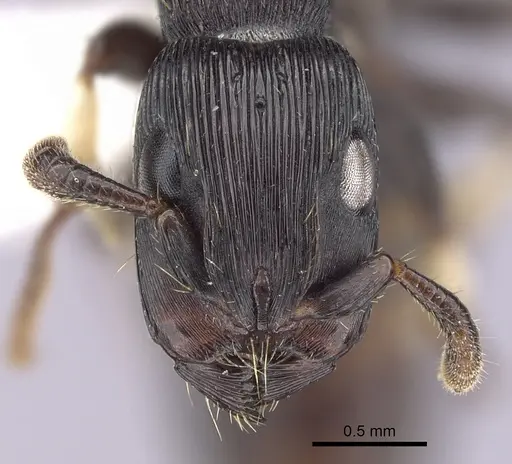
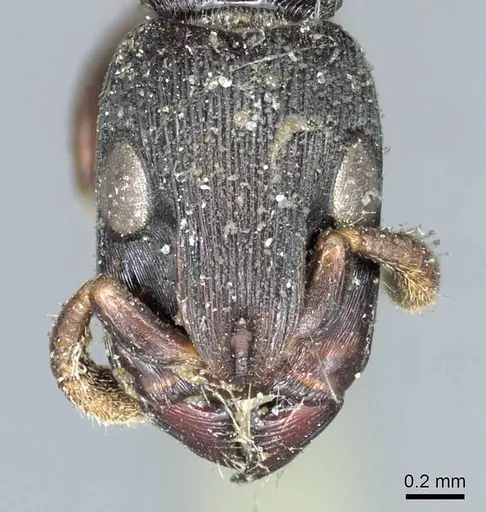
Cylindromyrmex striatus belongs to the subfamily Dorylinae, which includes army ants and their relatives. Within this group, it is placed in the tribe Cylindromyrmecini. Phylogenetic studies show it is the sister species to Cylindromyrmex whymperi, which has allopatric (non-overlapping) distribution. Both species are specialized termite predators. The genus Cylindromyrmex is exclusively New World (Western Hemisphere), found only in Central and South America. Workers can be identified by their striated (grooved) body sculpture, with the posterior third of the head having more than 34 striae [1][5][4].
Physical Description
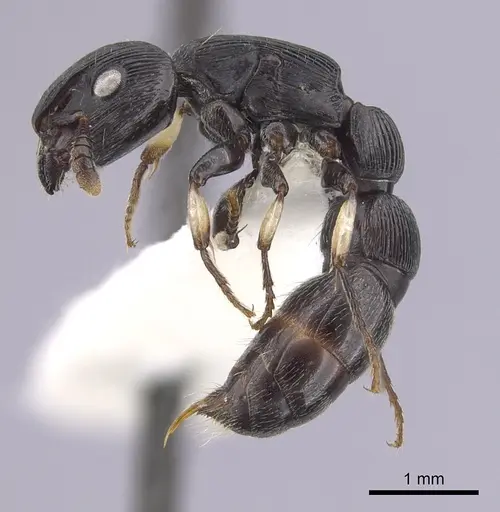
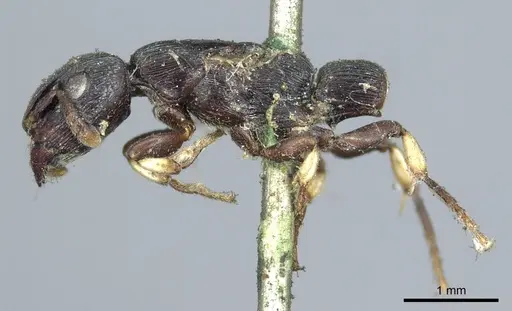
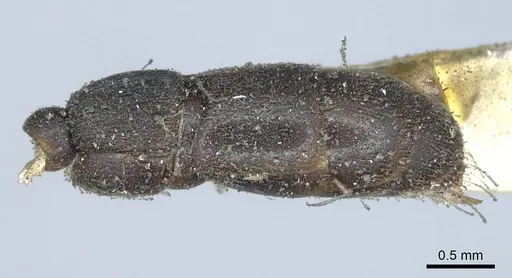
Workers measure 6.18-6.56mm in total length, making them a medium-sized ant. Their body is black and shining with a distinctive striated (grooved) sculpture pattern on the head, mesosoma, and petiole. The head is slightly longer than broad with large convex eyes positioned slightly behind the midline. The scapes (antenna segments) are short and do not reach the eyes. Legs are relatively short, and the tibiae are yellowish with brown distal borders. Queens are larger at 7.50-7.72mm with a broader mesosoma and well-developed ocelli. Males measure about 7.74mm [1].
Frequently Asked Questions
Can I keep Cylindromyrmex striatus as a pet ant?
No. This species should not be kept by hobbyists. They require live termite prey and nesting inside termite colonies, which is impossible to replicate in captivity. No documented captive colonies exist. This is a species for professional researchers only.
Where can I buy Cylindromyrmex striatus?
You cannot. This species is not available in the antkeeping hobby. They have never been successfully kept in captivity, and no dealers sell them. The few specimens that exist are in museum collections.
What do Cylindromyrmex striatus eat?
They are specialized termite predators. In the wild, they hunt and consume Nasutitermes termites almost exclusively. They would not accept standard ant foods like sugar water, mealworms, or honey. Providing appropriate live termite prey is essential for survival, and this is virtually impossible for hobbyists to maintain [3][1].
How do they nest?
In the wild, they nest directly inside the mounds of Nasutitermes termites. They are not free-nesting ants like most species. The colony lives within the termite nest structure itself, hunting termites within the colony [1].
What is their colony size?
Unknown. Only a handful of specimens have ever been collected from the wild. Based on related species and their specialized predatory lifestyle, colonies are likely small, probably fewer than 100 workers. True army ant colonies can reach thousands, but Cylindromyrmex are more stationary predators [1].
Do they need hibernation or diapause?
Unknown. As a tropical species from northern South America, they likely do not require a true hibernation period. However, no biological studies exist on their seasonal behavior.
Why are they so rare?
They live inside termite colonies and are rarely seen above ground. Combined with their limited geographic distribution to northern South America and the fact that they nest inside another organism (making them hard to find), this makes them one of the rarest ant species to study. Only a handful of specimens exist in museum collections worldwide [1].
Report an Issue
The current care sheet is based fully on literature. See inconsistencies, or something that's incorrect? Please , it will be resolved after review from an admin. Contributing to the blogs tab also helps providing information, to make us be able to further improve the caresheets. Thank you for your support!
References

This caresheet is licensed under CC BY-SA 4.0 .
Community Blogs
CASENT0106074
View on AntWeb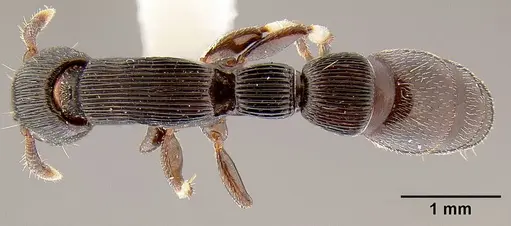
CASENT0249336
View on AntWeb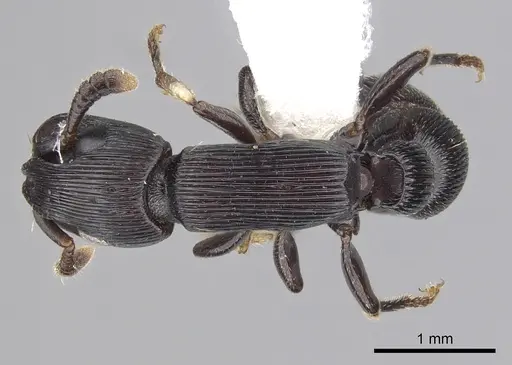
CASENT0915852
View on AntWeb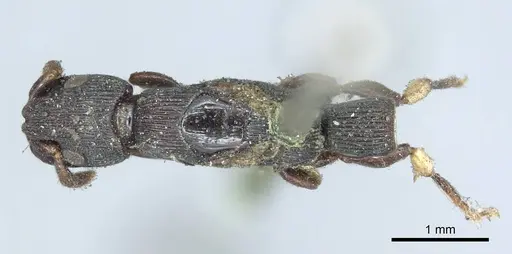
CASENT0915853
View on AntWeb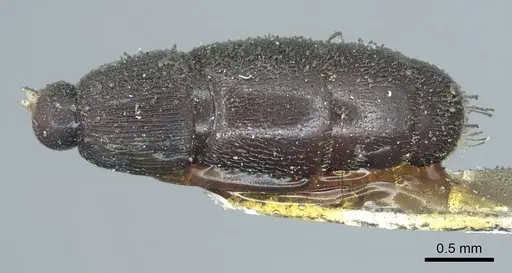
FOCOL0813
View on AntWeb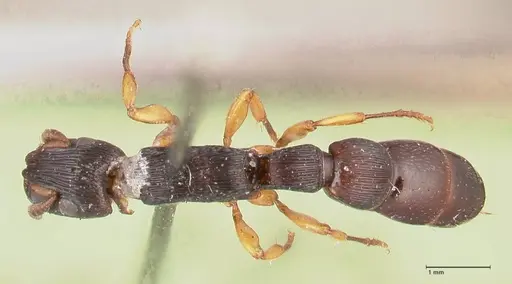
Literature
Loading distribution map...Loading products...