
Crematogaster telolafy
- Sci. Name
- Crematogaster telolafy
- Subgenus
- Orthocrema
- Tribe
- Crematogastrini
- Subfamily
- Myrmicinae
- Author
- Blaimer, 2012
- Distribution
- Found in 1 countries
Introduction
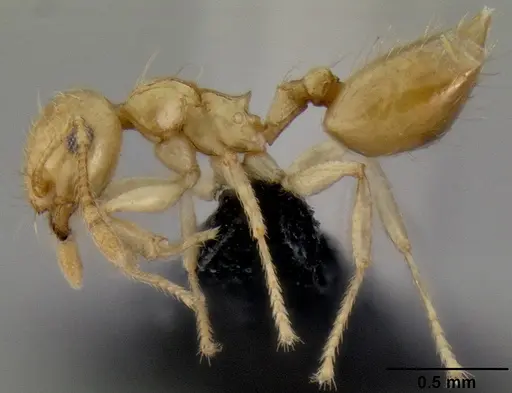
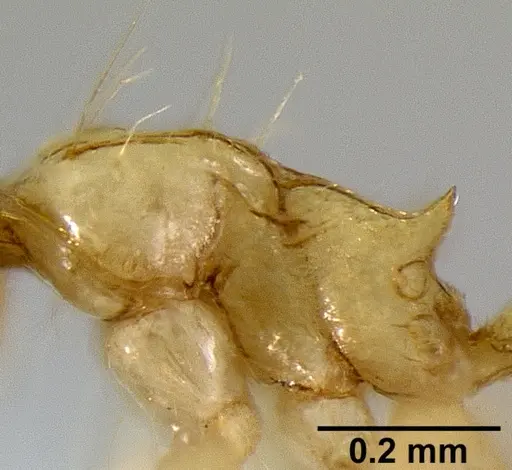
Crematogaster telolafy is a tiny ant species native to Madagascar, belonging to the Orthocrema subgenus within the Crematogaster genus, commonly known as acrobat ants . Workers are pale to medium yellow with distinctive triangular propodeal spines - the species name 'telolafy' means 'triangle' in Malagasy, referring to this feature . This species is part of the C. madecassa-group and is found mainly in the dry and spiny forests of southern and western Madagascar at low elevations, though they've also been recorded in western rainforest remnants and gallery forest areas . Queens remain unknown in this species, making captive breeding impossible as no wild colonies have ever been collected .
Quick Summary
- Difficulty: Expert
- Origin & Habitat: Madagascar, dry and spiny forests of southern and western regions at low elevations, with some records from western rainforest remnants and gallery forest [2]
- Colony Type: Unknown, only worker caste has been described, queen and male are unknown [2]
- Size & Growth:
- Queen: Unknown, queens have not been described [2]
- Worker: ~2-3mm inferred from Crematogaster genus, size data unavailable for this specific species
- Colony: Unknown, no colony collections have been made [2]
- Growth: Unknown
- Development: Unknown, no development data exists for this species (No development data available)
- Antkeeping:
- Temperature: Based on Madagascar dry forest habitat: keep around 24-28°C with a gradient. No specific data exists for this species.
- Humidity: Based on dry forest habitat: moderate humidity around 50-70%. Allow some drying between waterings.
- Diapause: Unknown, no data on overwintering requirements. Madagascar species from low elevations may have minimal diapause needs.
- Nesting: Based on collection data: found in dead tree stumps and rotting logs in spiny forest and tropical dry forest [2]. A Y-tong or plaster nest with narrow chambers scaled to their tiny size would work. Provide access to dry nesting areas.
- Behavior: Crematogaster are known for their acrobat behavior, workers raise their abdomen over their head when threatened, and can bite and spray formic acid. This species is very small and unlikely to penetrate human skin effectively. They are likely active foragers. Escape prevention is critical due to their tiny size, use fine mesh barriers.
- Common Issues: queen unknown means wild colonies cannot be found for captive establishment, very small size makes escape prevention challenging, requires fine mesh, no captive husbandry information exists, all care is inferred from genus patterns, no colony data exists, colony size and growth rate are unknown, humidity control is important, balance between dry forest preferences and nest needs
Species Discovery and Status
Crematogaster telolafy was described in 2012 by Bonnie Blaimer, making it one of the more recently discovered ant species in the Madagascar region [2]. The species is known only from worker specimens collected through various sampling methods including litter sifting, malaise traps, pitfall traps, pan traps, and beating low vegetation [2]. No colony collections have ever been made, meaning there is no information about queen morphology, male morphology, colony size, or any aspect of their biology [2]. This makes C. telolafy one of the least known ant species in captivity, there are no established husbandry protocols and no source for wild-caught colonies. The species name 'telolafy' comes from the Malagasy word for triangle, referring to the distinctive triangular form of their propodeal spines [2].
Identification and Morphology
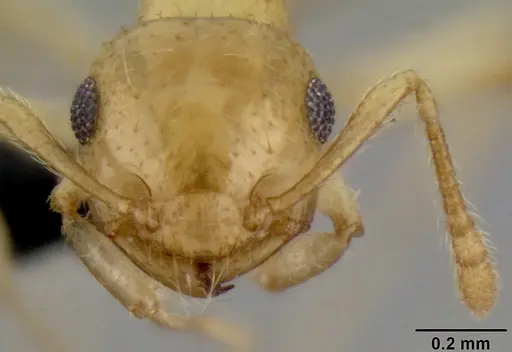
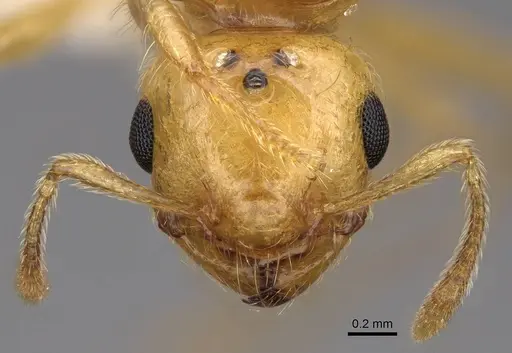
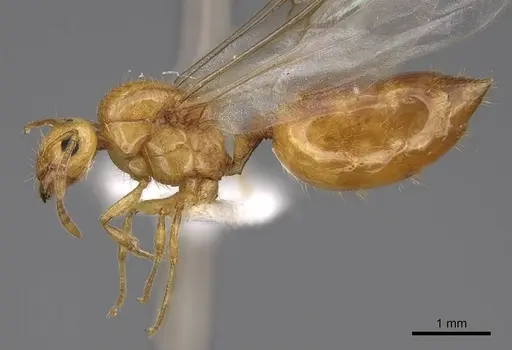
Workers of Crematogaster telolafy are very small, pale to medium yellow in color, making them difficult to spot against the sandy soils of their native dry forest habitat [2]. The most distinctive feature is the pair of vertical carinae (ridges) on the clypeus, this feature is shared only with the related species C. madecassa [2]. Their propodeal spines are short and triangular, distinctly curved upward in side view [2]. The antennal scapes are relatively short, reaching or barely surpassing the posterior margin of the head [2]. Workers typically have 6 long erect setae on the promesonotum, 2 humeral setae and 2 each at the anterior and posterior ends of the mesonotal carinae [2]. Queens have not been described but are expected to be morphologically similar to C. madecassa queens [2].
Natural Habitat and Distribution
This species is endemic to Madagascar, found primarily in the dry and spiny forests of the southern and western regions at low elevations [2]. The spiny forest ecosystem is unique to southern Madagascar, characterized by drought-resistant plants including many species with spines. They've also been recorded from remnant patches of western rainforest such as Réserve Ambohijanahary, and from gallery forest in the Isalo region [2]. This distribution pattern suggests some flexibility in habitat tolerance, though they clearly prefer drier conditions. They occur at low elevations, typically below 800 meters [2]. The species is allopatric with its closest relative C. madecassa (meaning they don't overlap in range) except for a narrow zone of sympatry or parapatry in the Andohahela region [2]. Among the species in this group, C. telolafy occurs in sympatry only with C. rasoherinae [2].
Keeping Crematogaster telolafy in Captivity
Since no captive colonies exist and no biological data has been collected, all care recommendations must be inferred from genus patterns and the species' habitat. This makes C. telolafy an expert-level species suitable only for advanced antkeepers who understand the risks of keeping a species with no established husbandry protocols. For nesting, provide a small nest with chambers scaled to their tiny size, a Y-tong nest or plaster nest with narrow passages works well. Based on their dry forest habitat, keep humidity moderate (50-70%) with some drying time between waterings. Temperature should be warm, around 24-28°C, which can be achieved with a heating cable on one side of the nest creating a gradient. Feed typical Crematogaster fare: sugar water or honey as a constant energy source, and small protein sources like fruit flies or other tiny insects. Escape prevention is critical, their very small size means they can squeeze through standard barrier setups. Use fine mesh and ensure all connections are sealed. The biggest challenge is obtaining a colony, since queens are unknown and no wild colonies have been collected, this species remains essentially unavailable to hobbyists.
Related Species and Research Context
Crematogaster telolafy belongs to the C. madecassa-species group within the Orthocrema subgenus [2]. The Orthocrema clade is distributed primarily in the Malagasy region (Madagascar and surrounding islands), with some species in Africa and Asia [1]. The closest relative is Crematogaster madecassa, which shares the distinctive feature of two vertical carinae on the clypeus [2]. However, C. telolafy can be distinguished by its shorter, more triangular propodeal spines and shorter antennal scapes [2]. Understanding the biology of related species can provide some inference for care, other Orthocrema species are typically ground-nesting in forest habitats, but each species can have unique requirements. Treat C. telolafy as a completely unknown species until documented otherwise. The fact that no colonies have ever been collected despite multiple sampling efforts suggests either very small colony sizes, cryptic nesting behavior, or limited distribution [2].
Frequently Asked Questions
Can I keep Crematogaster telolafy as a pet ant?
No, this species is essentially unavailable to antkeepers. Queens have never been described and no wild colonies have ever been collected. Without a source for founding colonies or established husbandry protocols, keeping this species is not currently possible.
What do Crematogaster telolafy eat?
No feeding observations exist for this specific species. Based on typical Crematogaster diet, they likely consume honeydew from aphids and scale insects, plus small insects for protein. In captivity, offer sugar water or honey as a constant energy source and small prey items like fruit flies.
How big do Crematogaster telolafy colonies get?
Unknown, no colony data exists for this species. Based on their very small worker size and typical patterns for tiny forest ants, colonies are likely small, but exact numbers are unconfirmed.
Do Crematogaster telolafy ants sting?
Crematogaster ants can bite and spray formic acid, but this species is so small that its mandibles cannot effectively penetrate human skin. They may still attempt to bite, but it would not be painful.
What temperature do Crematogaster telolafy need?
No specific data exists. Based on their Madagascar dry forest habitat, aim for warm conditions around 24-28°C. Use a heating cable on part of the nest to create a gradient so ants can choose their preferred temperature.
Are Crematogaster telolafy good for beginners?
No, this species is not recommended for any level of keeper. No captive colonies exist, queens are unknown to science, and there is no established care information. This is purely a species for advanced researchers, not hobbyists.
Where does Crematogaster telolafy live in the wild?
Only in Madagascar, specifically in the dry and spiny forests of southern and western regions at low elevations. They've also been found in western rainforest remnants and gallery forest areas.
How do I identify Crematogaster telolafy?
Workers are very small and pale to medium yellow. Key identifying features are the two vertical carinae on the clypeus and short triangular propodeal spines that curve upward. They have 6 long erect setae on the promesonotum.
Do Crematogaster telolafy need hibernation?
Unknown, no data exists on overwintering requirements. As a Madagascar species from relatively warm regions, they likely have minimal or no diapause requirements, though a slight cool period may be beneficial.
Can I find Crematogaster telolafy in the wild to start a colony?
Extremely unlikely, no wild colonies have ever been collected despite extensive ant surveys in Madagascar. The species is known only from a handful of worker specimens collected via specialized sampling methods. Even professional myrmecologists have not located colonies.
What is the scientific name origin of Crematogaster telolafy?
The species name 'telolafy' comes from the Malagasy word for 'triangle', referring to the distinctive triangular shape of their propodeal spines. It was described by Bonnie Blaimer in 2012.
Why is Crematogaster telolafy called the acrobat ant?
All Crematogaster ants are called acrobat ants because of their behavior when threatened, they raise their abdomen over their head like an acrobat balancing on their hands. This allows them to aim their formic acid spray at predators.
Report an Issue
The current care sheet is based fully on literature. See inconsistencies, or something that's incorrect? Please , it will be resolved after review from an admin. Contributing to the blogs tab also helps providing information, to make us be able to further improve the caresheets. Thank you for your support!
References

This caresheet is licensed under CC BY-SA 4.0 .
Community Blogs
CASENT0032779
View on AntWeb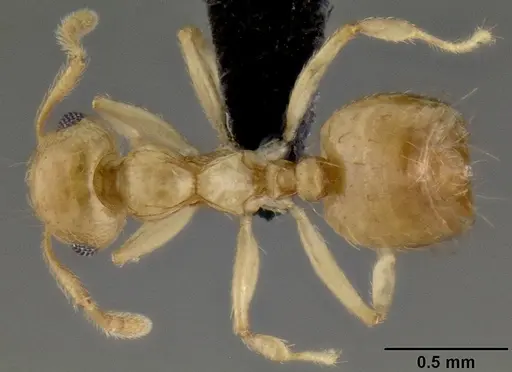
CASENT0077869
View on AntWeb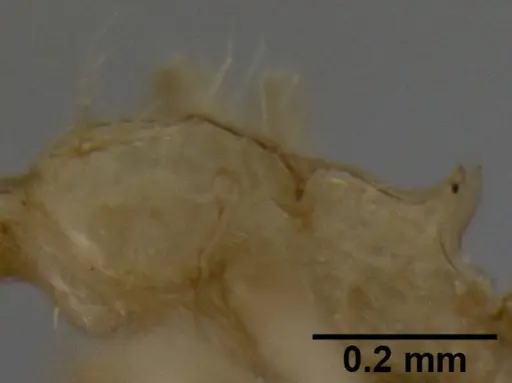
CASENT0419808
View on AntWeb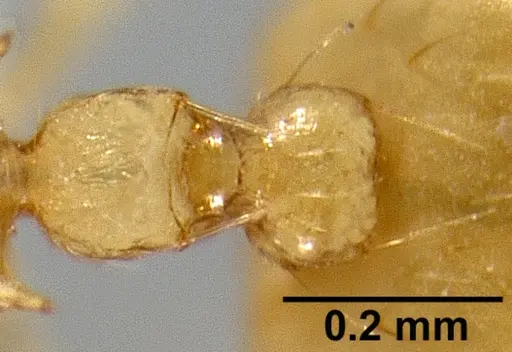
CASENT0419832
View on AntWeb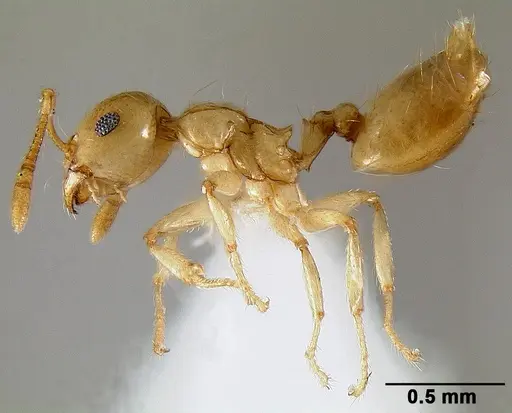
CASENT0922651
View on AntWeb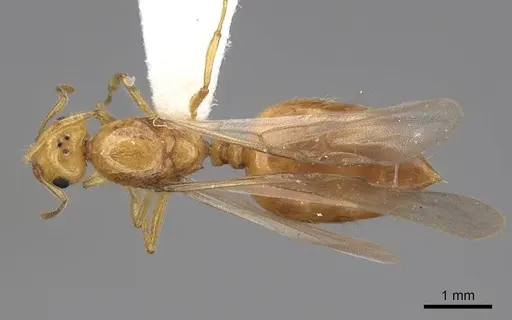
Literature
Loading distribution map...Loading products...