
Crematogaster rossi
- Sci. Name
- Crematogaster rossi
- Tribe
- Crematogastrini
- Subfamily
- Myrmicinae
- Author
- Buren, 1968
- Distribution
- Found in 1 countries
Introduction
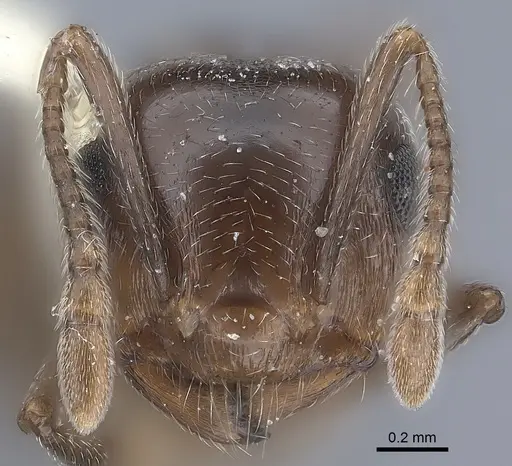
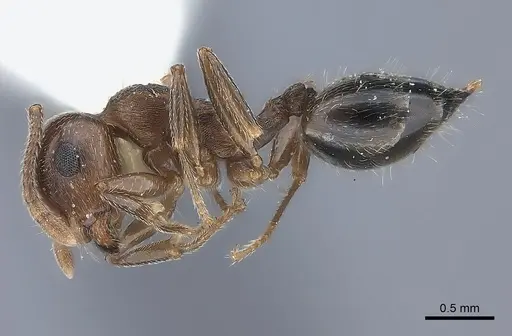
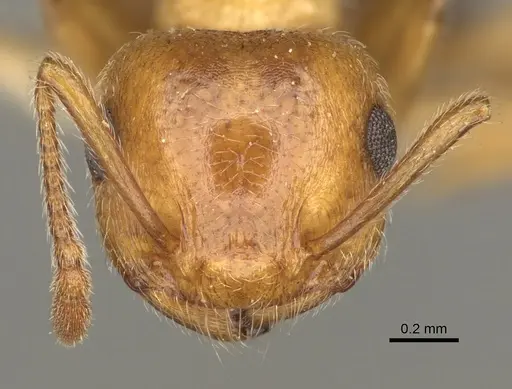
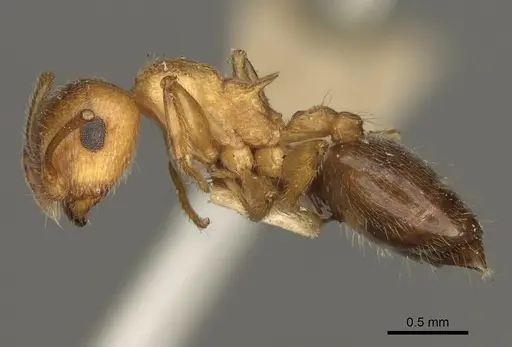
Crematogaster rossi is a small ant species native to the Baja California peninsula in Mexico. Workers measure 3.5-4.3mm with a shiny head and coarsely ridged middle body section. Coloration is yellowish to light brownish-red, with the head typically darker than the thorax. Queens are significantly larger at 9-10mm with a robust build and very broad scutellum. This species was originally described from San Jose del Cabo in Baja California Sur and Tepic in Nayarit, Mexico [AntWiki]. The biology of this species remains poorly documented. It is closely related to Crematogaster californica but can be distinguished by its coarser body sculpturing and more shining head surface. These ants are ground-nesting, which is unusual for the genus as many Crematogaster species are arboreal . They belong to the scutellaris group of Crematogaster.
Quick Summary
- Difficulty: Unknown, insufficient data for care recommendations
- Origin & Habitat: Baja California peninsula in Mexico, primarily the southern and central regions. They inhabit arid to semi-arid environments and are ground-nesting [3][2].
- Colony Type: Colony structure is unconfirmed. Based on related Crematogaster species, likely single-queen colonies, but this requires verification.
- Size & Growth:
- Antkeeping:
- Temperature: Based on the species' range in Baja California, they likely prefer warm conditions similar to other Crematogaster species. Aim for roughly 22-27°C with a gentle gradient.
- Humidity: Baja California has arid to semi-arid conditions. Keep nest substrate moderately dry to slightly moist, avoid the damp conditions preferred by tropical species.
- Diapause: Unknown, no specific data on overwintering requirements. The species occurs in a relatively warm climate, so may have reduced activity periods rather than true hibernation.
- Nesting: Ground-nesting species. In captivity, they do well in test tubes for founding colonies. Once established, a Y-tong or plaster nest with moderate humidity works well.
- Behavior: Crematogaster ants are known for their distinctive heart-shaped gaster, which they can raise and curl over their body when threatened, giving them the common name 'acrobat ants.' This species likely has similar temperament to other North American Crematogaster: moderately active foragers, not particularly aggressive, but will defend the nest if disturbed. Workers are small (3.5-4.3mm), so use standard barrier methods like fluon on test tube rims to prevent escape.
- Common Issues: insufficient biological data makes care recommendations uncertain, this species has not been kept in captivity by the hobby, no confirmed information on founding behavior, unknown if claustral or semi-claustral, diet preferences are unconfirmed, related species are omnivorous but specific acceptance is unknown, no data on nuptial flight timing makes colony establishment from wild-caught queens difficult
Species Identification and Distinction
Crematogaster rossi can be identified by several distinctive features. Workers are 3.5-4.3mm with a shiny head that is broader than long. The middle body section has coarse ridges. The head and thorax are yellowish to light brownish-red, with the head typically darker. Queens are larger at 9-10mm with a very broad scutellum and robust thorax. This species is most closely related to Crematogaster californica but can be distinguished by its coarser thorax sculpturing, more shining head, and in queens by longer scapes and smaller ocelli [1].
Natural Distribution and Habitat
This species is endemic to the Baja California peninsula in Mexico. It is found primarily in the central and southern parts of the peninsula, with disjunct populations in southern Arizona and mainland Mexico. It is absent from northern peninsula areas and California. The species is considered a peninsula-mainland disjunct species, meaning it occurs on both the Baja California peninsula and the mainland but not in the areas between [3]. They are ground-nesting, which distinguishes them from many Crematogaster species that nest in trees or rotting wood [2].
Known Biology and Research Gaps
Very little is known about the biology of Crematogaster rossi. The species was described in 1968 by Buren and was later considered a junior synonym of Crematogaster vermiculata before being reinstated as a valid species in 2022. What we know comes primarily from the original description and taxonomic work. The species is ground-nesting, which is useful for captive care. However, we lack information on founding behavior, colony size, development timeline, diet preferences, nuptial flight timing, and overwintering requirements [1].
Housing and Nesting in Captivity
Based on the fact that this is a ground-nesting species from arid Baja California, provide a nest with moderate humidity rather than the damp conditions preferred by many tropical ants. For founding colonies, a standard test tube setup works well. Once the colony establishes workers, consider a Y-tong or plaster nest with a water reservoir. Keep the nest area at roughly 22-27°C, providing a temperature gradient so the ants can choose their preferred zone. Avoid overly humid conditions, the substrate should be moist but not waterlogged, with some drier areas available.
Feeding and Diet
The specific diet of Crematogaster rossi has not been documented. Most Crematogaster species are omnivorous, accepting both sugar sources (honey, sugar water) and protein (insects, small prey). Based on related species in the genus, they likely forage for honeydew from aphids and small insects in the wild. In captivity, offer a varied diet: sugar water or honey as a constant energy source, and protein sources like fruit flies, small mealworms, or other small insects several times per week. Observe your colony to determine preferences and adjust accordingly.
Frequently Asked Questions
How long does it take for Crematogaster rossi to have first workers?
The exact development timeline is unknown for this species as it has not been studied. Based on typical Crematogaster development patterns, expect approximately 6-10 weeks from egg to first worker at optimal warm temperatures (around 24-27°C). This is an estimate only, actual times may vary.
What do Crematogaster rossi ants eat?
Specific diet preferences are unconfirmed for this species. Based on related Crematogaster species, they are omnivorous and likely accept sugar sources (honey, sugar water) and protein (small insects like fruit flies or mealworms). Offer a varied diet and observe what your colony prefers.
Are Crematogaster rossi good for beginners?
This species cannot be recommended for beginners due to the lack of documented care information. Without established protocols, keeping this species successfully requires experience with ant keeping and a willingness to experiment. Consider starting with better-documented Crematogaster species like Crematogaster scutellaris or Crematogaster lineolata.
Do Crematogaster rossi ants sting?
Crematogaster ants have a stinger but are not considered dangerous to humans. If threatened, they may curl their gaster over their body (giving them the 'acrobat' name) and attempt to sting. However, their small size and mild venom mean stings are rarely noticeable to humans.
What temperature do Crematogaster rossi need?
Exact temperature requirements are unconfirmed. Based on their native range in Baja California, they likely prefer warm conditions around 22-27°C. Provide a temperature gradient so the colony can self-regulate. Avoid temperatures below 18°C or above 30°C.
How big do Crematogaster rossi colonies get?
Maximum colony size is unknown, no scientific data exists on colony sizes for this species.
Can I keep multiple Crematogaster rossi queens together?
Colony structure (monogyne vs polygyne) has not been documented for this species. Until more information is available, it is not recommended to combine unrelated queens. Keep one queen per colony for best success.
Do Crematogaster rossi need hibernation?
Diapause or hibernation requirements are unknown. The species occurs in a relatively warm climate (Baja California), so they may not require a true hibernation period. However, a cool period of reduced activity during winter months may be beneficial. Keep temperatures moderate (15-20°C) for 2-3 months in winter if possible.
Is Crematogaster rossi a ground-nesting species?
Yes, this species is confirmed as ground-nesting based on research data. This is somewhat unusual for Crematogaster, as many species in the genus are arboreal. In captivity, provide nest setups suitable for ground-nesting ants rather than arboreal setups [2].
Where is Crematogaster rossi found in the wild?
This species is endemic to the Baja California peninsula in Mexico, primarily the central and southern regions. There are also disjunct populations in southern Arizona and mainland Mexico. It is not found in California or northern Baja California [3].
Report an Issue
The current care sheet is based fully on literature. See inconsistencies, or something that's incorrect? Please , it will be resolved after review from an admin. Contributing to the blogs tab also helps providing information, to make us be able to further improve the caresheets. Thank you for your support!
References

This caresheet is licensed under CC BY-SA 4.0 .
Community Blogs
CASENT0217853
View on AntWeb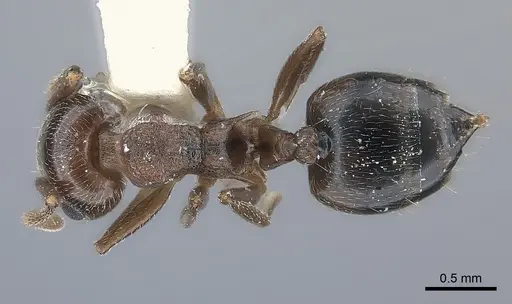
USNMENT00531965
View on AntWeb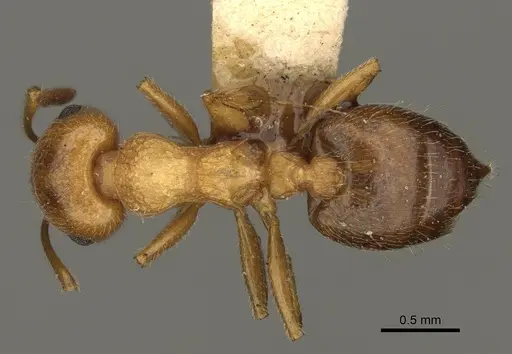
Literature
Loading distribution map...Loading products...