
Crematogaster reticulata
- Sci. Name
- Crematogaster reticulata
- Subgenus
- Orthocrema
- Tribe
- Crematogastrini
- Subfamily
- Myrmicinae
- Author
- Hosoishi, 2009
- Distribution
- Found in 1 countries
Introduction
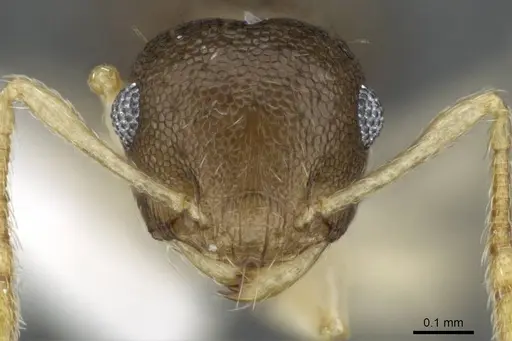
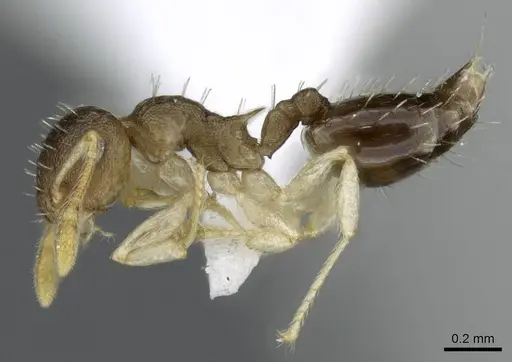
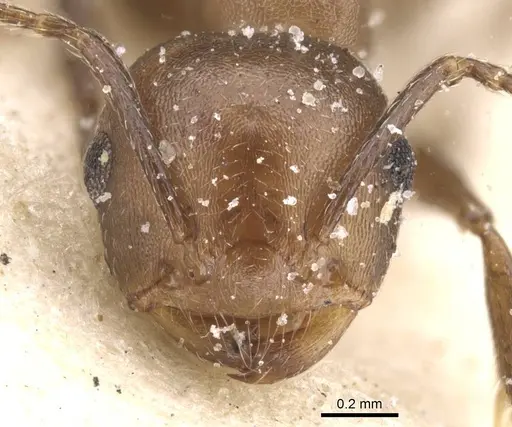
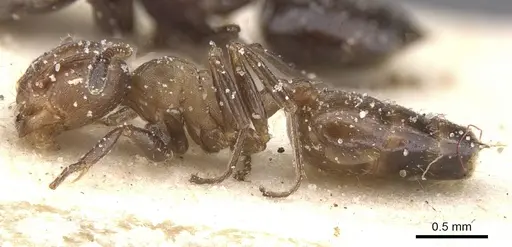
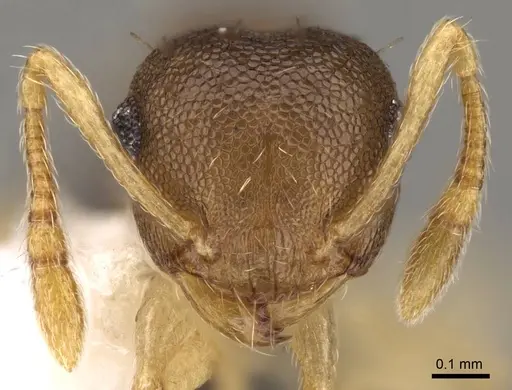
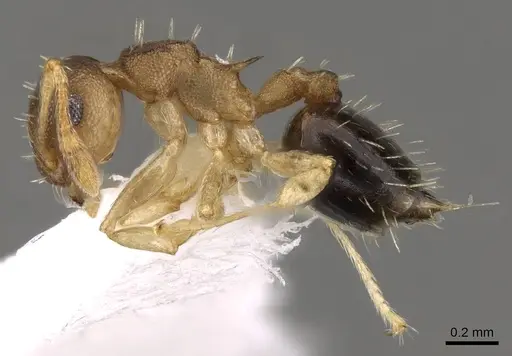
Crematogaster reticulata is a small ant species native to Southeast Asia, including southern Thailand, Malaysia, and Brunei . It inhabits developed forests and nests in dead twigs or leaves on trees . Body size data is unavailable, as no total length measurements are provided in research. A notable feature is the presence of intermediate workers, which are unusually large and can approach queen size, with three ocelli and a highly convex mesonotum .
Quick Summary
- Difficulty: Medium
- Origin & Habitat: Southeast Asia, southern Thailand, Malaysia (Peninsula and Borneo), and Brunei. Inhabits developed forests and nests in dead twigs or dead leaves on trees [1].
- Colony Type: Unconfirmed, colony structure has not been studied for this specific species.
- Size & Growth:
- Queen: Size data unavailable, no total length measurements provided.
- Worker: Size data unavailable, no total length measurements provided.
- Colony: Colony size estimate unknown, research does not provide specific data.
- Growth: Moderate, tropical species with year-round activity expected.
- Development: Unknown, no specific data on development time. (Development time is unclear for this species.)
- Antkeeping:
- Temperature: Keep warm, roughly 24-28°C, based on tropical habitat inference [1].
- Humidity: Keep nest substrate consistently moist but not waterlogged, with a humidity gradient, as they nest in forests [1].
- Diapause: No, this is a tropical species, so no diapause required.
- Nesting: Arboreal nester, prefer tight, enclosed spaces. Use Y-tong or plaster nests [1][2].
- Behavior: Crematogaster ants are known for their acrobat behavior, raising their gaster when threatened [2]. They are generally docile but small, so escape prevention is critical due to their size.
- Common Issues: escape prevention is critical due to their very small size, they can squeeze through tiny gaps, tropical species may struggle in air-conditioned rooms or cold climates, arboreal nesting means they need humidity control, too dry causes colony decline, intermediate workers may be mistaken for queens by inexperienced keepers, wild-caught colonies may carry parasites that can devastate captive colonies
Nest Preferences and Housing
Crematogaster reticulata is an arboreal species that naturally nests in dead twigs and dead leaves suspended in trees within developed forests [1]. In captivity, you should replicate these conditions as closely as possible. A Y-tong (AAC) nest works well because it provides the dark, enclosed chambers these ants prefer. Alternatively, a plaster formicarium with small, tight chambers scaled to their tiny size is suitable. Avoid large, open spaces. Adding small twigs to the outworld gives them natural foraging surfaces. Keep the nest humid, these forest ants need moisture, but ensure ventilation to prevent mold.
Feeding and Diet
Crematogaster reticulata is omnivorous and will accept both sugar sources and protein. In the wild, they forage for honeydew and small insects. In captivity, provide sugar water or honey constantly. For protein, offer small prey like fruit flies or pinhead crickets 2-3 times per week. Remove uneaten prey after 24-48 hours to prevent mold. [2]
Temperature and Seasonal Care
As a tropical species, Crematogaster reticulata requires warm temperatures. Based on tropical habitat, keep the nest area at 24-28°C for optimal brood development [1]. A heating cable can create a gradient. Avoid temperatures below 20°C. They do not require diapause.
Behavior and Temperament
Crematogaster reticulata displays acrobat ant behavior, raising the gaster when threatened [2]. They are generally not aggressive toward keepers. Workers are active foragers. Their small size makes escape prevention critical. Intermediate workers are notable and may serve specialized roles [1].
Frequently Asked Questions
How long does it take for Crematogaster reticulata to produce first workers?
Unknown, no specific data on development time for this species.
Can I keep Crematogaster reticulata in a test tube setup?
Test tubes can work for founding colonies, but these arboreal ants prefer enclosed spaces. Plan to move to a proper nest once colony reaches 20-30 workers.
Do Crematogaster reticulata ants sting?
Crematogaster ants have stingers but rarely use them. Their primary defense is the acrobat display.
What temperature do Crematogaster reticulata need?
Based on their tropical habitat, keep them warm, roughly 24-28°C [1].
Are Crematogaster reticulata good for beginners?
This species is rated as Medium difficulty. They require specific conditions like high humidity and warm temperatures, so better for keepers with some experience.
How big do Crematogaster reticulata colonies get?
Colony size is unknown for this species. Research does not provide specific data.
Do Crematogaster reticulata need hibernation?
No, this is a tropical species and does not require diapause.
Why are my Crematogaster reticulata escaping?
Their small size makes them excellent escape artists. Check all seams and use fine mesh.
Can I keep multiple queens together?
Colony structure is unconfirmed. It is not recommended to combine unrelated queens.
What do Crematogaster reticulata eat?
They are omnivorous. Offer sugar water and small insects.
When should I move my colony to a formicarium?
Move when colony reaches 20-30 workers or when test tube is cramped.
Is Crematogaster reticulata invasive anywhere?
This species is native to Southeast Asia and has not been documented as invasive.
Report an Issue
The current care sheet is based fully on literature. See inconsistencies, or something that's incorrect? Please , it will be resolved after review from an admin. Contributing to the blogs tab also helps providing information, to make us be able to further improve the caresheets. Thank you for your support!
References

This caresheet is licensed under CC BY-SA 4.0 .
Community Blogs
CASENT0193610
View on AntWeb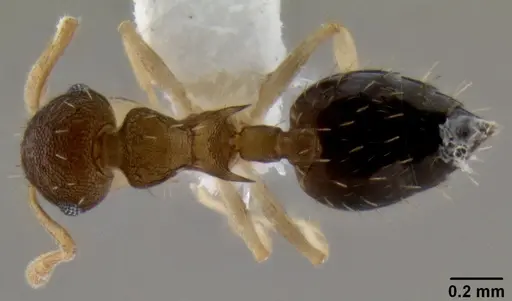
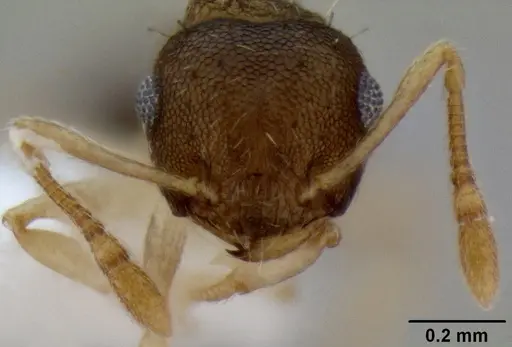
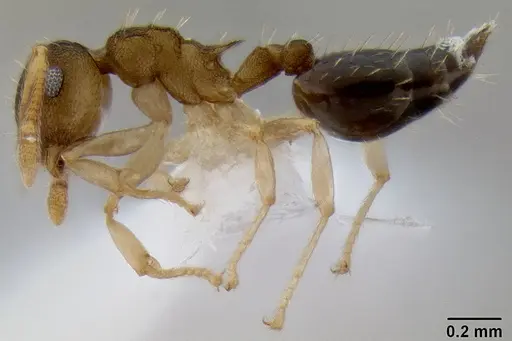
CASENT0905905
View on AntWeb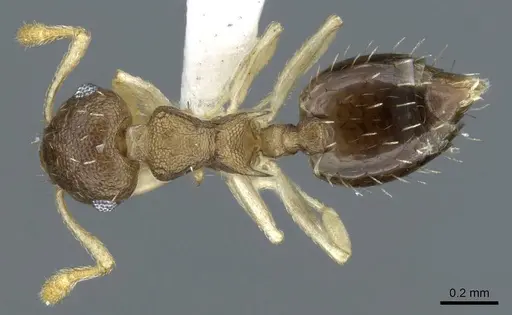
CASENT0912718
View on AntWeb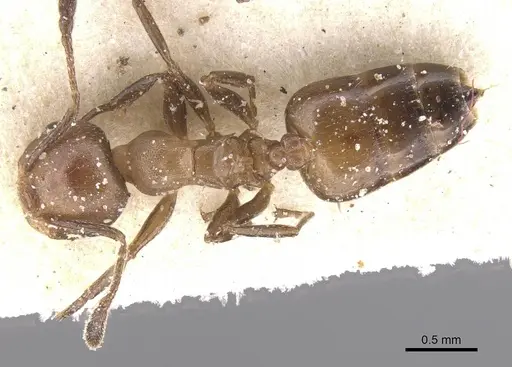
CASENT0914544
View on AntWeb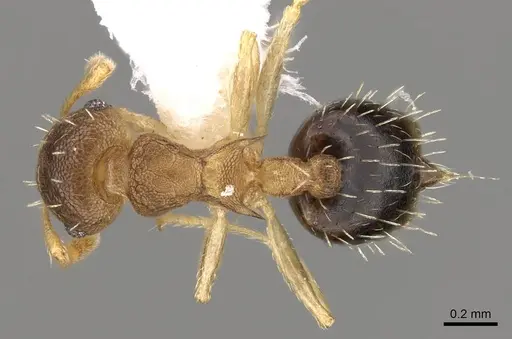
Literature
Loading distribution map...Loading products...