
Crematogaster pulchella
- Sci. Name
- Crematogaster pulchella
- Subgenus
- Orthocrema
- Tribe
- Crematogastrini
- Subfamily
- Myrmicinae
- Author
- Bernard, 1953
- Distribution
- Found in 1 countries
Introduction
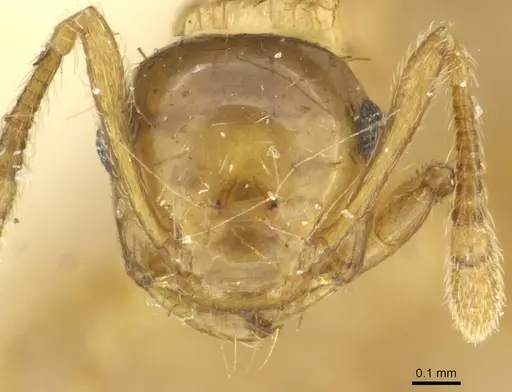
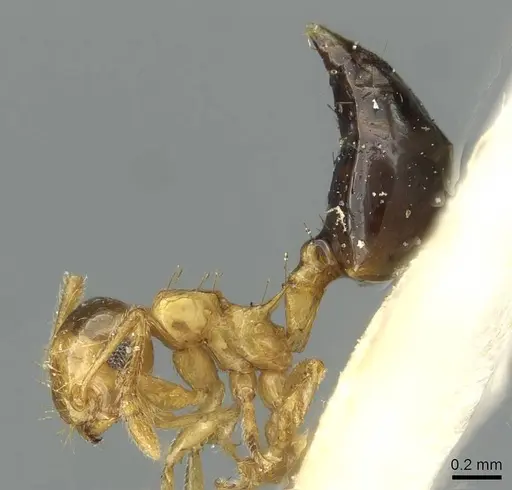
Crematogaster pulchella is a small myrmicine ant native to the Afrotropical region, found in Guinea and Cameroon. Workers have the characteristic Crematogaster heart-shaped gaster that they raise when threatened. This species is notable for having ergatoid queens - wingless replacement queens that can take over reproduction if the primary queen dies. The ergatoid queens are unusually large, roughly twice the length of workers, with two ocelli on the head and a proportionally larger gaster. They also possess a specialized soldier caste that lays unfertilized eggs, a rare trait in ants . In the wild, they are arboreal nesters found in lowland rainforest environments .
Quick Summary
- Difficulty: Medium
- Origin & Habitat: Guinea and Cameroon in West/Central Africa. Found in lowland rainforest environments at elevations up to 1300m in the Nimba Mountains. They are arboreal nesting ants, typically establishing nests in trees or elevated locations in tropical forest habitats [2][3].
- Colony Type: Likely monogyne with ergatoid replacement queens documented. The species has a specialized soldier caste that can lay unfertilized eggs, providing colony continuity if the primary queen dies [1].
- Size & Growth:
- Queen: ~6-8 mm, inferred from ergatoid queens being twice the length of workers [1].
- Worker: ~2-3 mm, inferred from typical Crematogaster worker size range.
- Colony: Up to a few thousand workers, typical for Crematogaster genus.
- Growth: Moderate, typical for tropical Myrmicinae.
- Development: Estimated 6-8 weeks at optimal tropical temperatures (24-28°C), based on typical Crematogaster development patterns. (Development time is inferred from genus-level data as no specific study exists for this species.)
- Antkeeping:
- Temperature: Keep at 24-28°C. As a tropical species from Cameroon and Guinea, they need warm conditions. A heating cable on one side of the nest can create a gentle gradient if room temperature falls below this range.
- Humidity: High humidity is essential, think damp tropical forest. Keep the nest substrate consistently moist but not waterlogged. Provide a water tube for drinking access. Mist the outworld occasionally and ensure good ventilation to prevent mold while maintaining humidity.
- Diapause: No true diapause required. As a tropical species, they do not need hibernation.
- Nesting: Arboreal nesting preference means they do well in Y-tong (AAC) nests or plaster nests with chambers scaled to their small size. They prefer enclosed nests with some humidity retention. Avoid dry, open-style setups.
- Behavior: Crematogaster pulchella is a relatively calm species. Like other Crematogaster, they may raise their heart-shaped gaster when threatened and can release alarm pheromones, but they are not particularly aggressive. They are arboreal and will establish colonies in elevated locations within the formicarium. Workers are small but active foragers. Standard precautions (fluon barriers) are recommended for small ants.
- Common Issues: high humidity management can be tricky, too wet causes mold, too dry causes desiccation, tropical species may struggle if temperatures drop below 22°C for extended periods, small colony size initially means founding colonies are fragile and need minimal disturbance, arboreal nesting preference means they may not accept ground-level test tube setups easily, limited available information means some care aspects require adaptation from related species
Nest Preferences and Housing
Crematogaster pulchella is an arboreal nesting species, which means they prefer elevated, enclosed nest spaces rather than ground-level setups. In captivity, they do well in Y-tong (AAC) nests or plaster nests that can maintain humidity. The chambers should be appropriately scaled to their small worker size. Because they come from humid tropical rainforest environments, the nest material should retain some moisture without becoming waterlogged. A test tube setup can work for founding colonies, but once established, transfer to a more enclosed nest that meets their arboreal preferences. Ensure the nest has some vertical space or multiple chambers they can use as the colony grows. [3]
Feeding and Diet
Like other Crematogaster species, C. pulchella likely has an omnivorous diet with a preference for sugary substances. In nature, they forage for honeydew from aphids and scale insects, and also hunt small insects for protein. In captivity, offer sugar water or honey water as a constant energy source. For protein, provide small insects like fruit flies, pinhead crickets, or mealworms. Given their small worker size, prey items should be appropriately sized. Feed protein 2-3 times per week and keep sugar water available at all times. Remove uneaten prey after 24-48 hours to prevent mold.
Temperature and Seasonal Care
As a tropical species from Cameroon and Guinea, Crematogaster pulchella requires warm temperatures year-round. Keep the nest area at 24-28°C for optimal brood development. They do not require hibernation or diapause, maintaining consistent tropical conditions is key. If your room temperature falls below 24°C, use a heating cable on one side of the nest to create a gentle warmth gradient. Place the heating on top of the nest rather than underneath to avoid drying out the substrate. Monitor colony activity, if workers become sluggish or cluster together, the temperature may be too low.
Colony Structure and Reproduction
This species has a fascinating social structure with ergatoid queens, wingless queens that serve as replacement reproductives if the primary queen dies [1]. Additionally, they possess a soldier caste specialized to lay unfertilized eggs, which is a rare and unusual trait in ants [1]. This means colonies have multiple backup systems for maintaining reproduction. In the wild, colonies are likely founded by a single claustral queen who seals herself in a chamber and raises the first workers on stored fat reserves. Founding colonies should be left undisturbed for the first few weeks until the first workers (nanitics) emerge. The colony will grow gradually over time.
Behavior and Temperament
Crematogaster pulchella is generally a calm, non-aggressive species. When threatened, they may raise their distinctive heart-shaped gaster and release alarm pheromones to alert nestmates, but they prefer to avoid confrontation rather than engage. Workers are active foragers, both in the nest and outworld. They are arboreal by nature, so they will explore elevated spaces and may establish foraging trails up walls and across ceilings. Standard escape prevention with fluon barriers on the outworld is recommended given their small size.
Frequently Asked Questions
How long does it take for Crematogaster pulchella to produce first workers?
Based on typical Crematogaster development patterns, expect first workers (nanitics) to emerge in about 6-8 weeks after the queen lays eggs, provided temperatures are maintained at 24-28°C. This is an estimate based on genus-level data, as no specific development study exists for this species.
What temperature do Crematogaster pulchella ants need?
Keep them at 24-28°C. This tropical rainforest species from Cameroon and Guinea requires warm conditions year-round. A heating cable can help maintain temperatures if your room is cooler.
Do Crematogaster pulchella ants need hibernation?
No, they do not require hibernation. As a tropical species, they need consistent warm temperatures year-round.
What do Crematogaster pulchella ants eat?
They are omnivorous with a preference for sugary foods. Offer sugar water or honey water constantly, and provide small insects like fruit flies or mealworms for protein 2-3 times per week.
Are Crematogaster pulchella ants aggressive?
No, they are generally calm and non-aggressive. They may raise their gaster when threatened and release alarm pheromones, but they prefer to avoid conflict rather than engage.
What size colony does Crematogaster pulchella reach?
Colony size is not specifically documented, but related Crematogaster species typically reach up to a few thousand workers. Growth is moderate.
Can I keep multiple Crematogaster pulchella queens together?
This is not recommended. While the species has ergatoid replacement queens, these are replacement reproductives within an established colony, not multiple founding queens. Combining unrelated foundress queens has not been documented for this species and would likely result in aggression.
What type of nest is best for Crematogaster pulchella?
As an arboreal species, they do well in enclosed nests like Y-tong (AAC) or plaster nests that can maintain humidity. They prefer nests with multiple chambers scaled to their small size.
Do Crematogaster pulchella ants sting?
Crematogaster ants have a stinger but it is very small and rarely penetrates human skin. They are not considered dangerous to humans.
Why is my Crematogaster pulchella colony declining?
Common causes include: temperatures below 22°C, humidity too low (drying out) or too high (causing mold), insufficient protein food, or disturbance to founding colonies. Ensure warm, humid conditions and minimal disturbance during the founding phase.
Report an Issue
The current care sheet is based fully on literature. See inconsistencies, or something that's incorrect? Please , it will be resolved after review from an admin. Contributing to the blogs tab also helps providing information, to make us be able to further improve the caresheets. Thank you for your support!
References

This caresheet is licensed under CC BY-SA 4.0 .
Community Blogs
CASENT0913653
View on AntWeb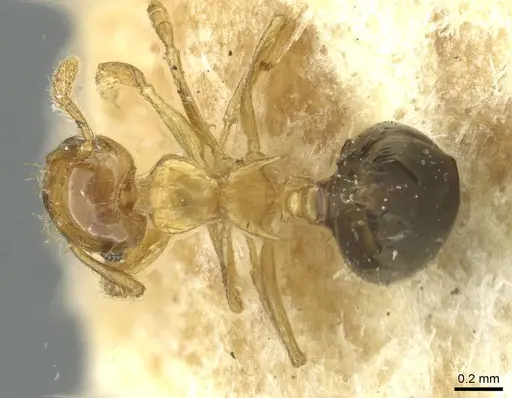
Literature
Loading distribution map...Loading products...