
Crematogaster opuntiae
- Sci. Name
- Crematogaster opuntiae
- Tribe
- Crematogastrini
- Subfamily
- Myrmicinae
- Author
- Buren, 1968
- Distribution
- Found in 1 countries
Introduction
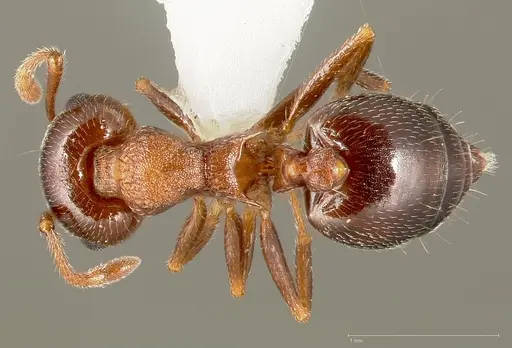
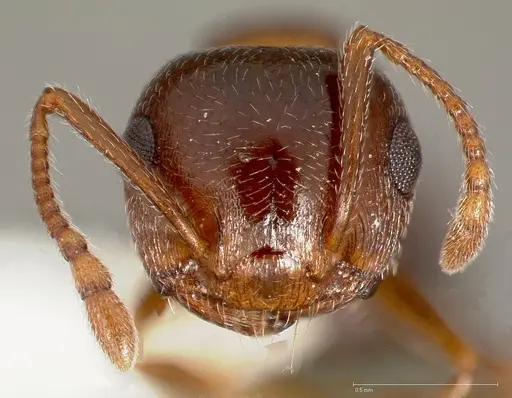
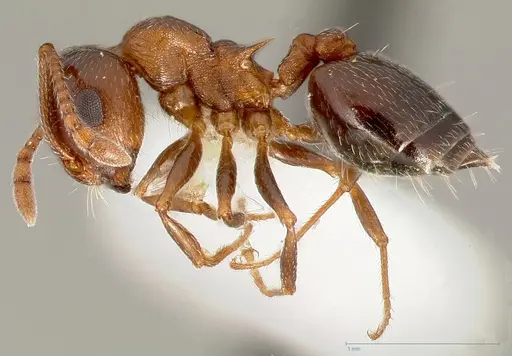
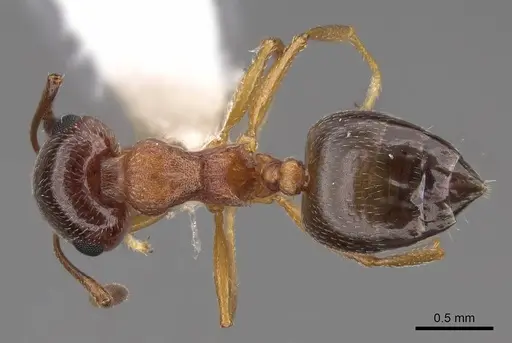
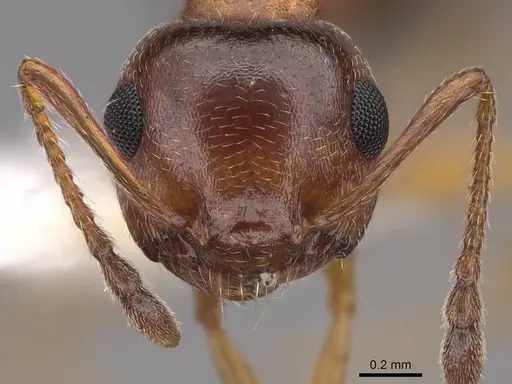
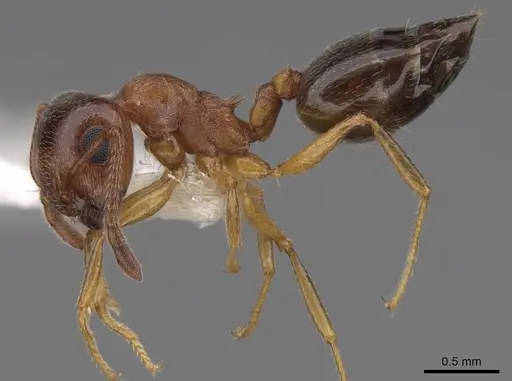
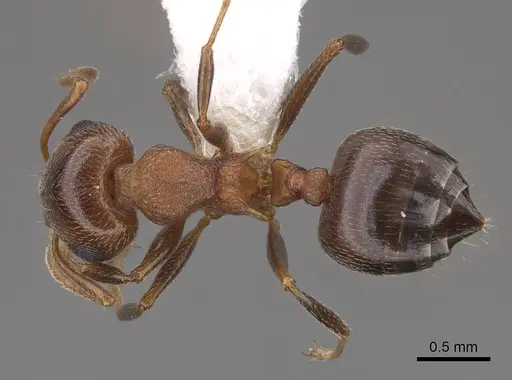
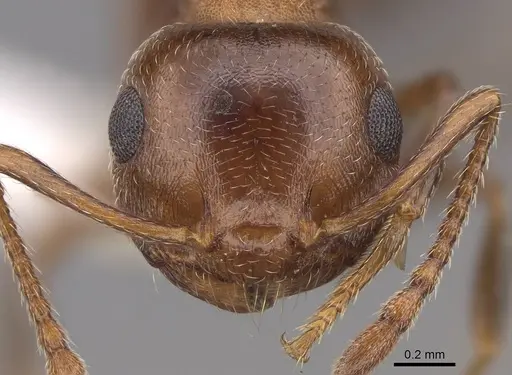
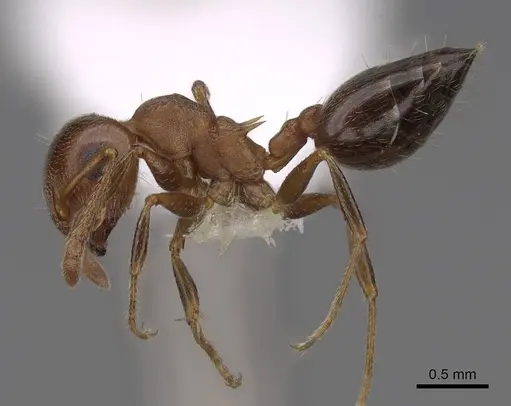
Crematogaster opuntiae is an ant native to the American Southwest and northern Mexico. Workers measure 3.5-4.5 mm and are typically dark in color. They inhabit Chihuahuan Desert scrub and grasslands, often nesting in soil, under stones, or in cactus cavities . This species engages in mutualism with desert cacti, protecting plants from herbivores in exchange for extrafloral nectar .
Quick Summary
- Difficulty: Medium
- Origin & Habitat: Native to Arizona, southern Nevada, southeastern California, and northern Mexico. Found in desert scrub, grasslands, and up to 1380 meters elevation in pinyon-juniper and oak forests [3][2].
- Colony Type: Polydomous, colonies maintain multiple nest sites connected by foraging trails [5][6]. Ground-nesting in desert regions [2]. Colony structure (monogyne/polygyne) is unconfirmed.
- Size & Growth:
- Antkeeping:
- Temperature: Keep nest area at 24-28°C with a gradient [4][7]
- Humidity: Keep nest substrate mostly dry with one small moist area, as they are adapted to desert conditions [1][3]
- Diapause: Unknown, brood found from March to October in the wild [3], suggesting minimal diapause
- Nesting: Ground-nesting in soil, under stones, or in cactus cavities [2][3]. Use soil-based or Y-tong nests with moderate chambers
- Behavior: Aggressive defenders of host plants, show strong alarm response to threats [7]. Polydomous with long-term trail networks to food sources [5]. Escape risk is moderate, use standard barriers
- Common Issues: colonies may decline if kept too cold, they need warmth to stay active [4], polydomous nature may lead to secondary nests outside the main formicarium, overfeeding can cause mold in their dry environment, aggressive toward other ant species if housed together, provide a temperature gradient to avoid stress
Housing and Nest Setup
Use a naturalistic setup with soil substrate or a Y-tong nest to mimic desert ground-nesting [2][3]. Include flat stones or cork bark for hiding spots. These ants are polydomous and may establish multiple nest sites if space allows [5][6]. Provide a water test tube for moisture, but keep the nest mostly dry to prevent mold [1]. A small outworld area supports foraging trails.
Feeding and Diet
In the wild, they collect small prey, honeydew, and carrion [5]. In captivity, offer sugar water or honey constantly, and protein like fruit flies or mealworms 2-3 times per week [7]. Lab colonies thrive on Manduca sexta larvae and 20% sucrose solution [7]. They prefer high-carbohydrate foods when raising brood [7].
Temperature Requirements
Keep nest temperatures at 24-28°C with a gradient [4][7]. They are active up to 45°C in the wild with a critical thermal maximum of 50.1°C [4]. Lab colonies succeed at 22°C, but warmer temperatures increase activity [7].
Behavior and Colony Structure
These ants are fiercely protective of their territory and show a strong alarm response to threats [7]. They are polydomous, maintaining long-term trail networks to food sources [5]. Workers are active foragers and defend nests vigorously. Use Fluon-coated walls to prevent escape in lab settings [7].
Seasonal Care and Overwintering
In their native range, brood is found from March to October, with sexuals appearing in July-September [3]. Diapause is likely minimal due to warm desert winters. If kept in cooler climates, a brief cool period may benefit colonies, but it is not strictly necessary.
Frequently Asked Questions
How long does it take for Crematogaster opuntiae to produce first workers?
Based on lab colonies at 22°C, expect first workers approximately 6-10 weeks after egg laying [7]. Development is faster at warmer temperatures.
Can I keep Crematogaster opuntiae in a test tube setup?
Yes, test tubes work for founding colonies. As the colony grows, move to a larger formicarium to accommodate their polydomous nature [5].
Do Crematogaster opuntiae ants sting?
Crematogaster ants have a stinger but rarely use it against humans. They are more likely to bite and use chemical defenses [3].
What temperature should I keep Crematogaster opuntiae at?
Keep nest temperatures between 24-28°C with a gradient [4][7]. They tolerate higher heat but avoid extreme temperatures.
Are Crematogaster opuntiae good for beginners?
They are moderate difficulty due to their need for warmth and dry conditions. Their polydomous nature requires attention [4][7].
How big do Crematogaster opuntiae colonies get?
Colony size is unknown, but polydomous colonies can be extensive with multiple nest sites [5].
Do Crematogaster opuntiae need hibernation?
Diapause is likely minimal, brood is active from March to October in the wild [3]. A brief cool period may help but is not required.
What do Crematogaster opuntiae eat?
They eat small prey, honeydew, and carrion in the wild [5]. In captivity, offer sugar water and protein like insects [7].
Why are my Crematogaster opuntiae dying?
Common issues include keeping them too cold, overwatering leading to mold, or insufficient food. Provide warmth, dry nesting, and regular feeding [4].
Report an Issue
The current care sheet is based fully on literature. See inconsistencies, or something that's incorrect? Please , it will be resolved after review from an admin. Contributing to the blogs tab also helps providing information, to make us be able to further improve the caresheets. Thank you for your support!
References

This caresheet is licensed under CC BY-SA 4.0 .
Community Blogs
Literature
Loading distribution map...Loading products...