
Crematogaster mpanjono
- Sci. Name
- Crematogaster mpanjono
- Subgenus
- Orthocrema
- Tribe
- Crematogastrini
- Subfamily
- Myrmicinae
- Author
- Blaimer, 2012
- Distribution
- Found in 1 countries
Introduction
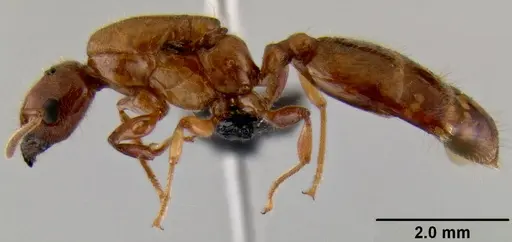
Crematogaster mpanjono is an extremely rare Madagascar endemic ant belonging to the Orthocrema subgenus. Workers are very small at approximately 2-3mm total length with a yellow to pale yellow coloration, while queens are medium-sized at approximately 4-5mm total length with a reddish-brown color . This species is part of the C. volamena group and can be distinguished from its close relative Crematogaster volamena by distribution and by the queen's scuto-scutellar suture structure . The name 'mpanjono' means 'fisher' in Malagasy and honors B.L. Fisher for his ant diversity research in Madagascar . Almost nothing is known about this species' biology - only a single nest collection (a queen and nanitic worker from an arboreal root pocket) has ever been documented . This makes C. mpanjono one of the least studied Crematogaster species in Madagascar. They inhabit lowland rainforests in the north-western Sambirano region and eastern littoral rainforest, occurring alongside the more common C. rasoherinae and Crematogaster madecassa .
Quick Summary
- Difficulty: Expert
- Origin & Habitat: Madagascar endemic, lowland rainforests of north-western Sambirano region (Nosy Bé, R.S. Manongarivo) and eastern littoral rainforest (Ile St.Marie) [1]
- Colony Type: Colony structure unconfirmed, only one queen with a single nanitic worker has ever been collected [1]
- Size & Growth:
- Queen: approximately 4-5mm total length (inferred from genus patterns) [1]
- Worker: approximately 2-3mm total length (inferred from genus patterns) [1]
- Colony: Unknown, only one nest collection exists [1]
- Growth: Unknown
- Development: Unknown, no development data exists for this species (No documented development timeline exists for this species. Any observations you make would be new information.)
- Antkeeping:
- Temperature: Likely warm, based on Madagascar lowland rainforest habitat. Provide a gentle gradient and observe colony activity.
- Humidity: Likely humid, rainforest species prefer moist conditions with some drier areas for selection.
- Diapause: Unknown, Madagascar lowland species may have reduced activity during cooler months but true diapause is unconfirmed.
- Nesting: Arboreal nesting is suggested by the single collection from an arboreal root pocket. Y-tong nests or naturalistic setups with climbing structures and moss work well.
- Behavior: Behavior is unstudied. Based on genus patterns, Crematogaster are typically active, generalist foragers with a characteristic habit of raising their gasters when alarmed. Their small size means escape prevention is critical, use fine mesh barriers. They likely nest in elevated locations and may tend aphids. As Myrmicinae, they have a smear defense mechanism using a flattened stinger to apply venom rather than pierce.
- Common Issues: almost no biological data exists, keepers must be prepared for experimental care, tiny worker size makes escape prevention challenging, single known colony sample means no captive breeding stock, wild-caught queens are extremely rare, unknown diapause requirements may cause seasonal management issues, closely resembles C. volamena making correct identification difficult without queen specimens
Species Identification and Range
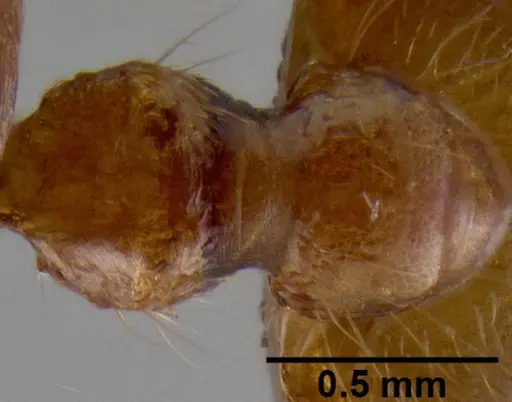
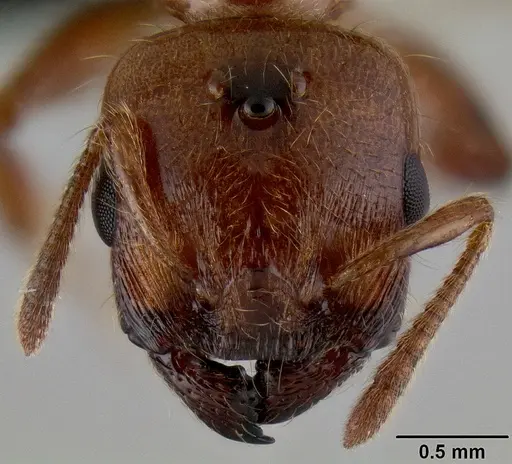
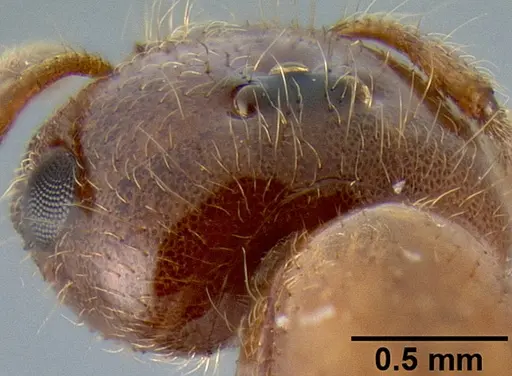
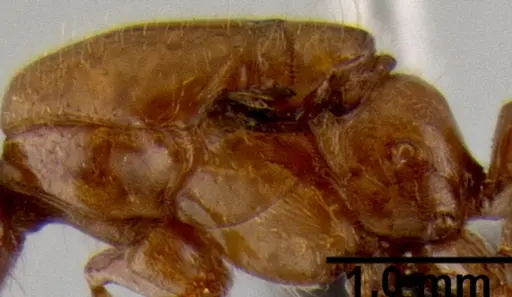
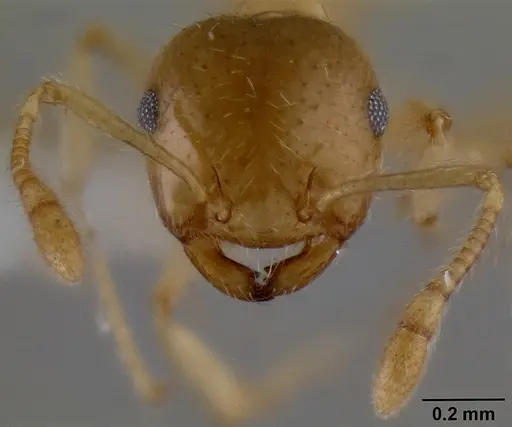
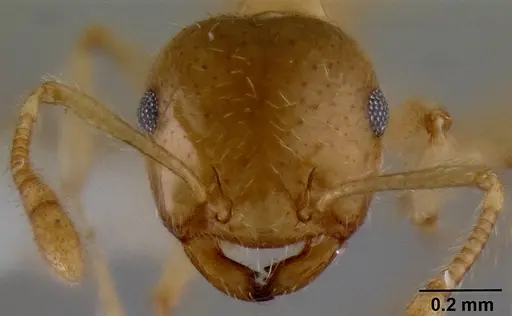
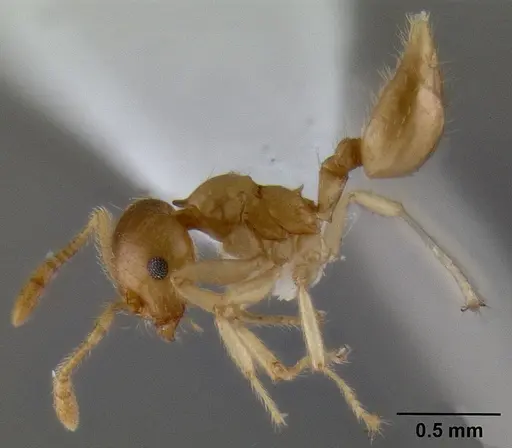
Crematogaster mpanjono is a member of the Orthocrema clade, which is endemic to the Malagasy region [2]. Workers are very small and range from yellow to pale yellow in color [1]. They can be identified by their indistinct occipital carinae, small non-protruding eyes, and short propodeal spines [1]. The propodeum often has longer erect pilosity, which helps distinguish them from the similar C. volamena [1]. Queens have reddish-brown coloration and can be distinguished by their scuto-scutellar suture that acutely meets the mesoscutum [1].
The distribution is peculiar, they occur in disjunct populations in north-western Madagascar (Nosy Bé, R.S. Manongarivo) and on the east coast island Ile St.Marie [1]. This could indicate incomplete distribution records or actual range fragmentation. They occur alongside the more common C. rasoherinae and C. madecassa [1].
Nesting and Habitat
The only known nest collection came from an arboreal root pocket, suggesting this species nests in elevated locations rather than in soil [1]. This aligns with typical Orthocrema behavior, as many species in this subgenus are arboreal or nest in elevated microhabitats. In captivity, provide a setup that allows for vertical nesting, Y-tong nests or naturalistic setups with climbing structures and moss work well.
Their natural habitat is lowland rainforest, which means they prefer warm, humid conditions with good ventilation. Avoid overly dry conditions. Since so little is known, observe your colony's behavior and adjust humidity up or down based on their activity levels.
Feeding and Diet
Diet is unconfirmed for this species, but Crematogaster generally are omnivorous and opportunistic feeders. They likely consume honeydew from aphids and scale insects, small insects and arthropods, and may accept sugar sources. Based on typical Crematogaster behavior, offer a mix of sugar water or honey, small live prey like fruit flies or springtails, and occasional protein sources.
Since this is an arboreal species from Madagascar, they may have more specific dietary needs than typical ground-nesting Crematogaster. Start with standard Crematogaster fare and observe acceptance. Remove uneaten prey within 24-48 hours to prevent mold.
Temperature and Seasonal Care
Temperature requirements are not documented, but their habitat in Madagascar lowland rainforests suggests warmth and stability. Provide a gentle gradient so ants can self-regulate. A heating cable on one side of the nest can create this gradient, place it on top of the nest to avoid evaporating moisture.
Diapause requirements are completely unknown. Madagascar does not experience harsh winters, so this species likely does not require true hibernation. However, cooler room temperatures during winter months may cause reduced activity. Monitor your colony, if they become less active but remain healthy, this may be natural seasonal variation rather than a need for full diapause. [1]
Challenges and Considerations
This is one of the most poorly documented ant species in the hobby. Keeping C. mpanjono successfully requires patience, careful observation, and a willingness to experiment. There is essentially no captive husbandry data for this species, everything keepers learn will be new information contributed to the hobby.
The tiny worker size means escape prevention must be excellent. Use fine mesh, tight-fitting lids, and reliable barriers. Correct identification is also challenging since workers closely resemble C. volamena, queen specimens are needed for definitive identification [1]. This species is extremely rare in the wild and in collections, so establishing a captive breeding population would be a significant achievement.
Related Species Care
While specific care for C. mpanjono is unknown, looking at related Orthocrema species and general Crematogaster care provides guidance. Crematogaster are known as 'acrobat ants' because they raise their gasters when threatened. They are generally active foragers with good vision.
The closest relative C. volamena is more common in the hobby and may share similar requirements. If you obtain C. mpanjono, consider connecting with other Madagascar ant keepers to share observations and refine care techniques. Document your findings carefully, any successful husbandry information would be valuable for this poorly known species.
Frequently Asked Questions
How long does it take for Crematogaster mpanjono to go from egg to worker?
The egg-to-worker timeline is completely unknown for this species, no development data exists. Any observation you make would be new information for this species.
What do Crematogaster mpanjono ants eat?
Diet is unconfirmed, but based on typical Crematogaster behavior, they likely accept sugar sources (honey, sugar water), small live prey (fruit flies, springtails), and occasional protein. Start with standard offerings and observe what they accept.
What temperature should I keep Crematogaster mpanjono at?
Temperature requirements are not documented. Based on their Madagascar lowland rainforest habitat, provide a warm environment with a gentle gradient. Observe colony activity and adjust, if they cluster near heat, increase slightly, if they avoid heated areas, reduce temperature.
Do Crematogaster mpanjono ants need hibernation?
Diapause requirements are completely unknown. Madagascar lowland species do not experience harsh winters, so true hibernation is unlikely. However, they may have reduced activity during cooler months. Monitor your colony and adjust care seasonally.
What size colony does Crematogaster mpanjono reach?
Colony size is unknown, only a single queen with one nanitic worker has ever been collected. No mature colony data exists.
Is Crematogaster mpanjono good for beginners?
No. This is an expert-level species due to almost complete lack of biological data. Almost nothing is known about their care requirements, making successful keeping very challenging. Only experienced antkeepers should attempt this species.
How do I identify Crematogaster mpanjono?
Workers are very small and yellow to pale yellow with indistinct occipital carinae and short propodeal spines [1]. Queens are medium-sized with reddish-brown color and can be distinguished by their scuto-scutellar suture structure [1]. Definitive identification often requires queen specimens.
Can I keep multiple Crematogaster mpanjono queens together?
Colony structure is unconfirmed, only single queen with nanitic worker has ever been collected. There is no data on whether they are monogyne or polygyne. Combining unrelated queens is not recommended due to lack of documentation.
What nest type is best for Crematogaster mpanjono?
Based on the single collection from an arboreal root pocket, they appear to be arboreal nesters [1]. Y-tong nests or naturalistic setups with climbing structures and moss work well. Avoid soil-based setups.
Do Crematogaster mpanjono ants sting?
Sting capability is not documented for this species. Crematogaster (Myrmicinae) have a smear defense mechanism using a flattened stinger to apply venom rather than pierce. They are too small to penetrate human skin effectively.
Where does Crematogaster mpanjono live?
This is a Madagascar endemic found in disjunct populations: lowland rainforests of the north-western Sambirano region (Nosy Bé, R.S. Manongarivo) and eastern littoral rainforest on Ile St.Marie [1].
Why is Crematogaster mpanjono so rare?
This species is one of the least collected Crematogaster in Madagascar, only a single nest has ever been documented [1]. This could reflect true rarity, specialized habitat requirements, or simply incomplete sampling. Their disjunct distribution adds to the mystery.
Report an Issue
The current care sheet is based fully on literature. See inconsistencies, or something that's incorrect? Please , it will be resolved after review from an admin. Contributing to the blogs tab also helps providing information, to make us be able to further improve the caresheets. Thank you for your support!
References

This caresheet is licensed under CC BY-SA 4.0 .
Community Blogs
CASENT0067033
View on AntWeb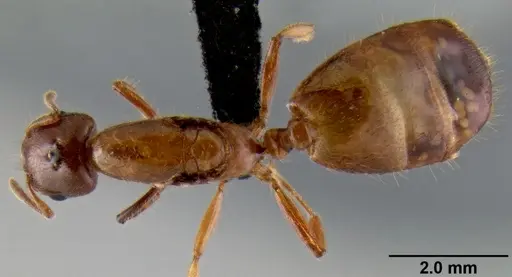
CASENT0193889
View on AntWeb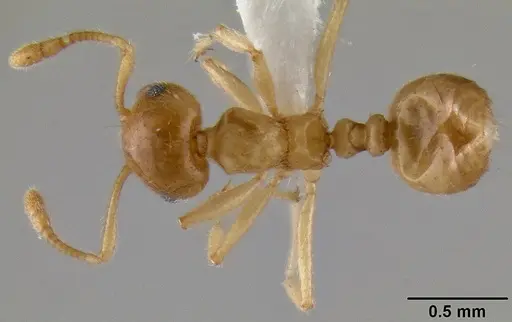
Literature
Loading distribution map...Loading products...