
Crematogaster moelleri
- Sci. Name
- Crematogaster moelleri
- Subgenus
- Orthocrema
- Tribe
- Crematogastrini
- Subfamily
- Myrmicinae
- Author
- Forel, 1912
- Distribution
- Found in 3 countries
Introduction
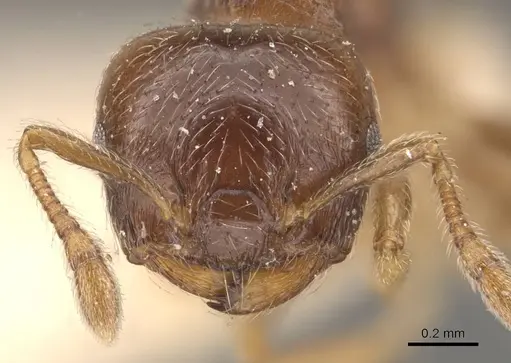
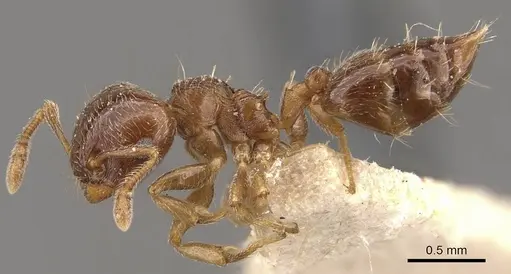
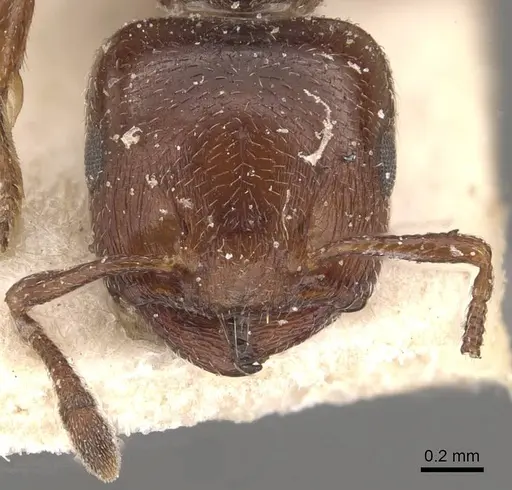
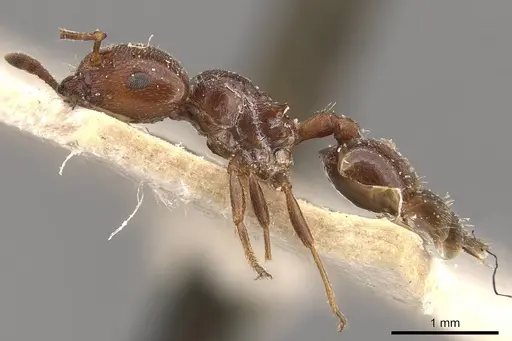
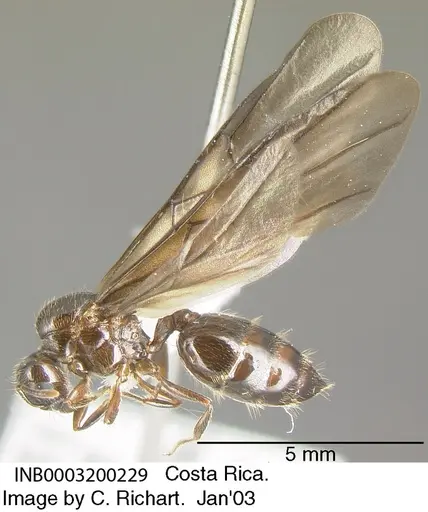
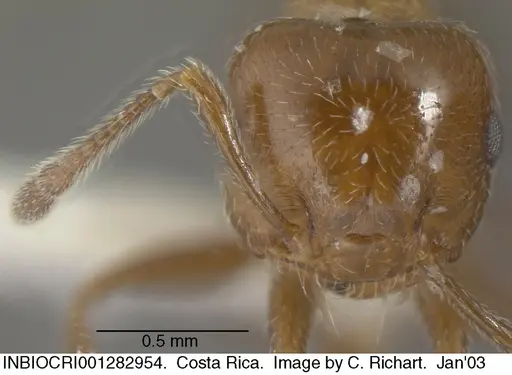
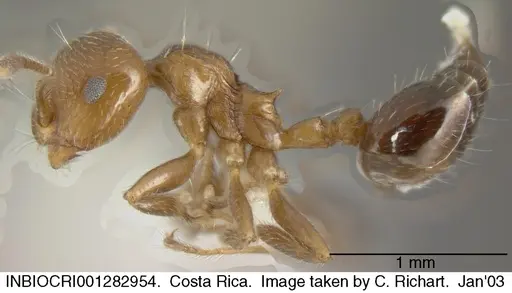
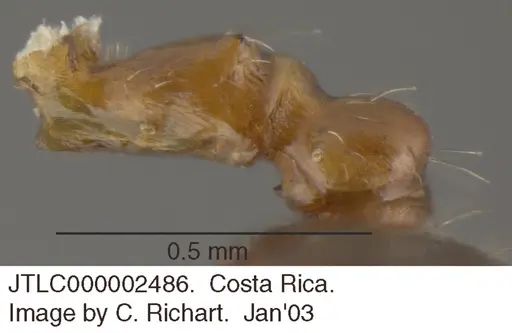
Crematogaster moelleri is a small ant from the Myrmicinae subfamily. Workers have a reddish-brown body with a darker gaster (abdomen). They have short, upturned spines on the propodeum (rear part of the thorax) and long, flexible hairs on the upper body that set them apart from similar species like Crematogaster crinosa. The antenna ends in a two-segmented club, with the last two segments much larger than the ones before . This ant lives in wet mountain forests of Costa Rica, around 1000m elevation, and has also been found in Brazil and Colombia . What makes C. moelleri unusual is that it's a high-elevation specialist within a group that usually sticks to lowlands. Workers move very slowly compared to related ants, and they have only been collected a few times. In the Monteverde area they've been seen foraging on tree trunks, and researchers collected them from extrafloral nectaries of Inga trees . This species is a rare find for ant keepers.
Quick Summary
- Difficulty: Medium
- Origin & Habitat: Montane moist to wet forests in Costa Rica (Monteverde, Braulio Carrillo National Park) at about 1000m elevation, plus scattered records in Brazil and Colombia (Boyacá, Cundinamarca, Nariño) [1][3][2].
- Colony Type: Colony structure is unconfirmed. No data available on whether colonies are single-queen (monogyne) or multi-queen (polygyne).
- Size & Growth:
- Queen: Not specifically measured in available literature. Based on the Crematogaster genus, queens are typically 8–12 mm total length.
- Worker: Size data unavailable – literature only provides head measurements, not total length. Inferred from genus, workers likely 3–5 mm total length.
- Colony: Unknown – no colony size data exists for this species.
- Growth: Unknown – no development data available for this species.
- Development: Unconfirmed – no direct data. Based on typical Crematogaster patterns, expect 6–10 weeks at optimal temperature. (Development has not been directly studied. Related Crematogaster species complete development in 6–10 weeks under warm conditions.)
- Antkeeping:
- Temperature: Based on its montane habitat at ~1000m elevation in Costa Rica, keep cooler than typical tropical ants. Aim for 18–22°C with a gentle gradient. Avoid temperatures above 25°C [1].
- Humidity: High humidity is needed – they come from moist to wet forests. Keep the nest substrate consistently damp but not waterlogged, and provide a water source. Cloud forest conditions mean high ambient moisture [1].
- Diapause: Unlikely – as a tropical montane species, they probably don't require true diapause. A slight seasonal temperature drop may be fine, but avoid cold below 15°C.
- Nesting: Like other Crematogaster, they likely nest in rotting wood, under bark, or in moist soil cavities. In captivity use a naturalistic setup with moist substrate (soil/gypsum formicarium) or a Y-tong nest with a water reservoir. Avoid dry conditions [1].
- Behavior: Workers are slow-moving compared to related species [1]. They forage on tree trunks and feed on honeydew and nectar. Like other members of the tribe Crematogastrini, they use a 'smear' defense – applying venom by wiping rather than stinging. They are not aggressive to keepers, and their tiny size (under 1mm head length) means they pose no sting risk. However, their small size also means they can squeeze through tiny gaps – use fine mesh on any ventilation openings [1].
- Common Issues: limited availability – this is a rarely collected species with few records, specific humidity requirements – dry conditions will likely cause colony decline, cooler temperature needs – overheating can be fatal since they naturally inhabit montane environments, slow growth – like many specialized species, colonies may develop slowly, escape risk due to tiny size – use extra‑fine barriers
Nest Preferences and Housing
Crematogaster moelleri lives in montane moist forests where they likely nest in rotting wood, under bark, or in moist soil cavities [1]. In captivity, set up a formicarium with consistently damp substrate (soil or gypsum works well) or a Y‑tong nest with a water reservoir to keep humidity high. Avoid dry test‑tube setups – this species needs more moisture than many common Crematogaster. The nest chambers should be scaled to their tiny worker size (head length under 1 mm). Because they are arboreal foragers, provide some vertical climbing space. Use very fine mesh on any openings to prevent escape – these ants are small enough to squeeze through standard gaps.
Feeding and Diet
Field observations show workers foraging on tree trunks and collecting nectar from extrafloral nectaries of Inga trees [1]. This means they feed on honeydew and plant nectar, and likely also take small insects for protein. In captivity, offer a constant supply of sugar water or honey, and provide small protein sources (fruit flies, pinhead crickets) 2–3 times per week. Remove uneaten prey after 24–48 hours to prevent mold.
Temperature and Environmental Control
Because this species lives at about 1000 m elevation in Costa Rica, it prefers cooler conditions than lowland tropical ants. Keep the nest at 18–22°C, avoid anything above 25°C. Create a gentle temperature gradient so workers can choose their preferred spot. Room temperature within this range is usually fine. Don't place the nest near heat sources or in direct sunlight. Overheating is a common cause of decline. Watch for signs of heat stress, like workers clustering away from warm areas [1].
Behavior and Colony Dynamics
Workers are noticeably slow‑moving compared to related crinosa‑group species [1]. They are arboreal foragers, often seen on tree trunks. Social structure (single‑queen or multi‑queen) is unknown, and there is no data on colony size or development rate. Like other Crematogaster, they use a smear defense – wiping venom onto enemies rather than stinging. They are not aggressive to keepers, and their small size poses no sting risk.
Acquisition and Availability
Crematogaster moelleri is rarely collected, with only a handful of records from Costa Rica, Brazil, and Colombia [1][3][2]. It is unlikely to appear through commercial ant suppliers. If available, it would come from specialized tropical ant dealers or researchers working in its range. The species is not known to be invasive or protected, but always ensure any acquisition is legal and ethical – do not collect from protected areas without permits. Given its rarity, this ant is recommended only for experienced keepers who have access to specialized sources.
Frequently Asked Questions
How long does it take for Crematogaster moelleri to produce first workers?
The development timeline has not been documented for this species. Based on typical Crematogaster patterns, expect 6–10 weeks from egg to worker at optimal temperatures. This is an estimate – actual time may vary, possibly slower due to montane origin.
What temperature do Crematogaster moelleri ants need?
Keep them cooler than typical tropical ants – aim for 18–22°C. They naturally inhabit montane forests around 1000 m elevation in Costa Rica, where temperatures are moderate. Avoid overheating above 25°C [1].
Are Crematogaster moelleri ants good for beginners?
No. This species is rarely available, requires specific cool and humid conditions, and has very little captive care information available. Rated Medium difficulty – not ideal for beginners.
What do Crematogaster moelleri ants eat?
They feed on nectar and honeydew (observed at extrafloral nectaries) and likely small insects. In captivity, offer constant sugar water or honey, and give small protein sources like fruit flies or tiny crickets 2–3 times per week [1].
Do Crematogaster moelleri ants sting?
Like other members of the tribe Crematogastrini, they use a smear defense – wiping venom onto enemies rather than stinging. Their tiny size means they cannot penetrate human skin, so they are not dangerous or aggressive.
How big do Crematogaster moelleri colonies get?
Colony size is unknown – no data exists on maximum colony size in the scientific literature.
Can I keep multiple Crematogaster moelleri queens together?
The colony structure (monogyne vs polygyne) has not been documented. Without data, it is not recommended to combine unrelated queens.
Do Crematogaster moelleri ants need hibernation?
Unlikely. As a tropical montane species, they probably do not require true diapause. A slight seasonal temperature variation may be natural, but avoid temperatures below 15°C.
Why is my Crematogaster moelleri colony declining?
Common causes include temperatures too warm (keep below 25°C, ideally 18–22°C), humidity too low (they need moist conditions), or inadequate food. This is a specialized species with specific requirements.
Where does Crematogaster moelleri live in the wild?
It inhabits montane moist to wet forests in Costa Rica around 1000 m elevation (Monteverde, Braulio Carrillo National Park), plus scattered records in Brazil and Colombia [1][3][2].
Report an Issue
The current care sheet is based fully on literature. See inconsistencies, or something that's incorrect? Please , it will be resolved after review from an admin. Contributing to the blogs tab also helps providing information, to make us be able to further improve the caresheets. Thank you for your support!
References

This caresheet is licensed under CC BY-SA 4.0 .
Community Blogs
CASENT0908399
View on AntWeb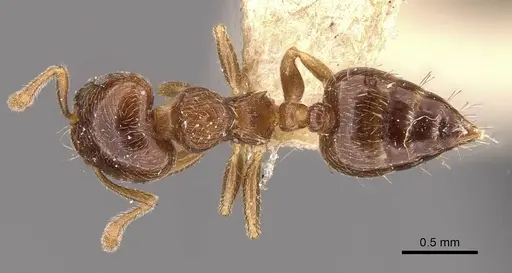
CASENT0908400
View on AntWeb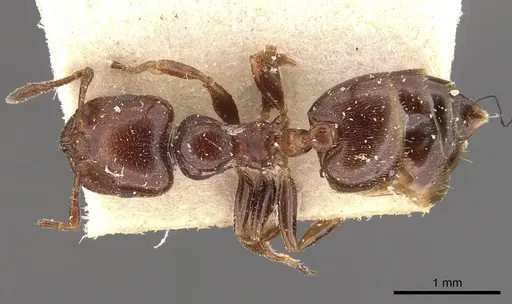
INB0003200229
View on AntWeb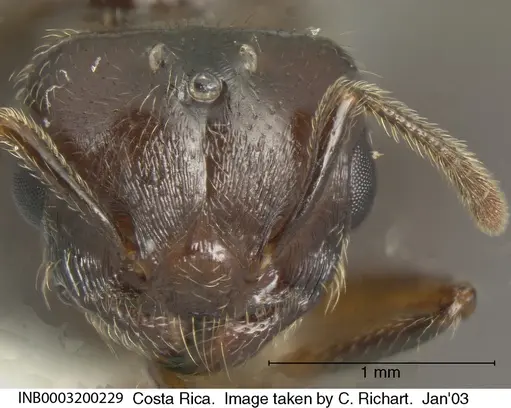
INBIOCRI001282954
View on AntWeb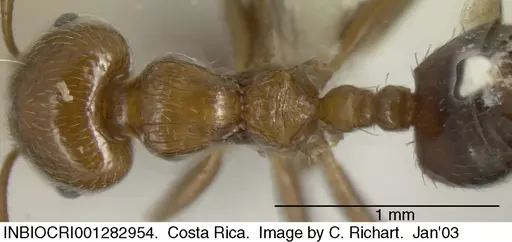
JTLC000002486
View on AntWeb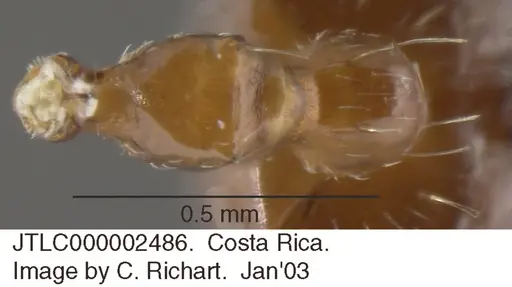
Literature
Loading distribution map...Loading products...