
Crematogaster malahelo
- Sci. Name
- Crematogaster malahelo
- Tribe
- Crematogastrini
- Subfamily
- Myrmicinae
- Author
- Blaimer, 2013
- Distribution
- Found in 1 countries
Introduction
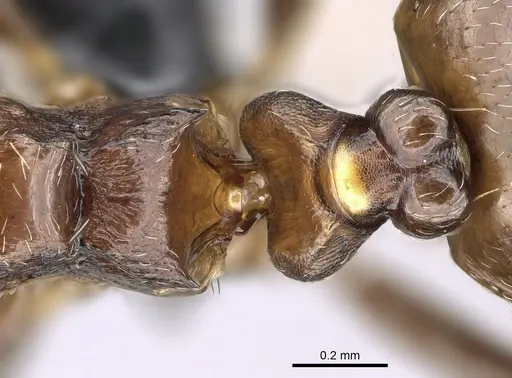
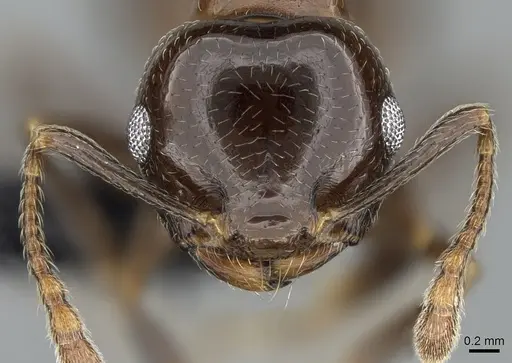
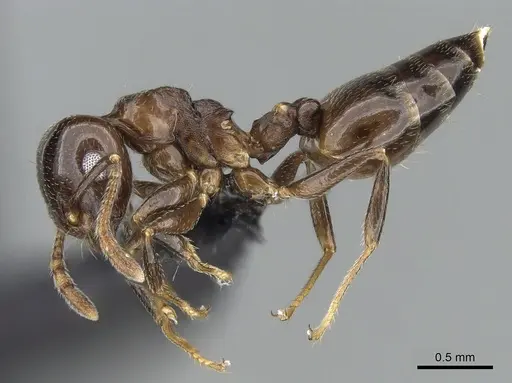
Crematogaster malahelo is a small to medium-sized ant native to the montane forests of Madagascar's central highlands . Workers are reddish brown to dark brown with distinctive morphological features including sharp lateral margins on the pronotum and very short triangular propodeal spines that are nearly absent . This rare species has been collected from only three locations (Kaloy, Manjakatompo, and Andranorovitra), all in disturbed forest fragments at elevations around 1400m . As an arboreal species, they nest in dead twigs above ground rather than in soil . They are part of the Crematogaster degeeri-species-assemblage and are only found sympatrically with Crematogaster mafybe, being allopatric with other species in the group . Only the worker caste has been described; queen biology remains unknown .
Quick Summary
- Difficulty: Expert
- Origin & Habitat: Endemic to montane forest of central highlands in Madagascar, specifically in disturbed forest fragments at elevations around 1400m [1][2].
- Colony Type: Colony structure is unconfirmed, only the worker caste has been described, and no queen or colony size data exists [1].
- Size & Growth:
- Queen: Unknown, queen caste has not been described [1]
- Worker: Small to medium, approximately 1mm in total length, inferred from genus patterns [1]
- Colony: Unknown, no colony size data available
- Growth: Unknown, no development data exists for this species
- Development: Unconfirmed, no development data exists for this species (Development timeline has not been studied.)
- Antkeeping:
- Temperature: Based on Madagascar highland climate (subtropical montane), aim for roughly 22-26°C. Avoid temperatures above 30°C or below 18°C.
- Humidity: Montane forest habitat suggests moderate humidity needs, aim for 60-80% relative humidity. Keep nest substrate slightly moist but not waterlogged.
- Diapause: Unknown, no data on seasonal behavior. Madagascar highlands have mild winters, so a light dormancy period may be beneficial but is not confirmed.
- Nesting: Arboreal nester, in captivity they do well in small test tubes or Y-tong setups with narrow chambers scaled to their tiny size. Provide small hollow spaces or twigs to mimic their natural dead-twig nesting preference [1].
- Behavior: Workers are small and active. Crematogaster ants are known for their characteristic heart-shaped gaster that they raise when alarmed, and they may emit a defensive secretion. Escape prevention is critical due to their tiny size, they can squeeze through very small gaps. Use fine mesh and tight-fitting lids.
- Common Issues: very small size means escapes are likely without fine mesh barriers, no colony data makes it difficult to assess appropriate colony size and growth expectations, unknown queen biology means founding behavior is unconfirmed, rare species with limited availability, wild colonies may be difficult to locate, arboreal nature means they may be more sensitive to humidity fluctuations than ground-nesting ants, only worker caste known, queen and reproductive biology completely unstudied
Nest Preferences
Crematogaster malahelo is an arboreal species that naturally nests in dead twigs above ground [1]. In captivity, provide nest setups that mimic this preference. Small test tubes with cotton water reservoirs work well, or you can use Y-tong nests with narrow chambers scaled to their tiny worker size. Avoid large, open spaces, these ants do best in tight, enclosed chambers that simulate the inside of a twig. You can also offer small pieces of dried twig or bamboo as enrichment. Ensure the nest has some vertical orientation since they naturally live above ground in vegetation.
Feeding and Diet
Like other Crematogaster species, they likely accept sugar sources and protein. Offer sugar water, honey, or diluted syrup as a constant energy source. For protein, small prey items are appropriate given their tiny worker size. Start with small portions and observe what they accept. Since their natural arboreal lifestyle involves foraging in vegetation, they may prefer feeding stations placed at some height rather than on the floor of the outworld.
Temperature and Care
This species comes from Madagascar's central highlands, a subtropical montane climate with moderate temperatures. Aim for a temperature range of 22-26°C. Avoid temperatures above 30°C or below 18°C. A heating cable on one side of the nest can create a gentle gradient if your room temperature runs cool. Place the heating element on top of the nest to avoid evaporating moisture too quickly. Monitor colony activity, if workers cluster together excessively, they may be too cold, if they avoid the heated area, reduce temperature. The montane habitat also suggests they may tolerate cooler conditions than typical tropical ants. [1]
Behavior and Temperament
Crematogaster ants are known for their defensive behavior, when threatened, they raise their distinctive heart-shaped gaster and may emit a defensive secretion. Their small size means they are not dangerous to humans, but they can be aggressive toward intruders. They are active foragers and likely maintain trails to food sources. Escape prevention is critical, their tiny size allows them to squeeze through gaps that larger ants cannot fit through. Use fine mesh on all openings and ensure lids fit tightly. They are arboreal by nature, so they may spend more time exploring vertical surfaces than ground-dwelling species. [1]
Defense Mechanism
Crematogaster ants have a modified, flattened stinger used to wipe or smear venom onto enemies rather than piercing flesh. This smear defense is characteristic of the Crematogaster genus.
Acquiring This Species
Crematogaster malahelo is an extremely rare species that has only been collected from three locations in Madagascar [1]. It is not commonly available in the antkeeping hobby. If you do acquire a colony, it will likely be from a specialized breeder or through careful searching. Given how rare this species is in the wild, captive breeding efforts are particularly valuable for conservation. Do not release any captive colonies, they are endemic to Madagascar and could cause ecological problems if introduced elsewhere.
Challenges and Considerations
This is an expert-level species due to the lack of available biological data. No one has documented queen founding behavior, colony development timelines, or specific care requirements in captivity. You will essentially be pioneering husbandry methods for this species. Expect some experimentation and be prepared to adjust your care based on colony responses. Start with conditions matching related Crematogaster species and adjust based on what you observe. Document your findings carefully, any successful captive breeding would be a significant contribution to knowledge of this poorly understood species.
Frequently Asked Questions
How long does it take for Crematogaster malahelo to develop from egg to worker?
The development timeline is unconfirmed for this species. No specific development data exists for C. malahelo.
What size colony does Crematogaster malahelo reach?
Colony size is unknown, no colony size data has been documented for this species. As a rare species only known from a few specimens, wild colony sizes have not been studied.
Can I keep Crematogaster malahelo in a test tube?
Yes, test tubes work well for this species given their tiny worker size. Use a small test tube with a cotton water reservoir. The narrow chamber mimics their natural dead-twig nesting preference. Ensure excellent escape prevention, their small size means they can escape through tiny gaps that larger ants cannot.
Do Crematogaster malahelo ants sting?
Crematogaster ants have a stinger but due to their very small size, they rarely penetrate human skin. They are not considered dangerous to humans. When threatened, they more commonly raise their heart-shaped gaster and emit a defensive secretion rather than sting.
What temperature do Crematogaster malahelo ants need?
Based on their Madagascar highland origin, aim for 22-26°C. Avoid temperatures above 30°C or below 18°C. The central highlands have a subtropical montane climate with moderate temperatures year-round.
Are Crematogaster malahelo good for beginners?
No, this species is not recommended for beginners. It is an expert-level species due to the complete lack of documented captive care information. No one has successfully established and bred this species in captivity, so you would be pioneering all husbandry methods. Additionally, the species is extremely rare in the hobby.
Do Crematogaster malahelo need hibernation?
Diapause requirements are unknown for this species. The Madagascar highlands have mild winters, so if any dormancy is needed, it would likely be a light rest period at cooler temperatures for a few weeks, rather than a true hibernation. Monitor your colony for signs of natural slowing before attempting any cooling.
Can I keep multiple Crematogaster malahelo queens together?
Not recommended, combining unrelated queens of this species has not been documented. The colony structure is unconfirmed, and there is no data on whether they are monogyne or polygyne. Without this information, attempting to keep multiple queens together carries significant risk of one killing the other.
Why are my Crematogaster malahelo dying?
Without documented care information, diagnosing problems is difficult. Common issues likely include: escape through tiny gaps (use fine mesh), temperature stress (keep between 22-26°C), humidity issues (keep moderately humid but not wet), and stress from insufficient food. Given how rare this species is, any mortality is significant, document conditions carefully and try adjusting temperature and humidity.
Report an Issue
The current care sheet is based fully on literature. See inconsistencies, or something that's incorrect? Please , it will be resolved after review from an admin. Contributing to the blogs tab also helps providing information, to make us be able to further improve the caresheets. Thank you for your support!
References

This caresheet is licensed under CC BY-SA 4.0 .
Community Blogs
CASENT0317768
View on AntWeb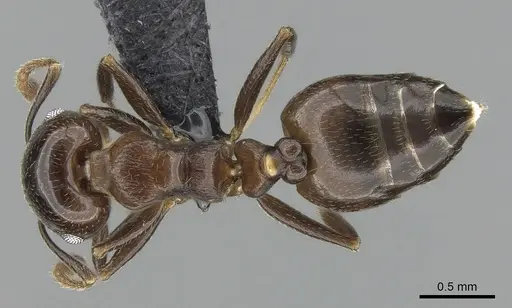
Literature
Loading distribution map...Loading products...