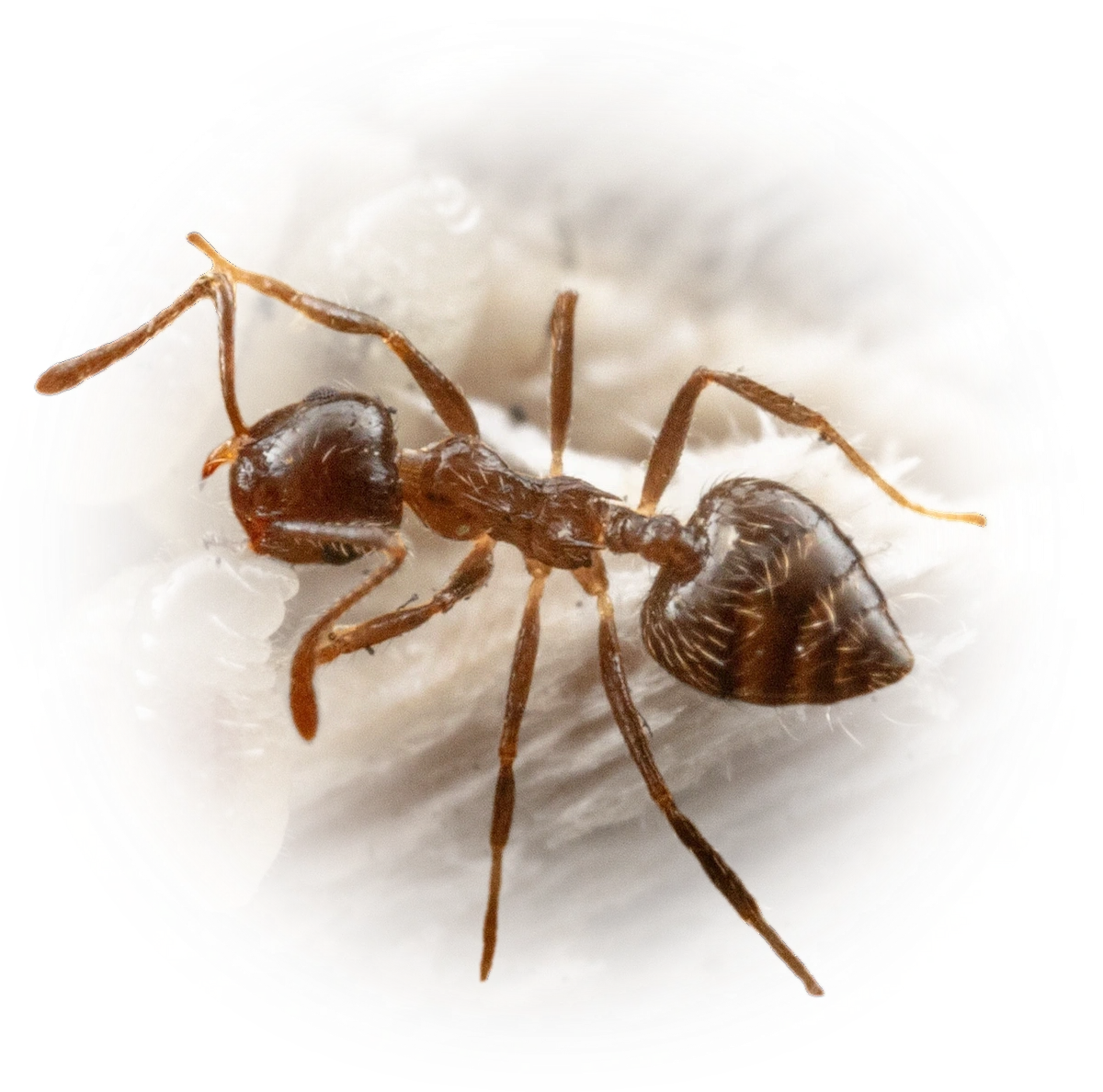
Crematogaster limata
- Sci. Name
- Crematogaster limata
- Subgenus
- Orthocrema
- Tribe
- Crematogastrini
- Subfamily
- Myrmicinae
- Author
- Smith, 1858
- Distribution
- Found in 12 countries
Introduction
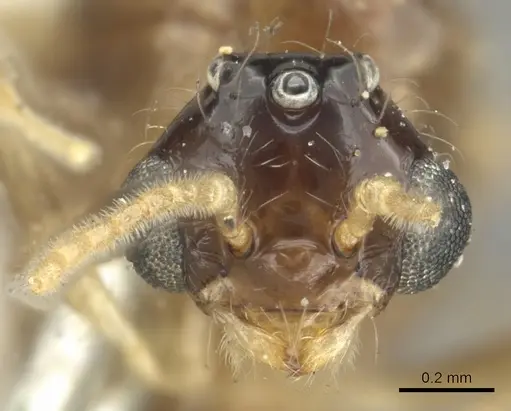
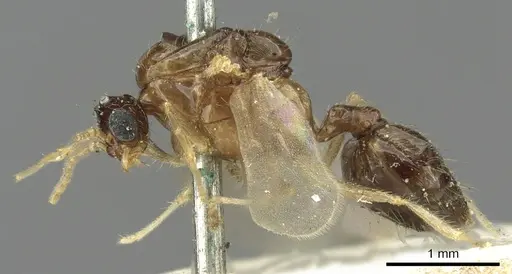
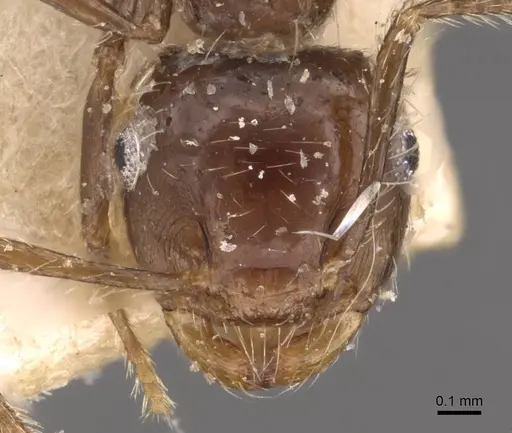
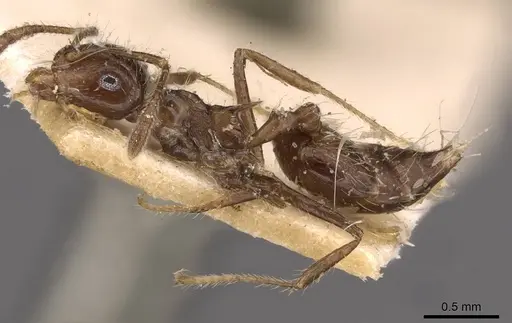
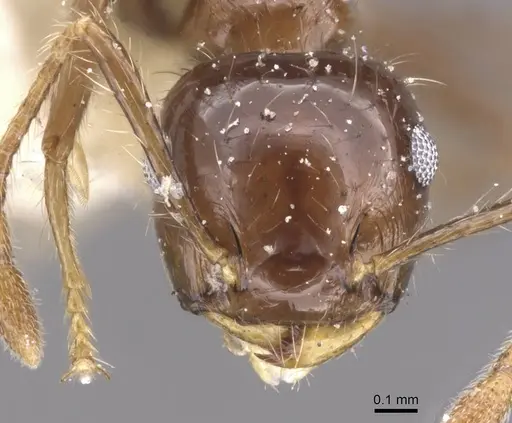
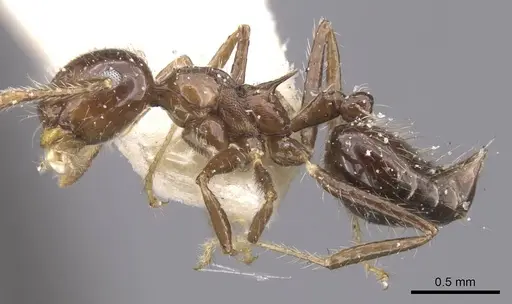
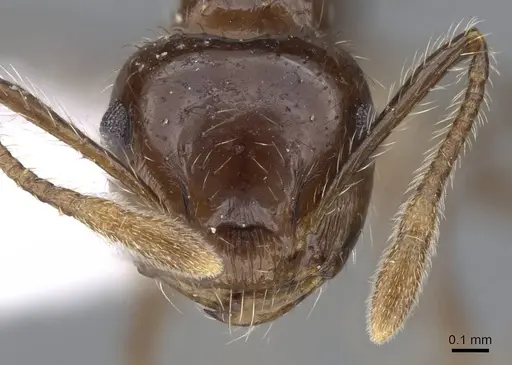
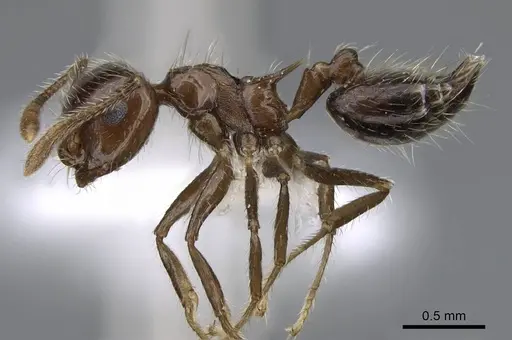
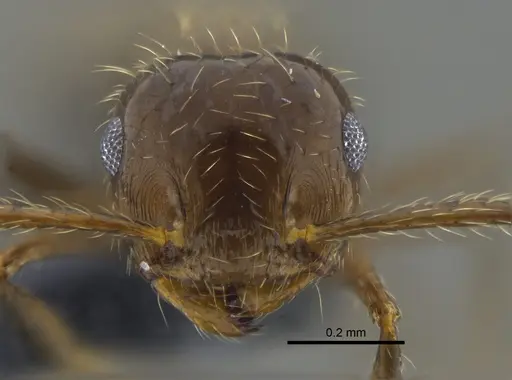
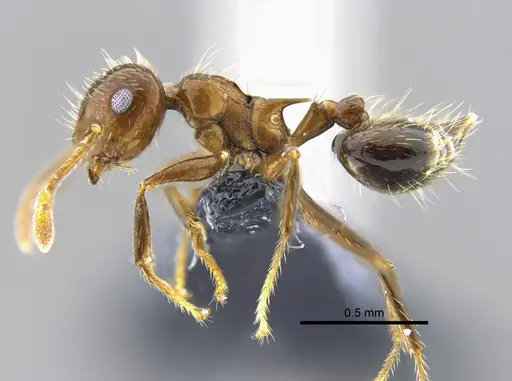
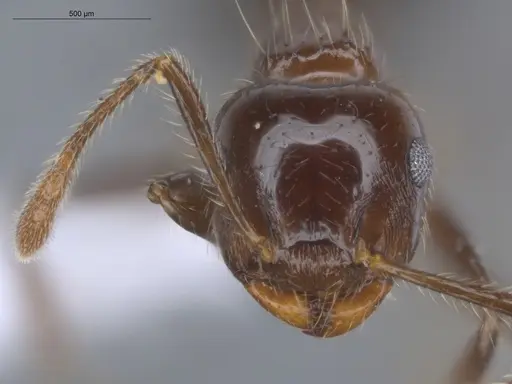
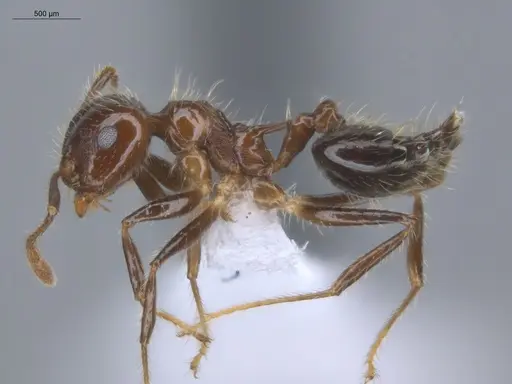
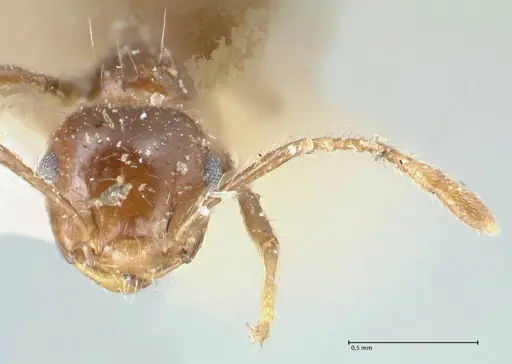
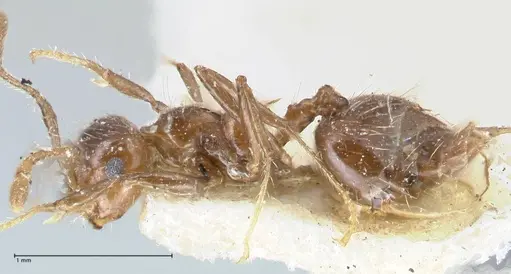
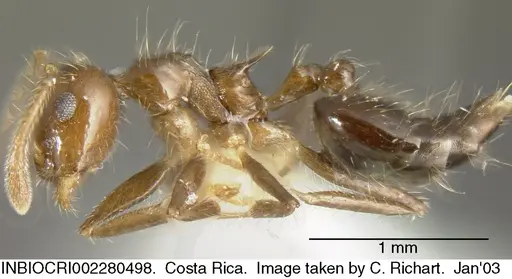
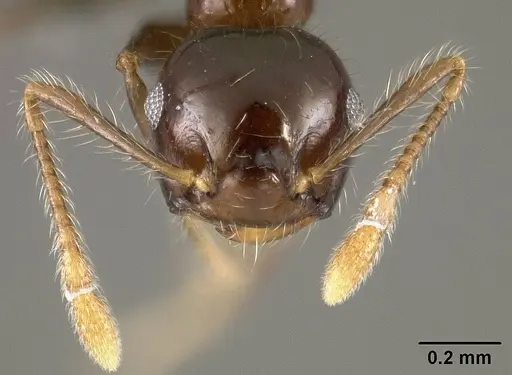
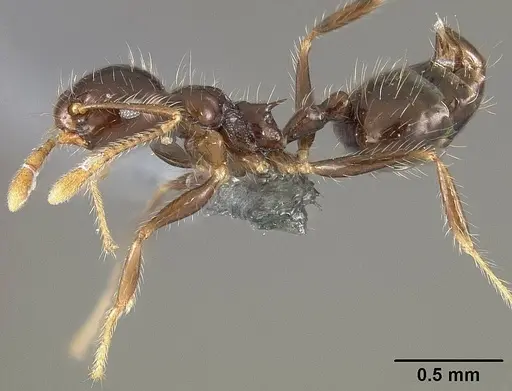
Crematogaster limata is a small, reddish-brown ant with a distinctive heart-shaped gaster that it raises upward when threatened, earning it the common name 'acrobat ant.' Workers are monomorphic and measure around 2.7mm . They have long propodeal spines and are covered in abundant white setae . This species ranges from Mexico to Bolivia and southern Brazil, living in wet forests from sea level to 1000m elevation, and is most abundant in disturbed areas . When defending food resources, workers raise their gaster and exude a venom droplet as a chemical repellent . They are considered a dominant ant species in their habitats . Crematogaster limata has a very flexible lifestyle – colonies can have a single queen or multiple queens (polygynous), and they form polydomous colonies spreading across many nest sites . They nest in almost any small cavity: dead sticks, plant stems, abandoned insect nests, and even Cecropia saplings . They have remarkable ecological associations, including parabiosis (sharing nests and trails) with Camponotus femoratus and periodic 'raids' on Ectatomma tuberculatum nests, where they climb onto the larger ants and lick honeydew from their mouths .
Quick Summary
- Difficulty: Easy
- Origin & Habitat: Wet forests from Mexico to Bolivia and southern Brazil, most abundant in disturbed areas from sea level to 1000m elevation [2][10]
- Colony Type: Flexible – either monogyne (single queen) or polygynous (multiple queens). One wild colony contained 21 physogastric queens. Colonies are polydomous, spreading across multiple nest sites over a cubic meter or more [2].
- Size & Growth:
- Queen: Size not documented, likely larger than workers, estimated ~6-7mm based on Crematogaster genus.
- Worker: 2.7mm [1]
- Colony: Up to large polydomous colonies covering 30m or more in the wild [4]
- Growth: Moderate
- Development: 4-8 weeks (estimated, no direct data for this species) (Timeline based on tropical Myrmicinae, temperature affects development speed.)
- Antkeeping:
- Temperature: 24-28°C (based on tropical habitat [2])
- Humidity: High – keep nest substrate consistently moist but not waterlogged. They inhabit wet forests [2].
- Diapause: No – as a tropical species, they do not require hibernation [10]
- Nesting: Test tubes for founding. For mature colonies, use Y-tong (AAC), plaster, or 3D-printed nests with narrow chambers. Provide multiple connected chambers to match their polydomous tendency. In the wild they nest in dead sticks, small twigs (1.2-1.4 cm diameter), and other cavities [2][6].
- Behavior: Workers are aggressive defenders of food resources – when threatened they raise their heart-shaped gaster and may exude venom droplets [4]. They recruit strongly to protein baits and can dominate food sources [2][5]. Forage day and night. Good climbers – use fluon or barrier gel on smooth surfaces to prevent escape. Polydomous colonies can spread across multiple chambers, ensure all connections are secure [2].
- Common Issues: small workers (2.7mm) mean high escape risk – seal all connections and use barrier on smooth surfaces., humidity requirements can cause mold if ventilation is insufficient., aggressive recruitment can stress or outcompete other species in mixed setups., queen founding type is unconfirmed – starting from a single queen may require patience and suitable conditions., polydomous colonies may need frequent expansion of nest space as they grow.
Housing and Nest Setup
Crematogaster limata is a cavity‑nesting species. In the wild, they nest in dead sticks, small twigs (1.2–1.4 cm diameter), plant stems, and abandoned insect nests [2][6]. In captivity, start founding colonies in test tubes. As the colony grows, move them to Y‑tong, plaster, or 3D‑printed formicaria with narrow, secure chambers. Because they form polydomous colonies, connect several chambers with tubing to allow expansion. Workers are small (2.7 mm), so ensure all passages are tight enough to provide security. Provide a moist nest substrate (e.g., soil or sand kept damp but not waterlogged) and use a water tube to maintain humidity.
Feeding and Diet
These ants are omnivorous and opportunistic. They forage day and night, recruit strongly to protein baits, and frequently tend Homoptera (aphids, scale insects) and extrafloral nectaries for honeydew [2]. In captivity, offer sugar water or honey as a constant carbohydrate source. Provide small insects (crickets, mealworms, fruit flies) 2–3 times per week for protein. They are aggressive recruiters – expect dozens of workers to arrive at a new food source within minutes. Remove uneaten protein after 24 h to avoid mold. Their recruitment speed has been measured at 5.5 ant·seconds⁻¹ [1].
Temperature and Humidity
As a tropical species from Central and South American wet forests, Crematogaster limata needs warm, humid conditions. Keep the nest at 24–28 °C, room temperature often works, but a heating cable may be needed on cooler days. Brief temperature drops are tolerated, but steady warmth is best. Humidity should be high – the substrate should feel damp to the touch. Use a water tube connected to the nest and mist the outworld occasionally, but ensure good ventilation to prevent mold growth. This species does not require diapause or hibernation [2][10].
Colony Structure and Growth
One of the most interesting traits of Crematogaster limata is its flexible social structure. Colonies can be monogynous (single queen) or polygynous (multiple queens). A single wild nest was found with 21 physogastric queens [2]. They are also polydomous – the colony spreads across many connected cavities, with a central nest containing the queen and brood and peripheral nests containing only workers. In captivity, you may need to add chambers as the colony expands. The first workers (nanitics) appear after about 4–8 weeks (estimated), then steady growth follows. Large colonies can become impressive, covering several interconnected chambers [2][4].
Behavior and Defense
When threatened, Crematogaster limata workers raise their heart‑shaped gaster and may exude a droplet of venom as a repellent – this is why they are called acrobat ants [4]. They are aggressive defenders of food resources and often dominate baits in the wild [4][5]. Workers forage both day and night and recruit heavily to discovered food [2]. They have fascinating interspecific interactions: they conduct periodic ‘raids’ on nests of the larger ant Ectatomma tuberculatum, climbing onto the Ectatomma workers and licking honeydew from their bodies, which is tolerated [2][9]. They also live in parabiotic associations with Camponotus femoratus, sharing nests and trails while using different food resources [7][8]. In captivity, they are generally calm when the nest is undisturbed, but they will defend their colony against perceived threats.
Unique Ecological Associations
Crematogaster limata stands out for its rich web of ecological interactions. It nests in parabiosis with Camponotus femoratus in ant gardens, sharing the same nest structure and trail system [7][8]. Ant gardens are still debated – Orivel & Leroy (2011) note that this species likely does not form true ant gardens, it is often confused with Crematogaster carinata and Crematogaster levior [11]. Additionally, they have a cleptobiotic relationship with Ectatomma tuberculatum, stealing honeydew directly from the larger ants [9][2]. Many C. limata nests contain abundant inquiline beetles of the genus Gnostus (Ptinidae) [2]. The syrphid fly Pseudomicrodon biluminiferus has also been found as a predator of their brood [12]. These associations make C. limata particularly interesting for observing complex ant interactions.
Frequently Asked Questions
Is Crematogaster limata a good beginner ant?
Yes, it is beginner-friendly. It is hardy, does not need hibernation, and is not aggressive toward keepers. The main challenges are maintaining high humidity and containing their strong foraging activity. Their small size (2.7 mm) means they can escape easily if the setup is not secure [2][1].
How long does it take for Crematogaster limata to produce first workers?
There is no direct data for this species. For tropical Myrmicinae, the usual time from egg to worker is 4–8 weeks, depending on temperature. Keep the queen warm (24–28 °C) and undisturbed.
Can I keep multiple queens together?
Yes, C. limata is facultatively polygynous. Wild colonies often have multiple queens, and a nest containing 21 queens has been documented [2]. However, when combining unrelated foundress queens, introduce them carefully and monitor for aggression. Pleometrosis (multiple foundresses) has been observed but is not guaranteed to succeed in captivity [2].
Do Crematogaster limata ants sting?
They have a stinger but their main defense is raising the gaster and exuding a venom droplet as a chemical repellent – this is why they are called acrobat ants [4]. They rarely use the stinger on humans and are not considered dangerous.
What do Crematogaster limata eat?
They are omnivores. Offer sugar water or honey as a constant energy source, and provide small insects (crickets, mealworms, fruit flies) 2–3 times per week. In the wild they also tend Homoptera for honeydew and recruit to protein baits [2][1].
Do they need hibernation?
No. As a tropical species from Central and South America, they do not require diapause. Keep them at warm room temperature (24–28 °C) all year [2][10].
What size colony do they reach?
Wild colonies can be large and polydomous, spanning 30 m or more [4]. In captivity, healthy colonies can reach several thousand workers over several years. They are considered a dominant ant species in their range [4][5].
How do I identify Crematogaster limata?
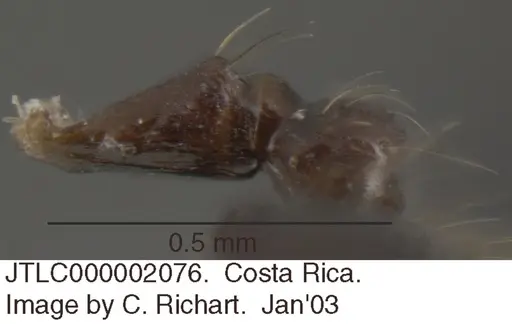
Workers are small (2.7 mm), red-brown, with a heart-shaped gaster. They have long propodeal spines and abundant white setae on the body. The key feature within the limata complex is the absence of ventral teeth on both the petiole and postpetiole – this differentiates them from C. carinata, C. brasiliensis, and C. tenuicula [2][3].
Why are they called acrobat ants?
When disturbed, they raise their heart-shaped gaster upward in a handstand-like pose, sometimes releasing a venom droplet. This acrobatic posture gives them their common name [2][4].
Report an Issue
The current care sheet is based fully on literature. See inconsistencies, or something that's incorrect? Please , it will be resolved after review from an admin. Contributing to the blogs tab also helps providing information, to make us be able to further improve the caresheets. Thank you for your support!
References

This caresheet is licensed under CC BY-SA 4.0 .
Community Blogs
CASENT0628107
View on AntWeb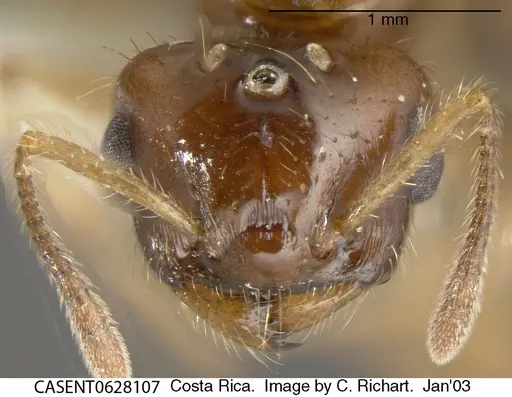
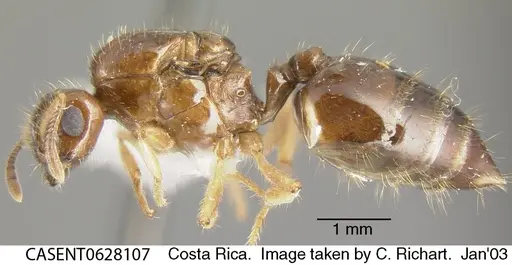
CASENT0902158
View on AntWeb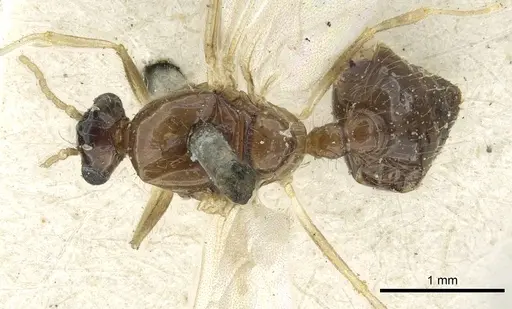
CASENT0908434
View on AntWeb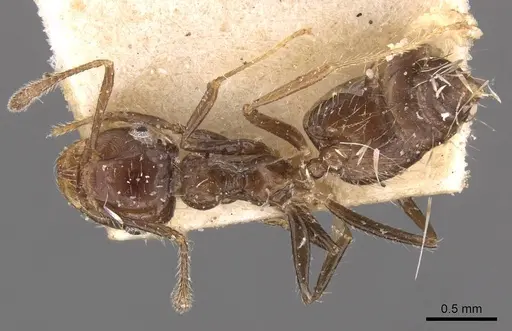
CASENT0912774
View on AntWeb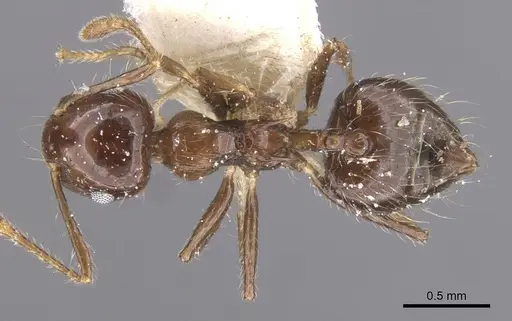
CASENT0914571
View on AntWeb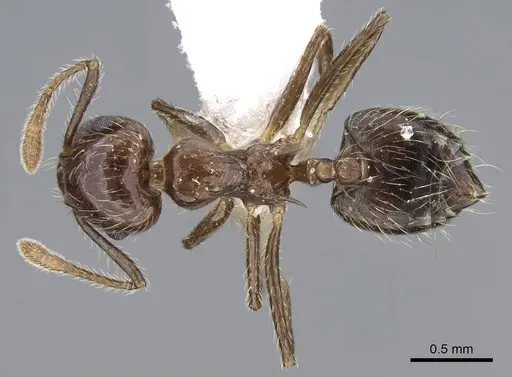
CBUMAGENT41952
View on AntWeb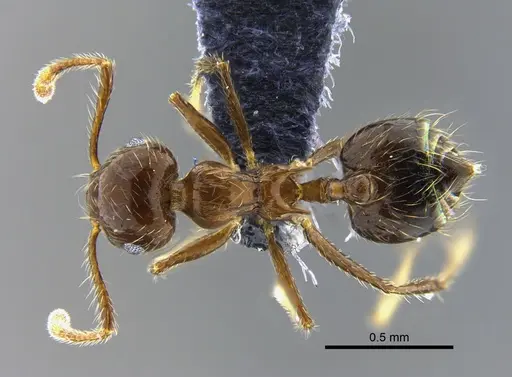
ECOFOG-IT14-1001-10
View on AntWeb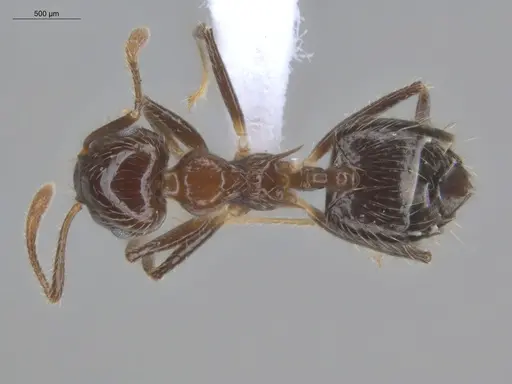
FOCOL1627
View on AntWeb
FOCOL1628
View on AntWeb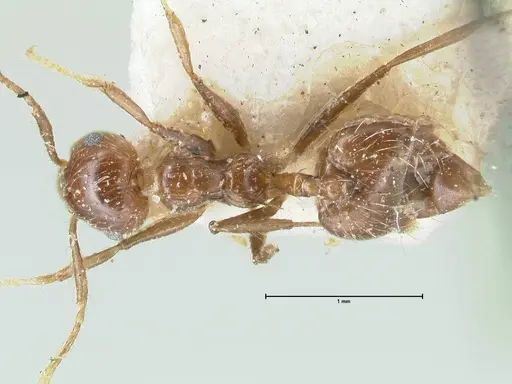
FOCOL1629
View on AntWeb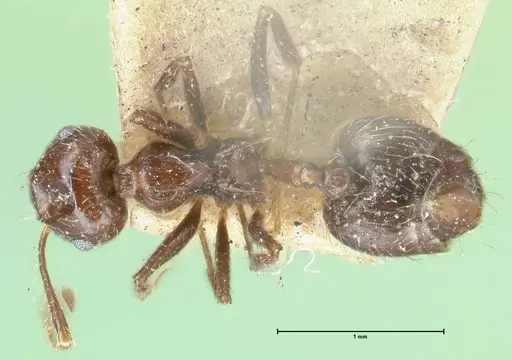
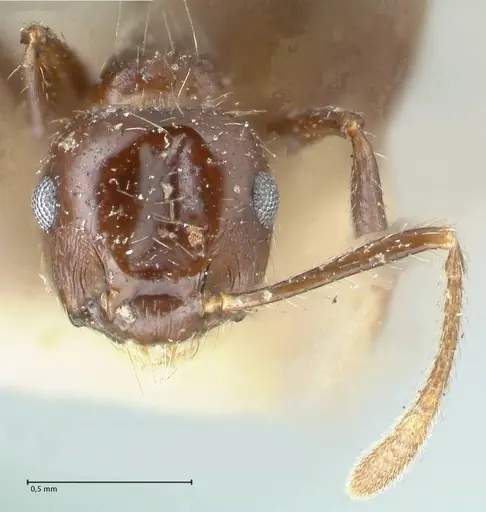
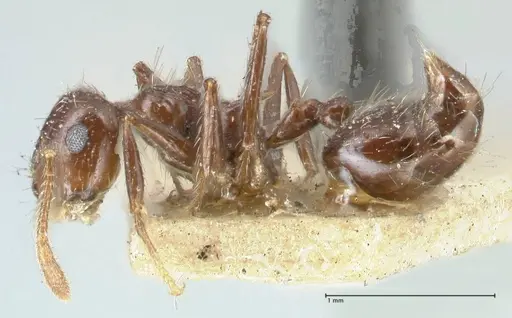
INBIOCRI002280498
View on AntWeb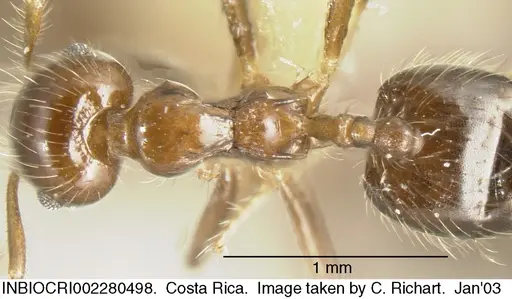
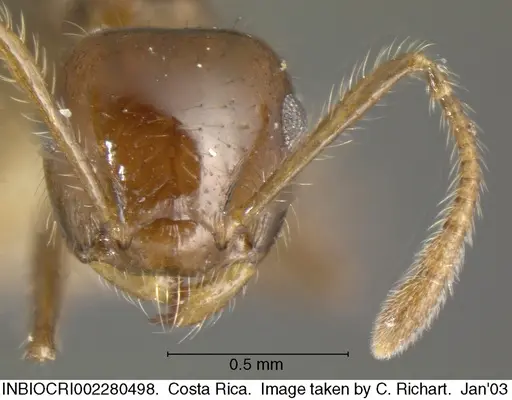
JTLC000002076
View on AntWeb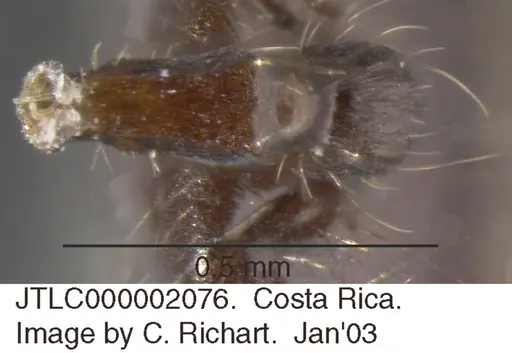
USNMENT01124278
View on AntWeb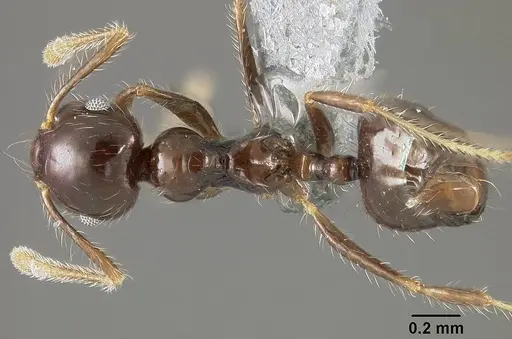
Literature
Loading distribution map...Loading products...