
Crematogaster jehovae
- Sci. Name
- Crematogaster jehovae
- Tribe
- Crematogastrini
- Subfamily
- Myrmicinae
- Author
- Forel, 1907
- Distribution
- Found in 1 countries
Introduction
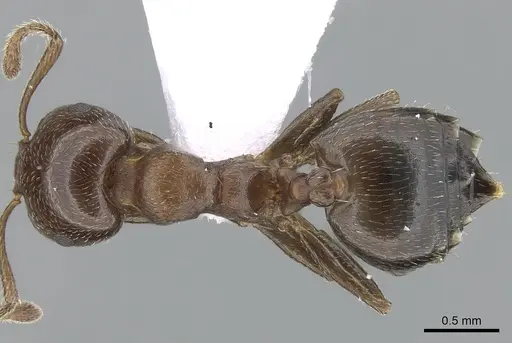
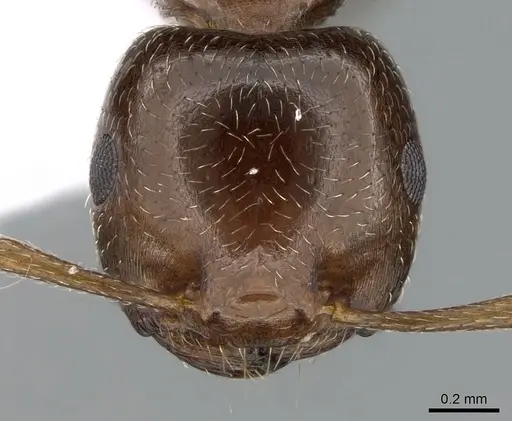
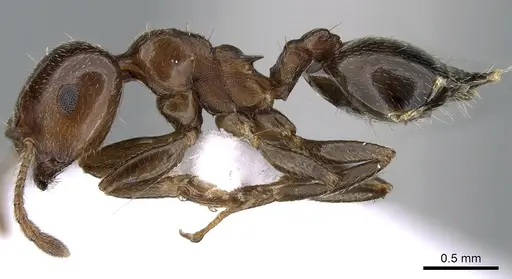
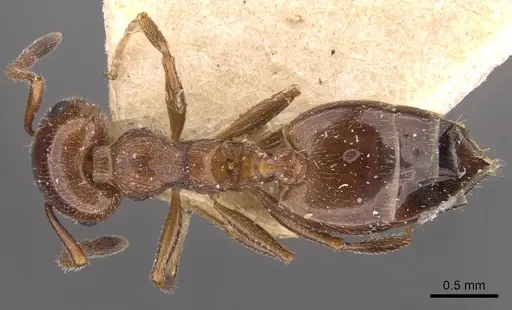
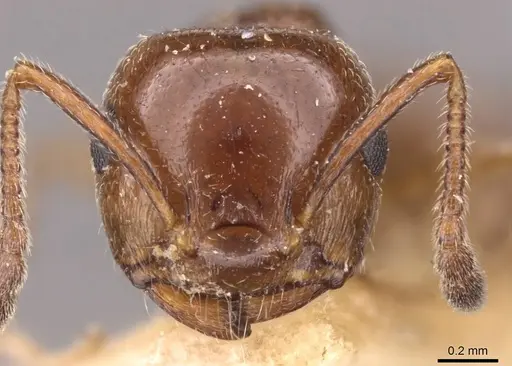
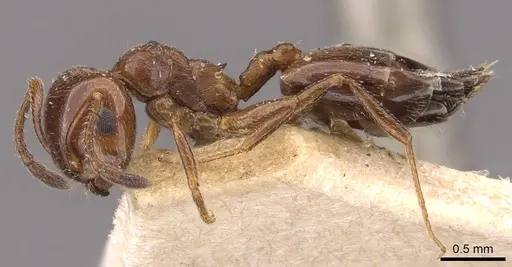
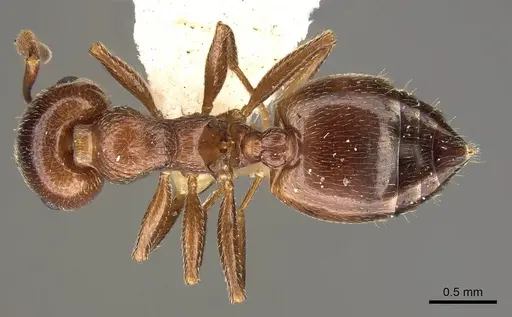
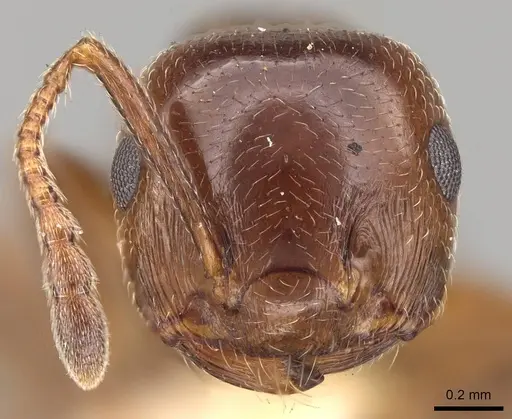
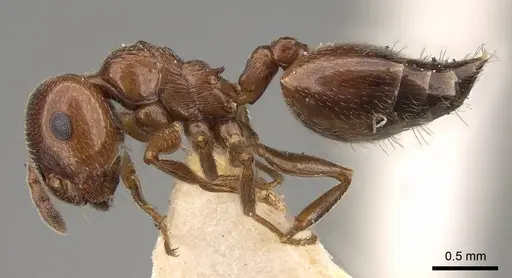
Crematogaster jehovae is a small reddish-brown ant native to the Mediterranean region and Middle East. Workers have the characteristic Crematogaster heart-shaped abdomen that curls upward when threatened. The species has short propodeal spines and a postpetiole that is slightly broader than long. This ant is found across Israel, Greece, Turkey, Cyprus, Egypt, Jordan, Lebanon, Iraq, Montenegro, Serbia, Saudi Arabia, United Arab Emirates, and Yemen, living in warm Mediterranean and arid Middle Eastern habitats at altitudes ranging from sea level to over 1500m . This species nests at the bases of trees and shrubs like Tamarix and olive trees, where workers tend scale insects for honeydew. It has been documented associating with lycaenid butterfly larvae, particularly Cigaritis acamas. Unlike some aggressive Crematogaster species, C. jehovae is not particularly aggressive and rarely causes pest outbreaks on citrus despite being associated with soft brown scale and black citrus aphid .
Quick Summary
- Difficulty: Medium
- Origin & Habitat: Mediterranean and Middle Eastern regions, found in Israel, Greece, Turkey, Cyprus, Egypt, Jordan, Lebanon, Iraq, Montenegro, Serbia, Saudi Arabia, UAE, and Yemen. Nests at bases of trees and shrubs in warm, dry to moderately humid habitats from sea level to 1520m altitude [1][2][5][7].
- Colony Type: Colony structure is not well-documented in scientific literature. Likely single-queen colonies based on typical Crematogaster patterns, though this requires confirmation for this specific species.
- Size & Growth:
- Queen: Size data unavailable, queen measurements have not been specifically documented for this species
- Worker: Approximately 4mm, inferred from similar Crematogaster species descriptions [5]
- Colony: Colony size is not directly documented, typical Crematogaster colonies reach several hundred workers
- Growth: Moderate
- Development: Development timeline is unconfirmed for this species (Specific development data is unavailable)
- Antkeeping:
- Temperature: Keep at 24-28°C. This Mediterranean species prefers warm conditions. A heating cable on one side of the nest creates a temperature gradient allowing workers to regulate their exposure.
- Humidity: Moderate humidity. Provide a moist nest chamber but allow portions to dry. These ants naturally inhabit relatively dry Mediterranean environments with access to moisture at tree bases where they tend scale insects.
- Diapause: Yes, required during winter months. Given its Mediterranean distribution from Greece to Israel, the species experiences seasonal temperature drops and benefits from a winter rest period at 10-15°C for 2-3 months.
- Nesting: Prefers nests at ground level near trees and shrubs. In captivity, a Y-tong (AAC) or plaster nest works well. Provide a shallow water reservoir. The species nests under stones and at tree bases in the wild.
- Behavior: Workers are active foragers that tend homopteran insects (scale insects and aphids) for honeydew. They are not particularly aggressive and rarely sting, though they may bite if provoked. The heart-shaped abdomen can be raised as a defensive display. Workers are moderate climbers, ensure escape prevention is adequate. They are primarily nocturnal or crepuscular foragers in warmer climates.
- Common Issues: colonies may fail if kept too cold, maintain warm temperatures year-round except during hibernation, overwatering can cause fungal problems in nests, allow substrate to partially dry between waterings, wild-caught colonies may introduce scale insects or parasites that can harm the colony, slow founding phase, queens may take months to produce first workers, escape risk is moderate, ensure nest connections are secure
Nest Preferences and Housing
Crematogaster jehovae naturally nests at the bases of trees and shrubs like Tamarix and olive trees, often under stones or in soil. In captivity, provide a nest that allows them to maintain moderate humidity while having access to dry areas. Y-tong (AAC) nests or plaster nests work well, both allow you to control moisture levels. A shallow water reservoir attached to one side of the nest provides humidity without waterlogging the entire colony space. Keep the nest in a warm location, ideally with a gentle temperature gradient so workers can move between warmer and cooler areas. Outworld space should be moderate, these ants are active foragers but do not need enormous spaces. Ensure connections between nest and outworld are secure, as workers can squeeze through small gaps when motivated. [5]
Feeding and Diet
In the wild, these ants are strongly associated with tending scale insects (superfamily Coccoidea) and aphids for honeydew. They also consume small insects and likely scavenge. In captivity, offer sugar water or honey as a constant energy source. For protein, provide small insects like fruit flies, small mealworms, or crickets. Live prey is preferred as it stimulates foraging behavior, but they will accept pre-killed insects. Given their association with scale insects, they may have a strong sweet tooth, honey water should be available at all times. Feed protein 2-3 times per week, removing uneaten prey after 24 hours. Sugar water can be offered in a test tube with a cotton wick or small bottle cap. [5][4]
Temperature and Seasonal Care
This Mediterranean species thrives at warm temperatures between 24-28°C. Lower temperatures will slow activity and development. During summer, room temperature is often sufficient, but you may need a heating cable in cooler environments. Place the heating cable on top of the nest, not underneath, to avoid evaporating moisture too quickly. In winter, provide a diapause (hibernation) period of 2-3 months at 10-15°C. This mimics their natural seasonal cycle in the Mediterranean. Reduce feeding during hibernation and keep the nest slightly drier. Do not hibernate colonies that are still in the founding stage or very small. Bring them out of hibernation gradually in spring by slowly increasing temperature. [1][2]
Behavior and Defense
Crematogaster jehovae workers are not particularly aggressive compared to some other Crematogaster species. They display the characteristic defensive behavior of raising their heart-shaped abdomen upward when threatened, which serves as a warning display. They may bite if handled roughly, but stings are rare and not medically significant. Workers are active foragers, primarily hunting at night or during cooler parts of the day in their natural habitat. They communicate through chemical trails and will recruit nestmates to good food sources. Colonies establish multiple entrance points to their nest and maintain activity throughout the year except during winter dormancy. [4][5]
Colony Founding
The founding behavior of Crematogaster jehovae has not been directly documented in scientific literature. Based on typical Crematogaster genus patterns, the queen likely seals herself in a small chamber and survives on stored fat reserves until her first workers emerge. The founding phase may take several months, so patience is essential. Provide the founding queen with a moist test tube setup and keep her in a warm, dark, undisturbed location. Do not check on her frequently as this can stress her. Once the first nanitic workers emerge, you can begin offering tiny amounts of sugar water, but the colony will primarily rely on the queen's reserves until worker numbers increase.
Growth and Development
Specific development timeline data is not available for this species. Based on related Crematogaster species, development is temperature-dependent, cooler temperatures will slow it significantly. The first workers are typically smaller than mature workers. Growth rate is moderate, colonies may take several months to reach 50 workers and a year or more to reach several hundred. Provide consistent warmth, adequate food, and stable humidity to support development. Avoid disturbing the nest during critical developmental periods.
Frequently Asked Questions
How long does it take for Crematogaster jehovae to produce first workers?
The exact timeline is not documented. The founding queen may take several months before her first workers emerge, so patience is essential.
What do Crematogaster jehovae ants eat?
They primarily feed on honeydew from scale insects and aphids, plus small insects. In captivity, offer constant access to sugar water or honey, and protein sources like small insects 2-3 times weekly.
Do Crematogaster jehovae ants sting?
They can bite if handled but are not particularly aggressive and stings are rare. Their main defense is raising their heart-shaped abdomen as a warning display.
What temperature do Crematogaster jehovae ants need?
Keep them warm at 24-28°C. This Mediterranean species prefers warm conditions. A heating cable on the nest can help maintain optimal temperature, especially in cooler climates.
Do Crematogaster jehovae ants need hibernation?
Yes, they benefit from a winter diapause. Given their Mediterranean distribution, provide 2-3 months at 10-15°C during winter to mimic their natural seasonal cycle.
Are Crematogaster jehovae good for beginners?
They are moderate difficulty. While not as challenging as some species, the slow founding phase and specific temperature requirements may challenge complete beginners. Their non-aggressive nature and moderate size make them manageable once established.
How big do Crematogaster jehovae colonies get?
Colony size is not well-documented, but typical Crematogaster colonies reach several hundred workers. Growth is moderate over several years.
Can I keep multiple Crematogaster jehovae queens together?
The colony structure is not well-documented for this species. Combining unrelated queens is not recommended as it has not been studied and may result in fighting.
What type of nest is best for Crematogaster jehovae?
Y-tong (AAC) or plaster nests work well. They naturally nest at tree bases in the wild, so provide moderate humidity with some dry areas available. A shallow water reservoir helps maintain moisture.
Why is my Crematogaster jehovae colony dying?
Common causes include: temperatures too low (keep above 24°C), excessive moisture causing fungal problems, insufficient food (especially sugar sources), or stress from too much disturbance during founding. Wild-caught colonies may also introduce parasites.
Report an Issue
The current care sheet is based fully on literature. See inconsistencies, or something that's incorrect? Please , it will be resolved after review from an admin. Contributing to the blogs tab also helps providing information, to make us be able to further improve the caresheets. Thank you for your support!
References

This caresheet is licensed under CC BY-SA 4.0 .
Community Blogs
Literature
Loading distribution map...Loading products...