
Crematogaster jeanneli
- Sci. Name
- Crematogaster jeanneli
- Subgenus
- Orthocrema
- Tribe
- Crematogastrini
- Subfamily
- Myrmicinae
- Author
- Santschi, 1914
- Distribution
- Found in 1 countries
Introduction
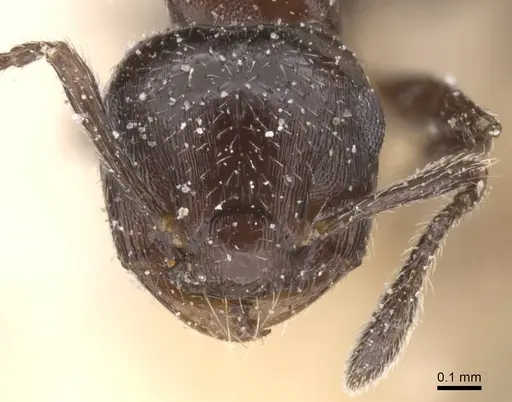
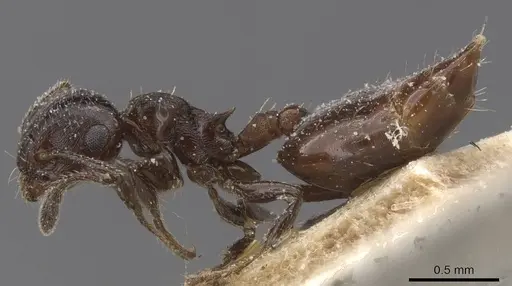
Crematogaster jeanneli is a small ant species belonging to the Myrmicinae subfamily. Workers are characterized by their distinctive heart-shaped gaster that can be raised over the head like an acrobat - giving these ants their common name 'acrobat ants'. The species was first described by Santschi in 1914 from specimens collected at River Tchania in Kenya at 1520 meters elevation. This is a poorly documented species known only from highland East Africa, with confirmed records from Kenya and Rwanda including Akagera National Park and Nyungwe Tropical Rain Forest .
Quick Summary
- Difficulty: Medium
- Origin & Habitat: Eastern Africa, specifically Kenya and Rwanda. The type locality is River Tchania in Kenya at 1520m elevation, and specimens have been collected in Akagera National Park in the east and Nyungwe Tropical Rain Forest in the southwest [1][2]. The Rwanda locations are tropical rain forest habitats, suggesting this species prefers humid, shaded forest environments.
- Colony Type: Colony structure is unconfirmed. No data exists on whether this species forms single-queen or multi-queen colonies.
- Size & Growth:
- Queen: Size data unavailable, no measurements exist for this species. Based on typical Crematogaster genus patterns, queens likely fall in the 7-10mm range.
- Worker: Size data unavailable, no specific measurements documented. Based on genus patterns, workers likely range 3-6mm.
- Colony: Unknown, no colony size data available for this species.
- Growth: Unknown, no development data exists.
- Development: Unknown, no species-specific development data exists. (No data available for this species.)
- Antkeeping:
- Temperature: Keep at 22-26°C. This range is inferred from the tropical rain forest habitat in Rwanda and typical Crematogaster preferences. Provide a gentle temperature gradient allowing workers to self-regulate.
- Humidity: High humidity required, aim for 70-85%. The species comes from humid tropical forest environments in Rwanda. Keep the nest substrate consistently moist but not waterlogged.
- Diapause: No, given the African tropical distribution, hibernation is likely not necessary.
- Nesting: No specific nesting data exists for this species. Based on typical Crematogaster behavior and the forest habitat, they likely nest in rotting wood, under bark, or in soil cavities. In captivity, a Y-tong (AAC) nest or plaster nest with good moisture retention works well for forest-dwelling Myrmicinae.
- Behavior: Temperament is unconfirmed, but Crematogaster species are generally moderate in aggression. They possess a modified stinger used to smear venom onto enemies rather than piercing. When threatened, they raise their abdomen in a defensive display and may release a foul-smelling secretion. They are arboreal to ground-nesting and typically forage in trees and on vegetation. Escape prevention should be good as workers are small but not tiny, standard barriers should suffice. They likely forage for honeydew and small insects.
- Common Issues: no specific data on founding behavior makes initial colony establishment uncertain, humidity requirements are high, incorrect moisture levels may cause colony decline, no documented diet preferences, may require experimentation to determine accepted foods, tropical origin means temperature drops below 20°C could stress the colony, no documented colony size data available
Natural History and Distribution
Crematogaster jeanneli is known only from eastern Africa, specifically Kenya and Rwanda. The species was originally described from Kenya's River Tchania at 1520 meters elevation, indicating it prefers highland habitats. More recent surveys have documented the species in Rwanda, including Akagera National Park in the east and Nyungwe Tropical Rain Forest in the southwest [1][2]. The Rwanda records from tropical rain forest environments suggest this species thrives in humid, shaded forest habitats at moderate elevations. The limited distribution data makes it difficult to determine the full range of this species, as it may occur in similar highland forest habitats throughout the Albertine Rift region.
Housing and Nesting
Based on the species' forest habitat in Rwanda, provide a nest that maintains high humidity. A Y-tong (AAC) nest or plaster formicarium works well for forest-dwelling Myrmicinae. The nest should have chambers scaled appropriately for workers likely in the 3-6mm range. Keep the nest substrate consistently moist, the substrate should feel damp to the touch but not have standing water. Provide an outworld area for foraging with access to sugar sources and protein. Since this is likely an arboreal to ground-nesting species, include some vertical space or branches in the outworld. Use standard escape prevention measures appropriate for small ants.
Feeding and Diet
No specific diet data exists for Crematogaster jeanneli. Based on typical Crematogaster behavior, they likely feed on honeydew from aphids and scale insects, plus small insects for protein. In captivity, offer sugar water or honey constantly as an energy source. For protein, offer small insects like fruit flies, small mealworms, or cricket pieces. Some Crematogaster species are attracted to sweet foods more than others, so experimentation may be needed. Feed protein 2-3 times per week and ensure sugar sources are available at all times.
Temperature and Seasonal Care
Maintain temperatures between 22-26°C based on the species' tropical rain forest origin in Rwanda. A slight temperature gradient allows the colony to self-regulate. Room temperature in most homes should work well, but a heating cable on one side of the nest can help maintain optimal range if needed. Place heating on top of the nest to avoid drying. No data exists on diapause requirements, but given the African tropical distribution, a true hibernation is likely not necessary. Some keepers reduce activity in winter months by lowering temperatures slightly (by 2-3°C), but this is optional for tropical species.
Frequently Asked Questions
How long does it take for Crematogaster jeanneli to produce first workers?
No species-specific data exists. Development time is unknown for this species.
What do Crematogaster jeanneli ants eat?
No documented diet exists for this species. Based on typical Crematogaster behavior, they likely accept sugar water or honey for energy and small insects for protein. Offer both and monitor acceptance.
Do Crematogaster jeanneli ants sting?
Crematogaster ants have a modified stinger used to smear venom onto enemies rather than sting. When threatened, they may raise their abdomen in a defensive display and release a foul-smelling secretion. They are not aggressive toward humans.
What temperature should I keep Crematogaster jeanneli at?
Maintain 22-26°C based on the species' tropical rain forest habitat in Rwanda. Room temperature in most homes falls within this range. A gentle gradient is beneficial but not required.
Can I keep multiple Crematogaster jeanneli queens together?
No data exists on colony structure for this species. The colony type is unconfirmed. Do not combine unrelated foundress queens unless you have specific data indicating they can found colonies pleometrotically.
How big do Crematogaster jeanneli colonies get?
Colony size is unknown, no colony size data has been documented for this species.
Do Crematogaster jeanneli need hibernation?
No data exists on overwintering requirements. Given the species' origin in tropical Rwanda, a true hibernation is likely not necessary.
Are Crematogaster jeanneli good for beginners?
This species is not well-documented in the antkeeping hobby, and the lack of species-specific care data makes it more challenging than established species. The high humidity requirements and unknown founding behavior present challenges. Consider starting with more established Crematogaster species or those with better documentation.
What humidity do Crematogaster jeanneli need?
High humidity is required, aim for 70-85% based on the species' tropical rain forest habitat. Keep the nest substrate consistently moist but not waterlogged. Mist the outworld occasionally and ensure water is always available.
When should I move Crematogaster jeanneli to a formicarium?
No specific guidance exists for this species. Follow standard practice: keep the colony in a test tube setup until the colony reaches 15-20 workers and shows signs of outworld exploration, then transition to a formicarium with appropriate humidity control.
Report an Issue
The current care sheet is based fully on literature. See inconsistencies, or something that's incorrect? Please , it will be resolved after review from an admin. Contributing to the blogs tab also helps providing information, to make us be able to further improve the caresheets. Thank you for your support!
References

This caresheet is licensed under CC BY-SA 4.0 .
Community Blogs
CASENT0912773
View on AntWeb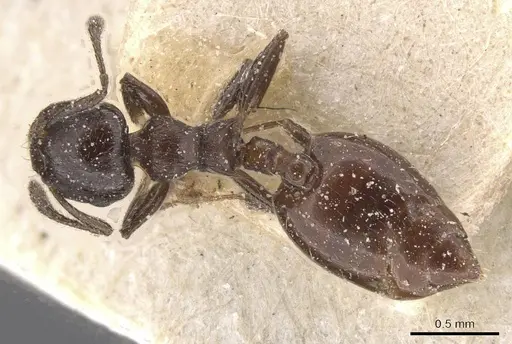
Literature
Loading distribution map...Loading products...