
Crematogaster frivola
- Sci. Name
- Crematogaster frivola
- Tribe
- Crematogastrini
- Subfamily
- Myrmicinae
- Author
- Forel, 1902
- Distribution
- Found in 1 countries
Introduction
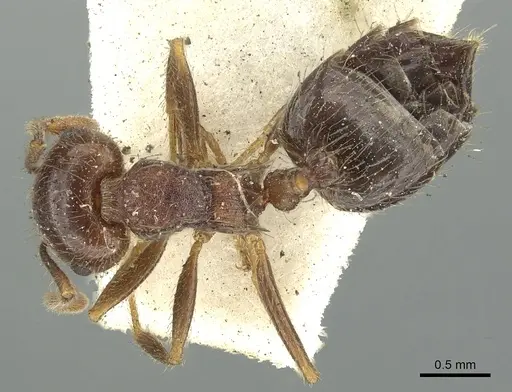
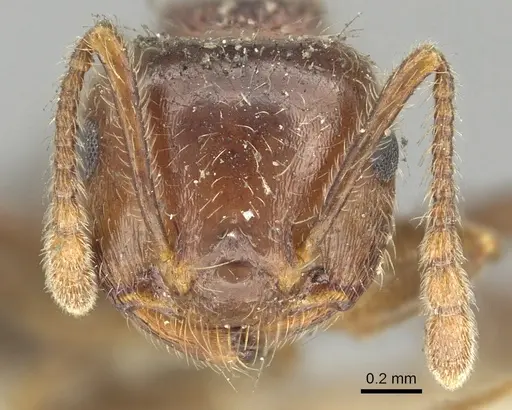
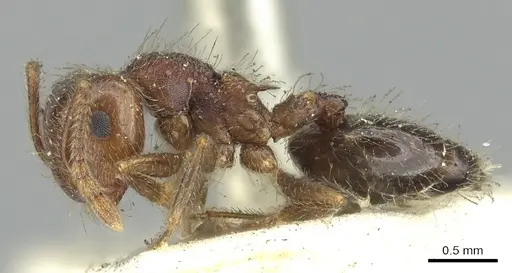
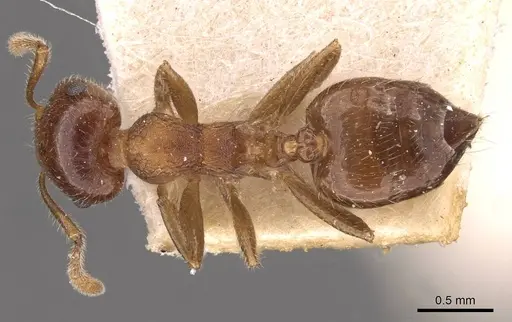
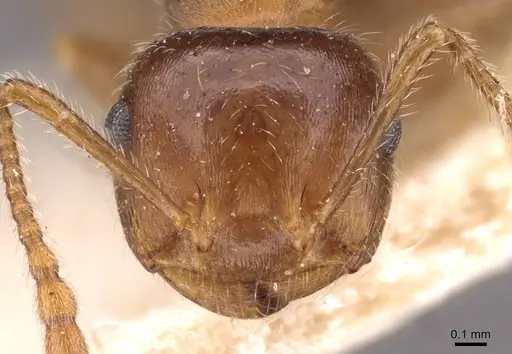
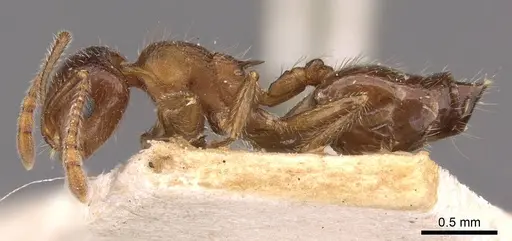
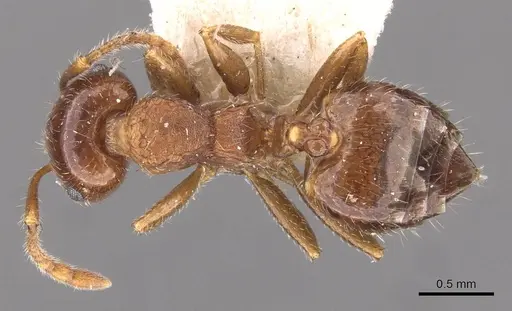
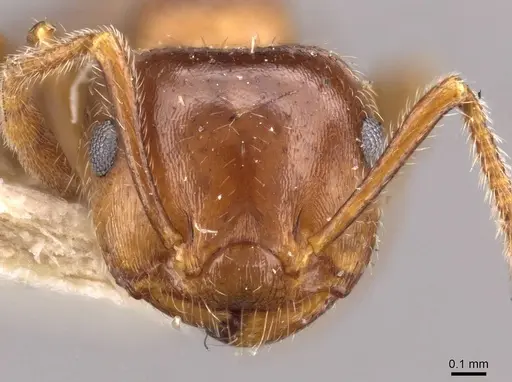
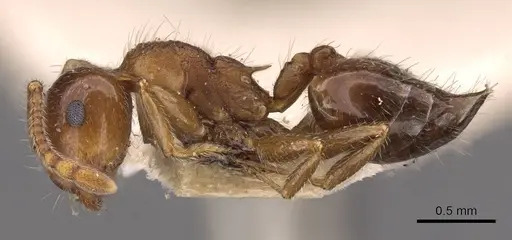
Crematogaster frivola is a small myrmicine ant native to Western Australia, found throughout the Southwest Botanical Province. Workers are tiny ants known for raising their abdomen like an acrobat when disturbed - giving them their common name. They have a smooth, glossy body and are commonly seen trailing along the ground and climbing vegetation in search of food.
Quick Summary
- Difficulty: Medium
- Origin & Habitat: Western Australia, specifically throughout the Southwest Botanical Province. They inhabit arid to semi-arid regions and are commonly found trailing on the ground and on vegetation. [1][2]
- Colony Type: Colony structure for this specific species has not been directly studied. Based on typical Crematogaster patterns, likely single queen colonies.
- Size & Growth:
- Queen: Size data unavailable, no specific measurements exist for this species. Estimated 5-7mm based on genus typical sizes.
- Worker: Size data unavailable, no specific measurements exist for this species. Estimated 2-4mm based on genus typical sizes.
- Colony: Maximum colony size is unconfirmed for this species. Likely moderate colonies of several hundred workers based on genus patterns.
- Growth: Growth rate is unconfirmed for this species. Typical for Crematogaster genus.
- Development: Development timeline is unconfirmed for this species. Estimated 6-8 weeks based on related Crematogaster species at optimal temperature. (Development time is estimated from genus-level data since no species-specific research exists. Temperature will significantly affect development speed.)
- Antkeeping:
- Temperature: Keep at room temperature around 20-26°C. Western Australian species typically tolerate moderate temperatures. Provide a gentle heat gradient if the colony shows signs of clustering.
- Humidity: Moderate humidity around 50-70%. These ants are from semi-arid to arid regions of Western Australia, so they prefer drier conditions compared to tropical species. Allow the nest to dry out between waterings.
- Diapause: Diapause requirements are unconfirmed for this species. Western Australia has distinct seasons with cooler winters, so a winter rest period may be beneficial. Provide a winter rest period of 8-12 weeks at temperatures around 10-15°C if the colony shows seasonal slowing.
- Nesting: In nature they likely nest in rotting wood, under stones, or in soil. In captivity, they do well in test tubes for founding and Y-tong (AAC) or plaster nests for established colonies. They prefer tight, enclosed spaces.
- Behavior: These ants are active foragers, commonly seen trailing along surfaces both on the ground and vegetation. They are not particularly aggressive but will raise their abdomen in a defensive display when threatened. Workers are small and excellent climbers, so escape prevention is important despite their small size. They likely recruit to food sources using chemical trails. [1]
- Common Issues: small size means escapes are likely without fine mesh barriers and tight-fitting lids, limited specific care information makes troubleshooting difficult, monitor colony behavior closely, slow founding phase may lead to beginner impatience and overfeeding, winter diapause timing and temperature must be correct or colony may fail, wild-caught colonies may carry parasites that can devastate captive colonies
Nest Preferences and Housing
Crematogaster frivola is a small species that thrives in enclosed nest spaces. For founding colonies, a standard test tube setup works well, the queen seals herself into a chamber and raises her first workers there. Once the colony reaches 20-30 workers, you can transition to a Y-tong (AAC) nest or a plaster nest with narrow chambers scaled to their tiny size. These ants prefer dark, enclosed spaces and will do best in nests that retain some humidity without becoming waterlogged. Avoid tall, open spaces that can make them feel exposed. A small outworld connected to the nest allows for feeding and waste management. [1]
Feeding and Diet
In the wild, Crematogaster frivola forages for honeydew from aphids and scale insects, small insects, and nectar. In captivity, offer a varied diet: sugar water or honey water as a constant energy source, and protein sources like small crickets, mealworms, or fruit flies. They are active foragers so place food in the outworld where they can find it easily. Feed protein 2-3 times per week, and keep sugar water available at all times. Remove uneaten prey after 24-48 hours to prevent mold. Their small size means even tiny prey items are acceptable.
Temperature and Seasonal Care
Keep your colony at room temperature, ideally around 20-26°C. Western Australian ants are accustomed to seasonal variation, so a slight temperature drop in winter may be beneficial. During the active season (spring through fall), maintain warm room temperature. In winter, you may provide an 8-12 week diapause period at 10-15°C, this can be done in a cool basement, garage, or refrigerator (with proper ventilation). Do not feed during deep diapause but keep the nest slightly moist. Resume normal feeding and warming when you bring them back to room temperature in spring.
Behavior and Defense
Crematogaster ants have a distinctive defensive behavior, when threatened, workers raise their abdomen high above their head like an acrobat, allowing them to spray formic acid from their venom gland. This species is not particularly aggressive toward keepers but will use this defense display if disturbed. They are excellent climbers and may attempt to escape through tiny gaps. Use fluon or similar barriers on the rim of your formicarium, and ensure all connections are secure. Workers are small so fine mesh is essential for outworld ventilation. They are active foragers and will establish foraging trails when food is discovered.
Frequently Asked Questions
How long does it take for Crematogaster frivola to raise their first workers?
The egg-to-worker timeline is estimated at 6-8 weeks based on related Crematogaster species. This occurs at optimal room temperature around 24-26°C. Development will be slower at cooler temperatures. Specific development data for this species does not exist.
Can I keep multiple Crematogaster frivola queens together?
This species is likely single queen based on typical Crematogaster patterns. Combining unrelated queens is not recommended as they will likely fight. If you catch multiple founding queens, house them separately until you can confirm which one survives or rehome extras.
Do Crematogaster frivola ants sting?
Crematogaster ants do not sting in the traditional sense. Instead, they raise their abdomen and spray formic acid as a defensive spray. This is generally not harmful to humans but can be irritating if it gets into eyes or wounds. They are not considered dangerous to keepers.
What temperature do Crematogaster frivola need?
Keep them at room temperature, roughly 20-26°C. They can tolerate the typical household temperature range. In winter, you may provide a cooler diapause period around 10-15°C for 8-12 weeks if the colony shows seasonal slowing.
Are Crematogaster frivola good for beginners?
This species is rated as Medium difficulty. They are small and require good escape prevention, but their care requirements are straightforward. The main challenge is the limited specific information available for this species, so you may need to rely on genus-level knowledge.
How big do Crematogaster frivola colonies get?
Colony size is estimated at several hundred workers based on typical Crematogaster colony sizes. This species has not been extensively studied in the wild, so exact maximums are unknown.
Do Crematogaster frivola need hibernation?
Diapause requirements are unconfirmed for this species. Western Australia has distinct seasons, so a winter rest period may be beneficial. You may provide 8-12 weeks at 10-15°C during winter if the colony shows seasonal slowing.
When should I move my colony to a formicarium?
Move from test tube to a proper nest (Y-tong or plaster) when the colony reaches 20-30 workers. Moving too early can stress the queen, while waiting too long can lead to escape issues in an overcrowded test tube.
Why are my Crematogaster frivola dying?
Common causes include: incorrect humidity (too wet or too dry), temperature stress, improper diapause, parasites from wild-caught colonies, or escape leading to lost workers. Review each aspect of your care and make adjustments gradually. Small colonies are particularly vulnerable during the founding phase.
What do Crematogaster frivola eat?
They need a balanced diet of sugar (honey water or sugar water always available) and protein (small insects like fruit flies, pinhead crickets, or mealworms). Feed protein 2-3 times per week. Remove uneaten food promptly.
Report an Issue
The current care sheet is based fully on literature. See inconsistencies, or something that's incorrect? Please , it will be resolved after review from an admin. Contributing to the blogs tab also helps providing information, to make us be able to further improve the caresheets. Thank you for your support!
References

This caresheet is licensed under CC BY-SA 4.0 .
Community Blogs
Literature
Loading distribution map...Loading products...