
Crematogaster flavomicrops
- Sci. Name
- Crematogaster flavomicrops
- Subgenus
- Orthocrema
- Tribe
- Crematogastrini
- Subfamily
- Myrmicinae
- Author
- Longino, 2003
- Distribution
- Found in 7 countries
Introduction
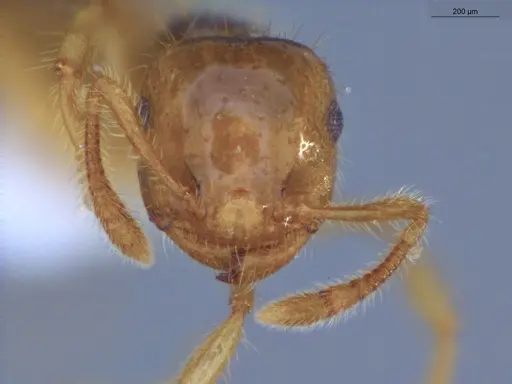
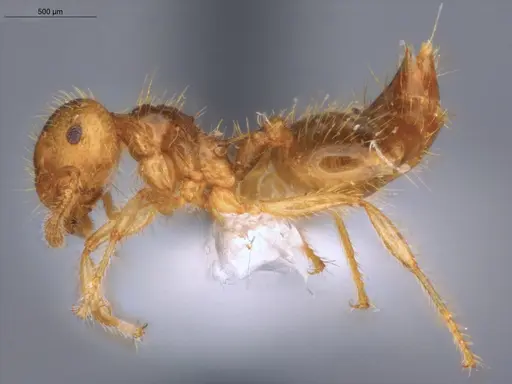
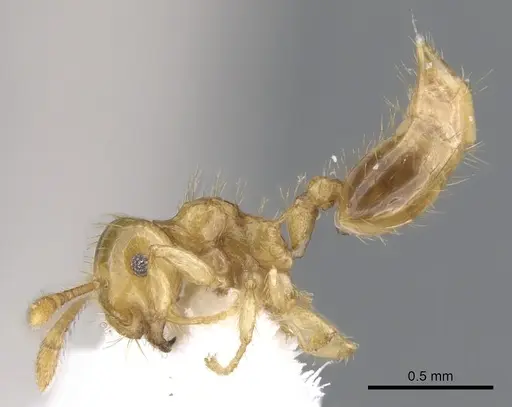
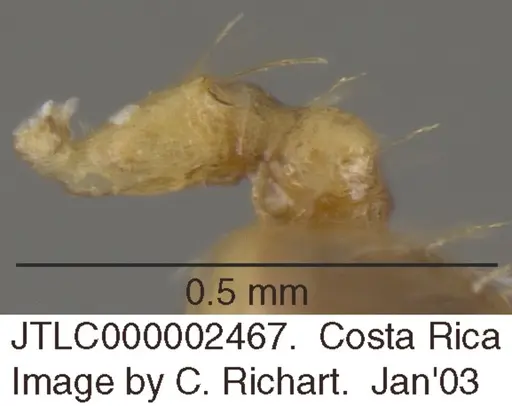
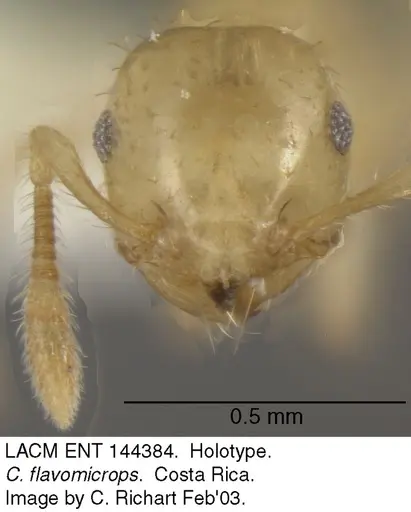
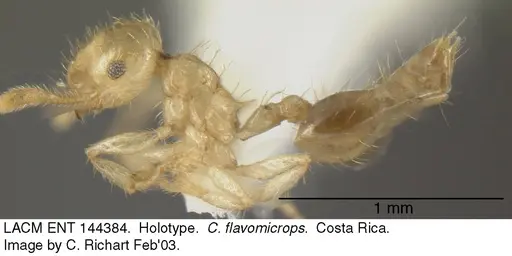
Crematogaster flavomicrops is a tiny yellow-orange ant native to Central and South American wet forests. Workers are very small, with a body length estimated at 1.5-2 mm based on head measurements . The species gets its name from two distinctive features: its yellow coloration and remarkably small eyes, with only 5-6 ommatidia across the long axis . The entire body is covered in short, stiffened amber setae that give a stubbly appearance, and they have short, upturned propodeal spines . This ant is rarely seen in the open and is typically collected by sifting leaf litter or from rotting wood using specialized extraction methods like Berlese and Winkler samples . It inhabits lowland to mid-montane wet forests across its range from Costa Rica to Brazil . The most interesting thing about this species is its cryptic lifestyle. Their tiny size and extremely small eyes suggest they rely heavily on chemical trails rather than vision, moving through the dark leaf-litter layer. They are uncommon in the wild and pose a rewarding challenge for experienced antkeepers looking for something different from typical pet ants.
Quick Summary
- Difficulty: Expert
- Origin & Habitat: Neotropical wet forests from Costa Rica to Brazil, including Colombia, Ecuador, Venezuela, Panama, Honduras, and French Guiana. Found in lowland to mid-montane elevations, typically in sifted leaf litter or rotting wood [1][3][2].
- Colony Type: Colony structure is unconfirmed. Based on typical Crematogaster patterns, likely single-queen colonies, but this has not been documented for this species.
- Size & Growth:
- Queen: ~4-5 mm (estimated based on genus patterns, as queens were described but measurements were not provided) [1].
- Worker: ~1.5-2 mm body length (estimated, not directly measured in the literature, head measurements are available) [1].
- Colony: Unknown – likely small based on cryptic leaf-litter lifestyle and infrequent collection [1][4].
- Growth: Unknown – inferred as moderate from genus patterns.
- Development: Estimated 6-8 weeks based on typical Crematogaster development at tropical temperatures. (Not directly studied for this species.)
- Antkeeping:
- Temperature: Keep at 22-26°C. As a Neotropical wet forest species, they prefer warm, stable conditions [1].
- Humidity: High humidity is essential – keep the nest substrate and outworld floor consistently moist but not waterlogged. They come from damp forest floor environments [1].
- Diapause: Unlikely – as a tropical species, they probably do not require a true diapause. However, a slight temperature reduction during winter months may be beneficial.
- Nesting: In nature they nest in rotting wood and leaf litter. In captivity, a naturalistic setup with moist substrate (like a terrarium-style formicarium) works well. They prefer tight, humid chambers. Standard test tube setups can work if humidity is carefully managed [1].
- Behavior: These ants are tiny and very cryptic. Workers are likely docile and non-aggressive, typical of leaf-litter Crematogaster. They probably forage singly or in small groups through the leaf litter, hunting micro-arthropods. Their small eyes suggest they rely less on vision and more on chemical trails. Their primary defense mechanism is to raise the gaster and use a modified, spatulate stinger to smear venom onto threats (a trait of the Crematogastrini tribe). Escape prevention is critical – their tiny size means they can slip through standard barriers easily.
- Common Issues: escape prevention is critical – their tiny size means they can fit through the smallest gaps, use fine mesh and tight-fitting lids, slow growth and small colony sizes make this species less rewarding for beginners, humidity control is tricky – too dry and they desiccate, too wet and mold appears, rare in the hobby and difficult to obtain – wild colonies require specialized extraction methods, wild-caught colonies may contain parasites that can devastate captive colonies
Housing and Nest Setup
Crematogaster flavomicrops requires a setup that mimics their natural leaf-litter habitat [1]. A naturalistic terrarium-style formicarium with moist soil or coconut fiber substrate works best. The substrate should be consistently damp but not waterlogged – think of the moisture level on a forest floor after rain. Add pieces of rotting wood, dried leaves, and other organic material to give them natural structures to explore and nest in [1]. Because they are so small, standard test tube setups can work for founding colonies but require careful humidity management. The cotton will dry out quickly, so check water levels frequently. Connect a small outworld for feeding. Keep the entire setup at a warm, stable temperature (22-26°C). Escape prevention is absolutely critical. Use fine mesh (0.5 mm or smaller) on all ventilation, ensure all lids fit tightly, and consider fluon barriers on smooth surfaces.
Feeding and Diet
In the wild, these tiny ants likely prey on micro-arthropods found in leaf litter [1]. They may also collect honeydew from sap-sucking insects, though this has not been documented specifically. In captivity, offer small live prey appropriate to their size: fruit flies, springtails, and other tiny arthropods should be their primary protein source. You can also offer small pieces of pre-killed insects like fruit flies or pinhead crickets, but live prey is likely accepted more readily. Sugar sources like honey water or sugar water can be offered occasionally as a supplement. Feed small amounts every 2-3 days, removing any uneaten prey after 24 hours to prevent mold. Because of their small size, even a tiny piece of prey is a substantial meal – adjust portions accordingly.
Temperature and Humidity Management
As a Neotropical wet forest species, Crematogaster flavomicrops needs warm, humid conditions [1]. Keep temperatures in the range of 22-26°C, with a slight gradient if possible so workers can choose their preferred microclimate. Room temperature in most homes (around 20-22°C) may be slightly cool – use a small heating mat on one side of the setup to create a warm zone. Humidity is more challenging. The substrate should feel consistently damp but never soggy. If you see standing water or condensation that doesn't evaporate, you have gone too far. If the substrate surface dries within hours of misting, you need to mist more often or reduce ventilation. A hygrometer can help, but visual inspection of the substrate is often more reliable. Avoid placing the setup near air conditioning vents, heaters, or in direct sunlight, as these cause fluctuations that stress the colony [1].
Behavior and Observation
This is not a showy ant species. Workers are tiny, cryptic, and spend most of their time hidden in the substrate or foraging through leaf litter. You won't see dramatic foraging swarms or aggressive defense. Instead, you'll observe subtle, careful exploration as workers move through their environment [1]. Cremaogaster ants are known for raising their gaster over their head when threatened – even these tiny workers will likely display this behavior when disturbed. Their real defense mechanism is a modified spatulate stinger used to smear venom onto enemies rather than piercing flesh (typical of the Crematogastrini tribe). Because of their small eyes, they rely heavily on chemical communication. This species is best suited for antkeepers who enjoy setting up naturalistic vivariums and observing subtle behaviors. If you want ants you can watch marching in formation or easily see feeding, this is not the right species [1][2].
Finding and Acquiring Colonies
Crematogaster flavomicrops is not common in the antkeeping hobby. In the wild, they are difficult to find – they are most often collected using Berlese or Winkler extraction from sifted leaf litter [1], which tells you how cryptic they are. Your best chance of obtaining a colony is either through a specialized dealer who imports Neotropical species, or by collecting a queen during nuptial flights if you live within their range. Nuptial flight timing is unknown, but based on the rainy season in tropical areas, it likely coincides with wet periods. When you acquire a colony, quarantine it for a few weeks to watch for signs of parasites or disease. Expect high prices if you find a dealer, shipping tiny tropical ants requires special care [1].
Frequently Asked Questions
How long does it take for Crematogaster flavomicrops to produce first workers?
The exact timeline is unknown for this species, but based on typical Crematogaster development, expect 6-8 weeks from egg to worker at optimal temperatures (22-26°C). The first workers (nanitics) will be very small, which is normal.
Can I keep Crematogaster flavomicrops in a test tube setup?
Yes, test tubes can work, but they require careful humidity management. The cotton will dry out quickly, so check water levels every few days. A test tube setup is best for founding colonies, but you may want to move them to a naturalistic setup as the colony grows.
Do Crematogaster flavomicrops ants sting?
Crematogaster ants do not sting in the typical sense – they have a modified spatulate stinger used to smear venom onto threats, not to pierce skin. Due to their tiny size (estimated body length 1.5-2 mm), their venom is not a concern to humans [1].
Are Crematogaster flavomicrops good for beginners?
No. This is an expert-level species due to their tiny size, specific humidity requirements, cryptic behavior, and rarity in the antkeeping hobby. Beginners should start with more forgiving species like Lasius niger or Messor barbarus.
What do Crematogaster flavomicrops eat?
They likely eat small live prey (springtails, fruit flies, micro-arthropods) and probably accept honeydew or sugar sources. Offer small live prey appropriate to their tiny size, and provide sugar water or honey occasionally [1].
How big do Crematogaster flavomicrops colonies get?
Colony size is not documented, but based on their cryptic leaf-litter lifestyle and infrequent collection, colonies are likely small – probably under 100 workers even at maturity. Do not expect large, impressive colonies [1][4].
Do I need to hibernate Crematogaster flavomicrops?
Probably not. As a Neotropical species from wet forests, they likely do not require a true diapause. However, a slight temperature reduction during winter months (a few degrees cooler) may be natural and beneficial.
Why are my Crematogaster flavomicrops escaping?
Their tiny size (~1.5-2 mm) means they can slip through gaps you might not notice. Use fine mesh (at least 0.5 mm), ensure all lids fit tightly, and apply fluon barrier to smooth surfaces. Check for gaps around tubing connections.
Can I keep multiple queens together?
Colony structure is unconfirmed for this species. Combining unrelated queens has not been documented and is not recommended. If you catch multiple founding queens, keep them in separate setups.
Where does Crematogaster flavomicrops live in the wild?
They live in lowland to mid-montane wet forests from Costa Rica to Brazil, including Colombia, Ecuador, Venezuela, Panama, Honduras, and French Guiana. They are found in sifted leaf litter and rotting wood on the forest floor [1][3][2].
Report an Issue
The current care sheet is based fully on literature. See inconsistencies, or something that's incorrect? Please , it will be resolved after review from an admin. Contributing to the blogs tab also helps providing information, to make us be able to further improve the caresheets. Thank you for your support!
References

This caresheet is licensed under CC BY-SA 4.0 .
Community Blogs
CASENT0193764
View on AntWeb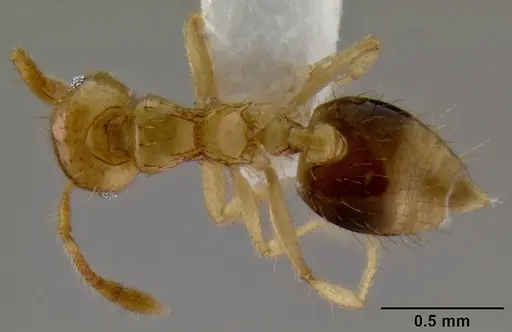
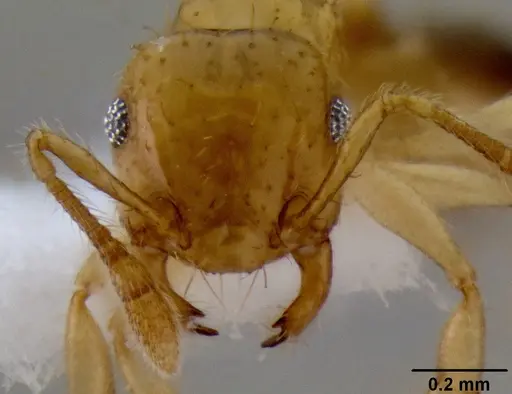
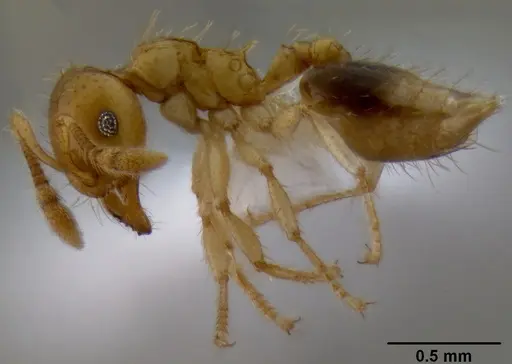
ECOFOG-KW14-0035-44
View on AntWeb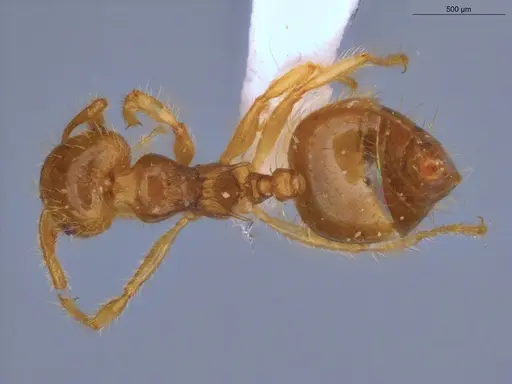
INBIOCRI001233311
View on AntWeb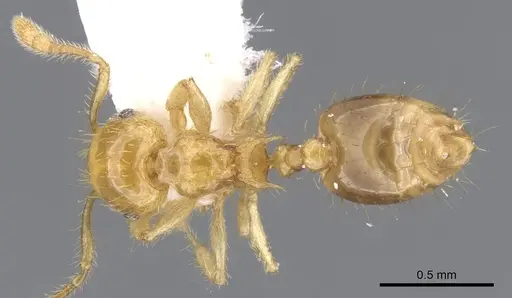
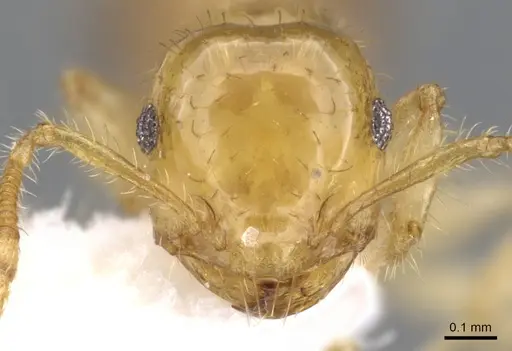
JTLC000002467
View on AntWeb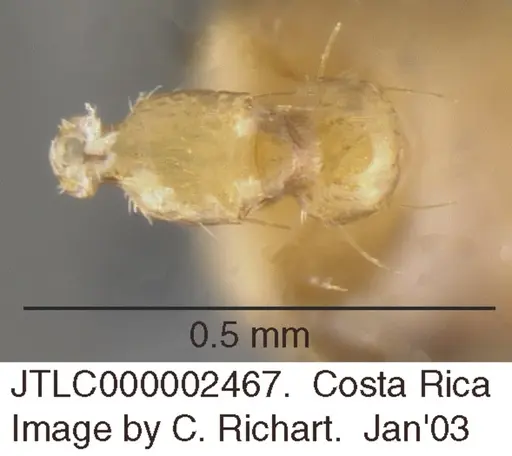
LACM-ENT-144384
View on AntWeb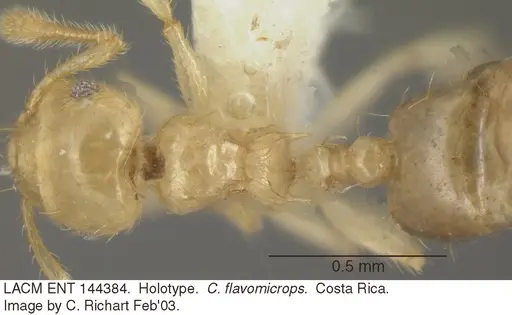
Literature
Loading distribution map...Loading products...