
Crematogaster egregior
- Sci. Name
- Crematogaster egregior
- Subgenus
- Orthocrema
- Tribe
- Crematogastrini
- Subfamily
- Myrmicinae
- Author
- Forel, 1912
- Distribution
- Found in 4 countries
Introduction
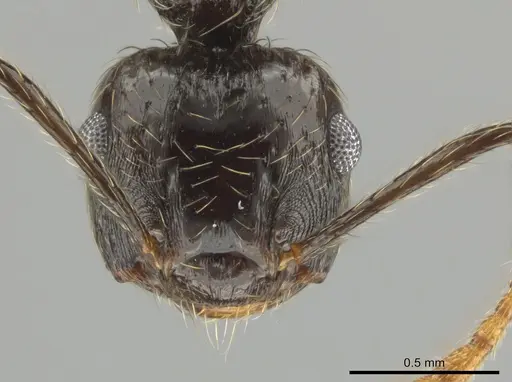
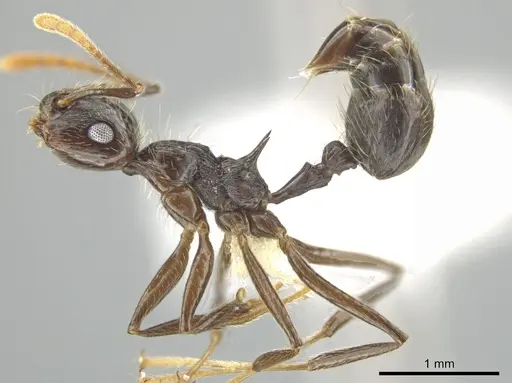
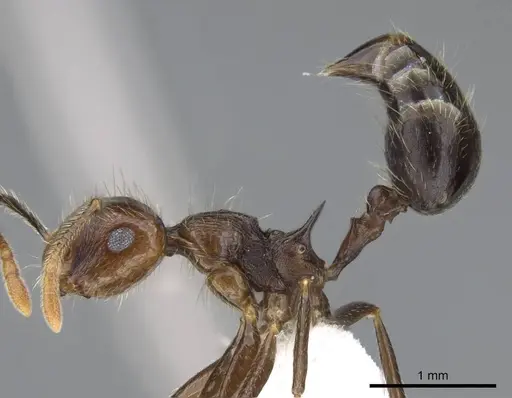
Crematogaster egregior is a small myrmicine ant native to the Amazon basin and surrounding Neotropical regions. It was originally described as a subspecies of Crematogaster longispina in 1912 and raised to full species status in 1970 . Distribution includes Bolivia, Brazil, Ecuador, French Guiana, and Peru . Like other Crematogaster (acrobat ants), workers can raise their heart‑shaped abdomen over their head when alarmed – a defensive posture. This species has a modified, flattened stinger used to smear venom onto enemies rather than piercing, a typical defense of the tribe Crematogastrini. An unusual ecological association has been documented: specimens have been found attached to the legs of Eciton hamatum army ants , suggesting a potential commensal or myrmecophilous relationship, though the exact nature is unknown.
Quick Summary
- Difficulty: Hard
- Origin & Habitat: Neotropical rainforests of South America: Bolivia, Brazil, Ecuador, French Guiana, Peru [1][2]. The type locality is Pará, Brazil – a tropical rainforest region with high humidity and stable warm temperatures year‑round. Specific microhabitat preferences are not recorded.
- Colony Type: Unknown. Colony structure (monogyne or polygyne) has not been documented for this species. Some Crematogaster species are monogyne, others polygyne, but no inference can be made here.
- Size & Growth:
- Queen: Size data unavailable
- Worker: Size data unavailable
- Colony: Unknown
- Growth: Unknown
- Development: Unknown (No specific development data exists for this species. Tropical conditions may accelerate development, but this is speculation.)
- Antkeeping:
- Temperature: Unknown. Given the tropical rainforest origin, stable warm temperatures (likely 24–28°C) are plausible, but no specific requirement is documented. Monitor colony activity and adjust accordingly.
- Humidity: Unknown. Presumably high humidity (70–85% RH) is needed, as typical for Amazonian ants, but no data is available. Keep the nest substrate consistently moist but not waterlogged.
- Diapause: Unknown. As a tropical species, a winter diapause is unlikely, but this is an assumption – do not cool the colony without evidence of need.
- Nesting: Unknown. Many Crematogaster nest in rotting wood or arboreal cavities. A Y‑tong (AAC) or plaster formicarium with good moisture retention may work, but this is untested for this species. Provide dark, humid chambers.
- Behavior: Defensive behavior includes raising the abdomen and smearing venom using a modified stinger – typical of acrobat ants. Aggressiveness toward keepers is unknown. The species has been found attached to army ant legs, suggesting it may be a commensal or scavenger near army ant colonies [3][4]. In captivity, they are likely active foragers, but specific behavioral data are absent. Due to small size (estimated, but unknown exact length), escape prevention is critical.
- Common Issues: escape prevention is critical – small size allows them to pass through tiny gaps, lack of published husbandry data makes care requirements uncertain, wild‑caught colonies may carry unknown parasites or pathogens from their natural habitat, sensitivity to uncontrolled temperature or humidity changes – stability is key but optimal parameters are unknown
Housing and Nest Setup
Because specific nesting preferences for Crematogaster egregior are unknown, a general approach for small arboreal ants is recommended. A test tube with a water reservoir is ideal for a founding colony – it provides a dark, humid environment. When the colony grows, a Y‑tong (AAC) or plaster formicarium with small chambers may be used, but success is unverified. The nest should retain moisture without becoming waterlogged. Due to the unknown but likely small worker size, all openings must be sealed with fine mesh or fluon barriers to prevent escape.
Feeding and Diet
No specific dietary data exists for Crematogaster egregior. By inference from the genus, offer a constant sugar source (honey or sugar water) and protein such as small insects (fruit flies, pinhead crickets) 2–3 times per week. Remove uneaten prey after 24 hours. The documented association with army ants [3][4] might indicate opportunistic feeding on insects flushed by army ant raids, but this is speculative.
Temperature and Seasonal Care
Optimal temperature is not documented. Based on the tropical rainforest habitat of the Amazon basin, the colony should be kept warm (likely 24–28°C) and stable year‑round. Avoid temperatures below 20°C. No hibernation or seasonal cooling is required – the species is presumed to be continuously active. Provide a temperature gradient within the nest to let workers choose their preferred zone.
Humidity Management
Humidity needs are unknown, but high humidity is expected for an Amazonian ant. Aim to keep the nest substrate consistently moist (damp to the touch) without standing water. Good ventilation is needed to prevent mold. Monitor the colony: if workers avoid the nest or cluster near the water source, adjust moisture levels accordingly.
Behavior and Observation
Observations of wild Crematogaster egregior are limited to specimens found attached to Eciton hamatum army ants [3][4]. In the nest, acrobat ants typically raise the abdomen when disturbed and use a smearing venom defense. Aggression toward the keeper is mild to absent in many acrobat ants, but this is unknown for the species. The army ant association suggests a possible symbiotic or commensal role, which could affect behavior in captivity – e.g., attraction to moving prey or disturbance. Careful observation is encouraged, but no firm conclusions can be drawn.
Frequently Asked Questions
How long does it take for Crematogaster egregior to raise their first workers?
This is unknown – no data exists for this species. In general, tropical Crematogaster may take 6–8 weeks under warm conditions, but that is speculation.
Do Crematogaster egregior ants sting?
They possess a modified stinger typical of Crematogastrini that smears venom rather than piercing. The effect is likely mild, but no specific reports exist for this species.
What temperature do Crematogaster egregior need?
Exact requirements are unknown. Given the tropical rainforest origin, maintain warm, stable temperatures (likely 24–28°C) and avoid drops below 20°C.
Can I keep multiple Crematogaster egregior queens together?
Not recommended. There is no data on polygyny for this species. Start with a single mated queen to be safe.
How big do Crematogaster egregior colonies get?
Unknown. Many acrobat ants reach several hundred workers, but this has not been documented for this species.
What do Crematogaster egregior eat?
Offer sugar water or honey as a constant energy source, and small insects (fruit flies, pinhead crickets) for protein 2–3 times per week. No specific diet is known, so this is a general recommendation.
Are Crematogaster egregior good for beginners?
No – this species is rated Hard because almost no husbandry data exists. Only experienced keepers who can experiment and adapt should attempt to keep it.
Do Crematogaster egregior need hibernation?
Unknown, but as a tropical species, they almost certainly do not need a winter diapause. Keep warm year‑round and do not artificially cool them.
Why are my Crematogaster egregior escaping?
Their small size (exact length unknown but presumably a few mm) allows them to pass through tiny gaps. Use fluon or PTFE barriers and seal all junctions with fine mesh.
When should I move my colony to a formicarium?
Wait until the test tube shows signs of degradation or the water reservoir is low, and the colony has at least 20–30 workers (assuming they exist – colony size estimates are unknown). Monitor and move cautiously.
Report an Issue
The current care sheet is based fully on literature. See inconsistencies, or something that's incorrect? Please , it will be resolved after review from an admin. Contributing to the blogs tab also helps providing information, to make us be able to further improve the caresheets. Thank you for your support!
References

This caresheet is licensed under CC BY-SA 4.0 .
Community Blogs
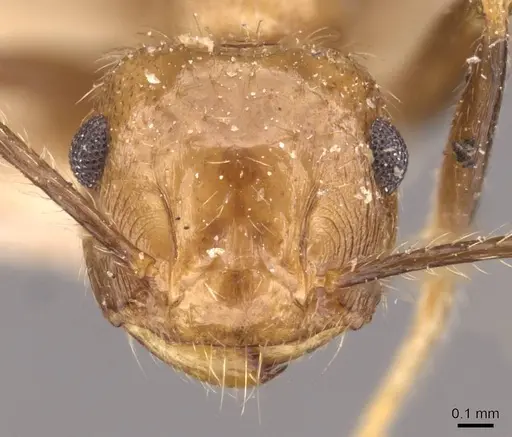
CASENT0646106
View on AntWeb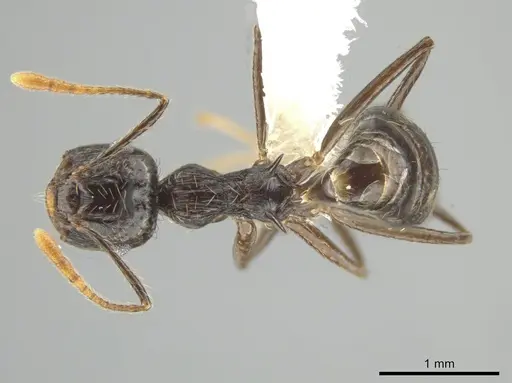
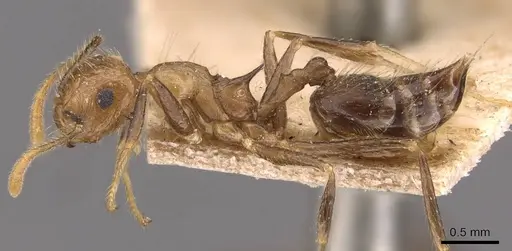
CASENT0908437
View on AntWeb
CASENT0914562
View on AntWeb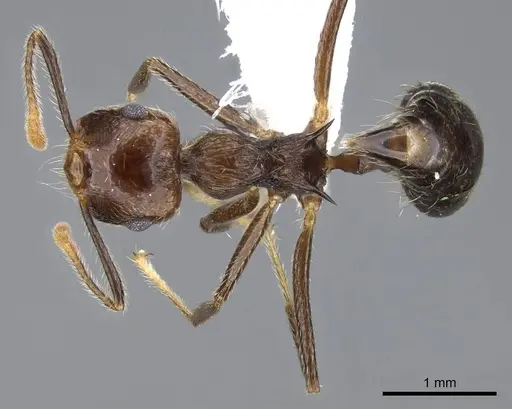
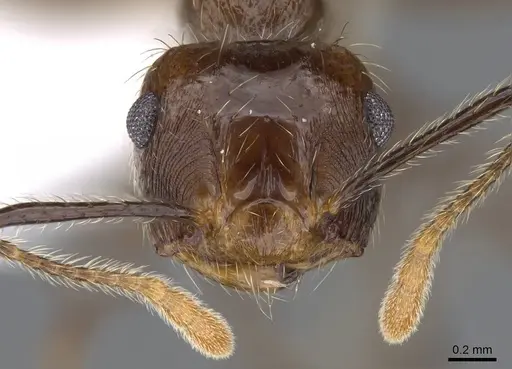
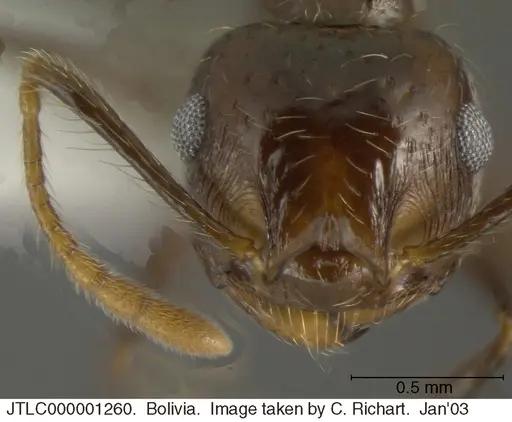
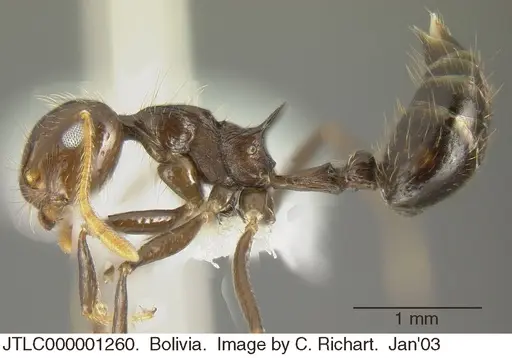
JTLC000001260
View on AntWeb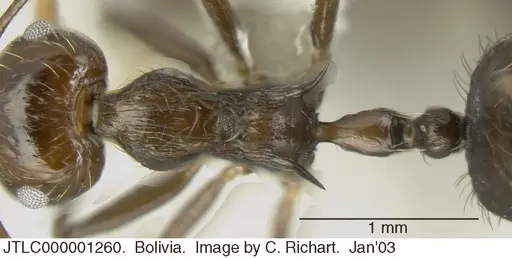
Literature
Loading distribution map...Loading products...