
Crematogaster crucis
- Sci. Name
- Crematogaster crucis
- Subgenus
- Orthocrema
- Tribe
- Crematogastrini
- Subfamily
- Myrmicinae
- Author
- Forel, 1912
- Distribution
- Found in 5 countries
Introduction
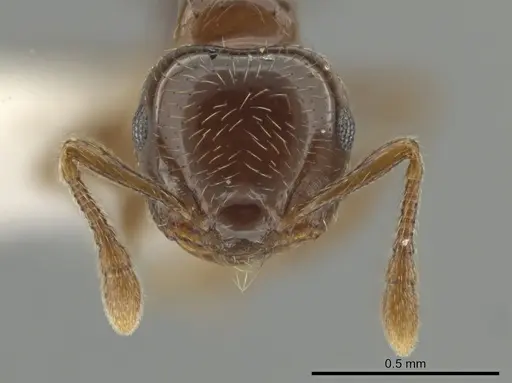
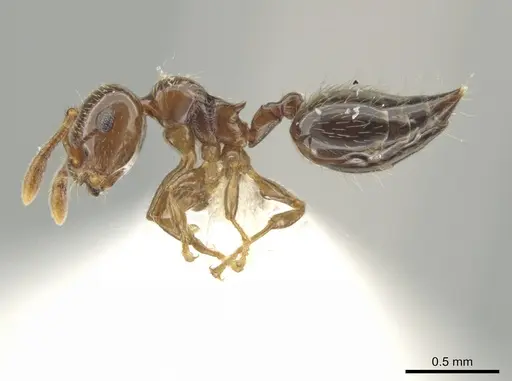
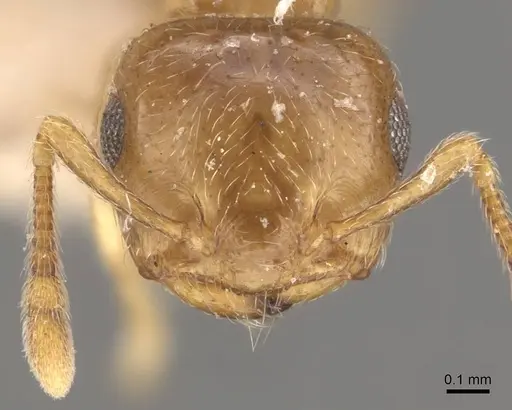
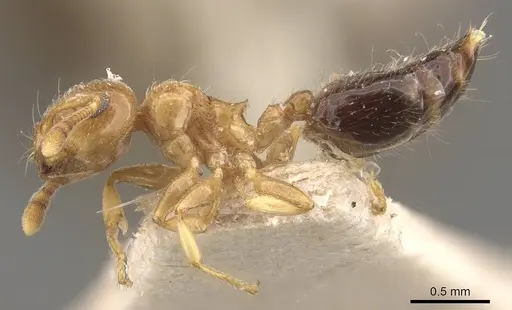
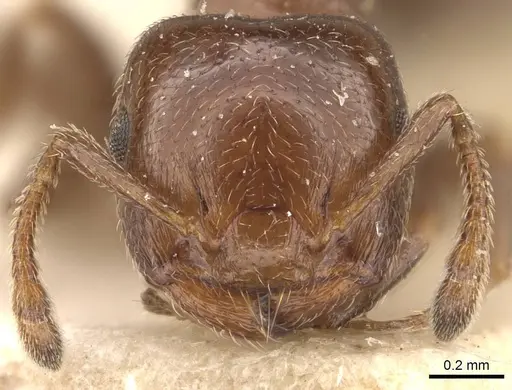
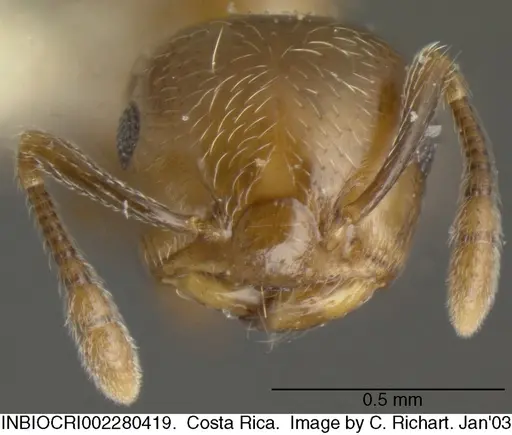
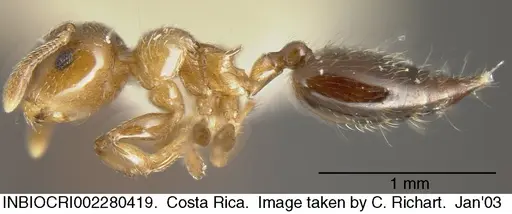
Crematogaster crucis is a small myrmicine ant native to the Neotropical region, found in Colombia, Costa Rica, and Ecuador. Workers are relatively uniform in size at approximately 2.5mm total length, with a distinctive appearance featuring long flexuous setae (long, bent hairs) on the mesosoma and abdomen, and short upturned propodeal spines. Color varies from uniformly orange-brown to bicolored with darker gaster, or uniformly dark red-brown. This species shows a potential specialized association with Azteca ants - two of the few known collections were found nesting alongside Azteca colonies in hollow branches, suggesting they may prefer nesting in microhabitats created by or near these larger ants .
Quick Summary
- Difficulty: Expert, this species is known from very few collections and almost no captive care information exists
- Origin & Habitat: Lowland wet forests of Costa Rica's Osa Peninsula and dry forest edges in Colombia's Tayrona National Park. Found at the habitat edge between beach and dry forest, and in recent treefalls [1].
- Colony Type: Colony structure is unconfirmed. Workers have been found with adult males and brood in nests, suggesting established colonies. No data on queen number.
- Size & Growth:
- Queen: size data unavailable, no queen measurements exist for this species
- Worker: approximately 2.5mm total length, inferred from genus typical size range [1]
- Colony: Unknown, only fragmentary colony data exists, likely modest in size
- Growth: Unknown
- Development: Unconfirmed, no development data exists for this species (Based on typical Crematogaster patterns, expect several weeks at tropical temperatures, but this is unconfirmed)
- Antkeeping:
- Temperature: Keep at 22-26°C as a starting point. This is a tropical species from lowland wet forests, so warmth is important. Provide a gentle temperature gradient so ants can self-regulate [1].
- Humidity: Moderate to high, they come from wet forest habitats. Keep nest substrate moist but not waterlogged. Provide a water source.
- Diapause: Unknown but unlikely, as a tropical species from lowland wet forests, they probably do not require a winter dormancy period [1].
- Nesting: In the wild, colonies nest in 5mm diameter dead twigs of Coccoloba plants and hollow branches. They appear to prefer pre-existing cavities rather than excavating their own nests. In captivity, small formicaria with narrow chambers scaled to their tiny size work well. The association with Azteca suggests they may prefer nesting in pre-existing cavities [1].
- Behavior: Workers are small (approximately 2.5mm) and may show the typical Crematogaster trait of raising their abdomen when threatened, this is a defensive posture but they are not particularly aggressive. Their possible association with Azteca ants in the wild suggests they may be more tolerant of other ant species than many Crematogaster. However, this is speculative based on collection data, not confirmed behavior. The most important practical consideration is their tiny size: they can easily escape through gaps that larger ants cannot. Use fine mesh on all openings and check connections regularly [1][2].
- Common Issues: very limited data means care requirements are poorly understood, this is an expert-level species for experienced keepers willing to experiment, escape prevention is critical due to tiny worker size, wild-caught colonies may be difficult to find as the species is rarely collected, no information on founding behavior, queen type is unknown, tropical species may be sensitive to temperature drops, avoid cool conditions below 20°C
Nest Preferences
In the wild, Crematogaster crucis nests in very small dead twigs, specifically 5mm diameter twigs of Coccoloba plants and hollow branches. This is a key consideration for captive care. They appear to prefer pre-existing cavities rather than excavating their own nests. In captivity, offer small formicaria with chambers scaled to their tiny size. The possible association with Azteca ants is intriguing, they may benefit from nesting near larger, more aggressive ants that could provide protection. If keeping this species, consider providing multiple small nesting options to see what they prefer. [1]
Feeding and Diet
Crematogaster ants are typically omnivorous, feeding on honeydew, small insects, and nectar. However, no specific dietary studies exist for C. crucis. Based on genus patterns, offer sugar water or honey as a constant energy source, and protein (small fruit flies, pinhead crickets, or other tiny insects) regularly. Their small size means prey items should be appropriately sized. Observe your colony to determine preferences, some Crematogaster species strongly prefer protein while others take readily to sugar. Given their potential association with Azteca (which tends honeydew-producing insects), they may have a sweet tooth.
Temperature and Care
As a tropical lowland species from Costa Rica and Colombia, Crematogaster crucis needs warm conditions. Aim for 22-26°C as a starting point, with a temperature gradient so workers can choose their preferred spot. Avoid temperatures below 20°C. Unlike temperate species, they likely do not require a winter dormancy period. Monitor colony activity, if workers become sluggish or cluster tightly, try warming the nest area slightly. Use a heating cable on one side of the nest if room temperature is below their preferred range. [1]
Behavior and Temperament
Workers are small and may show the typical Crematogaster trait of raising their abdomen when disturbed, this is a defensive posture but they are not particularly aggressive. Their possible association with Azteca ants in the wild suggests they may be more tolerant of other ant species than many Crematogaster. However, this is speculative based on collection data, not confirmed behavior. The most important practical consideration is their tiny size: they can easily escape through gaps that larger ants cannot. Use fine mesh on all openings and check all connections regularly. [1][2]
Colony Founding
Founding behavior is unconfirmed for this species. Most Crematogaster are claustral (queen seals herself in and lives off stored fat), but this has not been documented for C. crucis. If you obtain a founding queen, provide a small test tube setup with water reservoir and keep her warm and undisturbed. Do not attempt to feed claustral queens during founding as this can cause mold problems. Wait for the first workers (nanitics) to emerge before offering food.
Frequently Asked Questions
How long does it take for Crematogaster crucis to produce first workers?
This is unknown, no development data exists for this species. Based on typical Crematogaster patterns in tropical conditions, expect several weeks from egg to worker at optimal temperature, but this is an estimate only.
What do Crematogaster crucis ants eat?
No specific dietary data exists for this species. Based on genus patterns, they likely accept sugar sources (honey, sugar water) and small protein prey (fruit flies, tiny insects). Offer both and observe preferences.
Can I keep Crematogaster crucis in a test tube?
Yes, test tubes work well for founding colonies. Use a small test tube with a water reservoir (cotton ball) and keep it warm. Transfer to a proper formicarium only after the colony reaches a moderate size.
Do Crematogaster crucis ants sting?
Crematogaster ants have a stinger but due to their very small size, they rarely can penetrate human skin. They may show defensive behavior (raising the abdomen) but are not considered dangerous to humans.
Are Crematogaster crucis good for beginners?
No, this species is not recommended for beginners. It is known from very few collections in the wild, and almost no captive care information exists. The care requirements are poorly understood, making it an expert-level species for experienced antkeepers willing to experiment and document their findings.
What temperature do Crematogaster crucis need?
Keep them warm at 22-26°C as a starting point. This is a tropical lowland species from Costa Rica and Colombia, so avoid cool conditions below 20°C. Provide a temperature gradient so ants can self-regulate.
Do Crematogaster crucis need hibernation?
Unknown but unlikely. As a tropical species from lowland wet forests, they probably do not require a winter dormancy period. However, seasonal behavior has not been studied.
How big do Crematogaster crucis colonies get?
Unknown, the species is rarely collected and colony size data does not exist. Based on their small worker size and the few collection records, colonies are likely modest in size.
Why are my Crematogaster crucis dying?
Without specific data on this species, common issues likely include: temperature too cool (below 20°C), humidity too dry, escape leading to colony loss, or stress from wild-caught specimens. Ensure warm, humid conditions with excellent escape prevention. If the colony was wild-caught, stress and parasites are also possibilities.
Can I keep multiple Crematogaster crucis queens together?
Not documented. The colony structure is unknown for this species. Without data, combining unrelated queens is not recommended.
Report an Issue
The current care sheet is based fully on literature. See inconsistencies, or something that's incorrect? Please , it will be resolved after review from an admin. Contributing to the blogs tab also helps providing information, to make us be able to further improve the caresheets. Thank you for your support!
References

This caresheet is licensed under CC BY-SA 4.0 .
Community Blogs
CASENT0611921
View on AntWeb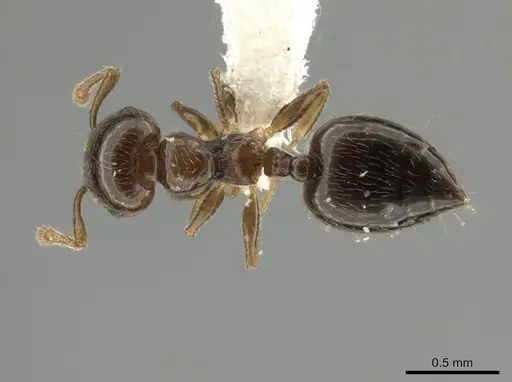
CASENT0908397
View on AntWeb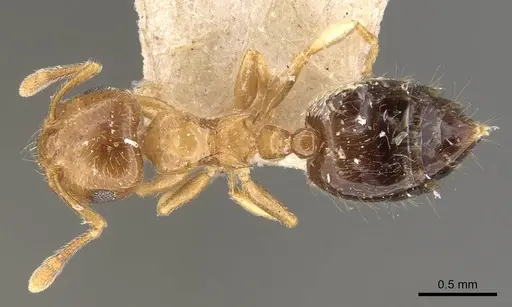
CASENT0908398
View on AntWeb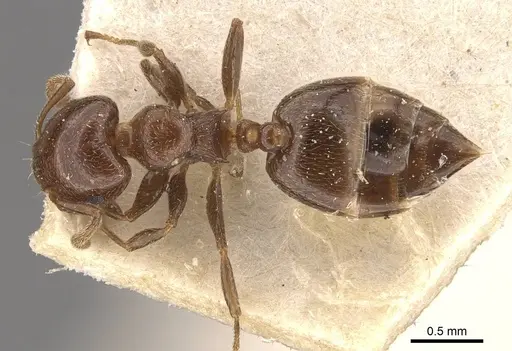
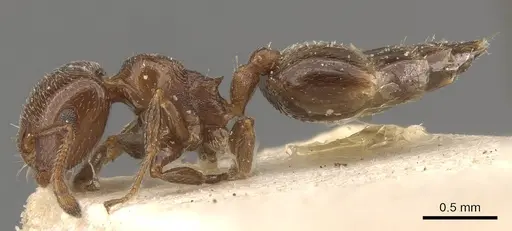
CBUMAGENT41933
View on AntWeb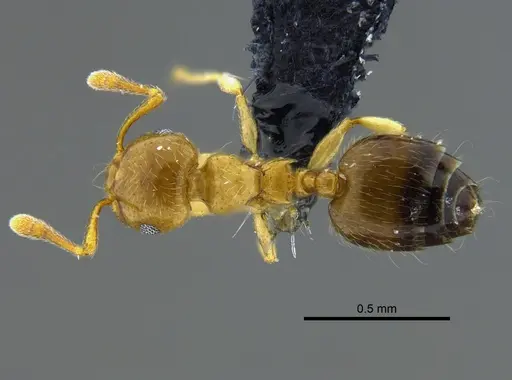
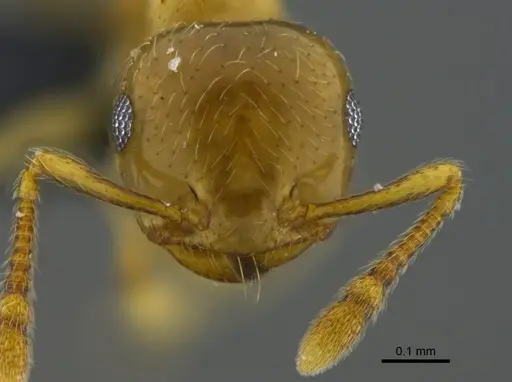
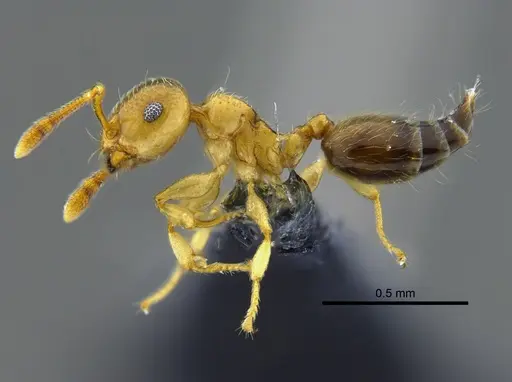
INBIOCRI002280419
View on AntWeb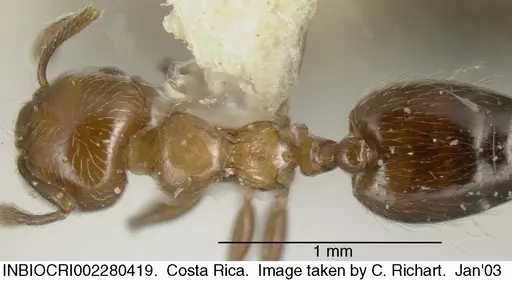
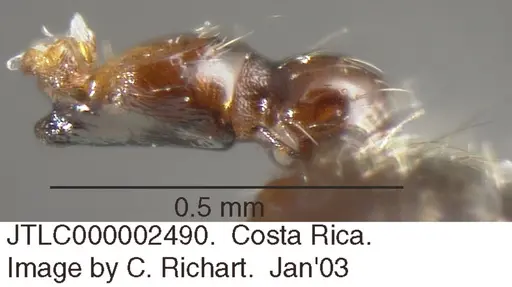
JTLC000002490
View on AntWeb
Literature
Loading distribution map...Loading products...