
Crematogaster bara
- Sci. Name
- Crematogaster bara
- Tribe
- Crematogastrini
- Subfamily
- Myrmicinae
- Author
- Blaimer, 2013
- Distribution
- Found in 1 countries
Introduction
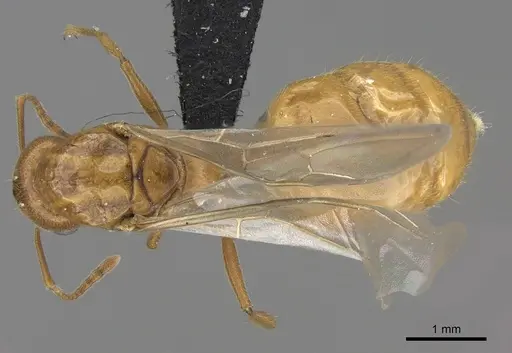
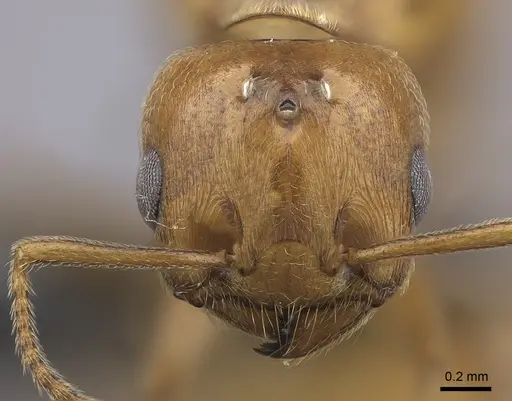
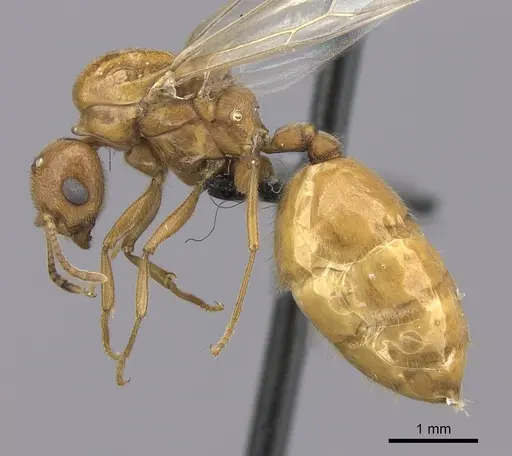
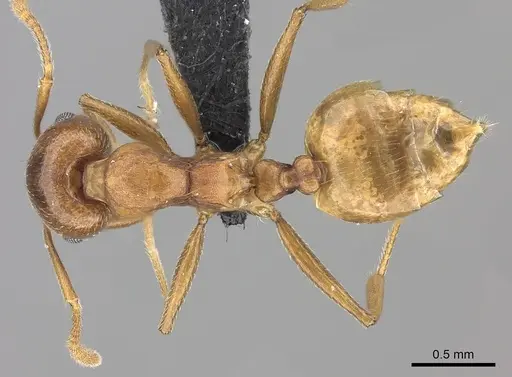
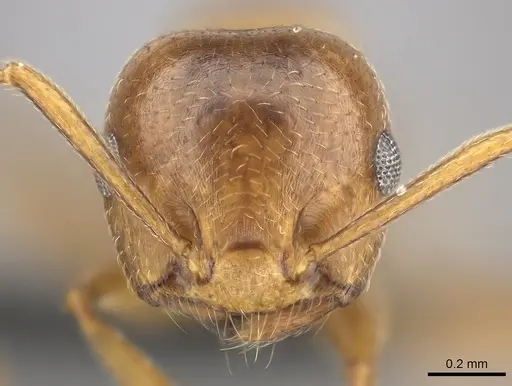
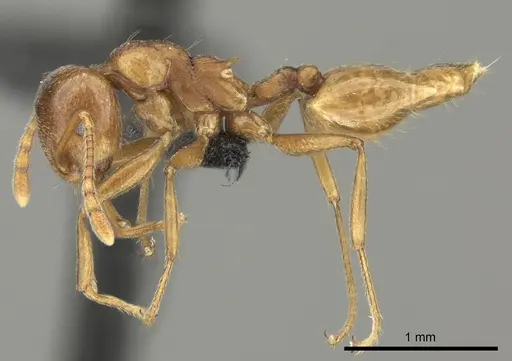
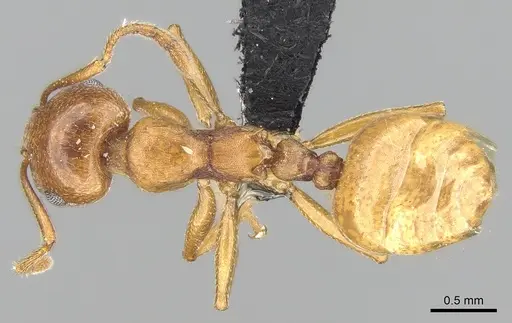
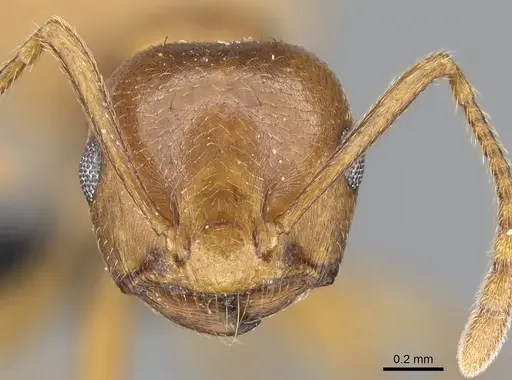
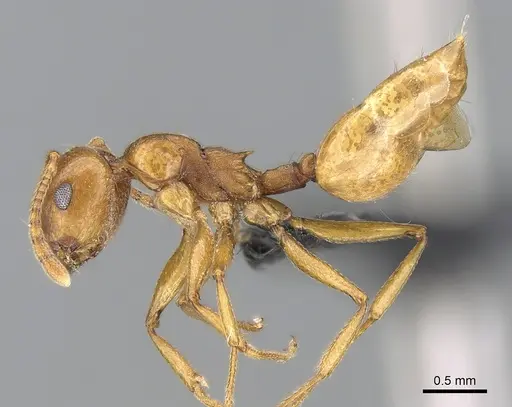
Crematogaster bara is a medium to large ant species endemic to southwestern Madagascar. Workers have a distinctive yellow body color and remarkably long antennal scapes that extend well beyond the head margin. This species belongs to the C. degeeri-species-assemblage and has been collected nesting under stones in gallery forest, savanna, Uapaca woodland, and spiny forest habitats at elevations between 30-1100 meters. The known distribution is very narrow, limited to southwestern Madagascar.
Quick Summary
- Difficulty: Medium
- Origin & Habitat: Southwestern Madagascar, found in gallery forest, savannah, Uapaca woodland, and spiny forest at elevations of 30-1100 meters. Colonies have been collected nesting under stones, indicating ground-nesting behavior. [1][2]
- Colony Type: Unconfirmed. The colony structure for C. bara has not been documented in scientific literature. [1][2]
- Size & Growth:
- Queen: Size data unavailable, queen measurements have not been described in scientific literature.
- Worker: Workers are medium to large, approximately 2-3mm total length, inferred from genus-level data for related Crematogaster species [1].
- Colony: Unknown, no colony size data has been published for this species.
- Growth: Unknown, development timeline has not been studied.
- Development: Unconfirmed, no specific development data exists for this species. (No development studies have been conducted on C. bara. Temperature and humidity preferences are inferred from habitat data.)
- Antkeeping:
- Temperature: Keep at 24-28°C. Madagascar is tropical to subtropical, so these ants prefer warm conditions.
- Humidity: Maintain moderate to high humidity (60-80%). Their natural habitat includes gallery forests and savanna areas with seasonal moisture. Keep the nest substrate consistently moist but not waterlogged.
- Diapause: Likely minimal or no true diapause. As a Madagascar species from relatively low elevations, they probably do not require hibernation.
- Nesting: Ground-nesting species that naturally nests under stones. In captivity, they do well in naturalistic setups with a soil substrate layer or Y-tong nests. Provide some substrate depth for burrowing and ensure the nest area stays humid. [1][2]
- Behavior: Crematogaster ants are known for their characteristic heart-shaped gaster that they can raise and curl over their bodies when threatened, giving them the common name 'acrobat ant'. They have a modified stinger used to smear venom onto enemies rather than piercing. They are generally active foragers and will readily explore their outworld for food. This species is likely moderately aggressive with good escape prevention needed. They communicate through chemical trails and can recruit nestmates efficiently to food sources. [3]
- Common Issues: limited availability, this is a rarely kept species with very narrow natural distribution, no established captive breeding lines, most specimens available are wild-caught, humidity management is critical, too dry and colonies stagnate, too wet and mold becomes a problem, escape prevention still matters, medium-sized ants can squeeze through loose connections, lack of species-specific care information means keepers must adapt from related species
Housing and Nest Setup
Crematogaster bara does well in setups that accommodate their ground-nesting nature. A naturalistic terrarium-style setup with a soil substrate layer works excellently, this allows them to create chambers and tunnels similar to their natural nests under stones. Alternatively, a Y-tong nest with appropriately sized chambers and a moisture reservoir works well for maintaining humidity. Provide a water tube or cotton wick for drinking water, and ensure the outworld has space for foraging. Escape prevention should include fluon on test tube rims and tight-fitting connections, as these ants are active explorers. [1][2]
Feeding and Diet
Like most Crematogaster species, C. bara likely accepts a varied diet. In the wild, Crematogaster are omnivorous, they tend honeydew from aphids and scale insects, collect nectar, and hunt small insects. In captivity, offer sugar water or honey as an energy source. For protein, provide small insects like fruit flies, small crickets, or mealworms. They are active foragers, so place food in the outworld where they can find it easily. Feed protein 2-3 times per week and keep sugar water available constantly. Remove uneaten prey after 24-48 hours to prevent mold. [3]
Temperature and Humidity
As a Madagascar species from elevations of 30-1100m, Crematogaster bara prefers warm, moderately humid conditions. Keep temperatures in the range of 24-28°C, this supports normal activity and brood development. A slight temperature gradient allows workers to self-regulate. For humidity, aim for 60-80% relative humidity within the nest area. This can be achieved by keeping the substrate moist but not saturated and using a water reservoir connected to the nest. Mist the outworld occasionally, but avoid creating standing water. These ants come from habitats with seasonal variation, so they can tolerate brief periods outside their ideal range, but consistent conditions support better colony health.
Colony Development and Growth
The colony development timeline for Crematogaster bara is not specifically documented, so keepers must rely on genus-level patterns. After the queen establishes her chamber, she will lay eggs and tend the brood alone. First workers typically emerge smaller than mature workers and help expand the colony. From there, growth is moderate. Patience is key with this species, as colonies can take a year or more to reach significant size. Monitor brood development, if eggs and larvae are present and being tended, the colony is progressing normally.
Behavior and Observation
Crematogaster bara displays the characteristic behaviors of the genus. When disturbed, workers raise their heart-shaped gaster in a defensive posture, this is where the common name 'acrobat ant' comes from. They have a modified stinger used to smear venom onto enemies rather than piercing flesh. They are active foragers and will quickly discover and recruit nestmates to food sources through chemical trails. Workers are moderately sized and relatively fast-moving. In the nest, you may observe them tending brood in clusters, maintaining the queen, and managing waste. Their yellow coloration makes them visually distinctive compared to many other Crematogaster species. Observing their foraging behavior and colony organization can be quite rewarding. [3]
Frequently Asked Questions
How long does it take for Crematogaster bara to produce first workers?
The exact timeline is unconfirmed for this species. Based on typical Crematogaster development, expect first workers to emerge around 6-8 weeks after the queen lays eggs, assuming optimal temperature (24-28°C). This is an estimate, actual timing may vary.
What do Crematogaster bara ants eat?
They are omnivorous. Offer sugar water or honey as a constant energy source, and provide protein sources like small insects (fruit flies, small crickets, mealworms) 2-3 times per week. Remove uneaten prey after 24-48 hours.
Do Crematogaster bara ants sting?
Crematogaster ants have a modified stinger used to smear venom onto enemies rather than sting. Most keepers experience only mild irritation if exposed to the venom. The more notable defensive behavior is raising their gaster to deter predators.
Can I keep multiple Crematogaster bara queens together?
The colony structure for this species is unconfirmed. Most Crematogaster are single-queen colonies. Combining unrelated queens is not recommended without evidence they can coexist, as fighting is likely.
What temperature do Crematogaster bara ants need?
Keep them at 24-28°C. As a Madagascar species from low to mid elevations, they prefer warm conditions. A temperature gradient allows them to regulate their exposure.
Are Crematogaster bara good for beginners?
This species is rated Medium difficulty. While not as challenging as some exotic species, there is limited species-specific care information available since it is rarely kept in captivity. Experience with other Crematogaster or medium-sized ants would be helpful.
How big do Crematogaster bara colonies get?
Colony size is not documented for this specific species.
Do Crematogaster bara need hibernation?
Probably not. As a Madagascar species from relatively low elevations, they likely do not require a true diapause.
What type of nest is best for Crematogaster bara?
A naturalistic setup with soil substrate works well since they are ground-nesting ants. Y-tong nests or nests with moisture reservoirs are also suitable. Provide chambers scaled to their medium size and ensure humidity can be maintained.
Why is my Crematogaster bara colony declining?
Common causes include: low humidity (keep substrate consistently moist), temperatures outside 24-28°C range, insufficient protein in diet, mold from overwatering or uneaten food, or stress from excessive disturbance. Check these parameters first.
Report an Issue
The current care sheet is based fully on literature. See inconsistencies, or something that's incorrect? Please , it will be resolved after review from an admin. Contributing to the blogs tab also helps providing information, to make us be able to further improve the caresheets. Thank you for your support!
References

This caresheet is licensed under CC BY-SA 4.0 .
Community Blogs
Literature
Loading distribution map...Loading products...