
Crematogaster bandarensis
- Sci. Name
- Crematogaster bandarensis
- Subgenus
- Orthocrema
- Tribe
- Crematogastrini
- Subfamily
- Myrmicinae
- Author
- Forel, 1913
- Distribution
- Found in 1 countries
Introduction
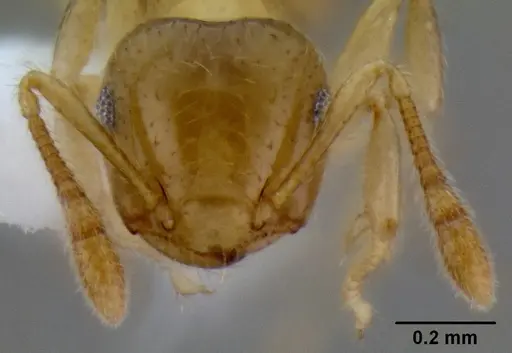
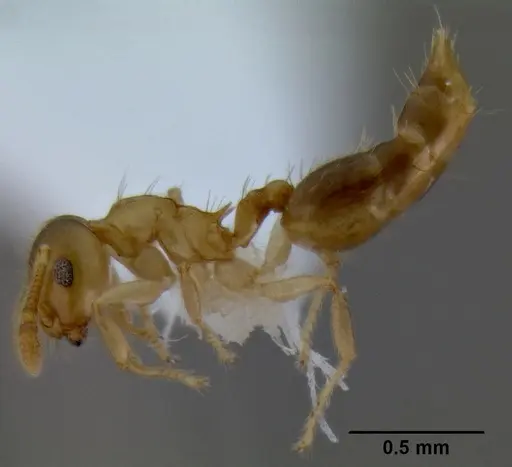
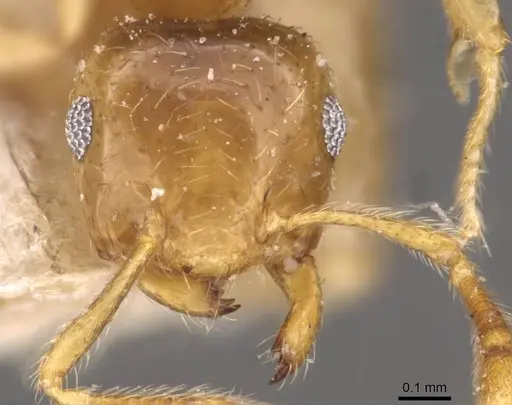
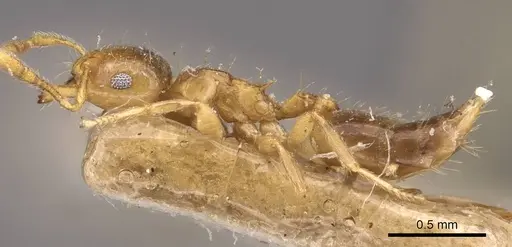
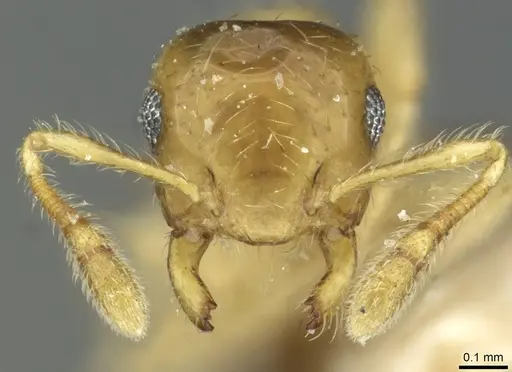
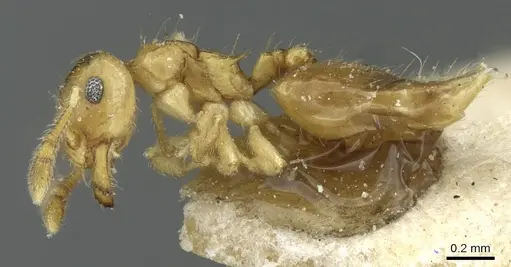
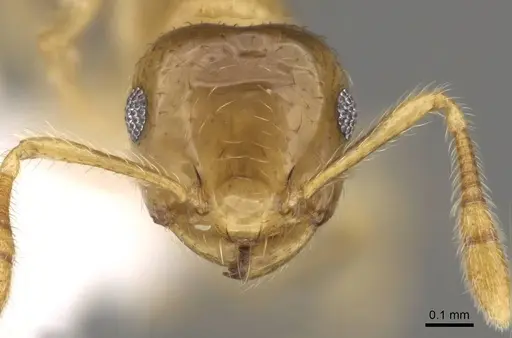
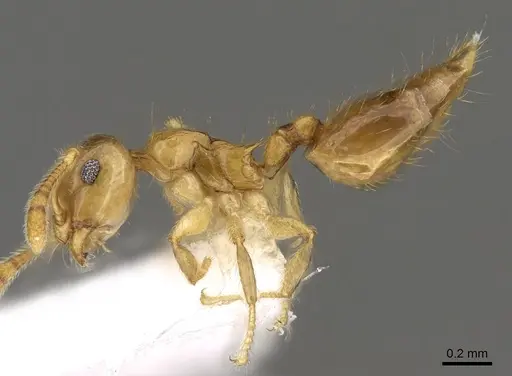
Crematogaster bandarensis is a tiny yellow ant from the Crematogaster quadriruga species group. Workers are very small - total body length isn't directly measured in literature, but head width is about 0.4-0.5 mm. They have short, stout propodeal spines, a V‑shaped metanotal groove, and large propodeal spiracles that touch the metapleural gland bulla. The body and all antenna segments are yellow. This species lives in developed forests across Southeast Asia and nests in soil or leaf litter . This ant belongs to the subgenus Orthocrema. You can separate it from similar species like Crematogaster philippinensis and Crematogaster sundalandensis by its very short propodeal spines (0.05-0.08 mm vs. 0.08-0.11 mm) .
Quick Summary
- Difficulty: Medium
- Origin & Habitat: Southeast Asia, southern Thailand, Malaysia (Peninsular and Borneo), Brunei, Indonesia (Bali, Sumatra, Krakatau). Found in developed forests, nesting in soil or leaf litter [1][2].
- Colony Type: Not documented in literature. Based on the genus, it may be monogyne (single queen), but this is unconfirmed.
- Size & Growth:
- Queen: Unknown, body length not given in available sources. Estimated 4-5 mm based on typical Crematogaster queens.
- Worker: Total length not measured in literature. Head width 0.40-0.47 mm [1], body length is estimated at 2-3 mm from related Orthocrema species.
- Colony: Unknown, no data available. Sister species often reach several hundred workers, but this is speculative.
- Growth: Unknown, no documented data. Based on related species, likely moderate.
- Development: Unknown for this species. For similar Crematogaster, expect 4-8 weeks at 24-28 °C, but this is not confirmed. (Timeline is an estimate from related species. Direct measurements are lacking for C. bandarensis.)
- Antkeeping:
- Temperature: Tropical species, keep at 24-28 °C (75-82 °F). Use a heating cable on one side of the nest to create a gradient. Avoid temperatures below 20 °C for long periods [1].
- Humidity: The substrate should be moderately moist but not waterlogged. Their natural habitat (forest floor leaf litter) is humid, so provide a gradient: damp areas and slightly drier spots. Mist occasionally but avoid pooling water [1][2].
- Diapause: No, as a Southeast Asian tropical ant, it does not need hibernation. Keep stable warmth year-round.
- Nesting: In nature they nest in soil and leaf litter. For captivity, Y‑tong (AAC) blocks or a naturalistic setup with soil and leaf litter work well. Their tiny size means chambers and passages must be small, test tubes are fine for founding, but later you’ll need a properly sealed formicarium.
- Behavior: This ant defends itself by smearing venom, it has a flattened, spatulate stinger used for wiping rather than piercing. Workers raise their heart‑shaped gaster when disturbed. They are active foragers and will tend aphids for honeydew. Their tiny size (body ~2-3 mm) makes escape prevention critical: they can slip through gaps smaller than 0.5 mm. They are not aggressive toward keepers but will defend the nest.
- Common Issues: escape: workers are tiny, use fine mesh (≤0.5 mm) and tight seals on all connections., humidity extremes: too dry and brood desiccates, too wet and mold can grow. Provide a gradient., slow founding: queens may take several weeks to produce first workers, avoid disturbing them., overfeeding: leftover protein can spoil quickly in warm, humid setups. Remove uneaten food after 24 hours., parasites: wild‑caught queens or colonies may carry mites or pathogens, quarantine new stock.
Housing and Nest Setup
For a founding queen, a test tube with water plugged by cotton works well. Fill the tube one‑third with water, push the cotton in until it's damp but not dripping, and place the queen inside. This gives her a stable, humid microclimate. Once you have about 20 workers, consider moving them to a small formicarium.
Y‑tong (AAC) blocks are a great choice for this species, their tiny workers can use small chambers and narrow passages. You can also use a naturalistic setup: a container with moist soil and leaf litter, plus pieces of bark for hiding spots. Because workers are only about 2-3 mm long, escape prevention is crucial. Use very fine mesh (0.5 mm or smaller), apply Fluon or PTFE barriers to container rims, and check that all joints are tight. Even a tiny gap can let them out [1][2].
Feeding and Diet
Crematogaster bandarensis is omnivorous. Offer a constant source of sugar water (1:1 sugar to water) or diluted honey. For protein, give small insects like fruit flies, pinhead crickets, or tiny pieces of mealworm twice a week. Make sure prey is small enough for workers to carry, they are tiny. In nature they likely tend aphids for honeydew.
Remove any uneaten protein after 24 hours to stop mold. Their small size also means you don't need large quantities, a few fruit flies are enough for a small colony.
Temperature and Seasonal Care
This ant is tropical, so it needs warmth all year. Keep the nest area at 24-28 °C (75-82 °F). A heating cable on one side of the nest creates a temperature gradient, the ants can move to cooler or warmer spots as they like. Avoid letting the temperature drop below 20 °C for more than a short time, because brood development will stop [1].
No hibernation is needed. Keep temperatures stable, sudden cold snaps can stress the colony and cause brood loss. If your room stays in the 24-28 °C range, you may not need extra heating, just check with a thermometer.
Colony Development and Growth
The founding method is not documented. Assuming it's similar to other Crematogaster, the queen probably starts a colony alone using stored reserves (claustral founding), but this is not certain for C. bandarensis. Be patient, the first workers may take 4-8 weeks to appear, and the colony will grow slowly at first. Disturbing the queen during founding can cause her to eat the eggs or brood.
Once the colony has about 20-30 workers, growth may pick up if you provide steady food and warmth. A mature colony might reach several hundred workers, but there are no reports of exact colony sizes for this species.
Behavior and Temperament
Crematogaster ants get their name from their heart‑shaped gaster. When threatened, they raise the gaster and wipe venom from their modified, spatulate stinger, they smear venom rather than sting. For humans, this is harmless, you won't feel any pain. They are generally not aggressive toward the keeper, but they will defend the nest if disturbed.
The main challenge is their tiny size. Workers are only about 2-3 mm long and can escape through the smallest cracks. Always use fine mesh, tight seals, and barrier fluids. Check connections regularly.
Frequently Asked Questions
How long does it take for Crematogaster bandarensis to produce first workers?
This isn't known for this species. If it's similar to related Crematogaster, it may take 4-8 weeks at 24-28 °C. But no specific data exists.
Can I keep Crematogaster bandarensis in a test tube?
Yes, test tubes are fine for founding. Use a water‑filled tube with a cotton plug. When the colony reaches about 20 workers, move them to a small formicarium or naturalistic setup.
What do Crematogaster bandarensis eat?
They are omnivorous. Give sugar water or honey constantly, and small protein sources like fruit flies or pinhead crickets twice a week. Prey must be very small because workers are tiny.
Can Crematogaster bandarensis sting?
They have a stinger, but it's flattened and used for smearing venom rather than piercing. You won't feel a sting from this species. They may raise their gaster and release alarm pheromones when threatened.
What temperature do Crematogaster bandarensis need?
Keep them at 24-28 °C (75-82 °F). As a tropical species, they need warmth year-round. Use a heating cable to create a gradient if needed [1].
Do Crematogaster bandarensis need hibernation?
No, they don't need hibernation. This is a tropical ant that stays active all year with stable warmth. Avoid temperatures below 20 °C [1].
How big do Crematogaster bandarensis colonies get?
Colony size hasn't been documented. Based on related species, they may reach several hundred workers, but this is an estimate.
Why are my Crematogaster bandarensis escaping?
Their tiny size (about 2-3 mm) lets them squeeze through very small gaps. Use fine mesh (0.5 mm or smaller), apply Fluon or similar barriers, and check all joints. Even tiny gaps must be sealed [1].
Are Crematogaster bandarensis good for beginners?
They are moderate difficulty. The main challenges are escape prevention (very small workers) and the need for steady warmth. If you can manage those, they can be a manageable species for a motivated beginner.
When should I move my colony to a formicarium?
Move them when the colony reaches about 20 workers. Moving too early can stress the queen, waiting too long may cause escape issues or resource problems in the test tube.
Can I keep multiple Crematogaster bandarensis queens together?
This isn't documented for this species. It's not recommended to combine unrelated queens. Some Crematogaster can be facultatively polygynous, but keep queens separate unless you're sure [1].
What humidity do Crematogaster bandarensis need?
Keep substrate moderately moist, they come from humid forest floors. It should feel damp but not waterlogged. Provide a gradient: some wet areas, some drier ones [1][2].
Report an Issue
The current care sheet is based fully on literature. See inconsistencies, or something that's incorrect? Please , it will be resolved after review from an admin. Contributing to the blogs tab also helps providing information, to make us be able to further improve the caresheets. Thank you for your support!
References

This caresheet is licensed under CC BY-SA 4.0 .
Community Blogs
CASENT0193609
View on AntWeb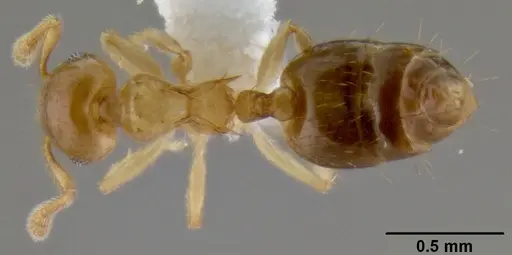
CASENT0908367
View on AntWeb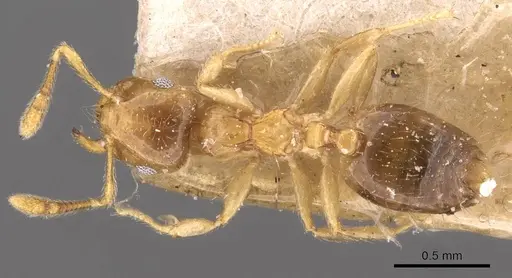
CASENT0912752
View on AntWeb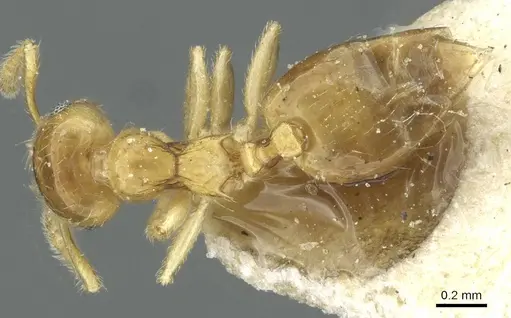
CASENT0914537
View on AntWeb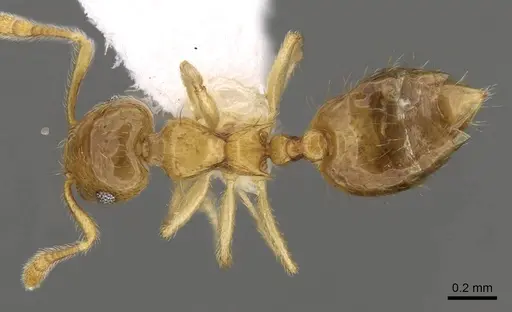
Literature
Loading distribution map...Loading products...