
Crematogaster baduvi
- Sci. Name
- Crematogaster baduvi
- Subgenus
- Orthocrema
- Tribe
- Crematogastrini
- Subfamily
- Myrmicinae
- Author
- Forel, 1912
- Distribution
- Found in 1 countries
Introduction
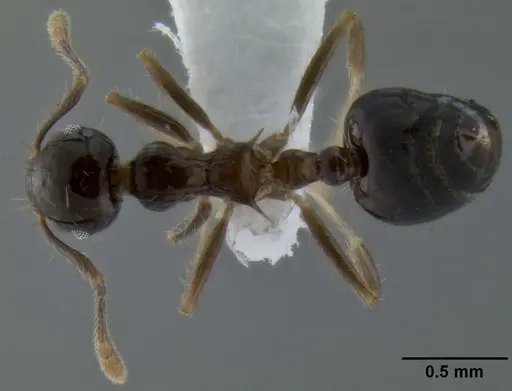
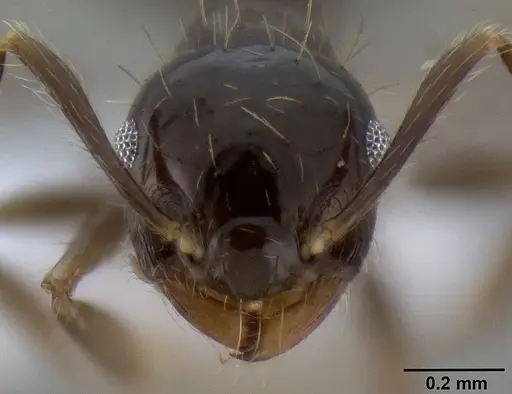
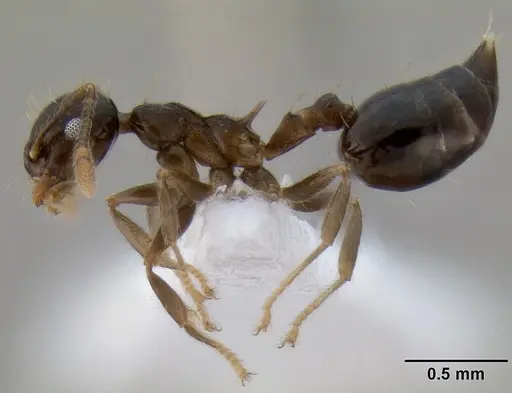
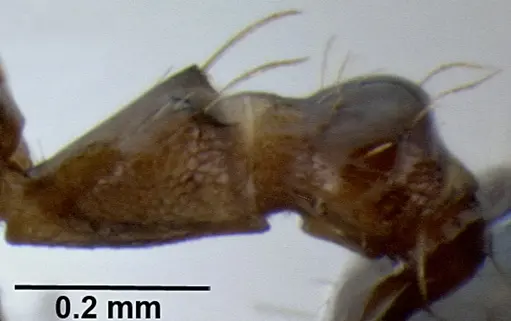
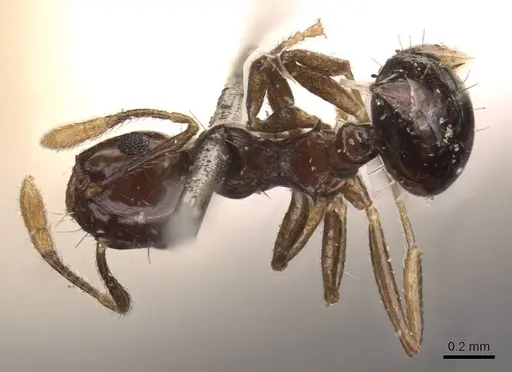
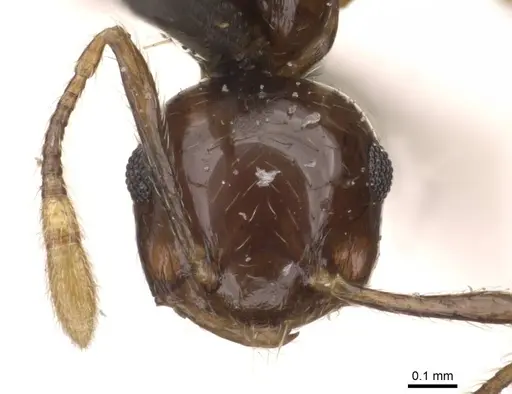
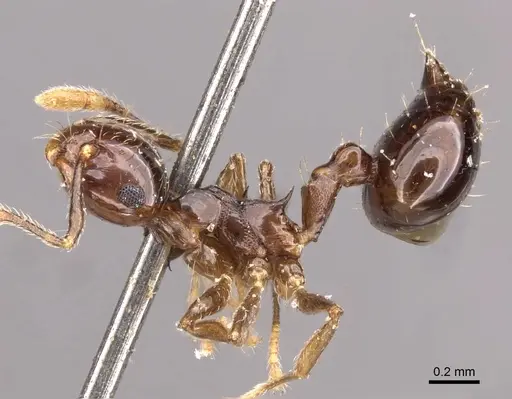
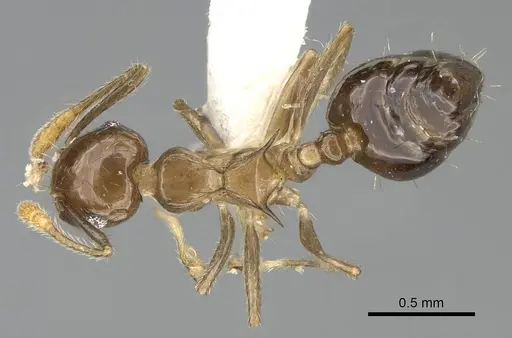
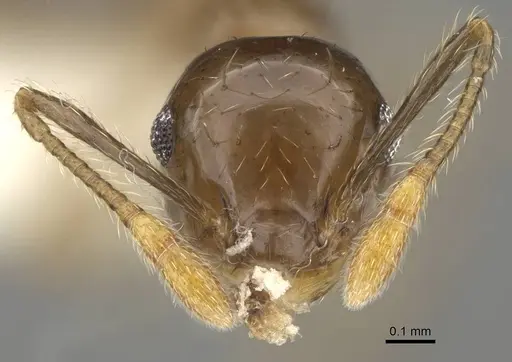
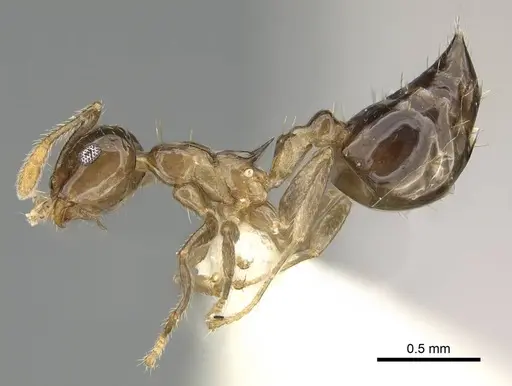
Crematogaster baduvi is a small ant belonging to the subgenus Orthocrema, found across Southeast Asia including Malaysia, Brunei, and Indonesia . Workers have distinctive smooth and shining body surfaces, long propodeal spines that are divergent and straight toward the tip, and a highly convex postpetiole that is globular rather than bilobed . Their body is red-brown with the last two funicular segments yellow, contrasting with the otherwise blackish antennae [AntWiki]. This species is part of the baduvi species group, which is known from Sumatra, Borneo, and New Guinea . What makes C. baduvi interesting is its membership in the Orthocrema clade, a group of Crematogaster ants characterized by their highly convex postpetiole and distinctive spine morphology . Like other acrobat ants, they can raise their gaster defensively. This species has been studied primarily in lowland dipterocarp forests and collected through canopy fogging, indicating they are arboreal or canopy-dwelling ants .
Quick Summary
- Difficulty: Medium
- Origin & Habitat: Southeast Asia, found in Malaysia (Peninsula), Brunei, and Indonesia (Krakatau, Sumatra, Java) [1]. They inhabit lowland dipterocarp forests and have been collected from forest canopies using fogging methods [3][1]. This is a tropical species from warm, humid rainforest environments.
- Colony Type: Colony structure is not documented in scientific literature. Further research needed to confirm whether they are monogyne or polygyne.
- Size & Growth:
- Queen: Size data unavailable, queen measurements have not been documented for this species.
- Worker: Approximately 5-6mm, inferred from Crematogaster genus worker size range [1].
- Colony: Colony size not documented in available research.
- Growth: Growth rate is unconfirmed for this species.
- Development: Development timeline is unconfirmed for this species. (No species-specific development data is available.)
- Antkeeping:
- Temperature: Keep at 24-28°C. As a tropical Southeast Asian species, they require warm, stable conditions. Use a heating cable on one side of the nest to create a gentle gradient if room temperature is below this range.
- Humidity: Maintain high humidity (70-85%) mimicking their rainforest canopy origin. Keep the nest substrate consistently moist but not waterlogged. Provide a water tube for drinking access.
- Diapause: No, this is a tropical species that does not require hibernation. They remain active year-round in consistent warm conditions [1].
- Nesting: In captivity, they do well in Y-tong (AAC) nests, plaster nests, or naturalistic setups. Their natural arboreal habitat suggests they prefer elevated nesting sites. Provide narrow chambers scaled to their worker size. Include some vertical space as they often nest in elevated positions.
- Behavior: Crematogaster baduvi is an arboreal species with typical acrobat ant behavior, workers are active foragers that can raise their gaster defensively when threatened [2]. They are not particularly aggressive toward keepers but will defend their nest. Escape prevention is important due to their small size, use fine mesh barriers and ensure all connections are secure. They are fast-moving and good climbers. Workers are attracted to sweet liquids and will tend aphids for honeydew.
- Common Issues: tropical species requires consistent warmth, cold temperatures below 20°C can slow activity and weaken the colony, small size means escape prevention must be excellent, they can squeeze through tiny gaps in equipment, high humidity requirements can lead to mold issues if ventilation is poor, limited specific care information means keepers may need to experiment with conditions, wild-caught colonies may harbor parasites that can affect captive colonies
Housing and Nest Setup
Crematogaster baduvi does well in various captive setups. Y-tong (AAC) nests work well for this species, the narrow chambers match their natural arboreal nesting preferences. Plaster nests also work well, providing the humidity control they need. For a naturalistic approach, you can use a setup with cork bark or wooden structures elevated above a water reservoir to maintain humidity. The key is providing chambers scaled to their worker size with some vertical space. Include an outworld area for foraging. Ensure all connections between the nest and outworld are secure, these small ants are excellent escape artists. [1][3][2]
Feeding and Diet
Like other Crematogaster species, C. baduvi is omnivorous with a preference for sweet substances. Offer sugar water, honey, or diluted maple syrup as a constant carbohydrate source. For protein, provide small insects like fruit flies, small crickets, or mealworms. They will also accept honeydew, you can offer aphid colonies or artificial honeydew substitutes. Feed protein sources 2-3 times per week, and keep sugar water available at all times. Remove uneaten prey after 24 hours to prevent mold. Observing their foraging behavior will help you adjust feeding frequency to your colony's needs. [2]
Temperature and Seasonal Care
As a tropical species from Southeast Asia, C. baduvi requires warm conditions year-round. Maintain temperatures between 24-28°C for optimal colony health and development. Temperatures below 20°C can cause sluggish behavior and may weaken the colony over time. A heating cable placed on one side of the nest creates a temperature gradient that allows ants to self-regulate. Place the heating element on top of the nest rather than underneath to avoid excessive drying. Since they come from a tropical climate with minimal seasonal temperature variation, no hibernation or diapause is required, they remain active throughout the year in consistent conditions. [1][4][2]
Humidity and Water
Crematogaster baduvi requires high humidity (70-85%) to thrive, reflecting their origin from humid rainforest environments in Southeast Asia [3]. Keep the nest substrate consistently moist but avoid waterlogging, which can drown brood and encourage mold. A water tube should always be available for drinking access, mist the nest area periodically to maintain humidity levels. Monitor condensation on nest walls as an indicator of humidity. Good ventilation is important to prevent stagnant air and mold growth, but avoid excessive airflow that dries the nest too quickly. Strike a balance: damp but not stagnant, moist but not wet.
Behavior and Handling
Crematogaster baduvi displays typical acrobat ant behavior, when disturbed, workers raise their abdomen (gaster) in a defensive posture, ready to use their chemical defenses or deliver a mild sting [2]. They are active foragers and good climbers, often exploring vertical surfaces. While not overly aggressive toward humans, they will defend their nest vigorously. Their small size makes them fast-moving and sometimes hard to handle during nest transfers. For escape prevention, use fluon on rim edges and fine mesh on any openings. These ants are generally calm in captivity once established, but can become agitated by vibrations or bright light. Observe your colony's activity patterns to understand their daily rhythms.
Frequently Asked Questions
How long does it take for Crematogaster baduvi to produce first workers?
The development timeline for this specific species has not been documented. Monitor your colony and adjust conditions if development seems slow. Expect several weeks to months under warm conditions based on typical Crematogaster patterns.
What size colony does Crematogaster baduvi reach?
Colony size is not specifically documented for this species in available research. With good care, expect a growing colony over time.
Do Crematogaster baduvi ants sting?
Yes, like other Crematogaster species, they can sting. However, their sting is mild and rarely penetrates human skin due to their small size. The main defense mechanism most keepers notice is the characteristic gaster-raising posture rather than actual stinging.
Can I keep multiple Crematogaster baduvi queens together?
The colony structure for this specific species has not been documented. Based on typical Crematogaster behavior, they are usually monogyne (single queen). Combining unrelated queens is not recommended unless you observe founding-stage queens peacefully cooperating, even then, some may need to be separated.
What temperature do Crematogaster baduvi need?
Keep them at 24-28°C. This tropical Southeast Asian species requires warm conditions year-round. Avoid temperatures below 20°C for extended periods.
Are Crematogaster baduvi good for beginners?
This species is rated as medium difficulty. While not the easiest species, they are rewarding once established. The main challenges are maintaining high humidity and consistent warmth. Beginners should be prepared for these specific requirements.
Do Crematogaster baduvi need hibernation?
No, they do not require hibernation. As a tropical species from Southeast Asia, they remain active year-round in consistent warm conditions. Attempting to hibernate them could be harmful.
What do Crematogaster baduvi eat?
They are omnivorous with a preference for sweets. Offer sugar water, honey, or maple syrup constantly. For protein, feed small insects like fruit flies, small crickets, or mealworms 2-3 times per week. They will also accept honeydew if available.
How do I prevent Crematogaster baduvi from escaping?
Use excellent escape prevention due to their small size. Apply fluon to all rim edges, use fine mesh on any ventilation holes, and ensure all connections between nest components are tight. Check for tiny gaps regularly.
When should I move Crematogaster baduvi to a formicarium?
Keep founding colonies in a test tube setup until they have 20-30 workers. Once the colony outgrows the test tube or you see workers avoiding the cotton (indicating waste buildup), transfer to a proper nest setup like a Y-tong or plaster formicarium.
Report an Issue
The current care sheet is based fully on literature. See inconsistencies, or something that's incorrect? Please , it will be resolved after review from an admin. Contributing to the blogs tab also helps providing information, to make us be able to further improve the caresheets. Thank you for your support!
References

This caresheet is licensed under CC BY-SA 4.0 .
Community Blogs
Literature
Loading distribution map...Loading products...