
Crematogaster atra
- Sci. Name
- Crematogaster atra
- Subgenus
- Orthocrema
- Tribe
- Crematogastrini
- Subfamily
- Myrmicinae
- Author
- Mayr, 1870
- Distribution
- Found in 8 countries
Introduction
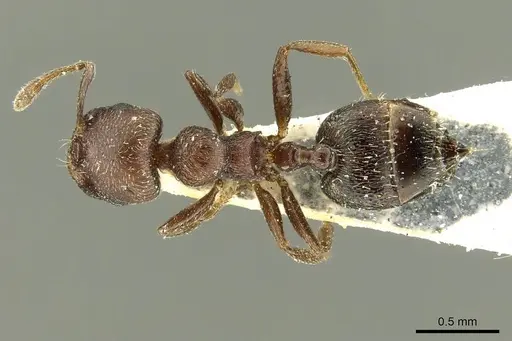
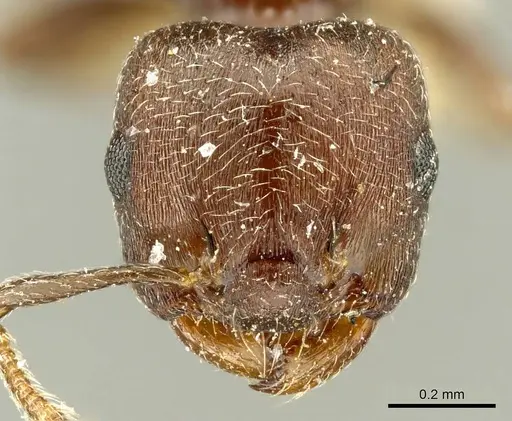
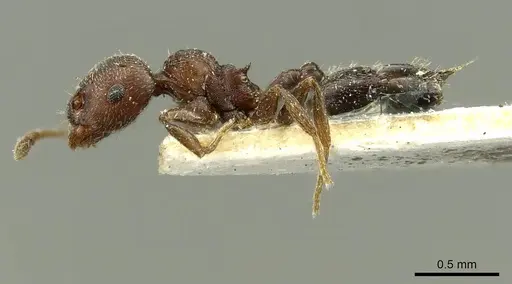
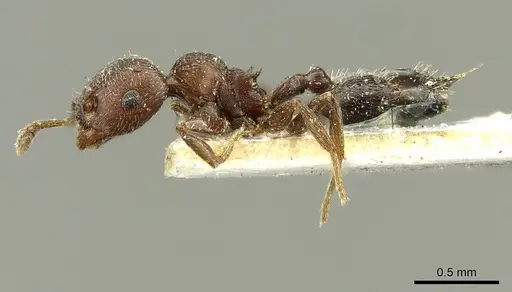
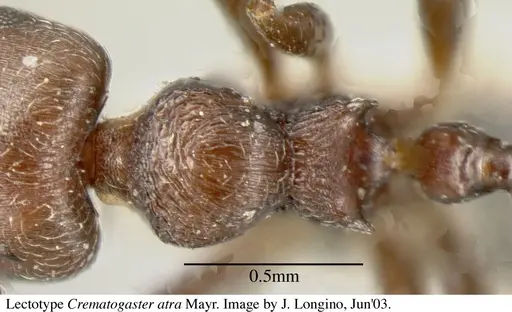
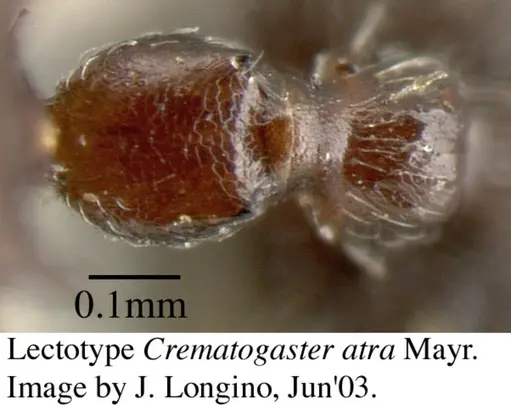
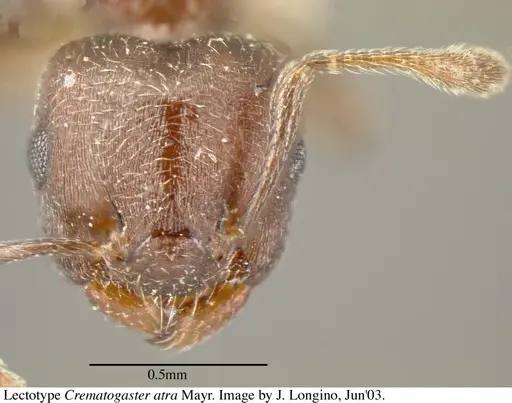
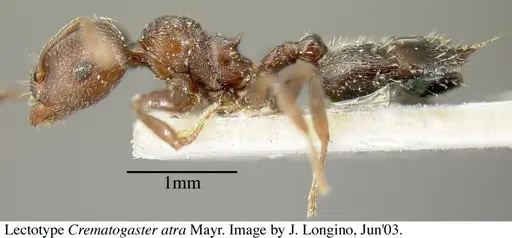
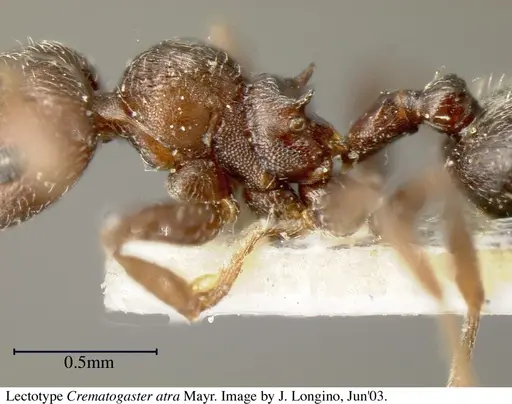
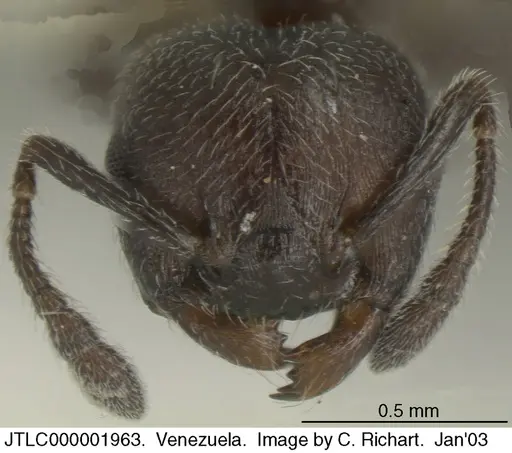
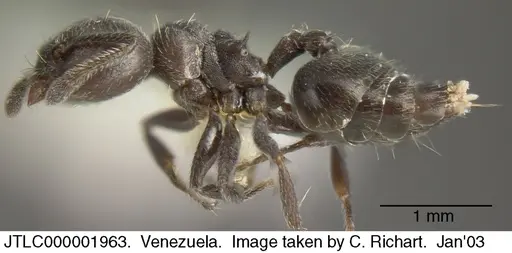
Crematogaster atra is a small ant species belonging to the Myrmicinae subfamily. Workers are characterized by a well-defined longitudinal striation on their face that follows the curvature of the eye, and short erect hairs covering most of the dorsal surface of their mesosoma. The sternopetiolar process is highly variable, ranging from absent to well-developed. This species is part of the Crematogaster crinosa complex and requires further taxonomic study . These ants are found across the Neotropical region, from central Mexico south to Argentina, inhabiting diverse environments ranging from desert shrubland to lowland rain forest. They are arboreal nesters in nature, commonly found nesting in trees and swollen thorn Acacia plants, though they also establish nests in soil including muddy clay with pebbles and various soil types from dark brown clay to white sand . Their common name 'acrobat ant' comes from their ability to raise their gaster over their head when disturbed, using a smear defense mechanism to wipe venom onto enemies.
Quick Summary
- Difficulty: Medium
- Origin & Habitat: Neotropical region, Mexico south to Argentina, including Brazil, Venezuela, Bolivia, Colombia, Paraguay, and Uruguay. Found in diverse habitats including desert shrubland, ravine riparian forest, oak woodland, scrubby disturbed rain forest, and lowland rain forest [1].
- Colony Type: Colony structure is not well documented for this specific species. More research needed on their exact colony structure.
- Size & Growth:
- Queen: Size data unavailable, not directly measured for this species
- Worker: Size data unavailable, only partial measurements (head width, mesosoma length) are documented [1]
- Colony: Colony size is unconfirmed for this species
- Growth: Unknown
- Development: Unknown for this specific species (Development data has not been documented for C. atra.)
- Antkeeping:
- Temperature: Keep nest area at 25-28°C. These are tropical ants that prefer warm conditions. A gentle temperature gradient allows workers to self-regulate. Avoid temperatures below 22°C for extended periods.
- Humidity: Moderate to high humidity. Provide a moist nest substrate, they naturally nest in soil and trees in humid environments. Keep the nest substrate consistently damp but not waterlogged. Provide a water tube for drinking access.
- Diapause: No, as a tropical species, they do not require hibernation. Maintain consistent warm temperatures year-round.
- Nesting: They are arboreal and ground-nesting in nature. In captivity, they do well in Y-tong nests or naturalistic setups with soil. Provide nesting chambers with some moisture retention. They accept various nest types but prefer enclosed spaces with humidity control. A test tube setup works for founding colonies.
- Behavior: Crematogaster ants are known for their defensive behavior, when threatened, workers raise their gaster over their head like an acrobat, which gives them their common name. They use a smear defense mechanism, wiping venom onto enemies rather than piercing flesh. They are generally not aggressive toward humans but will defend their nest vigorously. Workers are active foragers and will search for food both on the ground and in vegetation. They are omnivorous, feeding on honeydew, small insects, and sweet substances. Their small size means escape prevention should be a priority, use fine mesh barriers and tight-fitting lids.
- Common Issues: escape prevention is critical due to their small size, they can squeeze through standard mesh, tropical temperature requirements mean they may struggle in unheated homes during winter, wild-caught colonies may carry parasites that can cause colony failure, overfeeding can lead to mold problems in nest setups
Housing and Nest Setup
Crematogaster atra can be kept in various nest types. For founding colonies, a simple test tube setup works well, fill the tube with water, plug with cotton, and place the queen in the dark. Once you have workers, you can consider moving to a more elaborate setup.
For established colonies, Y-tong nests or naturalistic soil setups work well. These allow you to control humidity more precisely. Keep the nest substrate moist but not soggy, the ants should have access to both damp areas and slightly drier zones for self-regulation. A water tube attached to the outworld provides drinking water.
The outworld should be simple and easy to clean. These are small ants, so use a shallow foraging area to prevent prey from escaping. Fluon or vaseline barriers on the rim help prevent escapes. Consider double barriers or fine mesh since standard mesh may be insufficient. [1]
Feeding and Diet
Crematogaster atra is omnivorous like most Crematogaster species. In captivity, they readily accept sugar sources including honey water and sugar water. Offer a constant supply of sugar water in a test tube with a cotton wick.
For protein, offer small insects. Fruit flies, small crickets, mealworms, and other appropriately-sized arthropods are accepted. Feed protein several times per week, adjusting based on colony size and brood production. Remove uneaten prey after 24-48 hours to prevent mold.
They will also collect honeydew if you have aphids or scale insects available, though this is optional in captivity.
Temperature and Seasonal Care
As a tropical species from the Neotropical region, Crematogaster atra requires warm temperatures year-round. Keep the nest area at 25-28°C for optimal brood development. Temperatures below 22°C for extended periods can slow development and weaken the colony.
A small heating cable or heating mat on one side of the nest can create a temperature gradient. Place the heating on top of the nest rather than underneath to avoid drying out the substrate through evaporation. Monitor with a thermometer to ensure temperatures stay in range.
Unlike temperate species, these ants do not require hibernation or diapause. Maintain consistent temperatures throughout the year. [1]
Behavior and Defense
The most distinctive behavior of Crematogaster ants is their defensive posture, when threatened, workers raise their gaster over their head, ready to use their stinger. This 'acrobat' posture gives the entire genus its common name. Their defense mechanism involves smearing venom onto enemies using a modified, flattened stinger rather than piercing flesh. They are not particularly aggressive toward humans but will defend their nest if disturbed.
Workers are active foragers and will search for food both in the outworld and in vegetation if given the opportunity. They communicate using chemical trails and can recruit nestmates to food sources.
Their small size means they are excellent climbers and can scale smooth surfaces. Escape prevention is essential, use vaseline or fluon barriers on all rim surfaces and ensure any mesh barriers are fine enough to contain workers.
Colony Development and Growth
A newly mated queen will seal herself into a chamber and lay eggs. Specific founding behavior has not been documented for C. atra, further research is needed. The first workers, if produced, are typically smaller than normal workers.
Development time from egg to worker is unknown for this specific species. Once workers emerge, the colony grows as the queen focuses on egg production and workers take over foraging and brood care.
Growth rate depends heavily on temperature, feeding frequency, and colony health. Monitor your colony regularly and adjust care as needed.
Frequently Asked Questions
How long does it take for Crematogaster atra queens to produce first workers?
Development time has not been documented for this specific species. Be patient during the founding phase as specific timelines are unknown.
What do Crematogaster atra ants eat?
They are omnivorous. Offer sugar water or honey constantly, this is their primary energy source. For protein, feed small insects like fruit flies, small crickets, or mealworms several times per week.
Do Crematogaster atra ants sting?
They have a functional stinger but use a smear defense mechanism, they wipe venom onto enemies rather than piercing flesh. Their main defense is the acrobat posture, raising the gaster over the head, which serves as a warning. They are not considered dangerous to humans.
What temperature do Crematogaster atra ants need?
Keep them warm at 25-28°C. These are tropical ants that prefer consistent warmth. Avoid temperatures below 22°C for extended periods. A small heating cable or mat on one side of the nest creates a suitable gradient.
Can I keep multiple Crematogaster atra queens together?
This has not been documented for this specific species. It is not recommended to house multiple unrelated foundress queens together as they may fight.
How big do Crematogaster atra colonies get?
Colony size is not well documented for this specific species. Expect moderate growth over time with good care.
Do Crematogaster atra ants need hibernation?
No. As a tropical species from the Neotropical region, they do not require hibernation or winter cooling. Maintain consistent warm temperatures year-round.
Why are my Crematogaster atra escaping?
Their small size makes them excellent escape artists. Use fine mesh barriers, vaseline or fluon on rim surfaces, and ensure all connections are tight. Consider double barriers or fine mesh screens.
What is the best nest type for Crematogaster atra?
They are flexible and do well in test tubes for founding, then can be moved to Y-tong nests or naturalistic setups. The key is maintaining humidity control, keep the nest substrate consistently moist but not waterlogged.
Are Crematogaster atra good for beginners?
They are rated as Medium difficulty. They require tropical temperatures and have small workers that can escape easily, which makes them slightly challenging for complete beginners. However, they are rewarding once you understand their basic needs for warmth and humidity.
Report an Issue
The current care sheet is based fully on literature. See inconsistencies, or something that's incorrect? Please , it will be resolved after review from an admin. Contributing to the blogs tab also helps providing information, to make us be able to further improve the caresheets. Thank you for your support!
References

This caresheet is licensed under CC BY-SA 4.0 .
Community Blogs
Literature
Loading distribution map...Loading products...