
Colobostruma froggatti
- Sci. Name
- Colobostruma froggatti
- Tribe
- Attini
- Subfamily
- Myrmicinae
- Author
- Forel, 1913
- Distribution
- Found in 1 countries
Introduction
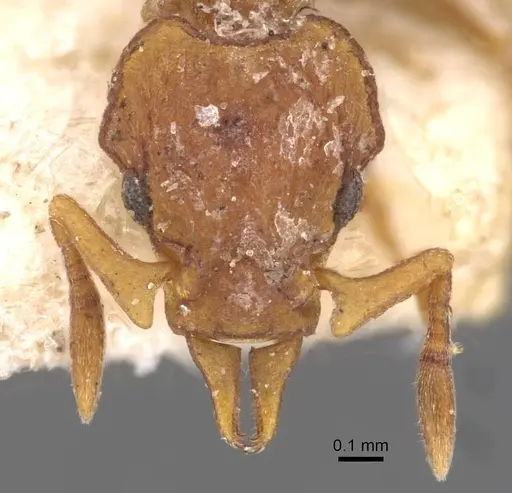
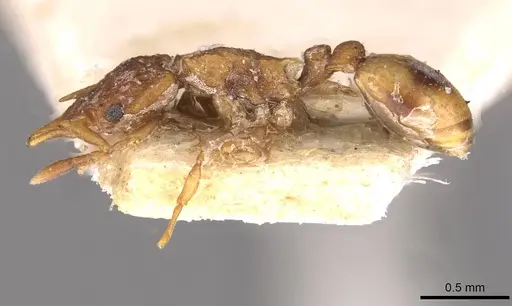
Colobostruma froggatti is a tiny Australian ant in the tribe Attini, measuring 2.5-3.2mm for workers [AntWiki]. These ants are recognizable by their 6-segmented antennae with a distinctive subbasal lobe, relatively long narrow mandibles, and a ridge above the eye that converges toward the front of the head. Body color ranges from honey yellow to yellow-red, with the gaster often showing an irregular dark band across its center. This species forms very small colonies with fewer than 100 workers, nesting in cracks in rocks covered by moss in forested areas across Australia, from Tasmania through the eastern states to Western Australia [AntWiki].
Quick Summary
- Difficulty: Medium
- Origin & Habitat: Australia (Tasmania, New South Wales, Victoria, South Australia, Western Australia). They inhabit forested sites ranging from wet to dry sclerophyll woodland, nesting in cracks in rocks with moss covering [1].
- Colony Type: Small colonies with fewer than 100 workers. Colony structure is unconfirmed, typical Dacetini species tend to be monogyne but this has not been specifically documented for this species.
- Size & Growth:
- Queen: Size data unavailable, no specific measurements exist for queens. Based on genus patterns, queens are likely larger than workers.
- Worker: 2.5-3.2mm [1]
- Colony: Under 100 workers [1]
- Growth: Slow, small colony size and limited brood production suggest gradual development
- Development: Development time unconfirmed, estimates based on related Dacetini species suggest several months. Small colony size means growth will be gradual. (Direct development data unavailable. Small colony size means growth is gradual.)
- Antkeeping:
- Temperature: Keep at room temperature, roughly 20-24°C. Australian temperate origin suggests they can tolerate moderate conditions. Avoid extremes.
- Humidity: Moderate. In nature they nest in rock cracks with moss covering, indicating they prefer damp conditions but not saturated substrate. Keep the nest substrate lightly moist with some drier areas available.
- Diapause: Likely required. As an Australian temperate species, they probably need a winter rest period. Reduce temperature for 2-3 months during winter.
- Nesting: These ants naturally nest in rock cracks. In captivity, they do well in tight-fitting setups like Y-tong nests or small test tube setups with narrow chambers scaled to their tiny size. Avoid large open spaces.
- Behavior: These are very small, docile ants with specialized narrow mandibles designed for catching small prey. They are not aggressive and unlikely to sting. Their tiny size makes escape prevention critical, they can squeeze through remarkably small gaps. Foraging is slow and deliberate given their small colony size.
- Common Issues: escape prevention is critical due to their very small size, use fine mesh barriers and tight-fitting lids, small colony size means slow growth, patience is required, limited natural history data means care is partly inferred from related species, wild-caught colonies may be difficult to establish due to small colony size and specific nesting requirements, overwatering can be fatal, their rock-crack nesting preference suggests they need well-drained conditions, not saturated substrate
Housing and Nest Setup
Colobostruma froggatti is a tiny ant that needs appropriately scaled housing. In the wild, they nest in cracks in rocks covered by moss, so they prefer tight, secure spaces rather than open areas. A Y-tong nest with narrow chambers works well, as does a small test tube setup for founding colonies. The key is providing chambers that match their small size, avoid tall, open spaces where they may feel exposed. Because they are so tiny, escape prevention must be excellent. Use fine mesh on any ventilation holes and ensure all connections are sealed. A small outworld area for foraging is sufficient given their tiny colony size. [1]
Feeding and Diet
As members of the tribe Attini, these ants belong to the Dacetini subgroup which are predators of small invertebrates. Feed them small live prey like fruit flies, pinhead crickets, and other tiny arthropods. They will likely accept sugar sources like honey water or sugar water, though protein should form the bulk of their diet. Offer food 2-3 times per week, removing any uneaten prey after 24 hours to prevent mold. Given their tiny colony size, offer small portions. [1]
Temperature and Seasonal Care
These Australian ants do well at moderate room temperatures, roughly 20-24°C. As a species found throughout temperate regions of Australia, they can tolerate cooler conditions than tropical ants but prefer warmth for optimal brood development. A heating cable on one side of the nest can create a gentle gradient if your room runs cool. During winter, they will benefit from a diapause period, reduce temperatures for 2-3 months. This mimics their natural seasonal cycle in temperate Australia. Keep the nest area stable and avoid sudden temperature swings. [1]
Behavior and Handling
Colobostruma froggatti is a docile, non-aggressive species. Their specialized narrow mandibles are designed for catching small prey, not for defense. They are unlikely to sting humans. However, their tiny size means they are expert escape artists, even the smallest gaps in setup can become exits. Always use excellent escape prevention. They are slow-moving and deliberate in their movements, with small colony sizes meaning you will rarely see massive foraging swarms. Watch for workers moving individually or in small groups searching for food. [1]
Frequently Asked Questions
How long does it take for Colobostruma froggatti to produce first workers?
Direct data is not available. Based on typical Dacetini development patterns, expect several months from egg to worker at optimal temperature. Small colony sizes mean growth is gradual, be patient.
Can I keep Colobostruma froggatti in a test tube?
Yes, test tubes work well for founding colonies. Use a small diameter tube appropriate for their tiny size, with a water reservoir at one end and a cotton plug creating a foraging area. Ensure the cotton is packed tightly, these tiny ants can squeeze through surprisingly small gaps.
What do Colobostruma froggatti eat?
They are predators of small invertebrates. Feed small live prey like fruit flies, tiny crickets, or other micro-arthropods. They will likely accept sugar water or honey as a supplement. Protein should be offered 2-3 times weekly.
How big do Colobostruma froggatti colonies get?
Colonies remain small, under 100 workers even at maturity. This is a naturally micro-colonial species. Do not expect large swarms like you would see with Lasius or Camponotus.
Do Colobostruma froggatti need hibernation?
Yes, as an Australian temperate species they likely need a winter rest period. Reduce temperatures for 2-3 months during winter to mimic their natural seasonal cycle.
Why are my Colobostruma froggatti escaping?
Their tiny size makes them excellent escape artists. Use fine mesh, ensure all connections are sealed, and check for gaps regularly. Even the tiniest crack can be an exit for these ants.
Are Colobostruma froggatti good for beginners?
They are moderate difficulty. Their small size and escape risk require attention to detail, but their docile nature and modest temperature needs make them manageable. The main challenge is their slow growth and small colony size requiring patience.
When should I move Colobostruma froggatti to a formicarium?
Wait until the colony has at least 20-30 workers and is actively foraging. Given their naturally small colony size, they do not need large spaces, a small Y-tong nest works well.
Can I keep multiple queens together?
Not recommended. While colony structure is not fully documented, they are likely monogyne. Combining unrelated queens has not been studied and could result in aggression.
Report an Issue
The current care sheet is based fully on literature. See inconsistencies, or something that's incorrect? Please , it will be resolved after review from an admin. Contributing to the blogs tab also helps providing information, to make us be able to further improve the caresheets. Thank you for your support!
References

This caresheet is licensed under CC BY-SA 4.0 .
Community Blogs
CASENT0280688
View on AntWeb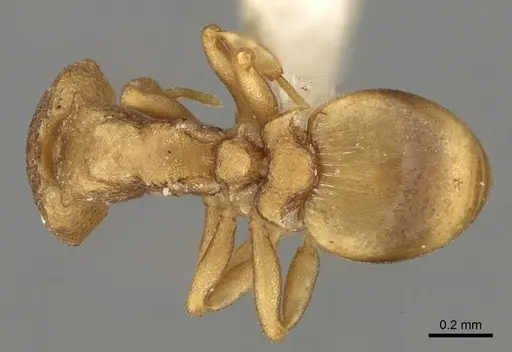
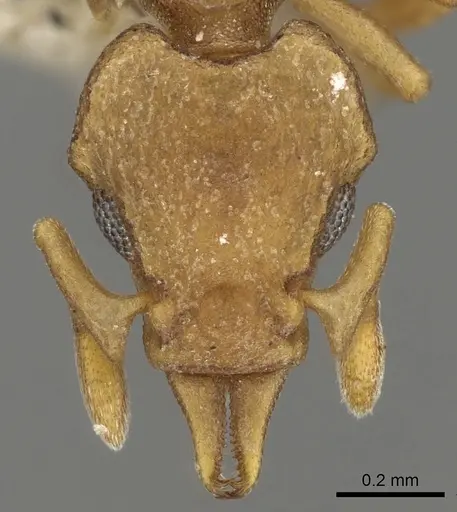
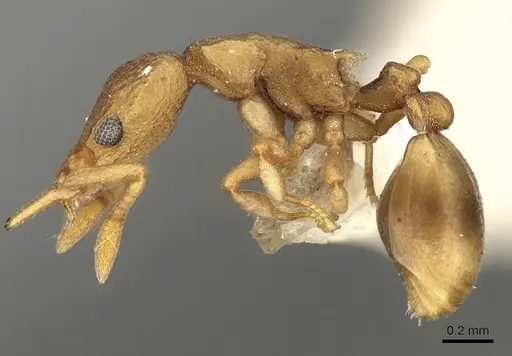
CASENT0909352
View on AntWeb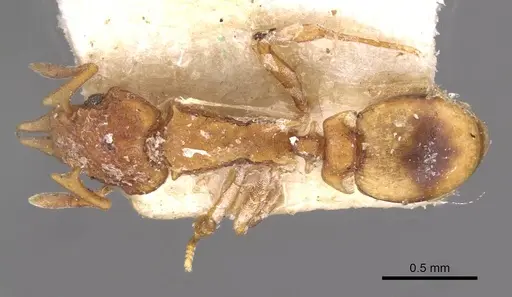
Literature
Loading distribution map...Loading products...