
Colobopsis schmeltzi
- Sci. Name
- Colobopsis schmeltzi
- Tribe
- Camponotini
- Subfamily
- Formicinae
- Author
- Mayr, 1866
- Distribution
- Found in 1 countries
Introduction
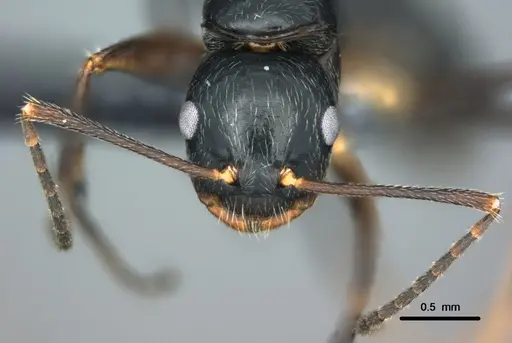
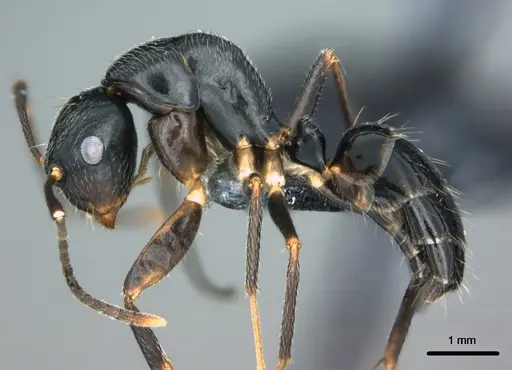
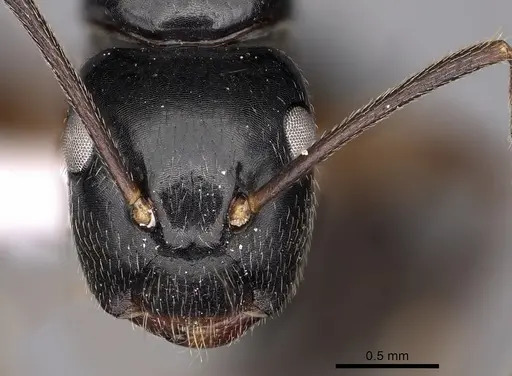
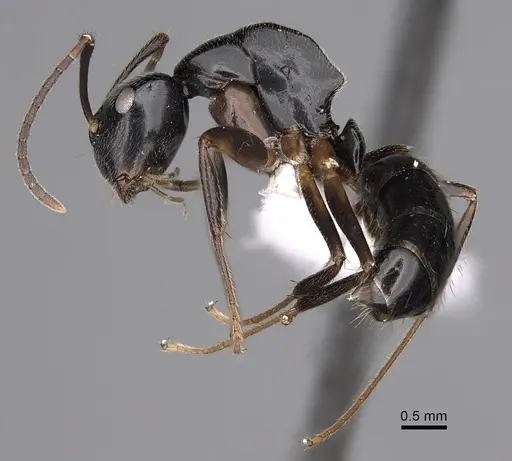
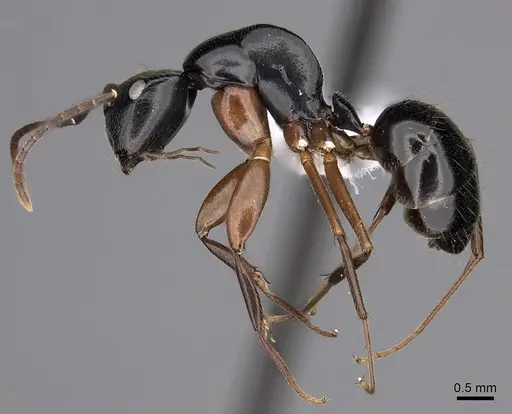
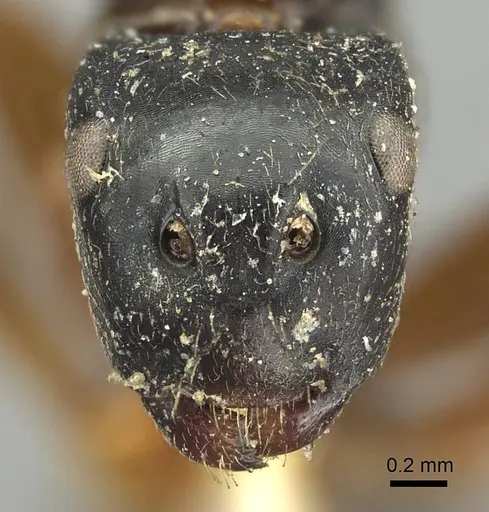
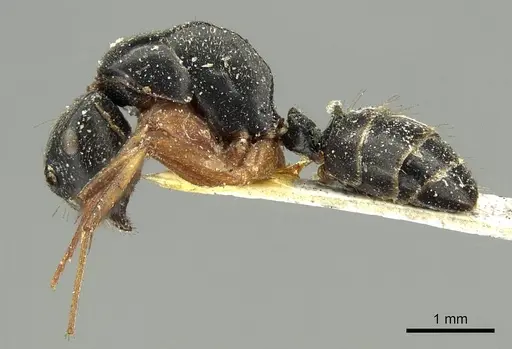
Colobopsis schmeltzi is a medium-sized carpenter ant endemic to the islands of Fiji. Workers measure around 5.4mm and are predominantly black and shiny, with distinctive chestnut-red legs and a uniquely shaped head and thorax that appears compressed from above. The thorax is notably compressed behind the pronotum, giving these ants an unusual flattened appearance. This species is arboreal by nature, nesting primarily in dead and dry branches, though they occasionally inhabit moister rotting wood. They are found across six of Fiji's major islands including Viti Levu, Ovalau, Taveuni, and Vanua Levu . What makes C. schmeltzi interesting is its extreme rarity in the antkeeping hobby. This is one of the few truly arboreal carpenter ant species from the Pacific region, making it a unique addition for advanced antkeepers seeking something different from common temperate Camponotus species. Their arboreal nesting preference means they do best in setups that mimic tree hollows rather than ground nests .
Quick Summary
- Difficulty: Medium
- Origin & Habitat: Fiji islands, endemic to Viti Levu, Ovalau, and five other major islands in the Fijian archipelago. Found in tropical rainforests where they nest in dead branches and rotting wood, both dry and slightly moist [2][4].
- Colony Type: Colony type is unconfirmed. Based on typical Camponotus patterns, likely single queen colonies.
- Size & Growth:
- Queen: Size data unavailable, no direct measurement exists in the research context. Based on genus patterns, likely around 9-12mm.
- Worker: 5.4mm [3]
- Colony: Maximum colony size is unknown. Based on related arboreal Camponotus species, likely reaches several hundred workers at maturity.
- Growth: Moderate, typical for tropical carpenter ants
- Development: Estimated 6-8 weeks at optimal tropical temperatures (25-28°C). Development timeline is inferred from genus patterns, not confirmed for this species. (Development likely faster than temperate species due to tropical origin)
- Antkeeping:
- Temperature: Keep at 24-28°C. These are tropical ants from Fiji, so they need warm, stable temperatures year-round. A heating cable on one side of the nest creates a gentle gradient allowing them to regulate their temperature.
- Humidity: Moderate humidity around 60-75%. Their natural habitat is tropical rainforest, but they nest in dry dead branches more often than moist logs. Provide a moist area in the outworld and a dry area in the nest for them to choose between [2].
- Diapause: No, as a tropical species from near the equator, they do not require hibernation. Keep temperatures consistent year-round.
- Nesting: Arboreal nesting preference, they naturally nest in dead branches and rotting wood. In captivity, a Y-tong (AAC) nest or plaster nest with wood-like chambers works well. Avoid fully soil-based nests as they prefer dry nesting chambers. Provide twigs or small wood pieces in the outworld as enrichment [2].
- Behavior: These ants are relatively docile and not aggressive toward keepers. As carpenter ants, they are capable of chewing through soft materials but are not destructive to formicariums. Workers are active foragers that will search the outworld for food. They have the typical Camponotus defense mechanism, they bite and spray formic acid from their acidopore. Escape risk is moderate, workers at 5.4mm are not tiny but can still squeeze through small gaps, so standard escape prevention measures apply.
- Common Issues: tropical temperature requirements mean colonies can struggle in air-conditioned rooms or cool climates, arboreal nesting means they may reject ground-level test tube setups, provide elevated nesting options, as a rare species with limited data, founding colonies can be challenging and slow, dry branch nesting preference means overly humid nests can cause problems, balance moisture carefully, limited availability in the antkeeping hobby means this species is difficult to acquire
Housing and Nest Setup
Colobopsis schmeltzi is an arboreal species, meaning they naturally nest above ground in dead branches and rotting wood rather than underground. In captivity, this means you should avoid traditional test tube setups placed flat on the ground. Instead, provide a nest that mimics their natural tree-hole habitat. A Y-tong (AAC) nest works well because it has narrow chambers similar to the inside of a branch. Plaster nests with wood-textured chambers are another good option. You can also create a naturalistic setup with small twigs or cork bark pieces in the outworld for them to explore and potentially nest in. The key is providing a dry nest chamber, these ants prefer nesting in dead, dry branches more than moist rotting wood [2].
Feeding and Diet
Like other carpenter ants in the genus Camponotus, C. schmeltzi is an omnivore that accepts both sugar sources and protein. Offer sugar water, honey, or diluted maple syrup as a constant carbohydrate source. For protein, provide small insects like fruit flies, small crickets, or mealworms. In the wild, these ants are foragers that likely collect honeydew from aphids and scale insects, so they may also accept aphid sugar water. Feed protein prey 2-3 times per week, and keep sugar water available at all times. Remove any uneaten prey after 24-48 hours to prevent mold. Since this is a tropical species, they may have higher metabolisms and benefit from more frequent feeding during warm periods.
Temperature and Heating
Being from tropical Fiji, these ants need consistently warm temperatures to thrive. Keep the nest area between 24-28°C (75-82°F). Unlike temperate ant species that can tolerate room temperature, tropical species like C. schmeltzi can become sluggish or stop brood development entirely if temperatures drop too low. Use a heating cable or heat mat on one side of the nest to create a warm zone, but always place heating on top of the nest rather than underneath to prevent excessive drying and moisture problems. Room temperature alone is likely insufficient unless your home is naturally warm. Monitor colony activity, if workers are clustered together and not foraging actively, they may need more warmth. Avoid temperature fluctuations and keep them away from air conditioning vents.
Humidity and Water
These ants come from a tropical rainforest environment but nest primarily in dry dead branches, so they need a balance of humidity. Aim for around 60-75% humidity in the nest area. Provide a water tube or small dish in the outworld so they can drink. In the nest, keep one area slightly moist and another dry, allowing the colony to self-regulate. The key is avoiding both extremes, too wet and you'll get mold and mite problems, too dry and the colony may desiccate. Mist the outworld occasionally rather than flooding the nest. Since they naturally nest in dry branches, err on the drier side rather than overwatering [2].
Frequently Asked Questions
How long does it take for Colobopsis schmeltzi to raise their first workers?
Based on typical Camponotus development patterns, expect 6-8 weeks from egg to first worker at optimal temperatures of 25-28°C. The queen will seal herself in a chamber and raise the first brood alone. These first workers (nanitics) will be smaller than normal workers but will immediately begin foraging to support the growing colony.
Can I keep Colobopsis schmeltzi in a test tube setup?
While possible, test tubes are not ideal for this arboreal species. They naturally nest in dead branches above ground, so they do better in Y-tong nests, plaster nests, or naturalistic setups with cork bark and twigs. If you must use a test tube, prop it at an angle or elevate one end to better simulate their natural tree-hole habitat.
What temperature do Colobopsis schmeltzi need?
Keep them warm at 24-28°C (75-82°F). These tropical ants from Fiji need consistent warmth year-round. A small heating cable on part of the nest helps maintain optimal temperatures. Avoid cool locations and air-conditioned rooms.
Are Colobopsis schmeltzi good for beginners?
This species is rated as medium difficulty and is not ideal for complete beginners. The main challenges are maintaining tropical temperatures, providing proper arboreal-style housing, and the general rarity of the species making queens difficult to acquire. If you're new to antkeeping, start with a more common species like Lasius niger or Camponotus floridanus first.
How big do Colobopsis schmeltzi colonies get?
Based on related arboreal Camponotus species, colonies likely reach several hundred workers at maturity. They are not among the largest carpenter ants, but a healthy colony should eventually number in the 300-500 worker range.
Do Colobopsis schmeltzi need hibernation?
No. As a tropical species from Fiji near the equator, they do not require hibernation or winter cooling. Keep temperatures consistent year-round at 24-28°C. Simulating seasonal temperature drops can actually harm the colony.
What do Colobopsis schmeltzi eat?
They are omnivores like other carpenter ants. Offer sugar water, honey, or maple syrup as a constant carbohydrate source. For protein, feed small insects like fruit flies, small crickets, or mealworms 2-3 times per week. They may also accept aphid honeydew.
Where is Colobopsis schmeltzi found in the wild?
This species is endemic to Fiji, meaning it is found nowhere else on Earth. It lives on several islands including Viti Levu, Ovalau, Taveuni, Vanua Levu, Kadavu, and Koro. They nest in dead and dry branches in tropical forest areas [2][4].
Why are my Colobopsis schmeltzi not growing?
The most likely causes are: 1) Temperature too low, they need 24-28°C, 2) Humidity issues, either too wet causing mold or too dry causing desiccation, 3) Poor nutrition, ensure protein is offered regularly, 4) Queen stressed from disturbance. Check these parameters and make adjustments gradually.
Report an Issue
The current care sheet is based fully on literature. See inconsistencies, or something that's incorrect? Please , it will be resolved after review from an admin. Contributing to the blogs tab also helps providing information, to make us be able to further improve the caresheets. Thank you for your support!
References

This caresheet is licensed under CC BY-SA 4.0 .
Community Blogs
CASENT0180467
View on AntWeb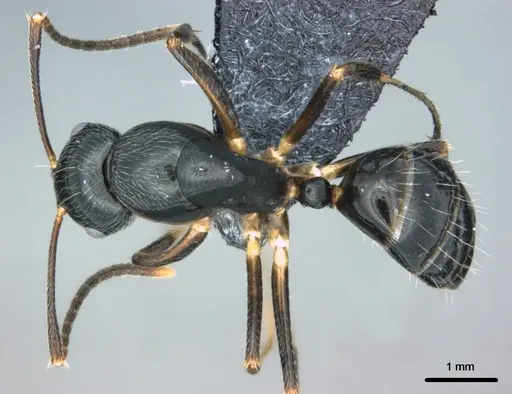
CASENT0280257
View on AntWeb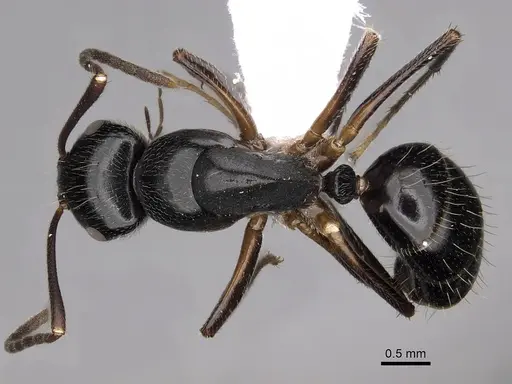
CASENT0280259
View on AntWeb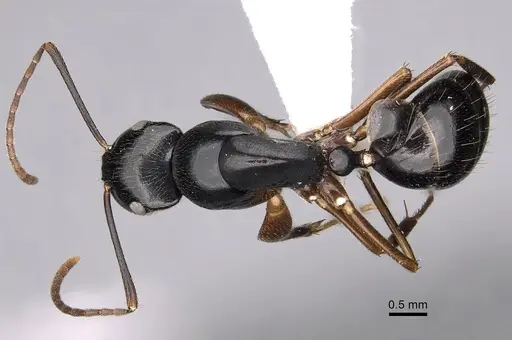
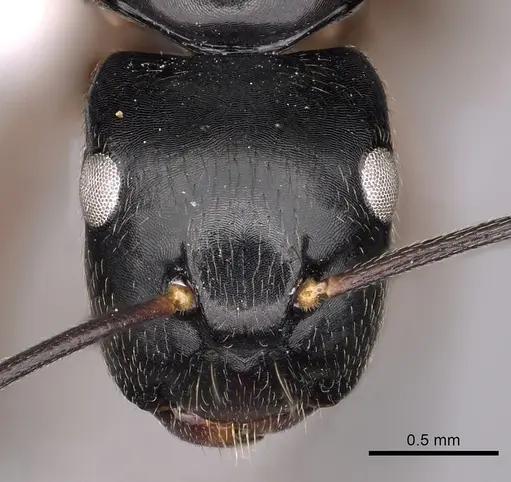
CASENT0915771
View on AntWeb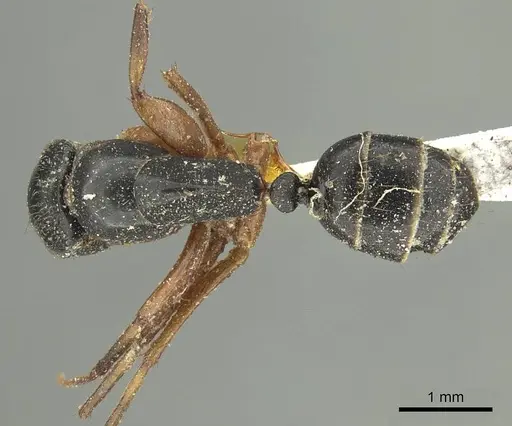
Literature
Loading distribution map...Loading products...