
Colobopsis sanguinifrons
- Sci. Name
- Colobopsis sanguinifrons
- Tribe
- Camponotini
- Subfamily
- Formicinae
- Author
- Viehmeyer, 1925
- Distribution
- Found in 1 countries
Introduction
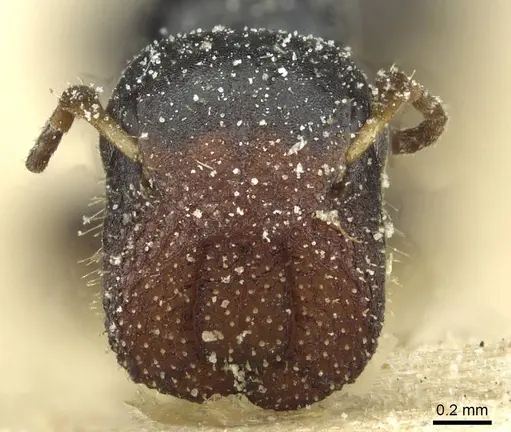
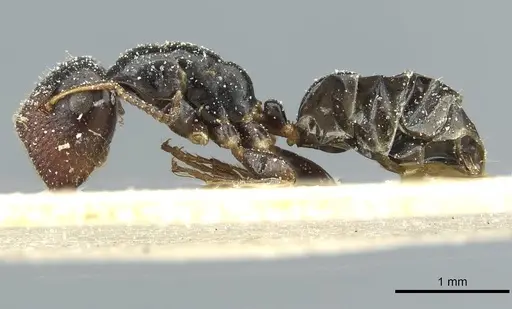
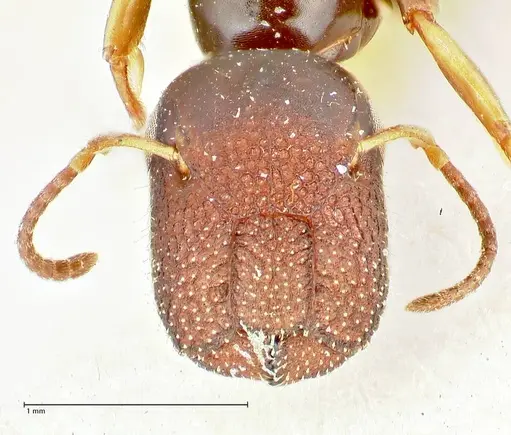
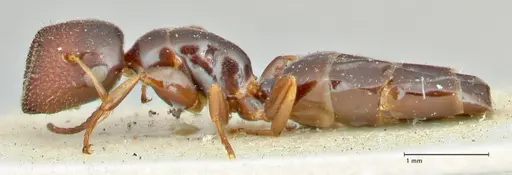
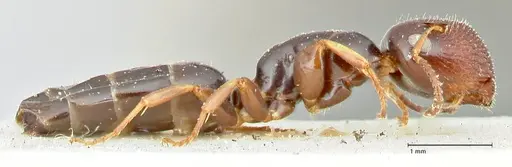
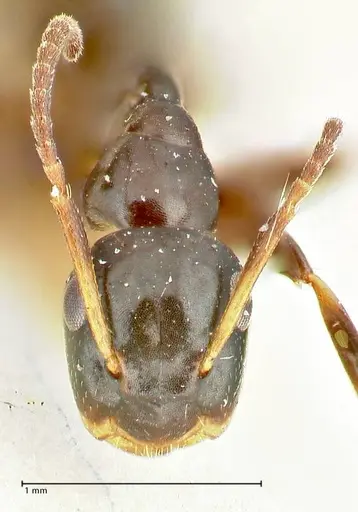
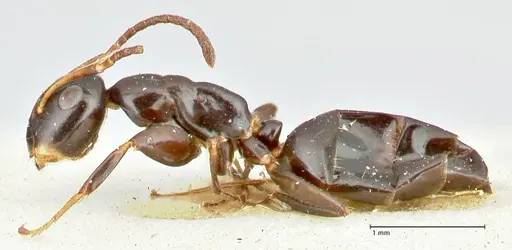
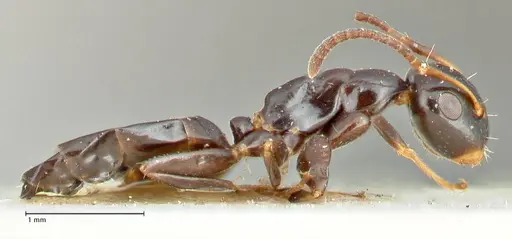
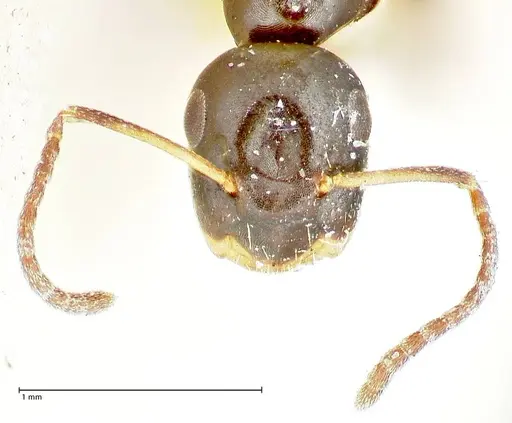
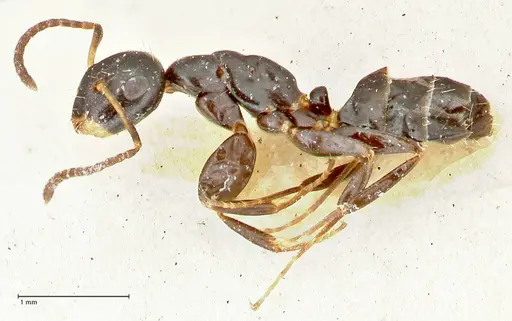
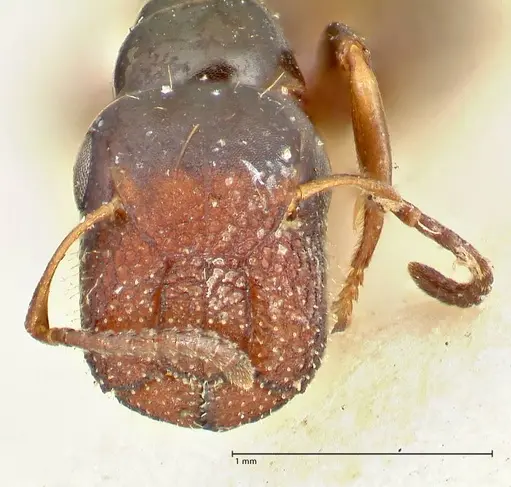
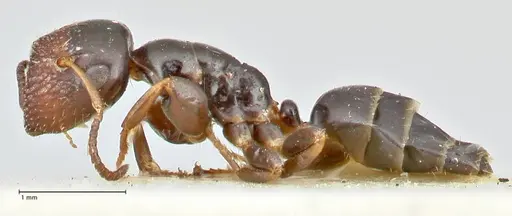
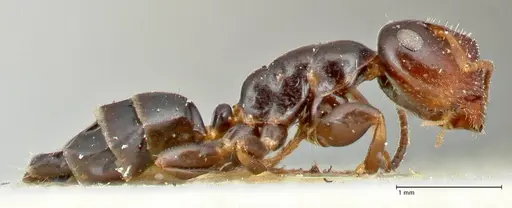
Colobopsis sanguinifrons is a tropical arboreal ant from the rainforests of New Guinea. Workers are small to medium-sized, typically around 5-8mm, with a reddish-brown coloration and a distinctly shaped head. This species nests exclusively in live branches within the high canopy of primary forest, making them a true tree-dwelling ant that rarely encounters the forest floor . The most remarkable feature is phragmosis - a specialized defense mechanism where soldiers have plug-shaped heads that block nest entrances like living corks . They are closely associated with scale insects, which they tend for honeydew as a primary food source .
Quick Summary
- Difficulty: Medium
- Origin & Habitat: New Guinea primary rainforest, arboreal in live branches of the high canopy. Found across 11 trees in 3 tree species from 3 botanical families, exclusively in primary forest, no nests were found in secondary forest [1].
- Colony Type: Likely single-queen colonies based on typical Colobopsis patterns. Colonies are relatively small [1].
- Size & Growth:
- Queen: size data unavailable
- Worker: 5-8mm [1]
- Colony: Small to moderate, likely a few hundred workers based on field data [1]
- Growth: Moderate
- Development: Estimated 6-8 weeks at optimal tropical temperatures based on typical Camponotus development patterns (Direct measurements for this species are unavailable, development time is inferred from related species)
- Antkeeping:
- Temperature: Keep at 24-28°C. These are tropical arboreal ants that thrive in warm conditions. A small heating cable on one side of the nest creates a gentle gradient.
- Humidity: High humidity is essential, aim for 70-85%. Their natural canopy habitat is constantly humid. Use moist nest materials and ensure water is always available.
- Diapause: No, this is a tropical species that does not hibernate. Maintain consistent warm temperatures year-round.
- Nesting: Arboreal setup required. These ants nest in live wood and branches. In captivity, they do well in wood-formicariums, cork bark setups, or Y-tong nests with wooden insert chambers. Provide dead branches or wood that they can excavate or occupy.
- Behavior: Colobopsis sanguinifrons is a docile species with a unique defensive strategy. Rather than using stingers or aggressive swarms, they rely on soldier ants with specialized plug-shaped heads that block nest entrances when threatened, this is called phragmosis [1]. Workers are not aggressive and rarely bite. They are arboreal and spend most of their time in the nest or on branches. Escape risk is moderate, they are good climbers but stay within their nest structure. They are nocturnal to crepuscular, becoming most active in dim light. The association with scale insects means they will readily accept honeydew and sugar sources [1].
- Common Issues: tropical temperature requirements mean cold drafts or rooms below 22°C can stress and kill colonies, arboreal nesting means they need wood or cork-based nests, standard soil test tubes may not be suitable, high humidity needs can lead to mold if ventilation is poor, small colony size means they develop slowly and need patient feeding schedules, primary forest origin means they may not tolerate disturbed or dry environments
Housing and Nest Setup
Colobopsis sanguinifrons requires an arboreal-style setup that mimics their natural habitat in tree branches. Unlike ground-nesting ants, they do best in wood-based nests where they can excavate or occupy pre-existing cavities. A wood-formicarium (using dead hardwood branches or bamboo) works well, as does a cork bark setup where they can nest in natural hollows. Y-tong nests with wooden inserts are also suitable. The key is providing nest chambers in wood material rather than soil or plaster. Because they nest in living branches in the wild, the nest material should retain some moisture to maintain humidity. Avoid glass or acrylic nests unless you can keep humidity consistently high, these ants do best in setups that let them feel the moisture in their nest material. [1]
Feeding and Diet
In the wild, Colobopsis sanguinifrons has a strong association with scale insects, which they tend for honeydew, a sweet, sugary substance secreted by these sap-sucking insects [1]. They also hunt small insects and arthropods. In captivity, offer sugar water or honey as a constant energy source. For protein, provide small insects like fruit flies, small crickets, or mealworms. Because they are arboreal and often live in canopy environments with abundant honeydew sources, they may prefer sugar sources over solid protein. Feed them small prey items 2-3 times per week, and keep a sugar water dispenser available at all times. Remove uneaten prey after 24 hours to prevent mold.
Temperature and Humidity
These are tropical ants that need warm, humid conditions year-round. Maintain temperatures between 24-28°C, this is warmer than most temperate ant species require. A small heating cable placed on one side of the nest can help maintain warmth, but always provide a temperature gradient so ants can move to cooler areas if needed. Humidity should stay high at 70-85%, mimicking the constant moisture of a rainforest canopy. The nest material should feel damp but not waterlogged. Because they are arboreal, they are used to some air movement, so moderate ventilation is beneficial to prevent mold while maintaining humidity. Never let temperatures drop below 20°C for extended periods. [1]
Phragmosis and Colony Defense
The most distinctive feature of Colobopsis sanguinifrons is their phragmotic defense system. Unlike ants that use stingers or powerful mandibles, these ants have specialized soldiers with uniquely shaped, plug-like heads. When threatened, these soldiers position themselves at nest entrances and literally plug the hole with their heads [1]. This creates a living barrier that predators cannot pass. In your colony, you may observe workers of different sizes, the larger soldiers have distinctly enlarged, disk-shaped heads. This is completely normal and indicates a healthy, functioning colony with its defense system intact. Do not try to force these soldiers out of their positions or damage their heads.
Colony Growth and Development
Colobopsis colonies grow more slowly than many common ant species. A founding queen will take several weeks to produce her first workers (nanitics) at optimal temperatures, and the colony will remain small for the first several months. Colonies in the wild have been found with dozens to a few hundred workers. Be patient with these ants, they are long-lived and a healthy founding colony can thrive for many years. The presence of soldiers typically appears once the colony reaches a certain size, as the colony invests in defensive castes only when it can support them. Do not overfeed or try to speed growth, a moderate, consistent feeding schedule produces healthier colonies than overfeeding. [1]
Frequently Asked Questions
Can I keep Colobopsis sanguinifrons in a test tube?
Standard test tubes are not ideal for this species. They are arboreal ants that naturally nest in wood and branches. A wood-formicarium, cork bark setup, or Y-tong nest with wooden inserts works much better. If you must use a test tube for founding, provide a small piece of wood or bark inside that the queen can use as a nest site.
What do Colobopsis sanguinifrons eat?
They primarily eat honeydew from scale insects in the wild, so offer sugar water or honey as a constant food source. They also accept small insects like fruit flies, small crickets, or mealworms for protein. Feed protein 2-3 times per week and keep sugar water available at all times.
How long does it take for Colobopsis sanguinifrons to produce first workers?
Expect several weeks from egg to first worker at optimal temperatures (24-28°C). This is typical for Camponotus species. Growth is slower than many common ant species, so patience is required during the founding stage.
Are Colobopsis sanguinifrons good for beginners?
They are not the best choice for complete beginners due to their specific arboreal nesting requirements and need for high humidity and warm temperatures. However, they are not difficult once you understand their needs. If you have kept other Camponotus species successfully, you should do well with these.
Do Colobopsis sanguinifrons need hibernation?
No, they do not hibernate. They are tropical ants from New Guinea and need warm temperatures year-round. Maintain 24-28°C consistently, temperatures below 20°C can be harmful.
How big do Colobopsis sanguinifrons colonies get?
Colonies remain relatively small compared to some other Camponotus species. Based on field data, mature colonies likely reach a few hundred workers at most. They are not supercolony-forming ants.
Why does my Colobopsis soldier plug the nest entrance?
This is completely normal and expected behavior. Colobopsis ants have phragmosis, soldiers use their uniquely shaped heads as living plugs to block nest entrances and protect the colony from predators. This is their primary defense mechanism, not a sign of stress or illness.
Can I keep multiple queens together?
This species is likely monogyne (single queen) based on typical Colobopsis patterns. It is not recommended to house multiple unrelated queens together. A single founding queen will establish a healthy colony on her own.
What temperature should I keep Colobopsis sanguinifrons at?
Keep them at 24-28°C. These are tropical arboreal ants that need warm conditions. A small heating cable on one side of the nest can help maintain warmth, but always provide a gradient so ants can regulate their own temperature.
Report an Issue
The current care sheet is based fully on literature. See inconsistencies, or something that's incorrect? Please , it will be resolved after review from an admin. Contributing to the blogs tab also helps providing information, to make us be able to further improve the caresheets. Thank you for your support!
References

This caresheet is licensed under CC BY-SA 4.0 .
Community Blogs
CASENT0911631
View on AntWeb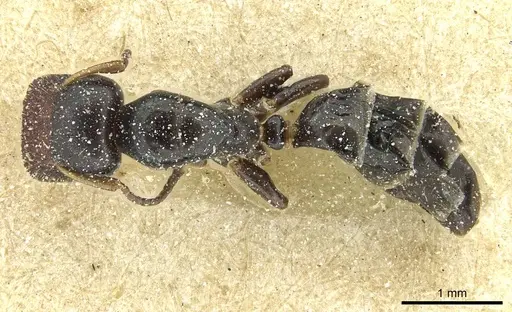
FOCOL2518
View on AntWeb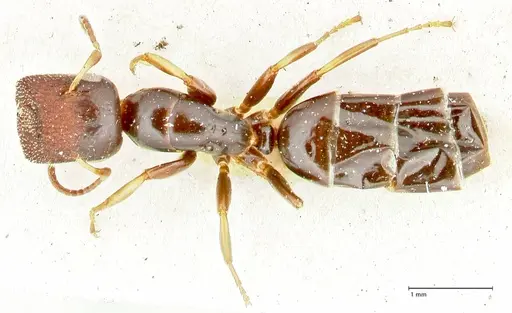
FOCOL2519
View on AntWeb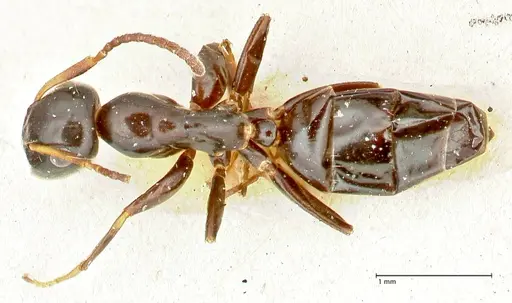
FOCOL2520
View on AntWeb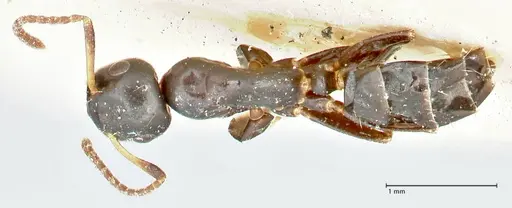
FOCOL2521
View on AntWeb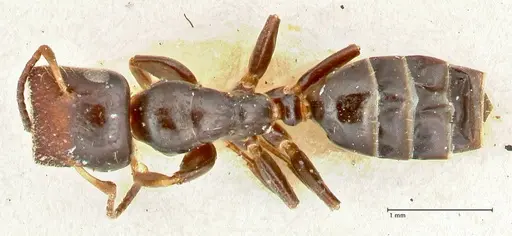
Literature
Loading distribution map...Loading products...