
Colobopsis sadina
- Sci. Name
- Colobopsis sadina
- Tribe
- Camponotini
- Subfamily
- Formicinae
- Author
- Mann, 1921
- Distribution
- Found in 2 countries
Introduction
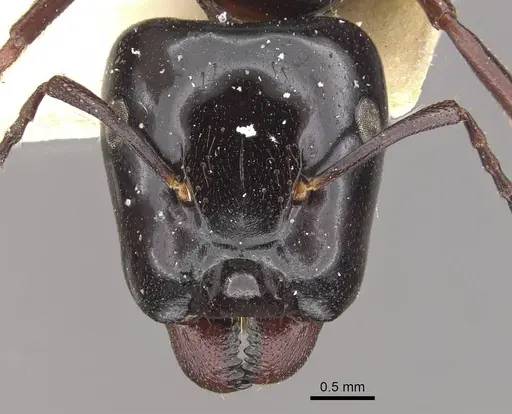
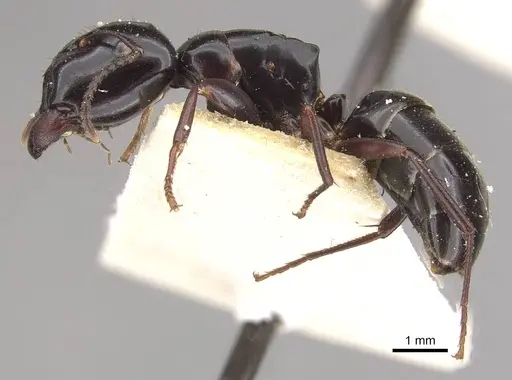
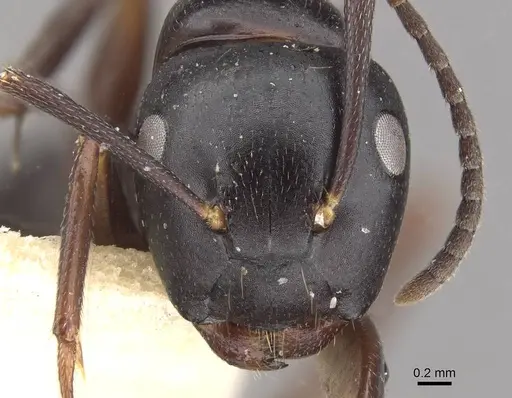
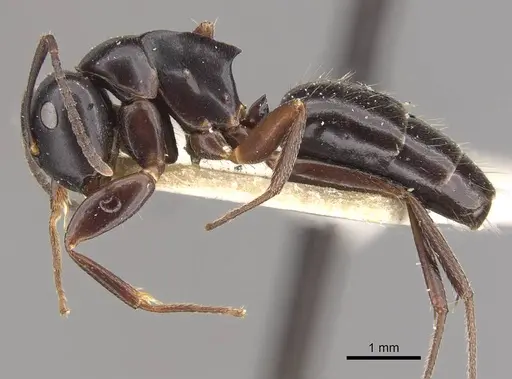
Colobopsis sadina is a black ant species endemic to the Fiji islands. Workers are black with legs ranging from black to reddish, and they have a distinctive mesonotal keel that projects posteriorly into an acute tooth-like structure. This species was originally described as a subspecies of Camponotus cristatus before being elevated to full species status. Minor workers have a more pronounced tooth projection compared to the similar C. cristatus, and their gastral hairs are sparser and darker. The species shows regional variation across Fiji's islands - specimens from Taveuni have stronger tooth projections while those from Kadavu have weaker, more obtuse angles. This is a poorly studied species with limited biological data available.
Quick Summary
- Difficulty: Medium
- Origin & Habitat: Endemic to Fiji, found on the islands of Viti Levu, Vanua Levu, Taveuni, and Kadavu [1][2]. Likely inhabits forested areas given the collection method (malaise trapping suggests arboreal or surface-active behavior) [1].
- Colony Type: Colony structure is unconfirmed. Based on genus-level patterns, likely single-queen (monogyne) colonies typical of most Colobopsis species.
- Size & Growth:
- Queen: Estimated 8-12mm, inferred from related Colobopsis species
- Worker: Workers are small to medium, approximately 4-7mm, estimated from morphology descriptions
- Colony: Unknown, likely moderate colony size based on typical Colobopsis patterns
- Growth: Moderate, estimated based on related carpenter ant species
- Development: Estimated 6-10 weeks based on typical Camponotini tribe patterns at optimal tropical temperatures (Development timeline is estimated, no specific studies exist for this species. Tropical species typically develop faster than temperate ones.)
- Antkeeping:
- Temperature: Keep at 24-28°C (tropical species). A gentle temperature gradient allows ants to regulate. Room temperature in most homes may be suitable if within this range.
- Humidity: Moderate to high humidity (60-80%). Fiji's climate is humid tropical, so provide moisture through damp substrate. Allow some drying areas for choice.
- Diapause: Likely minimal or no true diapause given Fiji's tropical location. May show reduced activity during cooler months but probably does not require hibernation.
- Nesting: Likely arboreal or nesting in rotting wood. In captivity, provide a wooden nest (Y-tong, plaster with wood insert, or naturalistic setup with wood pieces). Avoid overly wet conditions that could cause mold.
- Behavior: Behavior is not well documented, but related Colobopsis species are typically less aggressive than many Camponotus. They are likely arboreal foragers and may tend aphids or collect honeydew. Escape risk is moderate, use standard barriers. Their small to medium size means standard escape prevention is adequate. As a member of the Camponotini tribe, they lack a functional sting and instead bite and spray formic acid as defense.
- Common Issues: limited biological data makes precise care recommendations difficult, colony may be slow to establish due to unknown founding requirements, humidity control is important to prevent mold in wooden nests, tropical species may struggle in air-conditioned environments, wild-caught colonies may have parasites or适应问题
Natural History and Distribution
Colobopsis sadina is endemic to Fiji, meaning it is found nowhere else on Earth. The species has been recorded from four main islands: Viti Levu (the largest island), Vanua Levu (second largest), Taveuni, and Kadavu [1][2]. This distribution across multiple islands suggests the species is well-established in Fiji's ecosystems. The original description listed it as a subspecies of Colobopsis cristata, but it has since been elevated to full species status. The species shows some variation between island populations, ants from Taveuni tend to have stronger, more pronounced tooth projections on their mesonotum, while specimens from Kadavu show weaker projections [1]. Most specimens have been collected through malaise trapping, which suggests these ants are active on vegetation surfaces rather than strictly ground-nesting [1].
Nest Preferences and Housing
Based on the genus Colobopsis (formerly part of Camponotus), these ants are likely arboreal or wood-nesting species. In the wild, they probably nest in rotting wood, hollow twigs, or under bark. For captive care, provide a nest that mimics these conditions, a Y-tong nest with wooden insert, a plaster nest with wood channels, or a naturalistic setup with rotting wood pieces works well. Avoid test tube setups unless you confirm they accept them, as wood-nesting species often prefer enclosed wooden spaces. The nest should be kept humid but not wet, with some ventilation to prevent mold. A water tube attached to the nest helps maintain humidity.
Feeding and Diet
Like other Colobopsis and carpenter ant species, these ants likely have an omnivorous diet. They probably consume honeydew from aphids and scale insects, collect nectar, and hunt small insects for protein. In captivity, offer a mix of sugar sources (honey water, sugar water) and protein sources (small insects like fruit flies, pinhead crickets, mealworms). Since this is a tropical species, they may have higher protein needs for growth. Feed sugar water constantly and offer protein prey 2-3 times per week. Remove uneaten prey within 24-48 hours to prevent mold.
Temperature and Environmental Care
As a tropical species endemic to Fiji, Colobopsis sadina requires warm conditions. Keep the nest area at 24-28°C, which matches Fiji's average temperatures. A slight temperature gradient allows the colony to self-regulate, place a heating cable on one side of the nest set at very low heat. If your room temperature is already in this range, no additional heating may be needed. Humidity should be moderate to high (60-80%), mimicking Fiji's humid tropical climate. Use a water tube or moisture reservoir to maintain substrate dampness. Since Fiji does not experience cold winters, this species likely does not require hibernation or diapause, year-round warm conditions are best.
Colony Establishment and Growth
Specific founding behavior has not been documented for this species. Based on typical Colobopsis and Camponotini patterns, the queen likely performs claustral founding, she seals herself in a chamber and lives off stored fat reserves until her first workers (nanitics) emerge. This means you should not feed the founding queen, she will not leave the chamber to forage. Once the first workers emerge, you can begin offering small amounts of sugar water. Colony growth is expected to be moderate, do not expect rapid expansion. The first major workers should appear within 6-10 weeks under optimal conditions, but this is an estimate based on related species. Be patient with founding colonies, as they are vulnerable to disturbance.
Frequently Asked Questions
How long does it take for Colobopsis sadina to produce first workers?
The egg-to-worker timeline is estimated at 6-10 weeks based on related Camponotini species, but this has not been directly studied for C. sadina. Factors like temperature and nutrition can affect development speed.
What do Colobopsis sadina ants eat?
Like other carpenter ants, they likely accept sugar sources (honey water, sugar water) and protein (small insects like fruit flies, pinhead crickets, mealworms). They probably also collect honeydew in the wild.
Can I keep Colobopsis sadina in a test tube?
Test tubes may not be ideal, this species likely prefers wood-based nesting. A Y-tong nest with wooden insert, plaster nest, or naturalistic setup with rotting wood is more appropriate.
Do Colobopsis sadina need hibernation?
Probably not. As a tropical species from Fiji, they likely do not require a diapause period. Maintain warm temperatures year-round (24-28°C).
How big do Colobopsis sadina colonies get?
Colony size is not documented, but based on related species, they likely reach several hundred workers. Growth is expected to be moderate.
Are Colobopsis sadina good for beginners?
This species is rated Medium difficulty primarily because limited biological data exists. If you have experience with other carpenter ants (Colobopsis/Camponotus), it should be manageable. Beginners may find the lack of specific care information challenging.
What temperature should I keep Colobopsis sadina at?
Keep them at 24-28°C. This tropical species prefers warm conditions. A gentle gradient allows the colony to regulate its own temperature.
Where is Colobopsis sadina found naturally?
This species is endemic to Fiji, found only on the islands of Viti Levu, Vanua Levu, Taveuni, and Kadavu [1][2].
Why is there limited care information for Colobopsis sadina?
This species has not been studied in detail. Most research focuses on taxonomy (identifying specimens) rather than biology. Care recommendations are based on genus-level patterns and related species.
Report an Issue
The current care sheet is based fully on literature. See inconsistencies, or something that's incorrect? Please , it will be resolved after review from an admin. Contributing to the blogs tab also helps providing information, to make us be able to further improve the caresheets. Thank you for your support!
References

This caresheet is licensed under CC BY-SA 4.0 .
Community Blogs
CASENT0910580
View on AntWeb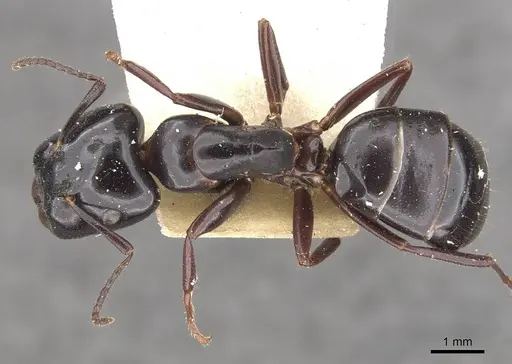
CASENT0910581
View on AntWeb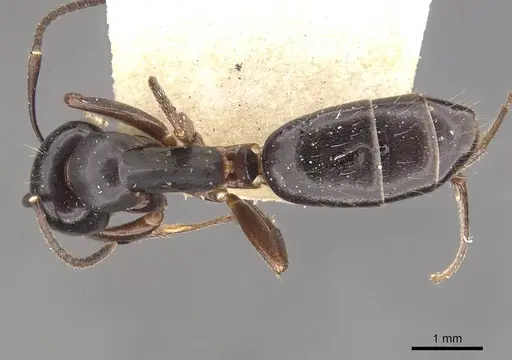
Literature
Loading distribution map...Loading products...