
Colobopsis rothneyi
- Sci. Name
- Colobopsis rothneyi
- Tribe
- Camponotini
- Subfamily
- Formicinae
- Author
- Forel, 1893
- Distribution
- Found in 1 countries
Introduction
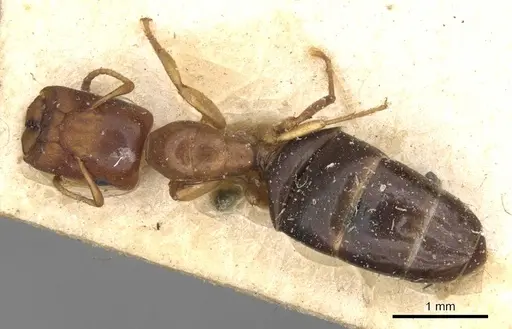
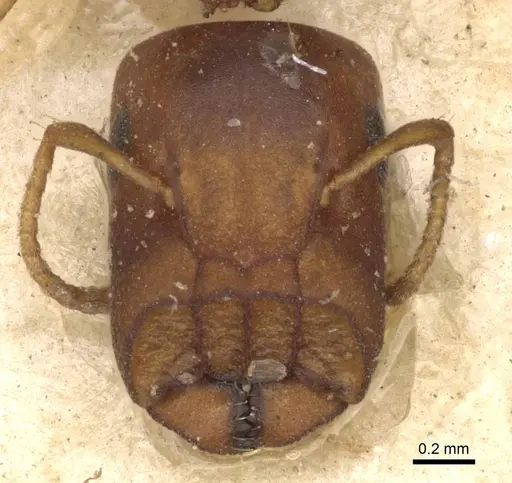
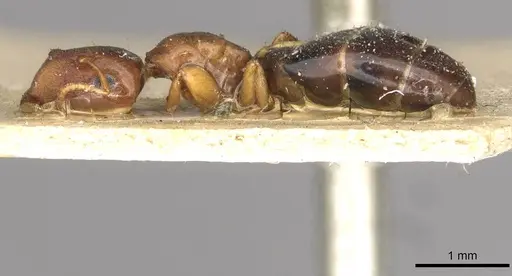
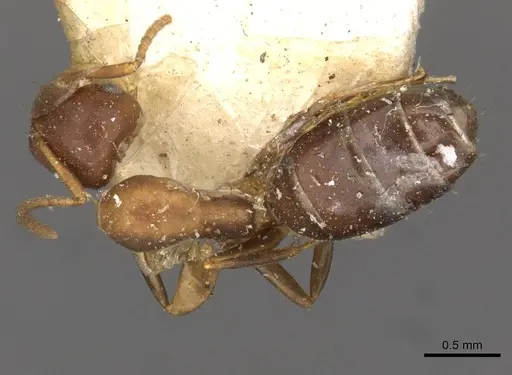
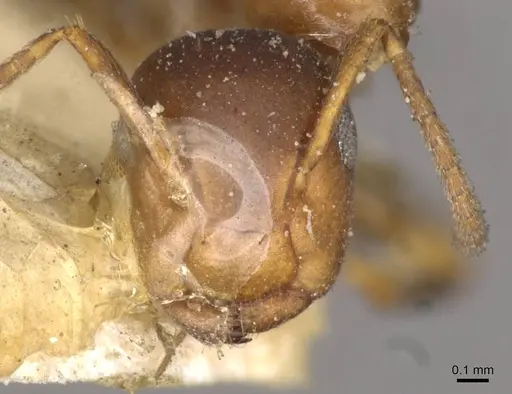
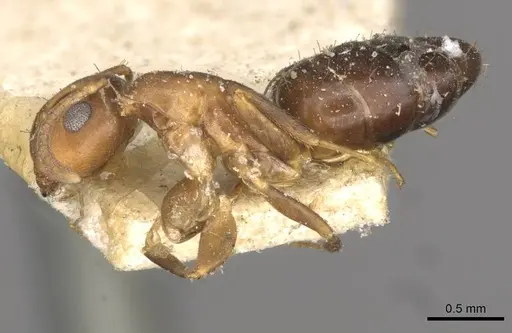
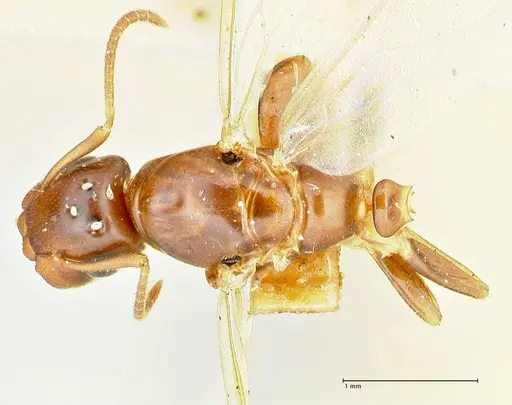
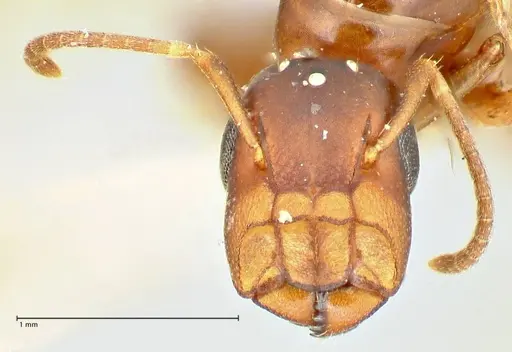
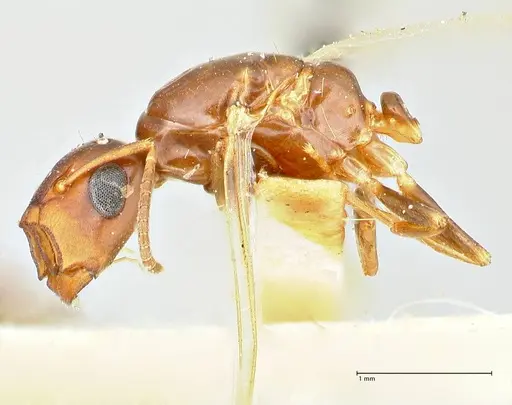
Colobopsis rothneyi is a moderately large, polymorphic ant species native to South and Southeast Asia, found across India, Nepal, Bangladesh, and Singapore . Workers measure approximately 4mm while queens reach approximately 7mm . The species is characterized by its reddish-brown coloration with a distinctly shaped head that is narrow and truncated, featuring a concave anterior portion. The gaster is black with a shiny appearance. This species was originally described as Camponotus rothneyi before being reclassified to Colobopsis in 2016. Like other Colobopsis species, they may have a soldier caste with specialized heads used to block nest entrances, though this requires confirmation for this specific species.
Quick Summary
- Difficulty: Medium
- Origin & Habitat: Native to the Indomalaya region, specifically found in India (West Bengal, Odisha, Sikkim, Uttarakhand), Nepal, Bangladesh, and Singapore [1][2]. These ants inhabit tropical and subtropical environments with warm temperatures and moderate to high humidity. They are typically found in forested areas and likely nest in rotting wood or under stones.
- Colony Type: Colony structure is unconfirmed. Further research is needed to confirm whether colonies have single or multiple queens.
- Size & Growth:
- Queen: Approximately 7mm [3]
- Worker: Approximately 4mm [3]
- Colony: Unknown, likely moderate-sized colonies based on related species patterns
- Growth: Moderate
- Development: Development time is unconfirmed for this species (No specific development data exists for C. rothneyi. Related tropical Camponotini species typically take 6-8 weeks at warm temperatures, but this is not confirmed for this species.)
- Antkeeping:
- Temperature: Keep at 24-28°C. This species originates from warm tropical and subtropical regions, so maintain temperatures in the low-to-mid 20s Celsius. A gentle gradient with a heating cable on one side of the nest allows workers to self-regulate.
- Humidity: Maintain moderate to high humidity, roughly 60-80%. The natural habitat in tropical forests suggests they prefer damp conditions. Keep the nest substrate consistently moist but not waterlogged, with some drier areas available for the ants to choose.
- Diapause: Likely no true diapause required. Given their tropical/subtropical distribution across India and Nepal, these ants probably remain active year-round without a winter rest period. However, a slight reduction in temperature during cooler months may be beneficial.
- Nesting: In nature, they likely nest in rotting wood or under stones, typical of Colobopsis species. In captivity, a Y-tong (AAC) nest or plaster nest with narrow chambers works well. Provide damp substrate and avoid overly dry conditions.
- Behavior: These ants are generally calm and not particularly aggressive. Workers are moderately active and likely forage for honeydew and small insects. As with other Colobopsis species, they may have a soldier caste capable of blocking nest entrances with their specialized heads. Escape risk is moderate, at 4mm worker size, standard escape prevention measures (tight-fitting lids, barrier tape) are recommended but not as critical as for tiny species. They are not known to be invasive outside their native range.
- Common Issues: colonies may be difficult to establish due to their rarity in the wild, slow founding phase, queens may take several months to raise first workers, humidity control is critical, too dry and brood will fail, too wet and mold becomes a problem, escape prevention should be maintained even though they are not tiny ants, wild-caught colonies may carry parasites that can decimate captive colonies
Getting Started: Founding a Colony
Colobopsis rothneyi founding behavior is unconfirmed. For best results, set up your queen in a test tube setup with a water reservoir. Place the tube in darkness and avoid disturbing her for 4-6 weeks. After the first workers emerge, you can begin offering tiny amounts of sugar water and small protein sources like fruit flies or small mealworm pieces. Wait until you have 10-15 workers before considering a transfer to a larger nest. The founding phase can be slow, be patient and resist the urge to check on her too frequently, as this can stress the queen and cause her to abandon or eat her brood.
Housing and Nest Setup
For founding colonies, a simple test tube setup works well. Fill a test tube about one-third with water, plug it with a cotton ball to create a water reservoir, then place the queen in the dry portion. For established colonies with 20+ workers, consider a Y-tong (AAC) nest or plaster formicarium. These nests hold humidity well, which is important for this tropical species. The chambers should be appropriately sized, not too large for the colony size, as ants feel safer in snugger spaces. Add a shallow outworld for foraging and place a heat source like a heating cable on one side of the nest to create a temperature gradient. Cover the nest partially to provide dark areas for the ants to retreat to. Always use escape prevention, while not tiny, these ants can still squeeze through small gaps.
Feeding Your Colony
In the wild, Colobopsis rothneyi likely feeds on honeydew from aphids and scale insects, plus small insects they can overpower. In captivity, offer a constant source of sugar water (honey water or sugar water in a small test tube with a cotton wick). For protein, provide small live or frozen insects like fruit flies, pinhead crickets, or small mealworms. Feed protein roughly twice a week, removing any uneaten prey after 24 hours to prevent mold. As the colony grows, increase food portions accordingly. A varied diet helps ensure healthy development, try alternating between different protein sources. Fresh fruit can occasionally be offered as a sugar source, but remove it before it ferments.
Temperature and Seasonal Care
As a species from tropical and subtropical Asia, Colobopsis rothneyi prefers warm conditions. Keep the nest area at 24-28°C for optimal brood development. A heating cable placed on top of the nest (never underneath where it could dry out the substrate too quickly) creates a gentle gradient allowing workers to regulate their own temperature. Room temperature in most homes may be too cool, monitor with a thermometer. Unlike temperate species, these ants likely do not require a true diapause or hibernation period. However, a slight reduction during winter months (dropping to around 20-22°C) may be natural and is generally well-tolerated. Avoid temperatures below 18°C or above 32°C for extended periods.
Understanding Colony Development
Colobopsis rothneyi is polymorphic, meaning colonies contain different worker sizes (majors and minors). This is typical of the genus and Camponotini tribe. Development time is unconfirmed for this species. The first workers are typically smaller than normal workers. Growth rate is moderate, do not expect rapid colony expansion. A healthy colony may take 1-2 years to reach 100+ workers. Be patient during the founding phase, as this is when colonies are most vulnerable. Avoid the temptation to overfeed, as excess food mold can kill developing brood.
Frequently Asked Questions
How long does it take for Colobopsis rothneyi queens to raise their first workers?
Development time is unconfirmed for this species. Expect roughly 6-8 weeks from egg to first worker at optimal temperature (around 24-28°C), based on related Camponotini species, though this is not specifically documented for C. rothneyi. The first workers will be smaller than normal workers and may take additional time to mature.
What do Colobopsis rothneyi ants eat?
Feed them sugar water or honey water as a constant carbohydrate source. For protein, offer small insects like fruit flies, small mealworms, or pinhead crickets twice weekly. They likely also collect honeydew in the wild, so sugar sources are important for colony health.
Do Colobopsis rothneyi ants need hibernation or diapause?
Probably not. Given their tropical and subtropical distribution across India, Nepal, and Bangladesh, they likely remain active year-round. A slight temperature reduction in winter (to around 20-22°C) is acceptable but not required.
What is the best nest type for Colobopsis rothneyi?
A Y-tong (AAC) nest or plaster formicarium works well for established colonies. These hold humidity effectively, which is important for this moisture-loving species. For founding colonies, a simple test tube setup with water reservoir is sufficient.
Are Colobopsis rothneyi ants aggressive or dangerous?
They are generally calm and not particularly aggressive. They possess the typical Formicinae ability to spray formic acid as a defense, but this is not dangerous to humans. Their small size makes their bite negligible.
How big do Colobopsis rothneyi colonies get?
Exact colony size is unknown, but based on related species, colonies likely reach several hundred workers over 1-2 years. They are polymorphic, so you'll see both smaller workers and larger major workers as the colony matures.
Can I keep multiple Colobopsis rothneyi queens together?
This has not been documented. Single-queen colonies are most likely. Combining unrelated queens is not recommended without evidence they can coexist peacefully.
What temperature should I keep Colobopsis rothneyi at?
Keep nest temperatures between 24-28°C. Use a heating cable on one side of the nest to create a gradient. Avoid temperatures below 18°C or above 32°C. Room temperature alone may be too cool in many climates.
Why is my Colobopsis rothneyi colony dying?
Common causes include: too dry conditions (keep substrate consistently moist), mold from overfeeding or poor ventilation, temperatures too low, or stress from too much handling. Wild-caught colonies may also carry parasites. Review each of these factors and adjust accordingly.
Is Colobopsis rothneyi a good species for beginners?
This is a medium-difficulty species. While not as challenging as some tropical specialists, they do require warm, humid conditions and patience during the slow founding phase. They are also quite rare in the antkeeping hobby, making them harder to acquire.
Report an Issue
The current care sheet is based fully on literature. See inconsistencies, or something that's incorrect? Please , it will be resolved after review from an admin. Contributing to the blogs tab also helps providing information, to make us be able to further improve the caresheets. Thank you for your support!
References

This caresheet is licensed under CC BY-SA 4.0 .
Community Blogs
Literature
Loading distribution map...Loading products...