
Chelaner xantheklemma
- Sci. Name
- Chelaner xantheklemma
- Tribe
- Solenopsidini
- Subfamily
- Myrmicinae
- Author
- Heterick, 2001
- Distribution
- Found in 1 countries
Introduction
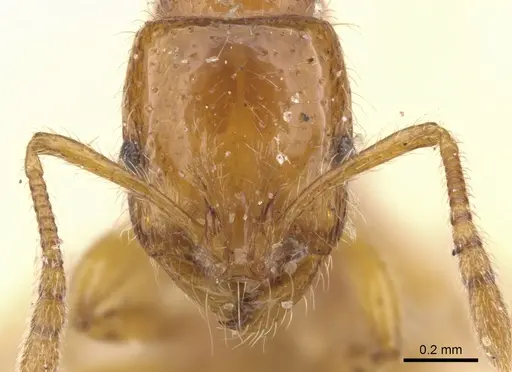
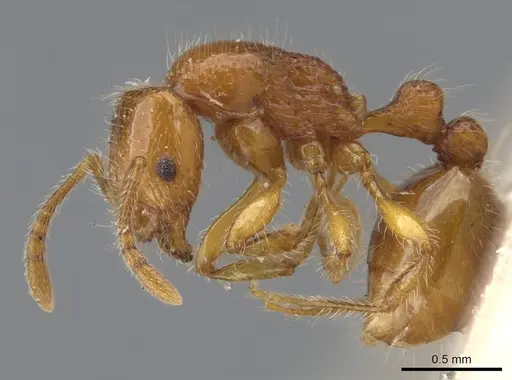
Chelaner xantheklemma is a small Australian ant known for its brilliant orange to reddish-orange coloration. Workers measure approximately 2mm in total length, making them a compact species suitable for smaller nest setups [AntWiki]. The head and alitrunk feature scattered foveae (small pits) and striolae, giving this species a distinctive shine not seen in related taxa. This species belongs to the rubriceps species group and was formerly classified as Monomorium before genetic analysis led to its reclassification to Chelaner in 2019 . This ant is notably rare in the wild, with a distribution limited to the Clare Valley in South Australia and the wheat-belt/goldfields regions of Western Australia. In their natural habitat, colonies nest under rocks in grassy paddocks and on bare ridge tops at elevations around 400-500 meters [AntWiki]. The presence of ergatoid (wingless) queens means colonies can maintain reproductive capacity even if the primary queen is lost, making them resilient in captivity.
Quick Summary
- Difficulty: Medium
- Origin & Habitat: Endemic to Australia, specifically the Clare Valley in South Australia and the wheat-belt/goldfields regions of Western Australia. Natural nesting sites include under rocks in grassy paddocks and bare ridge tops at elevations around 400-500 meters [1].
- Colony Type: Single-queen colonies with ergatoid (wingless) replacement queens documented. The presence of ergatoid queens means if the primary queen dies, a replacement can take over reproduction without swarming [1].
- Size & Growth:
- Queen: Ergatoid queens present (wingless, smaller than typical alate queens) [1]
- Worker: Approximately 2mm total length [1]
- Colony: Unknown for this species
- Growth: Moderate
- Development: Estimated 6-8 weeks at optimal temperature based on related species in the genus (Development time inferred from typical Monomorium patterns, specific data for this species is unavailable)
- Antkeeping:
- Temperature: Keep at 22-26°C. Australian species from temperate regions will tolerate room temperature but benefit from gentle warming. Avoid temperatures below 18°C or above 30°C.
- Humidity: Moderate humidity around 50-60%. Provide a moisture gradient in the nest so workers can self-regulate. The natural habitat in South Australian wheat-belt suggests they prefer drier conditions than many Myrmicinae.
- Diapause: Yes, Australian temperate species requires a winter rest period. Reduce temperature to 15-18°C for 2-3 months during winter.
- Nesting: Test tube setups work well for founding colonies. For established colonies, Y-tong nests or plaster nests with moderate moisture retention suit this species. They nest under rocks in the wild, so provide some cover and darkness in the nest chamber.
- Behavior: Workers are active foragers that likely scavenge and collect honeydew. Based on related species, they are not aggressive and will flee rather than engage. Their small size makes them capable of escaping through tiny gaps, excellent escape prevention is essential. Workers are fast-moving and alert.
- Common Issues: escape prevention is critical due to their tiny size, use fine mesh barriers and tight-fitting lids, wild-caught colonies may be stressed from collection and difficult to establish, ergatoid queen presence may confuse keepers expecting dealate queens, this is normal for the species, overheating is a risk, keep away from direct sunlight and heating elements set too high, colonies may be slow to establish in captivity due to their rarity and specific needs
Housing and Nest Setup
For founding colonies, a standard test tube setup works well. Fill the tube with water and plug with cotton, then provide a dark covering to simulate the underground chambers they naturally use. The queen will seal herself into a chamber and raise the first brood alone. Once the colony reaches 20-30 workers, you can move them to a formicarium. Y-tong (AAC) nests or plaster nests with moderate moisture work well, avoid overly wet conditions as this species comes from relatively dry Australian habitats. Provide a small outworld for foraging with sugar water and protein sources. [1]
Feeding and Diet
Like other Monomorium species, C. xantheklemma likely has an omnivorous diet. Offer sugar water or honey as a constant energy source. For protein, provide small insects like fruit flies, pinhead crickets, or mealworm pieces. Based on related Australian Monomorium, they may also tend aphids for honeydew. Feed protein 2-3 times per week, and keep sugar water available at all times. Remove uneaten prey after 24 hours to prevent mold.
Temperature and Seasonal Care
Maintain temperatures between 22-26°C during the active season. This species comes from temperate South Australia and Western Australia, so they experience distinct seasons. During winter (roughly May-August in the southern hemisphere), reduce temperatures to 15-18°C to simulate their natural dormancy period. Do not feed during hibernation but ensure some moisture is available. Gradual temperature changes are better than sudden shifts.
Colony Structure and Reproduction
This species has ergatoid queens, wingless females that can serve as replacement reproductives if the primary queen dies or becomes unproductive. This is different from having multiple queens in the colony. When you receive a wild-caught colony, you may see ergatoid queens alongside the primary dealate queen. This is normal and not a cause for concern. The colony can maintain its reproductive capacity without swarming, which makes them more resilient in captivity. [1]
Behavior and Handling
Workers are small but active foragers. They are not aggressive and will typically flee from threats rather than engage. Their small size means they can escape through remarkably tiny gaps, always use fine mesh on any openings and ensure lid seals are tight. Workers move quickly when foraging and will establish trails to food sources. Observing their foraging behavior is one of the joys of keeping this species.
Frequently Asked Questions
How long does it take for Chelaner xantheklemma to produce first workers?
Based on related Monomorium species, expect first workers around 6-8 weeks after the queen lays eggs, assuming temperatures around 24-26°C. The exact timeline for this species has not been documented.
Can I keep multiple Chelaner xantheklemma queens together?
This species is not polygynous, colonies typically have one reproductive queen. While ergatoid replacement queens may be present, combining unrelated foundress queens is not recommended and has not been documented as successful.
What do Chelaner xantheklemma eat?
They are omnivorous like most Monomorium. Offer sugar water or honey as a constant energy source, and protein such as small insects (fruit flies, pinhead crickets, mealworm pieces) 2-3 times per week.
Do Chelaner xantheklemma need hibernation?
Yes, as an Australian temperate species, they benefit from a winter rest period. Reduce temperatures to 15-18°C for 2-3 months, typically during winter. Reduce feeding but maintain some moisture.
Why are my Chelaner xantheklemma escaping?
Their tiny size means they can squeeze through incredibly small gaps. Use fine mesh (at least 0.5mm or finer), ensure all lid seals are tight, and apply fluon or other barriers to escape-proof your setup.
Is Chelaner xantheklemma a good beginner ant?
This species is rated as medium difficulty. While not as challenging as some species, their small size and specific temperature and humidity needs make them better suited for keepers with some experience. Their rarity also makes obtaining colonies more difficult.
When should I move my colony to a formicarium?
Move to a formicarium once the colony reaches 20-30 workers. Before that, a test tube setup is ideal for the founding colony. Make sure the formicarium has appropriately sized chambers for their small workers.
What makes Chelaner xantheklemma special?
Their brilliant orange coloration and rarity make them a prized species for antkeepers. The ergatoid queen system is also biologically interesting, allowing colonies to maintain reproduction without swarming. Their limited natural distribution adds to their appeal.
Report an Issue
The current care sheet is based fully on literature. See inconsistencies, or something that's incorrect? Please , it will be resolved after review from an admin. Contributing to the blogs tab also helps providing information, to make us be able to further improve the caresheets. Thank you for your support!
References

This caresheet is licensed under CC BY-SA 4.0 .
Community Blogs
CASENT0902326
View on AntWeb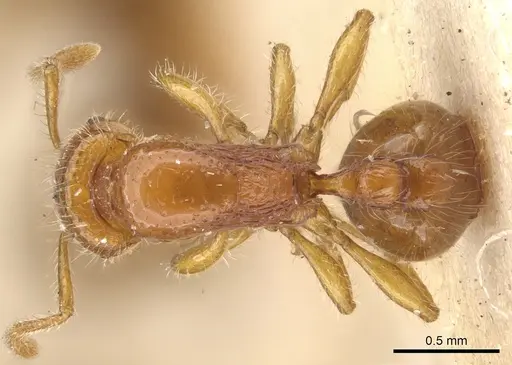
Literature
Loading distribution map...Loading products...