
Cephalotes foliaceus
- Sci. Name
- Cephalotes foliaceus
- Tribe
- Attini
- Subfamily
- Myrmicinae
- Author
- Emery, 1906
- Distribution
- Found in 2 countries
Introduction
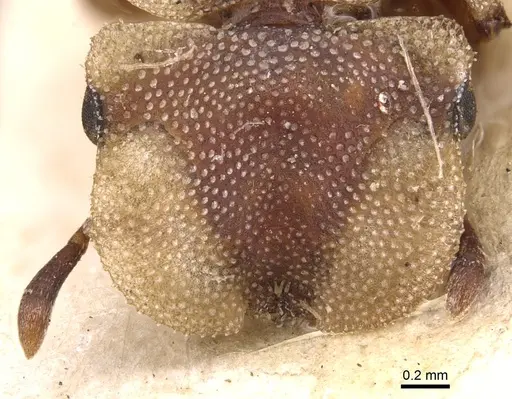
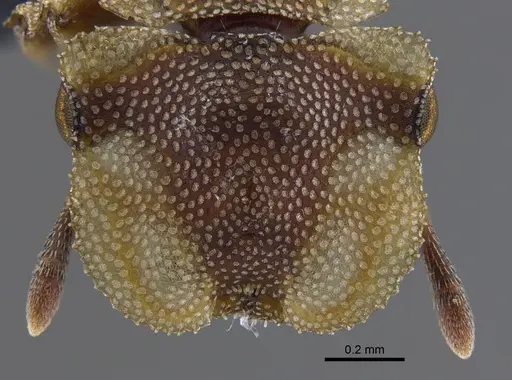
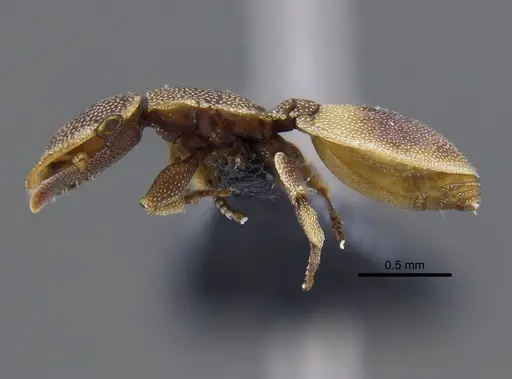
Cephalotes foliaceus is a Neotropical turtle ant known for its remarkably flattened, broad body shape. Workers measure 4.5-4.9mm total length with a characteristically wide head and a unique feature: the first gastral segment is surrounded by a broad membranaceous border . The integument appears black with white scales giving a silvery-grey effect . This species belongs to the pallens clade and is found across Panama, Colombia, Peru, and Bolivia at low elevations of 30-47 meters . As an arboreal species, they nest in tree hollows and dead branches in tropical forests.
Quick Summary
- Difficulty: Hard
- Origin & Habitat: Lowland Neotropical forests in Panama, Colombia, Peru, and Bolivia at 30-47m elevation [1]. Found in Caribbean lowland regions.
- Colony Type: Colony structure is unconfirmed. Cephalotes species are typically monogyne but some can have multiple queens.
- Size & Growth:
- Queen: Size data unavailable, no specific measurements exist for this species
- Worker: 4.5-4.9mm total length [1]
- Colony: Estimated up to 500 workers based on genus patterns
- Growth: Moderate, inferred from related Cephalotes species
- Development: Estimated 6-10 weeks at optimal tropical temperatures based on genus patterns (Development timeline is unconfirmed for this specific species.)
- Antkeeping:
- Temperature: Keep at 24-28°C. Avoid temperatures below 22°C as this is a lowland tropical species [1].
- Humidity: Moderate to high humidity. These arboreal ants prefer humid forest conditions but need good ventilation.
- Diapause: No, as a Neotropical lowland species, they do not require hibernation. Maintain warm conditions year-round.
- Nesting: Cephalotes are arboreal nesters. Use a naturalistic setup with dead wood/branches, or a Y-tong/plaster nest with narrow chambers. They prefer dark cavities.
- Behavior: Cephalotes are generally calm and non-aggressive. Workers are slow-moving and rely on their flattened body to access narrow crevices in trees. They possess a stinger but rarely use it, their primary defense is retreating into narrow spaces and the soldier caste blocking nest entrances with their specialized cephalic disc. Escape risk is moderate, they can squeeze through small gaps due to their flattened morphology.
- Common Issues: biology is poorly documented, limited care information available, wild-caught colonies may be stressed from canopy collection, requires warm, humid tropical conditions year-round, arboreal nature means they need vertical space and nesting options, slow colony growth may frustrate keepers expecting rapid development
Nest Preferences and Housing
Cephalotes foliaceus is an arboreal species that nests in pre-existing cavities in trees, typically dead branches or tree hollows. In captivity, provide a naturalistic setup with access to dead wood pieces or a Y-tong/plaster formicarium with narrow chambers scaled to their flattened body. They prefer dark conditions and will readily adopt artificial tunnels. The key is providing cavities that match their body shape, chambers should be tight but allow free movement. Avoid tall open spaces, these ants do not behave like ground-nesting species. [1]
Feeding and Diet
Cephalotes species are omnivorous with a preference for sugary liquids and protein. In the wild, they forage for honeydew from hemipterans and hunt small arthropods. In captivity, offer sugar water or honey water as a constant energy source. For protein, provide small insects like fruit flies, small mealworms, or other appropriately-sized prey. Feed protein 2-3 times per week and maintain a constant sugar water supply. Remove uneaten prey after 24-48 hours to prevent mold.
Temperature and Tropical Care
As a lowland Neotropical species from Panama to Bolivia at elevations of only 30-47m, Cephalotes foliaceus requires warm, stable tropical conditions. Maintain temperatures between 24-28°C year-round. A slight temperature gradient allows the colony to self-regulate. Avoid any prolonged exposure to temperatures below 22°C, as this species has no cold tolerance. Room temperature may be insufficient in cooler climates, use a heating cable or mat on one side of the nest to maintain warmth. Unlike temperate species, they do not require any cooling period or diapause. [1]
Behavior and Temperament
Cephalotes foliaceus is a calm, non-aggressive species. Workers are relatively slow-moving and spend most of their time within the nest or foraging along branches. Their primary defense is their flattened body allowing them to retreat into narrow crevices, and the soldier caste blocking nest entrances with their specialized cephalic disc. They possess a stinger but rarely use it, the sting is not medically significant to humans. The workers have distinctive membranaceous borders and scale-like hairs that give them a silvery appearance. Colonies are relatively quiet and do not exhibit aggressive territorial behavior. [2][1]
Unique Morphology
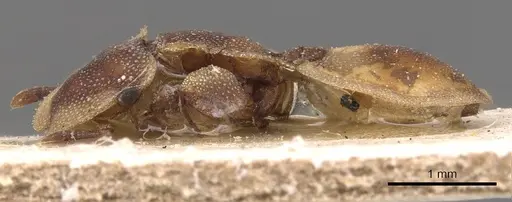
This species has a distinctive identification feature: the first gastral tergite is surrounded by a broad membranaceous border, unique among the grandinosus clade species [1]. Workers have a remarkably flattened and broad body with a wide head. The pronotum bears paired lateral lamellae, and the integument has deep foveae housing palmated leaf-like hairs [1]. The soldier caste is larger with a distinctive cephalic disc used for blocking nest entrances, this is a common defensive adaptation in Cephalotes. The flattened morphology allows these ants to access narrow tree hollows that other ants cannot reach.
Frequently Asked Questions
How long does it take for Cephalotes foliaceus to produce first workers?
The exact timeline is unconfirmed for this species. Based on related Cephalotes species, expect 6-10 weeks from egg to worker at optimal tropical temperatures (25-28°C). Growth is typically slower than ground-nesting Myrmicinae.
What temperature do Cephalotes foliaceus need?
Keep them warm at 24-28°C year-round. This is a lowland tropical species that does not tolerate cool temperatures. Avoid anything below 22°C.
What do Cephalotes foliaceus eat?
Offer sugar water or honey water as a constant energy source. For protein, provide small insects like fruit flies or small mealworms 2-3 times weekly.
Can I keep multiple Cephalotes foliaceus queens together?
Colony structure is unconfirmed for this species. Cephalotes are typically monogyne, but some species can have multiple queens. Without specific data, combining unrelated queens is not recommended.
What size do Cephalotes foliaceus colonies reach?
Based on genus patterns, expect colonies up to 500 workers. They are not large colony species compared to many Myrmicinae.
Do Cephalotes foliaceus need hibernation?
No. As a Neotropical lowland species from Panama to Bolivia, they do not require any diapause or cooling period. Keep them warm year-round.
What nest type is best for Cephalotes foliaceus?
Use a naturalistic setup with dead wood/branches or a Y-tong/plaster nest with narrow chambers. They are arboreal and prefer dark cavities scaled to their flattened body.
Are Cephalotes foliaceus good for beginners?
No. This is an advanced species due to limited biological data, specific tropical temperature requirements, and arboreal nesting needs. They are not recommended for beginners.
Why is my Cephalotes foliaceus colony declining?
Common causes include: temperatures below 22°C, low humidity, insufficient protein food, or stress from wild collection. Ensure warm, humid conditions and proper nutrition. Limited biological data makes troubleshooting challenging.
Report an Issue
The current care sheet is based fully on literature. See inconsistencies, or something that's incorrect? Please , it will be resolved after review from an admin. Contributing to the blogs tab also helps providing information, to make us be able to further improve the caresheets. Thank you for your support!
References

This caresheet is licensed under CC BY-SA 4.0 .
Community Blogs
CASENT0904925
View on AntWeb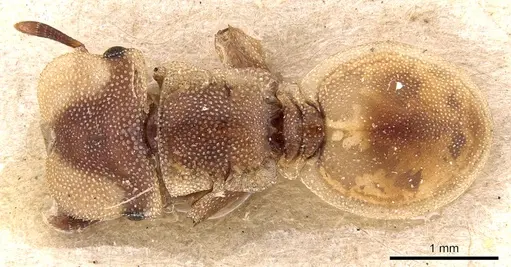
CBUMAGENT41887
View on AntWeb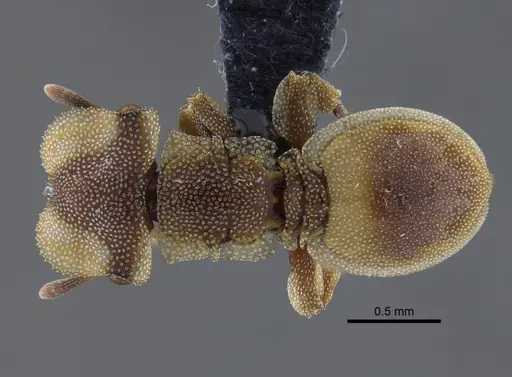
Literature
Loading distribution map...Loading products...