
Cephalotes dentidorsum
- Sci. Name
- Cephalotes dentidorsum
- Tribe
- Attini
- Subfamily
- Myrmicinae
- Author
- De Andrade, 1999
- Distribution
- Found in 1 countries
Introduction
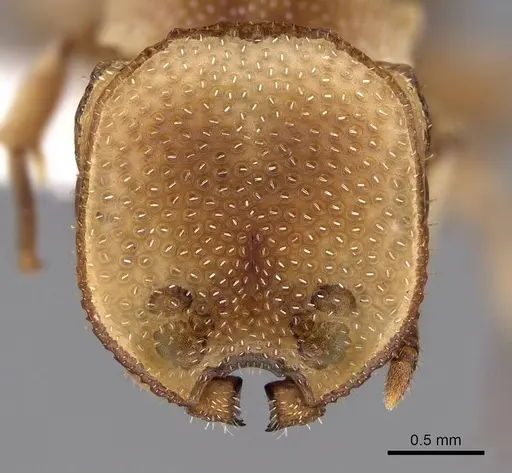
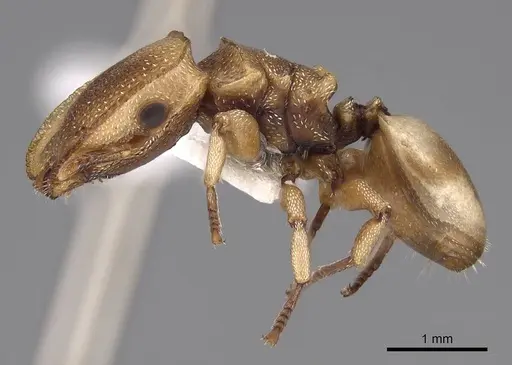
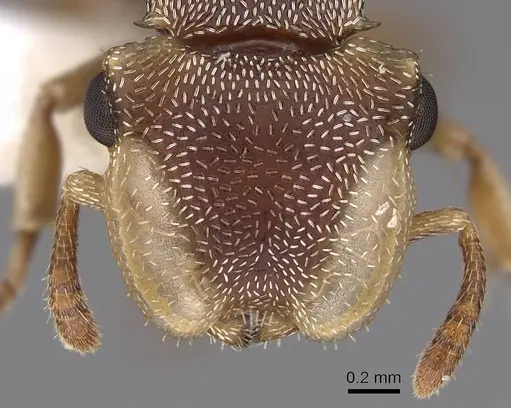
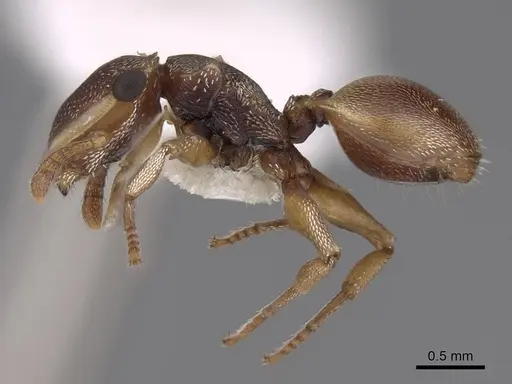
Cephalotes dentidorsum is an extremely rare turtle ant species from the western Amazon basin. Workers measure approximately 4mm total length with a distinctive light ferruginous (rusty brown) coloration. The species is a member of the Cephalotes angustus clade and can be identified by its characteristic pronotal spines and notably shiny gaster, which distinguishes it from the closely related C. adolphi. Only 31 workers have ever been documented in scientific collections - a single specimen from Peru in 1939 and 30 workers collected in Ecuador in 2003. This species has no documented biological data whatsoever. Nothing is known about their colony structure, founding behavior, diet, or nesting preferences. Their extremely limited distribution and complete lack of biological research make them one of the most poorly documented Cephalotes species.
Quick Summary
- Difficulty: Expert
- Origin & Habitat: Western Amazonia, known from Peru (Valle Chanchamayo at 800m elevation) and Ecuador (Sucumbíos province at 411m elevation). Both locations are in lowland tropical forest. [1][2][3]
- Colony Type: Unconfirmed, no colony structure data exists for this species. Most Cephalotes are monogyne, but this has not been documented for C. dentidorsum. [2]
- Size & Growth:
- Queen: Size data unavailable, no queen specimens have been described [1]
- Worker: Approximately 4mm total length [1]
- Colony: Unknown, only 31 workers have ever been collected in total [2]
- Growth: Unknown, no colony development data exists
- Development: Unconfirmed, no direct observations exist (Related Cephalotes species typically develop from egg to worker in 4-8 weeks at tropical temperatures, but this is an estimate for C. dentidorsum.)
- Antkeeping:
- Temperature: Keep at 24-28°C, this matches their tropical Amazonian habitat. Use a heating cable on one side of the nest to create a gentle gradient.
- Humidity: Keep moderately humid (60-80%). Like other turtle ants, they likely prefer arboreal conditions with some moisture but good ventilation.
- Diapause: No, they are tropical ants from the Amazon region and do not require hibernation.
- Nesting: Use an arboreal-style setup, Y-tong nests or acrylic nests with narrow chambers work well. In the wild, Cephalotes nest in hollow twigs and branches, so provide appropriately scaled passages. Test tubes can work for founding colonies.
- Behavior: Temperament is unknown, but Cephalotes workers are generally non-aggressive and more focused on foraging than defending. They are small ants with limited ability to sting, any sting would be negligible to humans. They are excellent climbers and will escape through tiny gaps, so escape prevention must be excellent. They likely forage for honeydew and small arthropods in the canopy.
- Common Issues: no biological data exists, everything about their care is an educated guess based on genus, extreme rarity means finding a colony is nearly impossible, their tiny size makes escape prevention critical, without known dietary preferences, establishing a feeding regimen is challenging, tropical humidity requirements can conflict with mold-prone setups
Species Identification and Range
Cephalotes dentidorsum is a member of the Cephalotes angustus clade, closely related to C. adolphi. The two species are nearly identical in morphology, with the key difference being that C. dentidorsum has a smooth and shining gaster while C. adolphi has an opaque and slightly punctate gaster. This distinction was confirmed through COI gene analysis showing less than 2% genetic divergence between the species. [2]
The species is known from only two locations: the type locality in Peru's Valle Chanchamayo at 800m elevation, and Sucumbíos province in Ecuador at 411m elevation. Both locations are in the western Amazon basin, suggesting this is a lowland Amazonian species with a potentially restricted range. [1][2]
Why This Species Is So Challenging
Cephalotes dentidorsum represents one of the most poorly documented ant species in the hobby. In over 80 years since the first specimen was collected, fewer than 35 workers have ever been documented in scientific collections. This means there is zero published information on their diet, nesting preferences, colony structure, founding behavior, or any aspect of their biology. [2]
For antkeepers, this presents a unique challenge: you would be pioneering all aspects of husbandry with no established guidelines. Success would require careful observation and experimentation, with no guarantee of matching their actual needs. This makes C. dentidorsum suitable only for very experienced antkeepers who have successfully kept other Cephalotes species and understand how to adapt when standard protocols fail.
Housing and Nest Setup
Based on general Cephalotes biology, provide an arboreal-style setup. These ants naturally nest in hollow twigs and branches in the forest canopy, so Y-tong nests or acrylic formicaria with narrow, appropriately-sized chambers work best. The chambers should be scaled to their tiny 4mm worker size, tight passages are better than open spaces.
Test tubes can work for founding colonies, but be prepared to move them to a more appropriate setup once the colony grows. Ensure excellent escape prevention, turtle ants are excellent climbers and will exploit any gap. Use fluon on the edges of your setup and check for tiny gaps regularly. Adequate ventilation is essential to prevent mold while maintaining humidity.
Feeding and Diet
Diet is unconfirmed for this species, but Cephalotes generally are omnivorous generalists. They likely feed on honeydew from aphids and scale insects, plus small arthropods for protein. In captivity, you should offer sugar water or honey as a constant energy source, and small live prey like fruit flies, pinhead crickets, or mealworms for protein.
Start with small prey items scaled to their tiny 4mm size. Observe carefully to see what they accept. Since nothing is known about their specific dietary needs, be prepared to experiment. Some Cephalotes species show preferences for certain foods, so variety testing may be necessary. Remove uneaten prey after 24-48 hours to prevent mold.
Temperature and Seasonal Care
Keep the nest area at 24-28°C, reflecting their tropical Amazonian habitat in Peru and Ecuador. A heating cable on one side of the nest creates a temperature gradient allowing the ants to self-regulate. Place the heating on top of the nest, not underneath, to avoid evaporating moisture too quickly.
No diapause or hibernation is required, these are true tropical ants. Maintain stable temperatures year-round. Avoid temperature drops below 20°C, as this could stress or kill them. Room temperature in most homes (20-24°C) may be too cool, consider supplemental heating. Monitor colony behavior, if workers become sluggish, increase temperature slightly.
Frequently Asked Questions
Is Cephalotes dentidorsum available in the antkeeping hobby?
No. This is an extremely rare species known from only 31 collected workers in scientific history. It is highly unlikely to be available from any ant supplier. Even if a colony were discovered, the limited numbers would make it unsuitable for the hobby. Consider related, more common Cephalotes species instead.
How do I care for Cephalotes dentidorsum when nothing is known about their biology?
You would need to rely on genus-level care from other Cephalotes species. Keep them at 24-28°C in a humid arboreal-style setup, offer sugar water and small live prey, and use excellent escape prevention. This species is only suitable for expert antkeepers willing to experiment and document their findings. Be prepared that captive success is uncertain.
What do Cephalotes dentidorsum ants look like?
Workers are tiny at approximately 4mm total length with a light ferruginous (rusty brown) coloration. They have distinctive pronotal spines (the 'dentidorsum' name means 'tooth-back') and a notably shiny, smooth gaster that distinguishes them from the similar C. adolphi. Like other turtle ants, they have a somewhat flattened body shape.
Where does Cephalotes dentidorsum live in the wild?
They are found in the western Amazon basin, specifically Valle Chanchamayo in Peru (800m elevation) and Sucumbíos province in Ecuador (411m elevation). Both locations are lowland tropical forest areas. Their entire known range covers just these two sites.
How big do Cephalotes dentidorsum colonies get?
Unknown. Only 31 workers have ever been collected in scientific history, so colony size in the wild is completely undocumented. Based on related Cephalotes species, colonies likely reach hundreds of workers, but this is purely speculative for this specific species.
Can I keep multiple Cephalotes dentidorsum queens together?
Unknown. No data exists on colony structure for this species. Most Cephalotes are monogyne (single queen), but polygyny has been documented in some species. Without any research on C. dentidorsum specifically, combining unrelated queens is not recommended.
What is the closest alternative to Cephalotes dentidorsum for antkeepers?
More common Cephalotes species like Cephalotes varians, Cephalotes pallidus, or Cephalotes texanus are regularly available and well-documented in captivity. These related turtle ants have established care protocols and can satisfy the interest in this genus without the extreme uncertainty of C. dentidorsum.
Do Cephalotes dentidorsum need hibernation?
No. They are tropical Amazonian ants from Peru and Ecuador with no seasonal temperature variation in their habitat. They should be kept warm year-round at 24-28°C with no diapause period.
How long does it take for Cephalotes dentidorsum to develop from egg to worker?
Unconfirmed, no biological observations exist for this species. Based on related Cephalotes species at tropical temperatures, development likely takes 4-8 weeks, but this is a rough estimate with no direct evidence.
Report an Issue
The current care sheet is based fully on literature. See inconsistencies, or something that's incorrect? Please , it will be resolved after review from an admin. Contributing to the blogs tab also helps providing information, to make us be able to further improve the caresheets. Thank you for your support!
References

This caresheet is licensed under CC BY-SA 4.0 .
Community Blogs
CASENT0922531
View on AntWeb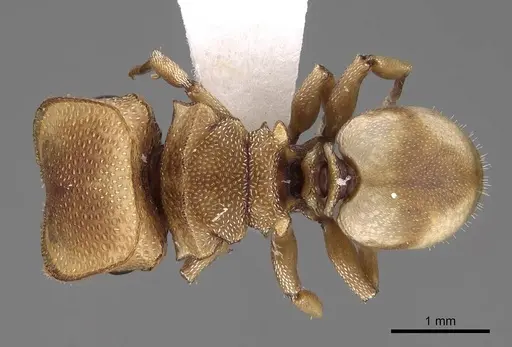
CASENT0922532
View on AntWeb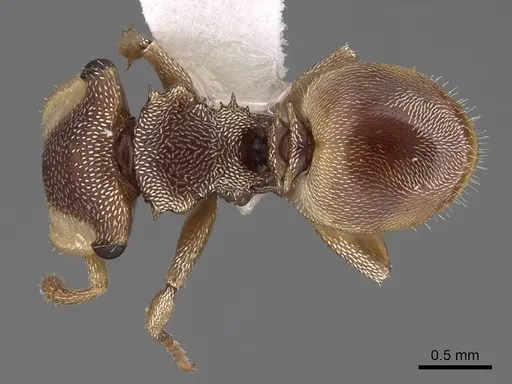
Literature
Loading distribution map...Loading products...