
Centromyrmex fugator
- Sci. Name
- Centromyrmex fugator
- Tribe
- Ponerini
- Subfamily
- Ponerinae
- Author
- Bolton & Fisher, 2008
- Distribution
- Found in 1 countries
Introduction
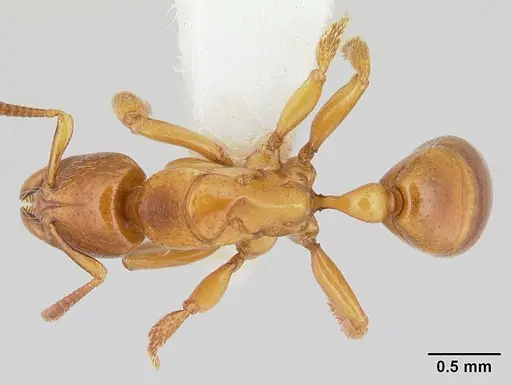
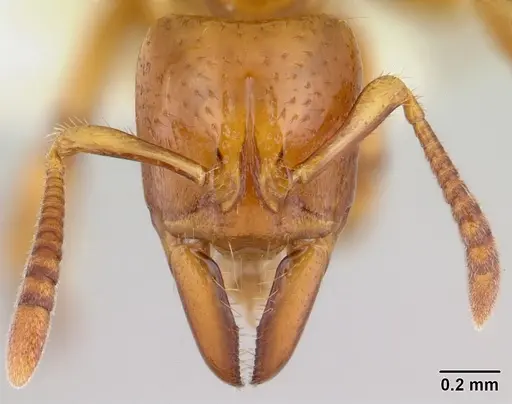
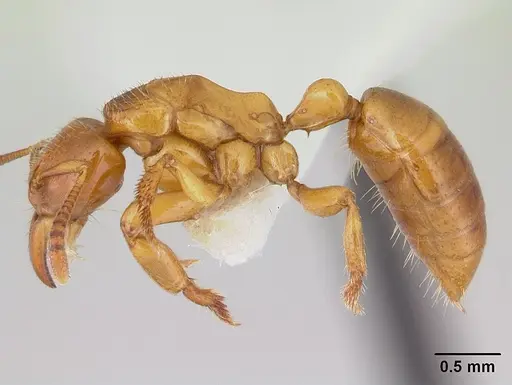
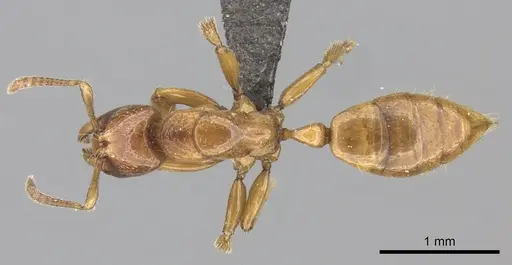
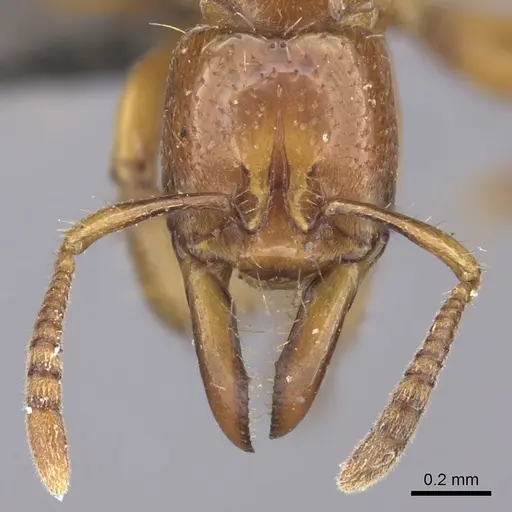
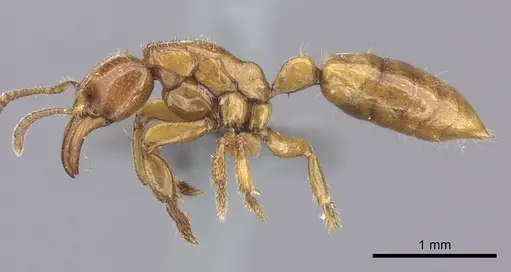
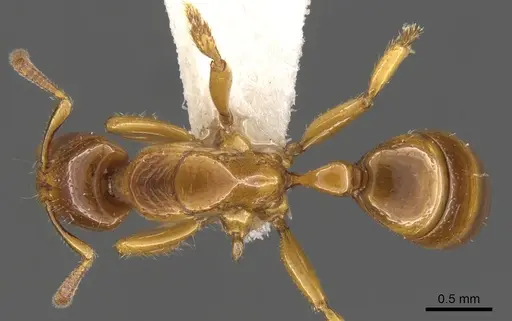
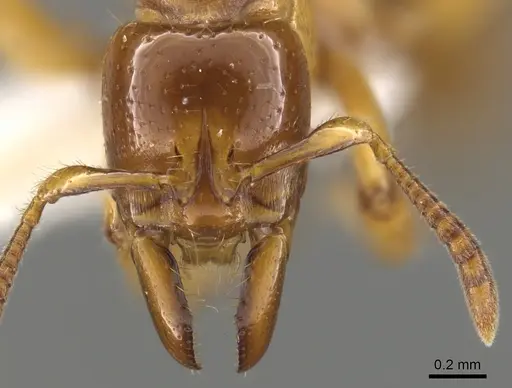
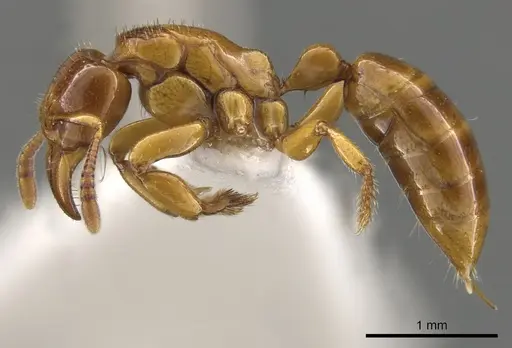
Centromyrmex fugator is a small ponerine ant native to the Afrotropical region, found in the Democratic Republic of Congo (Kinshasa) and South Africa (Gauteng Province) . Workers measure 4.7-4.8mm total length while queens are slightly larger at 5.1mm total length . The species is yellow to light brownish yellow in color, with a distinctive head capsule longer than broad and mandibles with around 10 small teeth . It closely resembles the related species Centromyrmex praedator but is smaller with different mandibular morphology . This is one of the most poorly studied ant species in existence - no biological data exists beyond limited specimen collections [AntWiki].
Quick Summary
- Difficulty: Expert
- Origin & Habitat: Afrotropical region, Democratic Republic of Congo (Kinshasa) and South Africa (Gauteng Province) [1]. The two collection sites are very far apart and likely have different ecologies, Kinshasa is a lowland tropical area while Gauteng is a highland temperate region [1]. Based on the genus, they likely inhabit rotting wood or soil in forested areas.
- Colony Type: Unconfirmed colony structure. Only known from limited worker and queen specimens. No data on whether colonies are single-queen or multi-queen.
- Size & Growth:
- Queen: 5.1mm total length [1][2]
- Worker: 4.7-4.8mm total length [1][2]
- Colony: Unknown, no colony size data exists
- Growth: Unknown, no development data exists
- Development: Unknown, no development data exists for this species (No data available. Based on typical Ponerini patterns, development may take 6-10 weeks at optimal temperature, but this is purely estimated.)
- Antkeeping:
- Temperature: Likely 22-26°C based on Afrotropical distribution. Start in this range and observe colony activity for adjustments.
- Humidity: Likely requires moderate to high humidity similar to other Centromyrmex species. Keep substrate consistently moist but not waterlogged.
- Diapause: Unknown for this species. South African populations in Gauteng experience cooler winters, suggesting possible seasonal slowing.
- Nesting: Nesting preferences unconfirmed. Based on genus patterns, likely prefers rotting wood or soil chambers. A naturalistic setup with moist substrate or a Y-tong/plaster nest works as a starting point.
- Behavior: Behavior is unconfirmed for this species. The genus Centromyrmex is known for predatory habits and trap-jaw mandibles, but specific behavior of C. fugator has not been documented. Likely similar to other Ponerini, active hunters with potent stings. As a Ponerine ant, they have a functional sting. Escape prevention should be good given their size.
- Common Issues: no biological data makes captive care highly speculative, colony may fail due to unknown specific requirements, growth and development timeline completely unknown, founding queens may have specific needs not yet understood, risk of overfeeding or inappropriate diet since prey preferences are unknown
Species Overview and Identification
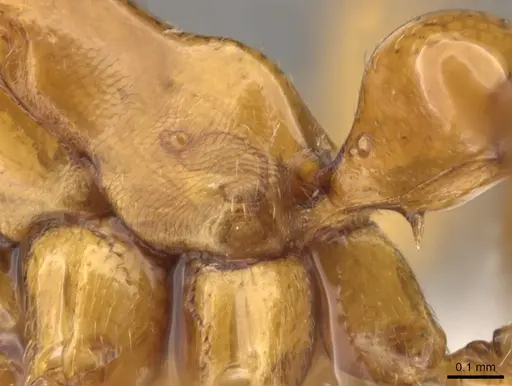
Centromyrmex fugator is a member of the feae species group within the genus Centromyrmex [1]. The species was formally described in 2008 by Bolton and Fisher from specimens collected in Kinshasa, Democratic Republic of Congo, with additional material from Gauteng Province, South Africa [1]. Workers are small at 4.7-4.8mm total length, yellow to light brownish yellow in color, with a distinctive head shape that is longer than broad and nearly straight sides [1][2]. The mandibles have about 10 very small, inconspicuous teeth along the masticatory margin [1]. Queens measure 5.1mm total length and have a more coarsely punctate mesoscutum than workers [1][2]. The species closely resembles Centromyrmex praedator but is smaller with different mandibular morphology [1]. Males have not been collected [1].
Distribution and Habitat
Centromyrmex fugator is known from two widely separated localities: Kinshasa in the Democratic Republic of Congo and Gauteng Province in South Africa [1]. These locations are very far apart and likely have very different ecologies, Kinshasa is a lowland tropical area while Gauteng is a highland temperate region [1]. This suggests the species may have broad ecological tolerance or that additional populations exist in intermediate areas that simply have not been documented. No specific habitat information exists for this species, but Centromyrmex genus members typically inhabit rotting wood, soil, or under stones in forested areas.
Known Biology and Care Challenges
Nothing is known about the biology of Centromyrmex fugator, this is one of the most poorly documented ant species you could attempt to keep [3]. The description above is based entirely on morphological measurements of preserved specimens, not on observations of living colonies [1]. We do not know their diet, founding behavior, colony size, development time, temperature preferences, humidity needs, or any other aspect of their biology that would guide captive care. This makes keeping C. fugator extremely challenging and risky. Any care recommendations would be based entirely on genus-level assumptions rather than species-specific data.
Genus-Level Expectations
While specific behavior of C. fugator is unknown, Centromyrmex as a genus provides some context. These are ponerine ants known for their predatory habits and specialized trap-jaw mandibles [3]. They are typically found in rotting wood or soil habitats. Based on this, you should expect: predatory diet requiring live prey (likely small invertebrates), moderate to high humidity needs, and active hunting behavior. However, these are genus-level assumptions, this species may deviate significantly. The Ponerini tribe generally contains ants with potent stings, so treat this species as potentially capable of stinging.
Why This Species Is Expert-Only
Centromyrmex fugator is not recommended for anyone except the most experienced antkeepers, and even then with extreme caution. The complete lack of biological data means you are essentially experimenting with no baseline information. Unlike most ant species where you can find at least some care guidance from related species or genus patterns, this species has zero documented captive observations. You will be making every decision based on guesswork. There is a very high risk of colony failure due to unknown specific requirements. Only experienced keepers who have successfully maintained multiple other ponerine species and are prepared for experimental care should consider this species.
Frequently Asked Questions
What do Centromyrmex fugator ants eat?
Their diet is completely unconfirmed. Based on genus patterns, they are likely predatory on small invertebrates. Do not attempt to keep this species unless you can provide live prey.
How long does it take for Centromyrmex fugator to develop from egg to worker?
Unknown, no development data exists for this species. Based on typical Ponerini patterns, development may take 6-10 weeks at optimal temperature, but this is purely estimated.
What temperature should I keep Centromyrmex fugator at?
Temperature requirements are unconfirmed. Based on their Afrotropical distribution (DRC and South Africa), start around 22-26°C and observe colony behavior for adjustments.
Can beginners keep Centromyrmex fugator?
Absolutely not. This species has no documented biology and requires expert-level experimental care. There is no care guide to follow, you would be pioneering captive husbandry for a completely unknown species.
What size colony does Centromyrmex fugator reach?
Unknown, no colony size data exists. Only a few workers are known from type specimens.
Do Centromyrmex fugator queens need hibernation?
Diapause requirements are completely unknown. South African populations in Gauteng experience cooler winters, suggesting possible seasonal slowing, but no specific data exists.
What nest type should I use for Centromyrmex fugator?
Nesting preferences are unconfirmed. Based on genus patterns, a naturalistic setup with moist substrate or a Y-tong/plaster nest with narrow chambers may work as a starting point.
Is Centromyrmex fugator aggressive?
Behavior is unconfirmed, but based on genus patterns, expect typical Ponerini temperament, alert and capable of defending the colony. Use appropriate escape prevention.
Where can I get Centromyrmex fugator ants?
This species is extremely rare in the antkeeping hobby. It is not commonly available and would likely require specialized collection from the wild in its native range (DRC or South Africa), which is not recommended.
Report an Issue
The current care sheet is based fully on literature. See inconsistencies, or something that's incorrect? Please , it will be resolved after review from an admin. Contributing to the blogs tab also helps providing information, to make us be able to further improve the caresheets. Thank you for your support!
References

This caresheet is licensed under CC BY-SA 4.0 .
Community Blogs
Literature
Loading distribution map...Loading products...