
Centromyrmex ereptor
- Sci. Name
- Centromyrmex ereptor
- Tribe
- Ponerini
- Subfamily
- Ponerinae
- Author
- Bolton & Fisher, 2008
- Distribution
- Found in 1 countries
Introduction
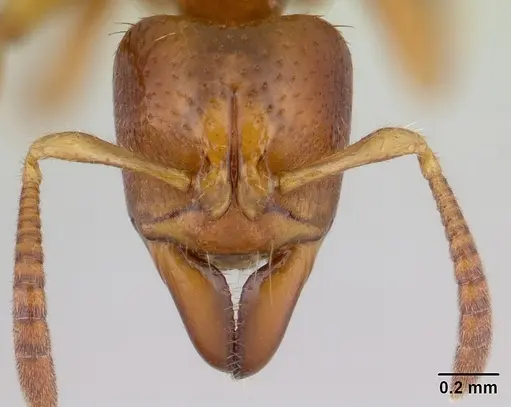
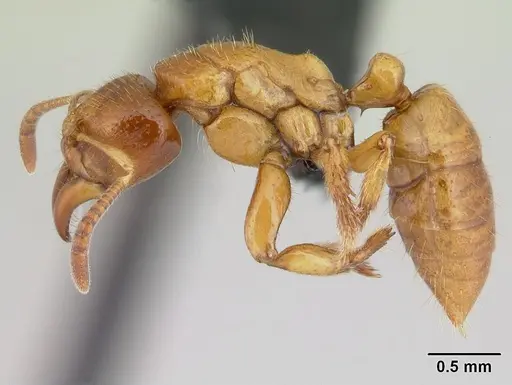
Centromyrmex ereptor is a tiny predatory ant species from the Ponerinae subfamily, native to Central African rainforests. Workers measure approximately 4.5mm in total length, making them one of the smaller ant species you'll encounter. They have a light brownish-yellow coloration and feature distinctive stiff spines on their hind legs. This species is known only from worker specimens collected in the Central African Republic, Gabon, and the Democratic Republic of Congo, where they inhabit lowland rainforest at elevations around 420 meters . Almost nothing is known about the biology of this species - no queens, males, or colony structures have ever been documented. This species is best considered an expert-level specialty for advanced antkeepers interested in rare Ponerine species, as captive husbandry protocols have not been developed.
Quick Summary
- Difficulty: Expert
- Origin & Habitat: Central African rainforests in the Democratic Republic of Congo, Gabon, and Central African Republic. Found in lowland rainforest at approximately 420 meters elevation [1][2].
- Colony Type: Unknown, only workers have been collected. Colony structure has not been documented [1].
- Size & Growth:
- Antkeeping:
- Temperature: Unconfirmed, based on their rainforest origin in Central Africa, warm conditions around 24-28°C are likely appropriate. Provide a temperature gradient so ants can self-regulate.
- Humidity: Unconfirmed, likely requires high humidity similar to other Centromyrmex species. Keep substrate consistently moist but not waterlogged.
- Diapause: Unknown, unlikely to require hibernation given their tropical origin.
- Nesting: Unconfirmed, likely nests in rotting wood or moist soil in captivity. Based on genus patterns, a naturalistic setup with moist substrate would be appropriate.
- Behavior: Temperament is unconfirmed, but Centromyrmex species are typically predatory hunters. They have a functional stinger as members of the Ponerinae subfamily. Escape prevention is critical due to their tiny 4.5mm size, they can slip through standard barriers easily. Use fine mesh and tight-fitting lids.
- Common Issues: no captive husbandry protocols exist, this species has never been kept in captivity, queen and male castes unknown, cannot obtain a founding colony from the wild, escape prevention is critical due to tiny worker size, predatory diet requirements may be difficult to meet with standard ant foods, high humidity requirements may promote mold in captive setups
Species Identification and Discovery
Centromyrmex ereptor was described in 2008 by Barry Bolton and Brian Fisher based on worker specimens collected from rainforest in the Central African Republic. The species name 'ereptor' suggests a connection to digging or burrowing behavior. The holotype worker measures 4.5mm total length. They can be distinguished from the similar Centromyrmex longiventris by their larger size and more shallowly sloped propodeum. The species remains known only from workers, queens and males have never been collected or described [1][2].
Distribution and Habitat
This species is known from three Central African locations: the Dzanga-Sangha Reserve in the Central African Republic, the Plateau d'Ipassa in Gabon, and the Yangambi Reserve in the Democratic Republic of Congo. All collections have been from lowland rainforest at elevations around 420 meters. The type locality in the Central African Republic is a dense rainforest area. Based on these records, the species appears to be restricted to intact Central African rainforest environments [1][2][3].
Keeping an Undescribed Species
Centromyrmex ereptor presents a challenge: it has never been kept in captivity, and almost nothing is known about its biology. No one has ever observed a queen, witnessed colony founding, or documented what these ants eat in the wild. This makes them an expert-level species suitable only for advanced antkeepers who understand that they are attempting captive husbandry for a completely undescribed species. You will need to experiment with temperature, humidity, diet, and nesting conditions while being prepared for the possibility that the species may not survive in captivity at all. There are no established protocols to follow.
Housing and Care Approach
Given the lack of biological data, care recommendations must be based on genus-level inference. Centromyrmex species are typically found in rotting wood or moist soil in tropical forests. For housing, use a naturalistic setup with consistently moist substrate. Maintain warm temperatures in the low-to-mid 20s Celsius. Due to their tiny 4.5mm size, escape prevention must be excellent: use fine mesh and ensure all openings are sealed. The diet is uncertain, but Centromyrmex are predatory, so offer small live prey like springtails, fruit flies, and other tiny arthropods.
Legal and Ethical Considerations
Before attempting to keep this species, check your local regulations regarding the collection and ownership of African ant species. Centromyrmex ereptor is not listed in the CITES appendices, but permits may be required for international acquisition. If collecting from the wild, do so sustainably and only from permitted areas. Remember that this species is known from limited rainforest locations, any wild collection could potentially impact local populations.
Frequently Asked Questions
Can I keep Centromyrmex ereptor as a pet ant?
This species is not recommended for most antkeepers. No one has ever successfully kept this species in captivity, and almost nothing is known about its biology. There are no established care protocols, and you would be experimenting entirely from scratch. Additionally, only workers have been collected, no queens have ever been found, so obtaining a founding colony from the wild is currently impossible.
What do Centromyrmex ereptor ants eat?
The diet of this species is completely unconfirmed. Based on genus patterns, they are likely predatory hunters that capture small soil-dwelling invertebrates. In captivity, you could experiment with offering tiny live prey like springtails, fruit flies, and other micro-arthropods.
How big do Centromyrmex ereptor colonies get?
Colony size is completely unknown. No colony has ever been documented, and we do not know if colonies consist of dozens or thousands of workers.
What temperature and humidity do they need?
Temperature and humidity requirements are unconfirmed. Based on their Central African rainforest origin, aim for warm temperatures around 24-28°C with high humidity. Provide a temperature gradient so ants can choose their preferred zone. Keep substrate consistently moist but not waterlogged.
Where can I get a Centromyrmex ereptor queen?
Queens of this species have never been documented, only workers are known to science. It is currently impossible to obtain a founding colony. Even if queens were discovered, they would likely be extremely rare in the antkeeping hobby. This species is not available through commercial sources.
Are Centromyrmex ereptor good for beginners?
Absolutely not. This is an expert-only species that has never been kept in captivity. There are no care guides, no established protocols, and no one to ask for advice. Even experienced antkeepers would be taking a significant risk attempting to keep this species. Choose a more established species instead.
Do they need hibernation?
Diapause requirements are unknown but unlikely given their tropical rainforest origin. Central African ants do not experience cold winters, so they probably remain active year-round. Do not attempt hibernation without specific evidence that it is needed.
What makes Centromyrmex ereptor special?
This species represents an opportunity to discover something new about ant biology. Centromyrmex ereptor is one of the least-known ant species in existence, every observation in captivity would be the first ever made. For advanced antkeepers interested in rare species, this represents a unique opportunity, though the risks of failure are very high.
Report an Issue
The current care sheet is based fully on literature. See inconsistencies, or something that's incorrect? Please , it will be resolved after review from an admin. Contributing to the blogs tab also helps providing information, to make us be able to further improve the caresheets. Thank you for your support!
References

This caresheet is licensed under CC BY-SA 4.0 .
Community Blogs
CASENT0081171
View on AntWeb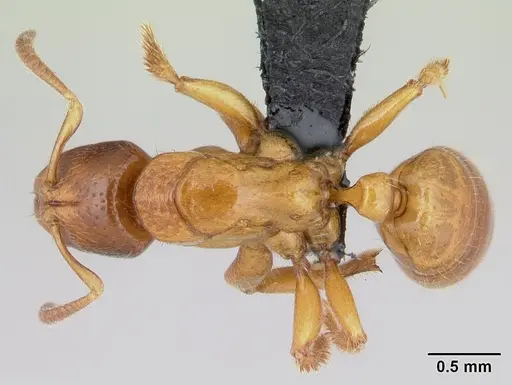
Literature
Loading distribution map...Loading products...