
Centromyrmex angolensis
- Sci. Name
- Centromyrmex angolensis
- Tribe
- Ponerini
- Subfamily
- Ponerinae
- Author
- Santschi, 1937
- Distribution
- Found in 4 countries
Introduction
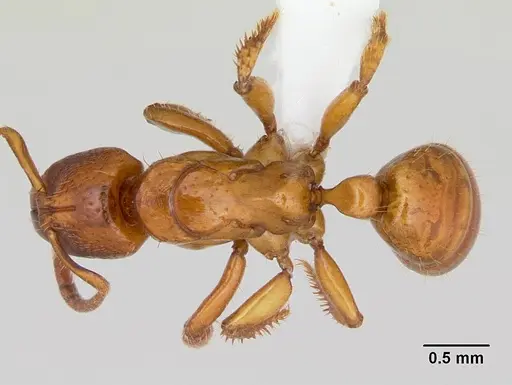
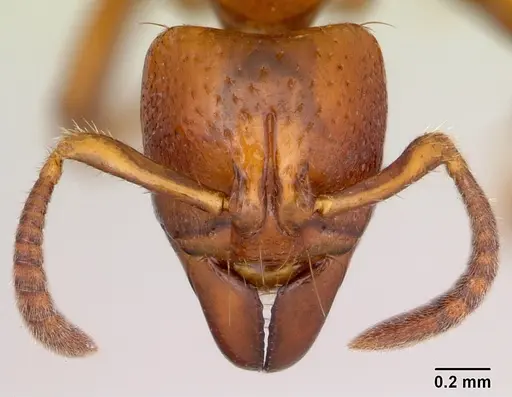
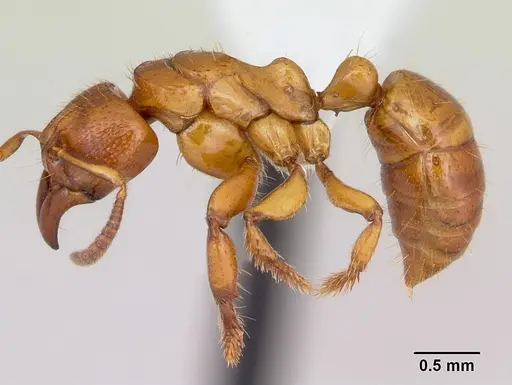
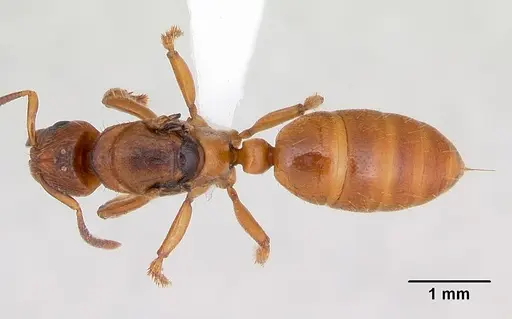
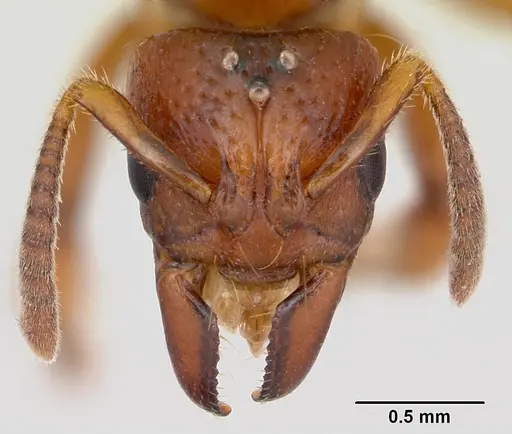
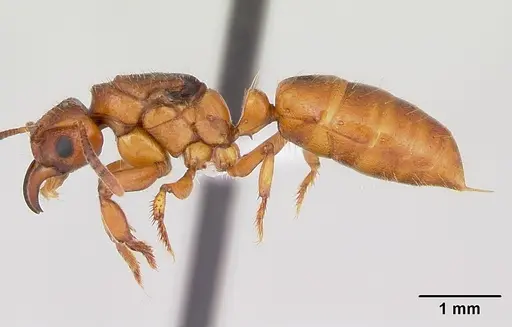
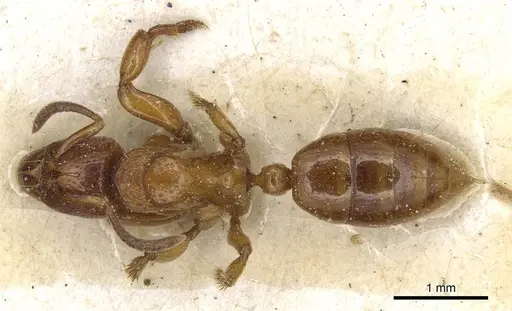
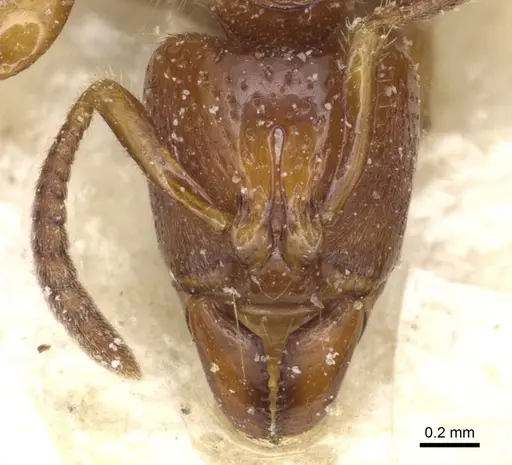
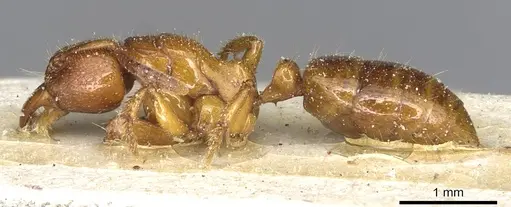
Centromyrmex angolensis is a medium-sized ponerine ant native to the Afrotropical region, ranging from West Africa (Liberia, Ghana, Ivory Coast) through Central Africa (Cameroon, Gabon, Central African Republic, Democratic Republic of Congo) to Angola . Workers measure 4.3-6.2 mm and are yellow to light brown in color, with a distinctive single spiniform seta at the inner apex of the metatibia that serves as a key identification feature . Queens are slightly larger at 6.0-6.4 mm, and also have this unique seta . This species is closely related to Centromyrmex sellaris but can be distinguished by its narrower head and single metatibial seta instead of two . The most striking aspect of Centromyrmex angolensis is its specialized predatory behavior: it nests directly within termite mounds, specifically those of Apitermes and Protermes species, where it preys on the termite colony .
Quick Summary
- Difficulty: Medium
- Origin & Habitat: Afrotropical region: Liberia, Ivory Coast, Ghana, Cameroon, Gabon, Central African Republic, Democratic Republic of Congo, and Angola. Inhabits tropical forest and woodland areas where termite mounds (termitaries) are present [1][2].
- Colony Type: Unconfirmed. Colony structure is not documented in literature.
- Size & Growth:
- Antkeeping:
- Temperature: As a tropical Afrotropical species, this ant requires warm temperatures year-round. Provide a stable temperature around 24-28°C (low-to-mid 20s°C). Use a heating cable on one side of the nest to create a gradient, adjust based on ant activity.
- Humidity: Keep the nest substrate consistently moist but not waterlogged. Provide a humidity gradient with a drier area for the ants to regulate moisture exposure. Replicate the damp interior of a termite mound.
- Diapause: No. As a tropical species, it does not hibernate. Keep warm year-round.
- Nesting: In nature, they nest inside termite mounds [1][2]. For captive housing, use a naturalistic setup with soil or a Y-tong/plaster nest that can hold moisture. Avoid acrylic nests.
- Behavior: Centromyrmex angolensis workers are active hunters that forage for live prey. They are not typically aggressive toward keepers but can deliver a painful sting if handled roughly (typical of Ponerinae ants). Escape risk is moderate for their size (workers 4-6 mm) – standard barriers like fluon or tight-fitting lids work well. Workers are yellow to light brown and robust.
- Common Issues: specialized diet requires live termites or similar small insects, which can be hard to source consistently., tropical warmth requirements mean colonies suffer if temperatures drop below 24°C., humidity control is critical: too dry and brood desiccates, too wet and mold becomes a problem., newly caught colonies from termitaries may contain parasites that can decimate the colony., founding behavior is unconfirmed, which can complicate colony establishment.
Nest Preferences and Housing
In the wild, Centromyrmex angolensis nests within termite mounds, specifically those of Apitermes and Protermes species [1][2]. The ants live in chambers inside the termite structure, giving them direct access to prey. For captive housing, replicate these conditions: use a naturalistic setup with a soil chamber or a Y-tong/plaster nest with moist substrate. The nest material should hold moisture without becoming waterlogged – think of the interior of a damp termite mound. Provide a connection to an outworld for foraging. A water reservoir or a cotton-plugged tube can help maintain consistent humidity. Avoid acrylic nests.
Feeding and Diet
Centromyrmex angolensis is a specialized termite predator, meaning live prey is essential. In the wild, they hunt termites inside their mounds [1]. In captivity, feed live termites if available (e.g., from pet stores or collected from the wild). Alternatives include fruit flies, pinhead crickets, and small mealworms. They rarely accept sugar water or honey. Feed small live prey 2-3 times per week, adjusting for colony size. Remove uneaten prey to prevent mold.
Temperature and Seasonal Care
As a tropical Afrotropical species, Centromyrmex angolensis needs warm temperatures all year. Keep the nest area at a stable 24-28°C (low-to-mid 20s°C). Temperatures below 24°C will slow activity and may harm brood. Use a heating cable on one side of the nest to create a gradient – the ants can then choose their preferred heat. Avoid direct overheating. This species does not need hibernation, maintain warmth continuously.
Behavior and Temperament
Centromyrmex angolensis workers are active hunters that leave the nest to search for live prey. They are not typically aggressive toward keepers, but like all Ponerinae, they have a functional sting that can be painful if they are provoked. Handle with care. Workers are 4.3-6.2 mm long, with distinctive yellow to light brown color [1]. Their single metatibial spiniform seta is a key feature for identification. Escape risk is moderate for their size – use standard barriers like fluon or tight lids.
Colony Founding
Founding behavior of Centromyrmex angolensis has not been documented in scientific literature. It is unknown whether queens found colonies claustrally, semi-claustrally, or in association with termites. If you obtain a queen, provide a secure, dark, warm, and moist chamber (e.g., a test tube with water cotton plug) and avoid disturbance. Expect uncertainty, patience is key. Once workers appear, offer live prey immediately.
Growth and Development
No specific data on development time or colony growth rate is available for this species. Monitor your colony for signs of brood production (eggs, larvae, pupae) and adjust care based on observed progress. Once the first workers emerge, colony growth likely accelerates, but exact timelines are unknown.
Frequently Asked Questions
How long does it take for Centromyrmex angolensis to get first workers?
This is unknown. No documented data exists for this species. Be patient with newly caught queens and watch for brood development.
What do Centromyrmex angolensis ants eat?
They are specialized termite predators. Feed live termites if possible, or substitute with fruit flies, pinhead crickets, or small mealworms. They generally ignore sugar sources. Live prey is essential [1].
Can I keep Centromyrmex angolensis in a test tube?
A test tube setup works for a founding queen, but an established colony needs more
Report an Issue
The current care sheet is based fully on literature. See inconsistencies, or something that's incorrect? Please , it will be resolved after review from an admin. Contributing to the blogs tab also helps providing information, to make us be able to further improve the caresheets. Thank you for your support!
References

This caresheet is licensed under CC BY-SA 4.0 .
Community Blogs
Literature
Loading distribution map...Loading products...