
Cataulacus vorticus
- Sci. Name
- Cataulacus vorticus
- Tribe
- Crematogastrini
- Subfamily
- Myrmicinae
- Author
- Bolton, 1974
- Distribution
- Found in 1 countries
Introduction
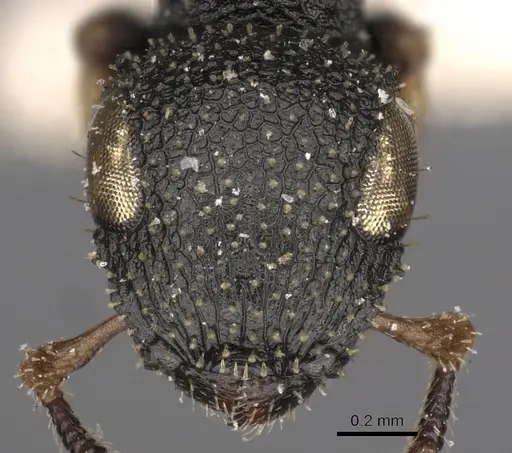
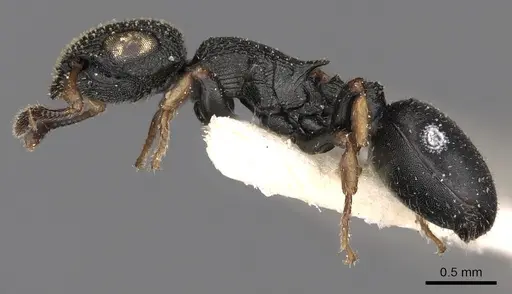
Cataulacus vorticus is a small arboreal ant species native to tropical Africa. Workers measure 3.4-3.5mm total length with a distinctive appearance featuring strongly clavate (club-shaped) hairs on the head and a single tooth on the pronotum. Queens are larger at 4.2-4.4mm total length, and the species has spines on the propodeum. This species belongs to the tenuis group of Cataulacus and is closely related to Cataulacus brevisetosus. In the wild, these ants nest under the bark of cocoa trees at branch junctions about 5 feet above ground level, where the bark is covered with moss . What makes Cataulacus vorticus interesting is their arboreal lifestyle - unlike most ants that nest in soil, these ants are adapted to living in and under tree bark. This affects everything from how you house them to the humidity levels they need. They're found across central and east Africa including Nigeria, Democratic Republic of Congo, Kenya, Uganda, Cameroon, and Gabon .
Quick Summary
- Difficulty: Medium
- Origin & Habitat: Tropical Africa (Nigeria, DRC, Kenya, Uganda, Cameroon, Gabon). Found nesting under bark of cocoa trees in forest zones, typically at branch junctions 5 feet above ground, with moss-covered bark [1].
- Colony Type: Colony type is unconfirmed. No specific literature data on queen number or colony structure for this species.
- Size & Growth:
- Queen: 4.2-4.4mm total length [1]
- Worker: 3.4-3.5mm total length [1]
- Colony: Colony size data unavailable, no specific studies on maximum colony size for this species
- Growth: Growth rate is unconfirmed
- Development: Development timeline is unconfirmed for this species (No specific development data available. Temperature-dependent development is typical for Myrmicinae.)
- Antkeeping:
- Temperature: Keep at 24-28°C. As a tropical species, they need warm conditions. A heating cable on one side of the nest creates a gentle gradient.
- Humidity: High humidity required. These ants naturally live under bark in moss-covered environments. Keep the nest substrate consistently moist but not waterlogged. Mist occasionally and provide a water tube.
- Diapause: No, being a tropical species, they do not require hibernation. Keep temperatures stable year-round.
- Nesting: Arboreal setup works best. They naturally nest under bark, so provide a naturalistic setup with flat stones, bark pieces, or a Y-tong/plaster nest with narrow chambers. Avoid deep soil nests, they prefer tight, enclosed spaces similar to under-bark environments.
- Behavior: These ants are relatively calm and not particularly aggressive. Workers are small but active, foraging for honeydew and small prey. They have functional stingers but due to their tiny size, they rarely penetrate human skin. Their small size means escape prevention is critical, use fine mesh and tight-fitting lids. They are arboreal by nature, so they will explore upward and may attempt to climb on smooth surfaces.
- Common Issues: escape prevention is critical due to their tiny size, they can squeeze through standard mesh, high humidity needs can lead to mold if ventilation is poor, tropical temperature requirements mean they may struggle in cool rooms, arboreal nature means they may not accept standard soil nests, they prefer tight spaces under bark, wild-caught colonies may carry parasites that can decimate captive colonies
Nest Preferences and Housing
Cataulacus vorticus is an arboreal species that naturally nests under tree bark, making standard soil formicariums less ideal. In captivity, they do best with setups that mimic their natural under-bark environment. A Y-tong nest with narrow chambers works well, as does a naturalistic setup with flat stones or bark pieces pressed together. The key is providing tight, enclosed spaces rather than open areas. Plaster nests can also work if kept appropriately moist. Avoid deep soil nests, these ants prefer to be snug in tight cavities. If using a test tube setup for founding colonies, transfer to a more appropriate arboreal-style nest once the colony reaches 20-30 workers. [1]
Feeding and Diet
Like most Cataulacus species, these ants are omnivorous with a preference for honeydew and small insects. In captivity, offer sugar water or honey as a constant energy source. For protein, provide small live prey such as fruit flies, pinhead crickets, or mealworms. Since workers are tiny, prey items should be appropriately sized. They may also accept commercial ant foods. Feed protein 2-3 times per week and keep sugar sources available at all times. Remove uneaten prey after 24 hours to prevent mold. [1]
Temperature and Seasonal Care
As a tropical species from central Africa, Cataulacus vorticus requires warm temperatures year-round. Keep the nest area at 24-28°C for optimal brood development. Room temperature may be sufficient in warm climates, but most keepers use a heating cable or mat on one side of the nest to maintain warmth. Create a temperature gradient so ants can choose their preferred spot. Unlike temperate species, they do not require hibernation or diapause, maintain stable temperatures throughout the year. Avoid temperatures below 20°C as this can slow or stop brood development and may harm the colony. [1]
Humidity and Water
These ants come from environments with high humidity, typically under moss-covered bark in forest zones. Keep substrate consistently moist but never waterlogged. The nest should have some condensation visible, but not standing water. A water tube attached to the nest provides drinking water. Mist the outworld occasionally to maintain humidity. Good ventilation is important to prevent mold while maintaining moisture, avoid completely sealed nests. The key is damp conditions, not wet ones. [1]
Behavior and Handling
Cataulacus vorticus workers are small but active and relatively calm. They are not aggressive and rarely sting humans, their stingers are too small to penetrate human skin effectively. Workers forage actively and will explore their environment. Being arboreal, they prefer to climb and may attempt to escape up any surface. They are not major escape artists compared to some species, but their small size means they can slip through tiny gaps. Handle gently, their small size makes them fragile. When moving colonies, use gentle techniques and avoid shaking or jarring the nest. [1]
Frequently Asked Questions
Can I keep Cataulacus vorticus in a test tube?
Test tubes work for founding colonies, but these arboreal ants prefer tight, enclosed spaces similar to under-bark environments. Transfer to a Y-tong or naturalistic setup once the colony reaches 20-30 workers for better long-term success.
What do Cataulacus vorticus ants eat?
They are omnivorous. Offer sugar water or honey constantly for energy, and small protein sources like fruit flies, pinhead crickets, or small mealworms 2-3 times per week. Prey should be appropriately sized for their tiny workers.
How long until first workers in Cataulacus vorticus?
Development timeline is unconfirmed for this species. Expect several months based on typical Myrmicinae patterns.
Do Cataulacus vorticus ants need hibernation?
No. As a tropical African species, they do not require hibernation. Keep temperatures stable year-round between 24-28°C.
Are Cataulacus vorticus good for beginners?
They are intermediate difficulty. While not overly demanding, their arboreal nature and humidity requirements differ from more common soil-nesting ants. Experience with ant keeping basics is helpful.
Do Cataulacus vorticus ants sting?
They have stingers but due to their very small size, they rarely penetrate human skin. They are not considered dangerous or aggressive.
How big do Cataulacus vorticus colonies get?
Colony size data is unavailable for this species. No specific studies document maximum colony size.
What temperature is best for Cataulacus vorticus?
Keep them at 24-28°C. Use a heating cable on one side of the nest to create a gradient if room temperature is below this range.
Why are my Cataulacus vorticus dying?
Common causes include: temperatures below 20°C (tropical species), low humidity (they need damp conditions), poor escape prevention despite small size, or parasites from wild-caught colonies. Check all three environmental factors first.
Report an Issue
The current care sheet is based fully on literature. See inconsistencies, or something that's incorrect? Please , it will be resolved after review from an admin. Contributing to the blogs tab also helps providing information, to make us be able to further improve the caresheets. Thank you for your support!
References

This caresheet is licensed under CC BY-SA 4.0 .
Community Blogs
CASENT0900272
View on AntWeb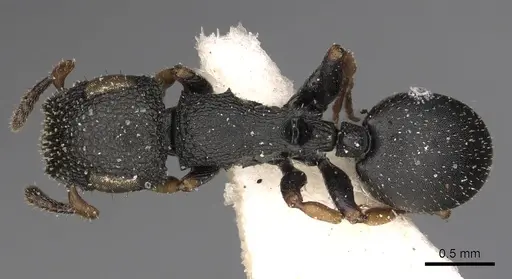
Literature
Loading distribution map...Loading products...