
Cataglyphis fortis
- Sci. Name
- Cataglyphis fortis
- Tribe
- Formicini
- Subfamily
- Formicinae
- Author
- Forel, 1902
- Distribution
- Found in 2 countries
Introduction
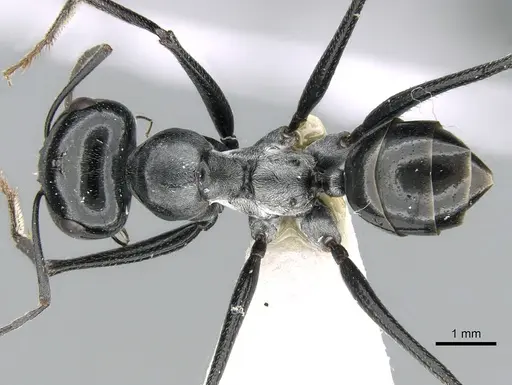
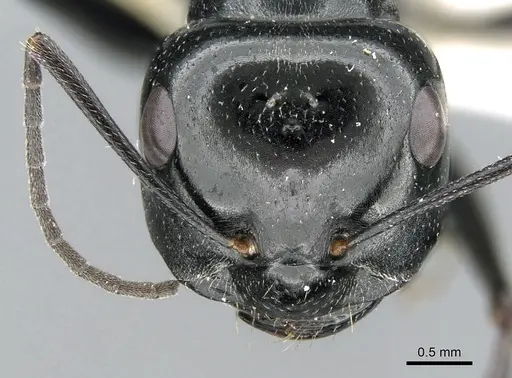
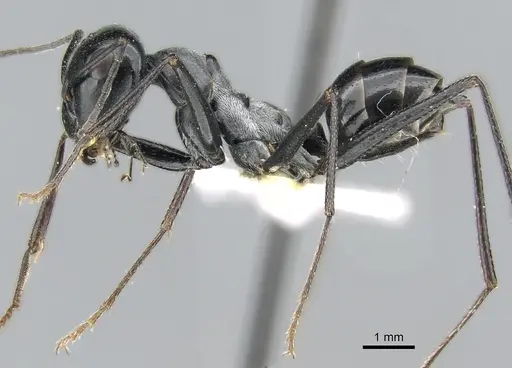
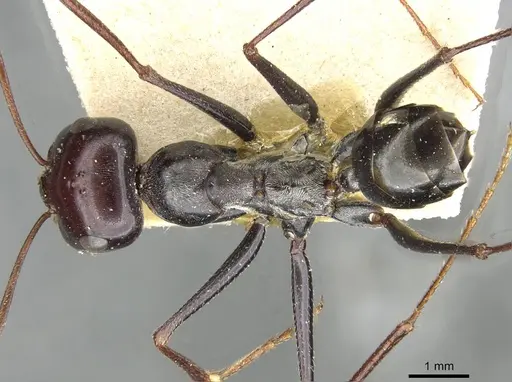
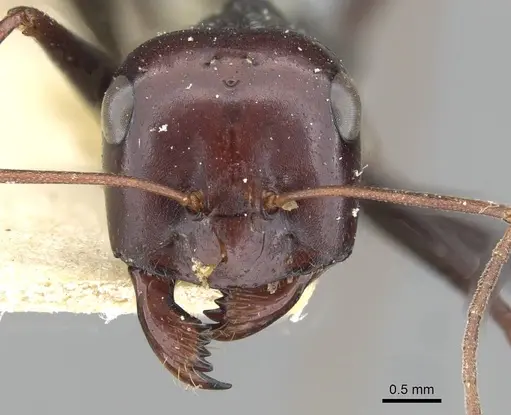
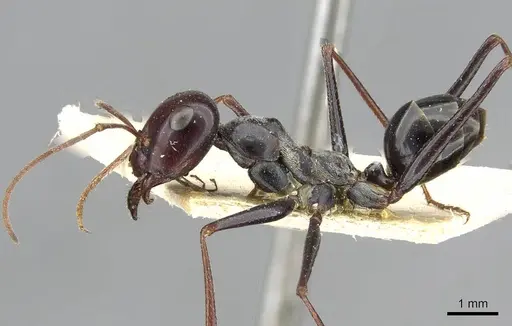
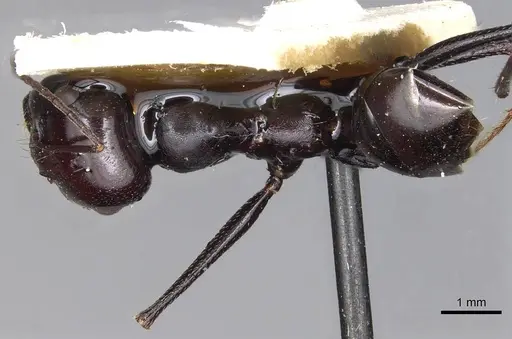
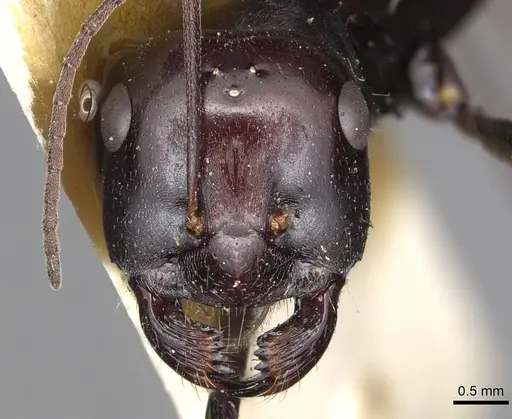
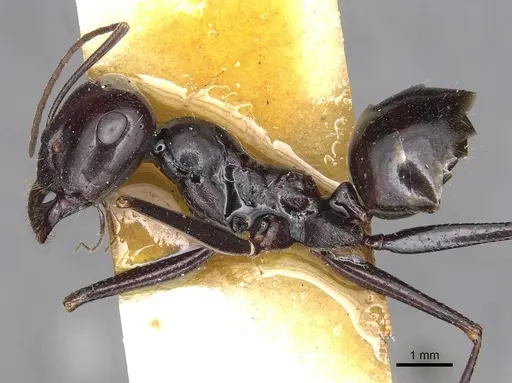
Cataglyphis fortis is a medium-sized desert ant native to the salt pans of North Africa, particularly Tunisia and Algeria. Workers measure approximately 6mm with a distinctive black, shiny body and relatively long legs . This ant is one of the most intensively studied insects in the world, serving as a model organism for understanding animal navigation and spatial cognition. In their natural habitat of flat, featureless salt pans, these ants perform remarkable foraging journeys of 100-200 meters from their nest, navigating back using path integration, skylight compass, and landmark recognition . They are thermophilic scavengers that forage exclusively during the hottest parts of the day, feeding on dead arthropods during their long solitary excursions .
Quick Summary
- Difficulty: Expert
- Origin & Habitat: North African salt pans (chotts and sebkhas) in Tunisia and Algeria. These are flat, nearly featureless salt flat environments with baked salty clay substrates and extremely high temperatures reaching 70°C [6][2][7].
- Colony Type: Monodomous (single nest) and monogynous (single queen) colony structure. Colonies contain approximately 200 workers on average [6].
- Size & Growth:
- Queen: size data unavailable
- Worker: approximately 6mm total length [1]
- Colony: up to 300 workers (202±125 workers in studied colonies) [6]
- Growth: moderate, workers spend about 4 weeks on interior tasks before transitioning to foraging for approximately 6 days [8]
- Development: estimated 6-10 weeks based on related Cataglyphis species (Direct development data not available. Workers transition from interior to exterior tasks at approximately 28 days old, with forager life expectancy of only about 7 days [8][9])
- Antkeeping:
- Temperature: High temperatures essential. These ants are extreme thermophiles that forage at temperatures exceeding 60°C in the wild but die within 2 hours at 45°C [4][3][5]. In captivity, provide a warm gradient with the nest area at 28-32°C. They can tolerate brief periods at higher temperatures but should not be exposed to sustained heat above 40°C.
- Humidity: Low humidity requirements. As desert ants from arid salt pan habitats, they prefer dry conditions. Keep the nest moderately dry with a small water tube for drinking. Avoid high humidity that would cause condensation.
- Diapause: Not required. As a North African species from a temperate climate, they do not experience true winter hibernation. A slight reduction in temperature during winter months (around 20-24°C) may be beneficial but is not mandatory.
- Nesting: Y-tong (AAC) or plaster nests work well. The nest should have narrow chambers scaled to their medium size. Provide a dry nest chamber with access to a water tube. They do not require elaborate decoration, simplicity mimics their natural salt pan habitat.
- Behavior: Cataglyphis fortis is a solitary forager with a calm but alert temperament. Workers forage individually for dead arthropods, traveling long distances before returning directly to the nest using path integration [2]. They are not aggressive toward humans and rarely sting. Their most notable behavior is their extraordinary navigation ability, they use a combination of polarized skylight compass, step-counting odometer, visual landmarks, and olfactory cues to find their way across vast featureless terrain [10]. Workers perform learning walks near the nest before beginning foraging, consisting of small circular movements (voltes) but not the spinning pirouettes seen in some related species [11][12]. They show sector fidelity, returning to successful foraging directions. Escape prevention should be moderate, they are medium-sized ants but excellent climbers.
- Common Issues: colonies remain relatively small (under 300 workers) which may disappoint keepers expecting large colonies, very high temperature requirements can be difficult to maintain consistently in captivity, short forager lifespan (about 7 days) means rapid worker turnover, wild-caught colonies may struggle to adapt to captive conditions after long foraging careers, limited information on captive breeding success, this is not a common captive species, do not tolerate temperatures above 40°C for extended periods despite being heat-tolerant foragers
Natural History and Distribution
Cataglyphis fortis is endemic to the salt pan habitats of North Africa, specifically the chotts (salt lakes) and sebkhas (salt marshes) of Tunisia and Algeria [6][14]. This is one of the most hostile environments any ant species occupies, flat, nearly vegetation-free salt flats where surface temperatures can exceed 70°C during summer [7]. They are the only ant species found in the centers of these salt flats, where conditions are too extreme for most other insects. Their distribution extends from southern Tunisia to northeastern Algeria, with recent records also from Iraq [1][14]. The species is closely related to Cataglyphis albicans and likely split from that ancestor in adaptation to the salt pan habitat [6]. Colonies are monodomous (maintaining a single nest) with typically one queen, and nest density is remarkably low at about 300 nests per square kilometer with average distances of 40 meters between neighboring nests [6].
Navigation and Foraging Behavior
This species has become a legendary model in navigation research, with over 50 years of intensive study by Rüdiger Wehner and colleagues. Cataglyphis fortis performs solitary foraging runs that can extend 100-200 meters from the nest, extraordinary distances for an ant only 6mm in size [5][2]. They navigate using path integration (dead reckoning), continuously updating a mental home vector by integrating the angles steered and distances traveled during their outbound journey. This allows them to return on a direct beeline rather than retracing their tortuous outbound path [3]. Their compass relies primarily on the polarization pattern of skylight, though they can also use the sun's position and even wind direction as backup cues [15][16]. Distance is measured primarily through stride counting (proprioception of leg movements), with a secondary contribution from ventral optic flow [17][18]. Near the nest, they use olfactory cues, the soil around the nest entrance contains specific aldehydes (hexanal, octanal, nonanal, decanal) and camphor that serve as an olfactory beacon [19][20]. They also learn visual landmarks around the nest for close-range guidance. Interestingly, they perform learning walks, small circular trips around the nest entrance before their first foraging runs, consisting of volte (small walked circles) but notably lacking the spinning pirouettes seen in related species in landmark-rich environments [11][12].
Temperature and Thermophilic Adaptation
Cataglyphis fortis is an extreme thermophile, foraging during the hottest parts of the day when surface temperatures exceed 50-60°C, conditions that would kill most other ants within hours [4][21]. Their name fortis (Latin for strong or powerful) reflects this remarkable heat tolerance. In the wild, they begin foraging around 08:30 solar time, reach peak activity at solar noon, and decrease in the late afternoon [22]. Studies show they die from desiccation within 2 hours at maximum temperatures around 45°C, with maximum foraging duration estimated at only 4 hours [5]. This apparent contradiction, foraging at 60°C but dying at 45°C, is resolved by their efficient thermoregulation and constant movement. In captivity, they require warm but not extreme conditions, nest temperatures of 28-32°C are ideal, with a temperature gradient allowing them to thermoregulate. A heating cable placed on part of the formicarium helps maintain these temperatures. They can tolerate brief heat spikes but should not be exposed to sustained temperatures above 40°C.
Colony Structure and Life Cycle
Cataglyphis fortis colonies are relatively small compared to many ant species, typically containing around 200 workers (202±125 in studied colonies) [6]. Each colony is monodomous (single nest) and monogynous (single queen). The queen is winged and capable of flight during nuptial season, after which she founds a new colony claustrally, sealing herself in a chamber and living on stored fat reserves until her first workers emerge [13]. Workers undergo age-related task specialization: they spend approximately the first 28 days performing interior tasks within the nest, then transition to outdoor foraging for their final 6-7 days of life [8][9]. This extremely short forager lifespan (averaging only 7.3 days) means colonies experience high worker turnover [9]. Despite their small colony size, they maintain stable nest sites, over 75% of nests survive from year to year, with some nests lasting at least 9 years [6]. This slow colony growth and long-lived nests contrast with the short individual worker lifespans.
Feeding and Diet
In the wild, Cataglyphis fortis is a scavenger that forages exclusively for dead arthropods and other animal matter [4][5][23]. They are solitary foragers, unlike many ants, they do not recruit nestmates to food sources using pheromone trails. Instead, each worker searches independently for scattered food items, often traveling great distances. When they find a suitable item, they carry it directly back to the nest. If a prey item is too large to lift, they will drag it backwards, a behavior that has also been studied extensively [24]. In captivity, their diet should consist primarily of small insects (fruit flies, small crickets, mealworms) and other protein sources. They may accept some sugar sources, but their primary nutritional need is protein from animal prey. Feed them small dead insects or freshly killed prey items 2-3 times per week, removing uneaten food after 24 hours. Fresh water should always be available.
Defense and Aggression
Cataglyphis fortis shows remarkable context-dependent aggression. Near the nest entrance, they are extremely aggressive toward members of other colonies, attacking and fighting fiercely. However, this aggression drops off rapidly with distance, essentially disappearing beyond about 5 meters from the nest [20][25]. This makes ecological sense: defending the nest is critical, but wasting energy on distant encounters would be counterproductive for foragers on long journeys. Studies have shown that their aggression level is actually controlled by their path integration state, ants that have run off their home vector (meaning they believe they are near home) are significantly more aggressive than ants still far from the nest according to their internal navigation system [26]. This allows them to modulate defense based on their perceived proximity to home, even before they actually reach the nest. They do not pose a significant threat to keepers, their sting is mild and rarely used against humans.
Frequently Asked Questions
How long does it take for Cataglyphis fortis to raise their first workers?
Based on related Cataglyphis species, expect approximately 6-10 weeks from egg to first worker at optimal temperatures (around 30°C). The exact timeline for C. fortis has not been directly documented in scientific literature.
Can I keep multiple Cataglyphis fortis queens together?
No. This species is monogynous (single queen) in natural colonies. Multiple unrelated queens would likely fight to the death. Only keep one queen per colony.
Do Cataglyphis fortis ants need hibernation?
No. As a North African species, they do not require true hibernation. A slight reduction in temperature during winter months (around 20-24°C) may be beneficial but is not mandatory.
What do Cataglyphis fortis eat?
They are scavengers that primarily eat dead insects and other small arthropods in the wild. In captivity, feed them small insects (fruit flies, small crickets, mealworms), dead or freshly killed. They may accept some sugar sources but protein from insects is essential.
How big do Cataglyphis fortis colonies get?
Relatively small by ant standards. Natural colonies contain around 200 workers on average, with maximum sizes of a few hundred. Do not expect the large colonies typical of many common ant species.
Are Cataglyphis fortis good for beginners?
No. This is an expert-level species requiring carefully controlled temperatures, specific humidity conditions, and understanding of their unique navigation-based behaviors. They are also not commonly available in the antkeeping hobby. Beginners should start with more forgiving species.
Why are Cataglyphis fortis so famous in science?
They are one of the most studied animals on Earth for navigation research. Scientists have spent over 50 years studying how these ants navigate across featureless desert terrain using path integration, skylight compasses, and landmark recognition. Their navigation system is remarkably sophisticated for an insect with a brain weighing less than a milligram.
What temperature do Cataglyphis fortis need?
Warm temperatures are essential but not extreme. They naturally forage at 50-60°C but die at 45°C if unable to move. In captivity, maintain nest temperatures of 28-32°C with a gradient. A heating cable on part of the formicarium helps achieve this. They can tolerate brief heat spikes but should not be kept at sustained temperatures above 40°C.
When will my Cataglyphis fortis colony start foraging?
Workers perform interior tasks for about 4 weeks before transitioning to foraging. Once they begin foraging, their career is short, only about 6-7 days as foragers before they die. This means you will see constant turnover as new foragers emerge.
Report an Issue
The current care sheet is based fully on literature. See inconsistencies, or something that's incorrect? Please , it will be resolved after review from an admin. Contributing to the blogs tab also helps providing information, to make us be able to further improve the caresheets. Thank you for your support!
References

This caresheet is licensed under CC BY-SA 4.0 .
Community Blogs
Literature
Loading distribution map...Loading products...