
Cataglyphis fisheri
- Sci. Name
- Cataglyphis fisheri
- Tribe
- Formicini
- Subfamily
- Formicinae
- Author
- Sharaf & Aldawood, 2015
- Distribution
- Found in 1 countries
Introduction
Cataglyphis fisheri is a small to medium-sized desert ant native to the Arabian Peninsula, first described in 2015. Workers measure 3.12-5.75mm with a distinctly elongated head and uniform yellow coloration . This species belongs to the C. pallida-group and represents the first record of this group from the Arabian Peninsula . They are found across sandy desert habitats in the United Arab Emirates, Oman, and Saudi Arabia, typically foraging near desert vegetation like Zygophyllum, Acacia, and Calotropis procera . As a newly described species, almost nothing is known about their specific biology in captivity [AntWiki].
Quick Summary
- Difficulty: Medium
- Origin & Habitat: Sandy desert habitats across the United Arab Emirates, Oman, and Saudi Arabia [1][2]. Found foraging next to desert vegetation including Zygophyllum plants, Acacia trees, and Calotropis procera [2].
- Colony Type: Colony structure is unconfirmed. Most Cataglyphis species are single-queen colonies, but this has not been documented for C. fisheri specifically.
- Size & Growth:
- Queen: Unknown, queen caste has not been described [1]
- Worker: 3.12-5.75mm [1]
- Colony: Unknown, no colony size data available
- Growth: Unknown, no development data exists for this species
- Development: Unknown, no direct observations for this species (This is a newly described species with no published development data.)
- Antkeeping:
- Temperature: Based on genus patterns, keep warm around 26-32°C. Desert ants like Cataglyphis are highly heat-tolerant and require warm conditions to remain active. A heating cable on one side of the nest creates an appropriate gradient.
- Humidity: Keep dry, these are true desert ants adapted to arid conditions. Provide a dry nest chamber with minimal moisture. A small water tube is sufficient for drinking access.
- Diapause: Unknown, specific requirements for C. fisheri are unconfirmed. They originate from the UAE, Oman, and Saudi Arabia which have mild winters. Monitor colony behavior to determine if they naturally slow down.
- Nesting: Provide a dry, warm nest. Y-tong or plaster nests work well for desert species. Avoid damp substrates, these ants prefer arid conditions. A test tube setup with minimal water reservoir is suitable for founding colonies.
- Behavior: Cataglyphis ants are known for their fast, erratic movement and excellent heat tolerance. Workers forage individually, racing across hot sand to find prey and nectar. They are diurnal foragers, active during the warmest parts of the day when other ants remain hidden. As Formicinae, they lack a functional sting but can spray formic acid as a defense mechanism. They may bite if threatened. Escape risk is moderate, their medium size means standard formicarium barriers are usually sufficient.
- Common Issues: almost no biological data exists, this is a newly described species with no captive husbandry records, specific temperature and humidity requirements are unconfirmed, keepers must experiment and observe colony health, growth rate is unknown, beginners may struggle without baseline expectations, winter care is unclear, diapause requirements have not been studied for this species, desert species are sensitive to excess moisture, keep substrate dry to prevent fungal issues
Natural History and Distribution
Cataglyphis fisheri is endemic to the Arabian Peninsula, found in the United Arab Emirates, Oman, and Saudi Arabia [1][2]. The type locality is Baynounah in the UAE, a sandy desert area near Sheikh Zayed city [1]. These ants inhabit true desert environments, hot, dry, sandy habitats with sparse vegetation. They have been collected foraging near Zygophyllum plants, Acacia trees, and Calotropis procera [2]. The species was only recently described in 2015. As part of the C. pallida-group, it shares characteristics with other pale-colored desert Cataglyphis species adapted to extreme heat.
Identification and Morphology
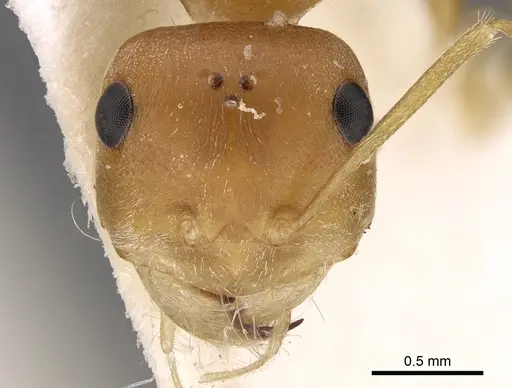
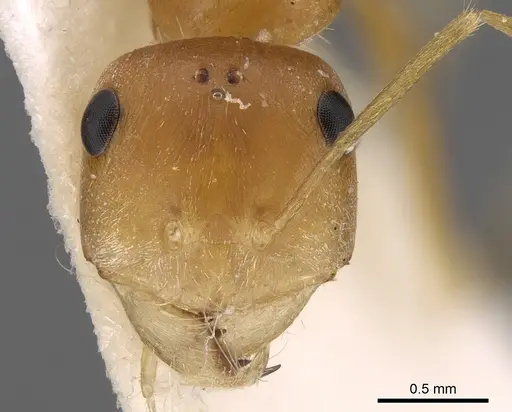
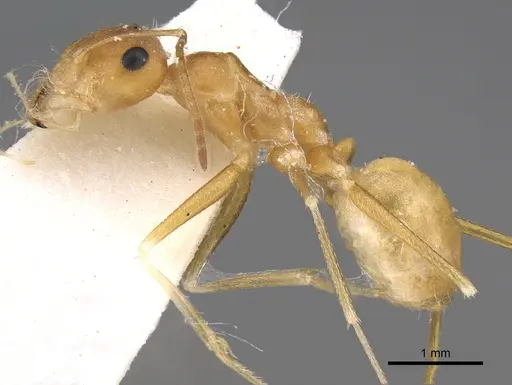
Workers of Cataglyphis fisheri measure 3.12-5.75mm, making them small to medium-sized ants [1]. They have a distinctly elongated head that is longer than broad, with straight posterior and lateral margins [1]. The scapes are relatively short, surpassing the head margin by less than one-quarter of their length when laid back [1]. The propodeum is distinctly low, sitting nearly at the same level as the petiolar node [1]. The petiole itself is an upright or slightly inclined scale with a narrowly rounded margin [1]. Body color is uniformly yellow with brown mandibular teeth [1]. The head has only a few hairs, with a single pair of erect hairs on the posterior margin, this distinguishes them from the similar C. pallida which has no hairs on the head margin [1].
Housing and Nest Setup
For this desert species, keep housing dry and warm. A Y-tong or plaster nest works well, both allow you to control humidity precisely. Unlike moisture-loving species, these ants prefer arid conditions. Use a small water tube for drinking access rather than a large moisture chamber. The outworld should be simple and easy to clean. Because they are moderate-sized workers (up to 5.75mm), standard barrier methods like fluon on test tube rims are usually effective for escape prevention. However, always check connections and lid fit since desert ants are active and may investigate gaps. A test tube setup works fine for founding colonies, use a small water reservoir that won't flood the cotton.
Feeding and Diet
While specific dietary studies do not exist for C. fisheri, Cataglyphis species are typically omnivorous, feeding on insects, honeydew, and nectar. In captivity, offer a varied diet including small insects (fruit flies, small crickets, mealworms) as protein sources and sugar water or honey as carbohydrates. Desert ants are often enthusiastic foragers, so place food in the outworld where you can observe their feeding behavior. Remove uneaten prey after 24-48 hours to prevent mold in the dry environment. Since they are from an extremely hot, dry habitat, they likely have high water needs, ensure constant access to fresh water.
Temperature and Seasonal Care
Cataglyphis fisheri comes from one of the hottest regions on Earth, the Arabian Peninsula deserts. These ants are highly thermophilic and require warm conditions. Aim for temperatures in the range of 26-32°C, with some variation allowed. A heating cable placed on one side of the nest creates a thermal gradient that lets the ants choose their preferred temperature. Avoid cold conditions, these ants are not cold-tolerant. Regarding winter care, most Cataglyphis species from temperate and subtropical regions do require a cool period, but specific diapause requirements for this species are unconfirmed. Given their origin in the UAE, Oman, and Saudi Arabia (regions with mild winters), a reduced temperature period at around 15-18°C for 2-3 months may be appropriate, but monitor colony activity to determine if they truly need a winter rest.
Behavior and Temperament
Cataglyphis ants are famous for their distinctive foraging behavior, workers race across hot sand at remarkable speeds, hunting prey and collecting nectar. They are typically diurnal, active during the warmest parts of the day when predator activity is lowest. In captivity, expect active, fast-moving workers that explore the outworld thoroughly. They may bite if provoked, though their small size means the bite is not medically significant to humans. Workers probably forage individually rather than in groups, characteristic of many Cataglyphis species. The genus is known for excellent navigation abilities, these desert ants can find their way back to the nest across featureless sand using visual cues and possibly solar orientation.
Frequently Asked Questions
How long does it take for Cataglyphis fisheri to produce first workers?
The egg-to-worker timeline is completely unconfirmed for this species, it has never been studied in captivity. No specific development data exists for C. fisheri.
What do Cataglyphis fisheri ants eat?
While not specifically studied, Cataglyphis species are omnivorous. Offer small insects (fruit flies, pinhead crickets, small mealworms) as protein and sugar water or honey as carbohydrates. They likely also collect honeydew in captivity, similar to their wild behavior near Acacia and Zygophyllum plants.
Are Cataglyphis fisheri ants good for beginners?
This species is not ideal for beginners. It was only described in 2015, and almost no biological data exists, there are no established care guidelines, no development timelines, and no confirmed husbandry protocols. Beginners should choose species with well-documented care requirements instead.
Do Cataglyphis fisheri ants need hibernation?
Diapause requirements are unconfirmed for this species. They come from the UAE, Oman, and Saudi Arabia, which have mild winters. Most Cataglyphis species do require a winter rest period, but the specific requirements for C. fisheri have not been studied. Consider providing a cool period (15-18°C) for 2-3 months and observe whether the colony naturally slows down.
What temperature should I keep Cataglyphis fisheri at?
Keep them warm, around 26-32°C is appropriate for this desert species based on genus patterns. Use a heating cable on part of the nest to create a thermal gradient. These ants are highly heat-tolerant and will be most active at warmer temperatures. Avoid cold conditions entirely.
How big do Cataglyphis fisheri colonies get?
Colony size is unknown, no published data exists on maximum colony size for this species. Most Cataglyphis colonies reach several hundred to a few thousand workers. Expect moderate colony growth over time, but specific projections are not possible without data.
Can I keep multiple Cataglyphis fisheri queens together?
Colony structure (monogyne vs polygyne) is unconfirmed for this species. Most Cataglyphis are single-queen colonies, but this has not been documented for C. fisheri specifically. Do not combine unrelated foundress queens, this has not been studied and may result in aggression.
When should I move Cataglyphis fisheri to a formicarium?
Keep them in a test tube setup for the founding stage. Once the colony reaches 20-30 workers and you see consistent activity, you can move them to a proper formicarium. For desert species, ensure the new setup maintains dry, warm conditions.
Why is my Cataglyphis fisheri colony not growing?
Without established care guidelines, troubleshooting is difficult. Check that temperatures are warm (26-32°C), humidity is low (dry conditions), and food is being consumed. This species may simply have slow growth, no baseline timeline exists. If workers are dying, review basic parameters and consider that this newly described species may have unknown specific requirements.
Report an Issue
The current care sheet is based fully on literature. See inconsistencies, or something that's incorrect? Please , it will be resolved after review from an admin. Contributing to the blogs tab also helps providing information, to make us be able to further improve the caresheets. Thank you for your support!
References

This caresheet is licensed under CC BY-SA 4.0 .
Community Blogs
CASENT0906454
View on AntWeb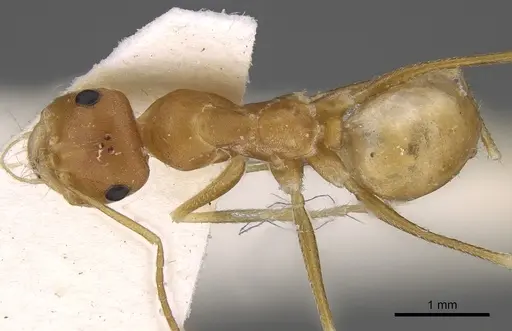
Literature
Loading distribution map...Loading products...