
Cataglyphis arenaria
- Sci. Name
- Cataglyphis arenaria
- Tribe
- Formicini
- Subfamily
- Formicinae
- Author
- Finzi, 1940
- Distribution
- Found in 5 countries
Introduction
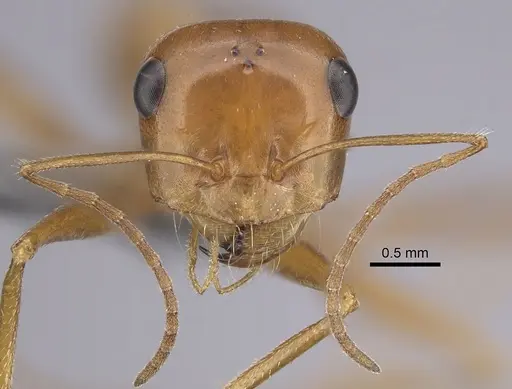
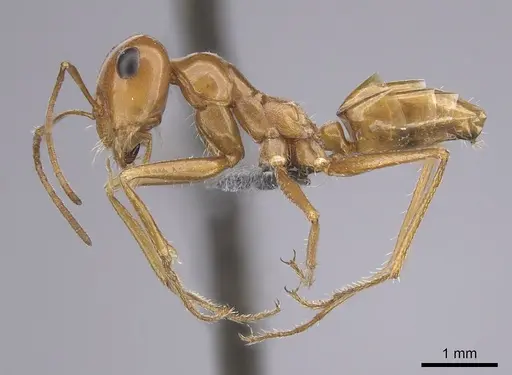
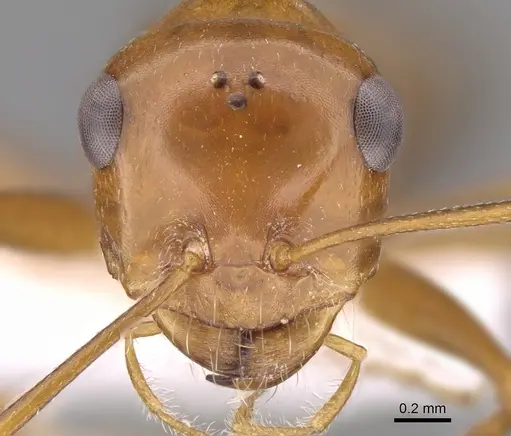
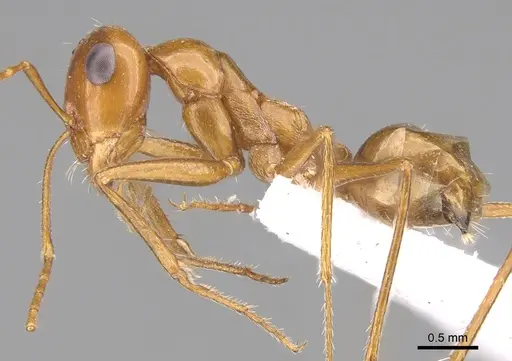
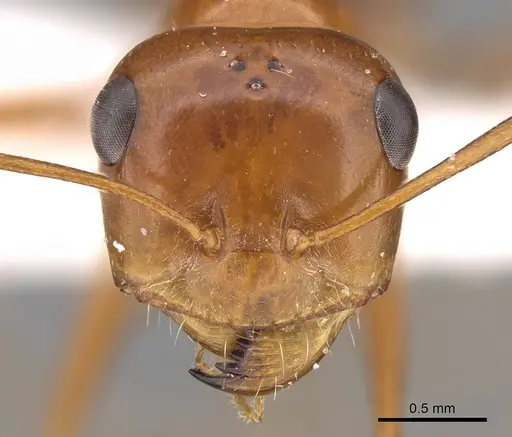
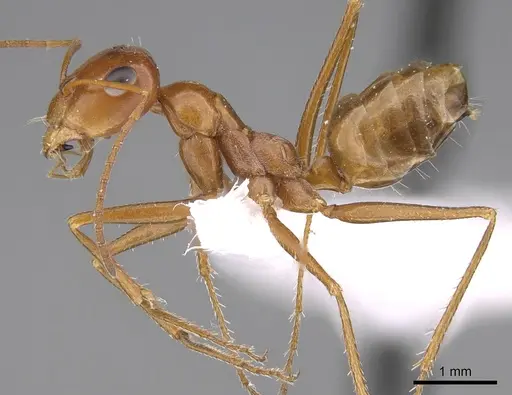
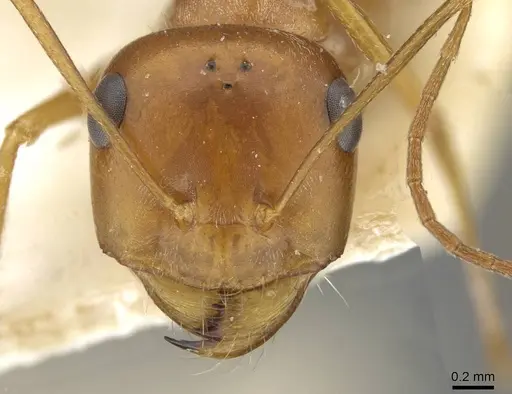
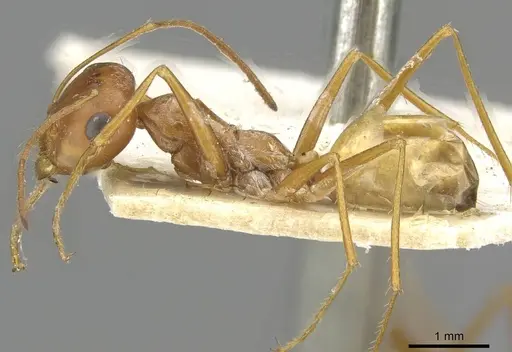
Cataglyphis arenaria is a medium-sized desert ant belonging to the Cataglyphis albicans species complex. Workers have a distinctive yellowish body - sometimes with a dark apex on the gaster - and are covered with a layer of silvery appressed pubescence on the mesosoma, posterior part of the head, and coxae . The propodeum is distinctly low in profile, and the petiole is a truncated node with a flat dorsal surface sloping forward . This Saharan species was originally described from Algeria and inhabits arid regions across North Africa and the Arabian Peninsula, from Mauritania to Jordan . They are fast-moving, diurnal foragers typical of the genus Cataglyphis, known for their characteristic running behavior as they search for prey and scavenge in hot desert conditions.
Quick Summary
- Difficulty: Medium
- Origin & Habitat: Saharan and Palearctic regions, originally described from Algeria, with confirmed distribution across North Africa (Algeria, Libya, Morocco, Tunisia) and the Arabian Peninsula (Jordan, Oman, Qatar, Saudi Arabia, United Arab Emirates) [4][3]. This is a true desert species that inhabits sandy soils in arid environments, including palm groves and sandy terrain in coastal regions [5].
- Colony Type: Colony structure is not well-documented in scientific literature. One documented nest in Tunisia was described as a small colony with few workers [5].
- Size & Growth:
- Queen: size data unavailable, no specific measurements for this species, inferred from genus patterns (~8-12mm for medium-sized Cataglyphis)
- Worker: size data unavailable, no specific measurements for this species. Figure 3 in Galkowski & Cagniant 2024 shows a worker at approximately 6-7mm based on the 1mm scale bar [5].
- Colony: Small, documented wild colonies have few workers [5]
- Growth: Moderate, based on typical Cataglyphis development patterns
- Development: Estimated 6-10 weeks at optimal temperature based on genus-level data for related Cataglyphis species (Development time is inferred from genus patterns, direct measurements for C. arenaria are not available. Cataglyphis species typically develop faster in warm conditions.)
- Antkeeping:
- Temperature: Keep warm, around 24-28°C. As a Saharan species, they thrive in elevated temperatures. Provide a thermal gradient so workers can regulate their body temperature by moving between warmer and cooler areas of the nest.
- Humidity: Low to moderate, desert species prefer dry conditions. Keep nest substrate relatively dry with only occasional light moistening. Avoid damp or humid conditions that could cause mold. Think sandy desert floor, not tropical rainforest.
- Diapause: Likely yes, Cataglyphis species from temperate and arid regions typically require a winter rest period. Provide a cool period around 10-15°C for 2-3 months during winter months. This aligns with their North African and Arabian distribution where winters are mild but noticeable.
- Nesting: Natural nesting occurs in sandy soil, in the wild, they nest directly in the ground in sandy or loose substrate. For captivity, a naturalistic setup with sandy substrate or a Y-tong/plaster nest with dry to moderately moist conditions works well. Avoid overly humid or compact substrates [5].
- Behavior: Cataglyphis arenaria are fast-moving, diurnal foragers characteristic of desert ant species. They are active during the hottest parts of the day, running quickly across substrate to hunt prey and scavenge. Workers are moderately aggressive when defending the colony but not particularly territorial. They have good escape abilities, use standard barrier methods like Fluon on test tube rims. Their small size means escape prevention should be taken seriously. They are visual hunters and use their excellent vision to locate prey. As members of the Formicinae subfamily, they lack a functional sting and instead spray formic acid as a defense mechanism.
- Common Issues: small colony size, documented colonies are small with few workers, so growth may be slower than expected, dry conditions required, overwatering or overly humid nests can cause mold and kill colonies, temperature sensitivity, being a desert species, they need warmth but may struggle if temperatures fluctuate wildly, escape risk, their speed and activity level means they will exploit any gaps in enclosure, limited availability, this species is rarely available in the antkeeping hobby, making queens difficult to obtain
Nest Preferences and Housing
In the wild, Cataglyphis arenaria nests directly in sandy soil, as evidenced by a nest found in the sandy soil of a palm grove in Djerba, Tunisia [5]. For captive care, replicate these conditions with a naturalistic setup using sandy substrate, or use a Y-tong or plaster nest designed for desert species. The key is maintaining dry to moderately moist conditions, avoid the damp environments preferred by tropical species. A test tube setup can work for founding colonies, but ensure the cotton is not too wet. Provide a water tube but avoid creating constant humidity. The nest should have areas where the ants can escape direct heat if needed, but overall conditions should be warm and dry.
Feeding and Diet
Cataglyphis ants are generalist predators and scavengers. In captivity, offer a varied diet including small live insects (fruit flies, small crickets, mealworms) as protein sources. They will also accept sugar water or honey for energy. As a desert species, they may have higher water needs than some other ants, ensure a constant water source is available. Feed protein prey 2-3 times per week, and keep sugar water available at all times. Remove uneaten prey after 24 hours to prevent mold. Their fast-moving foraging style means they will quickly locate and consume food items.
Temperature and Seasonal Care
Being a Saharan species, Cataglyphis arenaria thrives in warm conditions. Maintain nest temperatures around 24-28°C during the active season. A heating cable or mat on one side of the nest can create a thermal gradient, allowing workers to regulate their body temperature by moving between warmer and cooler areas. During winter, provide a diapause period of 2-3 months at cooler temperatures around 10-15°C. This mimics the mild winters they experience in their North African and Arabian range. Reduce feeding during diapause and allow the colony to slow down naturally. Do not cool suddenly, reduce temperature gradually over 1-2 weeks.
Behavior and Foraging
Cataglyphis arenaria exhibits the characteristic fast-running foraging behavior typical of the genus. Workers are diurnal and often active during the hottest parts of the day, which is unusual among ants and reflects their adaptation to desert environments. They use visual cues to navigate and locate prey. Workers are moderately defensive and will readily attack threats to the colony, but they are not excessively aggressive toward humans. Their excellent vision and speed make them effective predators of small insects. In captivity, ensure enclosures have secure lids as their activity level makes them prone to escaping through small gaps. As Formicinae ants, they lack a functional sting and instead use formic acid spray as their primary defense.
Colony Development
Colony development in Cataglyphis arenaria follows typical patterns for the genus. The first workers (nanitics) will be smaller than mature workers but will quickly begin foraging to support colony growth. Documented wild colonies are small with few workers [5], suggesting this species does not reach massive colony sizes. Expect moderate growth rates with patience being key, as small colonies develop more slowly than established ones.
Frequently Asked Questions
How long does it take for Cataglyphis arenaria to produce first workers?
Expect first workers (nanitics) to emerge around 6-10 weeks after the queen lays eggs, based on typical Cataglyphis development patterns. This timeline assumes optimal temperatures around 24-28°C. Cooler temperatures will slow development significantly.
Can I keep Cataglyphis arenaria in a test tube setup?
Yes, test tubes work well for founding colonies. Use a standard test tube with a water reservoir sealed with cotton, but keep the cotton only slightly moist, not wet. This species prefers dry conditions, so avoid overfilling the water chamber. Transfer to a larger nest once the colony reaches 20-30 workers.
What temperature range is best for Cataglyphis arenaria?
Keep them warm at 24-28°C during the active season. They can tolerate brief temperature spikes higher than this but prefer consistent warmth. Provide a thermal gradient so they can regulate their body temperature.
Does Cataglyphis arenaria need hibernation?
Yes, provide a winter rest period of 2-3 months at 10-15°C during winter. This mimics their natural range in North Africa and Arabia where winters are mild but noticeable. Reduce feeding during this period and allow the colony to slow down naturally.
Are Cataglyphis arenaria good for beginners?
This species is rated as medium difficulty. While not the easiest species for beginners, their care requirements are straightforward once understood. The main challenges are maintaining proper warm, dry conditions and being patient with their relatively slow colony growth.
How big do Cataglyphis arenaria colonies get?
Based on available data, colonies remain relatively small, documented wild colonies had few workers. This species does not reach the massive colony sizes seen in some other Cataglyphis species.
What do Cataglyphis arenaria eat?
They are generalist predators and scavengers. Feed small live insects (fruit flies, small crickets, mealworms) as protein 2-3 times per week. Keep sugar water or honey available constantly for energy. They have good appetites and will actively hunt prey.
Can I keep multiple queens together?
Not recommended. Like most Cataglyphis species, C. arenaria likely has single-queen colonies. Combining unrelated queens has not been documented and would likely result in fighting. Start with one queen per colony.
Why is my Cataglyphis arenaria colony dying?
Common causes include: too much humidity (desert species need dry conditions), temperatures too low or unstable, mold from overwatering, or insufficient protein in their diet. Check that the nest substrate is not overly damp and that temperatures are consistently warm.
Report an Issue
The current care sheet is based fully on literature. See inconsistencies, or something that's incorrect? Please , it will be resolved after review from an admin. Contributing to the blogs tab also helps providing information, to make us be able to further improve the caresheets. Thank you for your support!
References

This caresheet is licensed under CC BY-SA 4.0 .
Community Blogs
CASENT0263825
View on AntWeb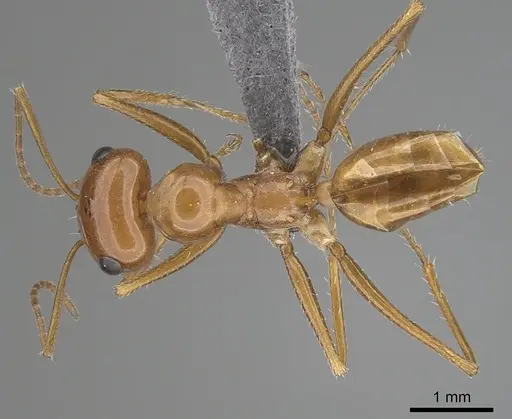
CASENT0906452
View on AntWeb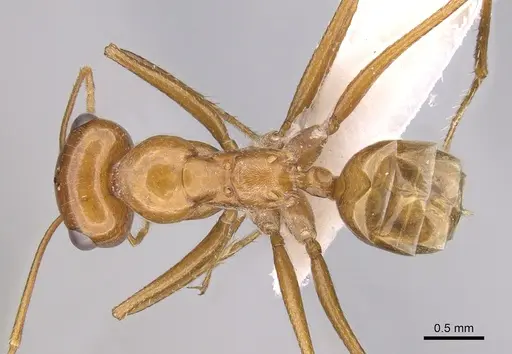
CASENT0906455
View on AntWeb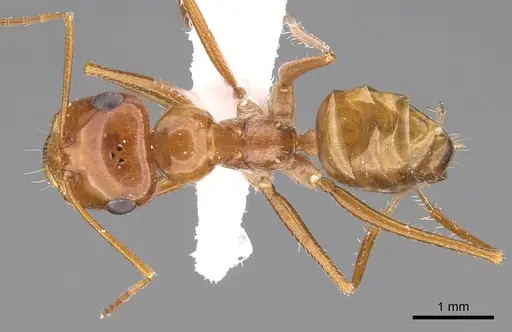
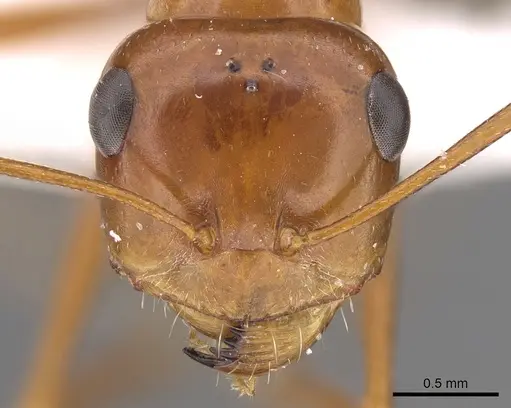
CASENT0911101
View on AntWeb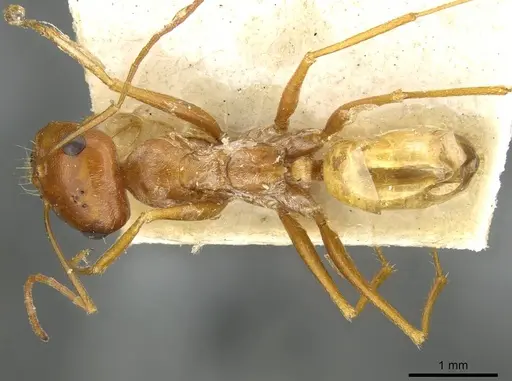
Literature
Loading distribution map...Loading products...