
Carebara rothneyi
- Sci. Name
- Carebara rothneyi
- Tribe
- Crematogastrini
- Subfamily
- Myrmicinae
- Author
- Forel, 1902
- Distribution
- Found in 0 countries
Introduction
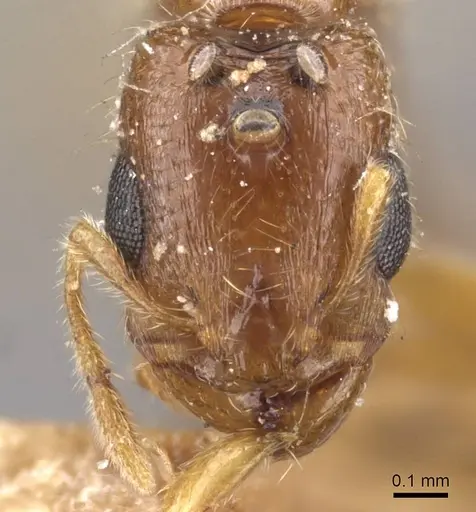
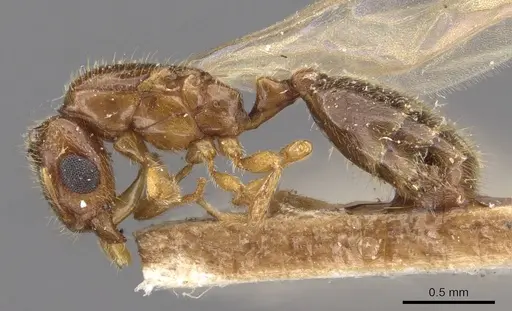
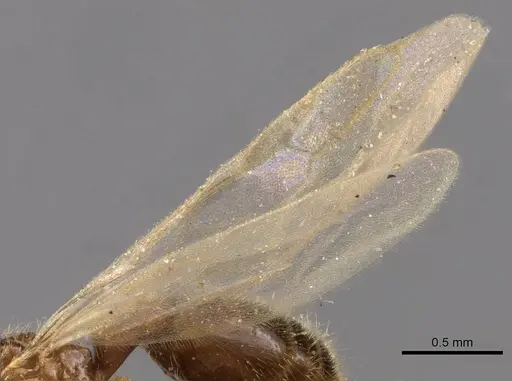
Carebara rothneyi is a tiny yellow ant species endemic to India. Queens measure under 5mm in length and have distinctive 9-segmented antennae, while males have 13-segmented antennae . This species was originally described in 1902 from specimens collected in Barrackpore, West Bengal, and remains one of the rarest Indian ant species with only a handful of records from Punjab, Sikkim, and West Bengal . The major worker caste has never been described, making this one of the more poorly known Carebara species. These ants were observed during a nuptial flight, with queens and males caught together in flight [AntWiki]. The genus Carebara contains some of the world's smallest ants, often called pygmy ants due to their diminutive size.
Quick Summary
- Difficulty: Unknown, too little data for reliable assessment
- Origin & Habitat: India (Punjab, Sikkim, West Bengal), likely forest floor or soil nesting based on genus patterns [3]
- Colony Type: Unknown, colony structure has not been documented. Only queens and males have been collected, workers remain undescribed [2].
- Size & Growth:
- Queen: under 5mm [1]
- Worker: Unknown, major worker caste not described [2]
- Colony: Unknown, no colony data exists
- Growth: Unknown
- Development: Unknown, no development data exists for this species (Development timeline cannot be estimated with confidence due to complete lack of colony observation data)
- Antkeeping:
- Temperature: Unknown, no thermal data exists. Based on Indian distribution, likely tolerates 20-28°C. Start at room temperature (22-25°C) and observe colony activity.
- Humidity: Unknown, no humidity data exists. Most Carebara species prefer moderate humidity. Keep nest substrate lightly moist but not waterlogged.
- Diapause: Unknown, no overwintering data exists for this species.
- Nesting: No specific nesting data exists. Based on genus Carebara patterns, they likely nest in soil, under stones, or in rotting wood. A test tube setup would be an appropriate starting point.
- Behavior: Behavior has not been documented in scientific literature. Based on genus Carebara patterns, these are likely docile, slow-moving ants that forage for small prey and honeydew. Their tiny size makes escape prevention critical, they can squeeze through standard mesh. Exercise extreme caution with containment.
- Common Issues: this species is extremely rare in the hobby and may not be available for keeping, no established care guidelines exist, keepers would be pioneering husbandry, worker caste is unknown, making colony identification difficult, escape prevention is critical due to tiny size, standard mesh may not contain them, virtually no information on diet acceptance in captivity
Species Overview and Identification
Carebara rothneyi is one of the rarest Indian ant species, known only from a handful of specimens collected over a century ago. The queen measures under 5mm and has distinctive yellow coloration with 9-segmented antennae [1]. Males have 13-segmented antennae [2]. The postpetiole (the segment behind the waist) is not broader than it is long, which helps distinguish this species from similar Carebara [1]. The major worker caste has never been described, which is unusual, most ant species have well-documented worker morphologies. This species was originally described as Carebara rothneyi before being reclassified to Carebara in 2004 [4]. Only queen and male castes are known from specimens collected during nuptial flights in Barrackpore, West Bengal [4].
Distribution and Habitat
This species is endemic to India, meaning it is found nowhere else in the world [3]. It has been recorded from only three regions: Punjab, Sikkim, and West Bengal [3]. The type locality is Barrackpore in West Bengal, where the original specimens were collected in 1902-1903 [4]. The specific habitat preferences are unknown, but the genus Carebara typically includes species that nest in soil, under stones, or in rotting wood in forested areas. Given the Indian distribution across varying latitudes from Punjab to West Bengal to Sikkim, this species may tolerate a range of conditions but likely prefers warm, moderately humid environments.
Current State of Knowledge
Carebara rothneyi represents a significant knowledge gap in ant biology. The species was described in 1902 and has been rarely encountered since, it was noted as rare as early as 1903 [5]. No scientific study has ever documented a colony in the wild, observed founding behavior, or described the worker caste. This means there is no confirmed information about: colony size, queen number (monogyne vs polygyne), founding type (claustral vs semi-claustral), temperature preferences, humidity needs, diet in captivity, or development timeline. Any antkeeper attempting to keep this species would essentially be pioneering husbandry methods with no established guidelines to follow. This is not a species for beginners, it requires someone willing to experiment and document their findings carefully.
Defense Mechanism
Carebara rothneyi belongs to the subfamily Myrmicinae and tribe Crematogastrini. Members of this tribe possess a modified, flattened stinger used to wipe or smear venom onto enemies rather than piercing flesh. This is a common defense strategy among Crematogastrini ants.
Recommended Approach for Keepers
If you obtain Carebara rothneyi, treat it as an experimental species. Start with standard test tube setups keeping the queen in a small, humid chamber. Maintain room temperature (22-25°C) as a baseline and observe colony behavior. For feeding, offer tiny prey items like springtails, fruit flies, or other small insects, along with a sugar source like diluted honey or sugar water. Document everything, your observations may become the first published information about this species captive care. Given the complete lack of data, do not expect rapid growth or established protocols. The tiny size of these ants means escape prevention must be excellent, use fine mesh and ensure all connections are sealed. This species is best suited for advanced antkeepers who enjoy the challenge of working with poorly documented species.
Frequently Asked Questions
How do I care for Carebara rothneyi ants?
No established care guidelines exist for this species. You would need to experiment with standard Myrmicinae care, keep queens in test tubes with moist cotton, maintain room temperature (22-25°C), and offer tiny prey like springtails. Document your observations carefully as this species has never been kept in captivity before.
What do Carebara rothneyi ants eat?
Diet is completely unconfirmed for this species. Based on genus patterns, they likely accept small live prey (springtails, fruit flies) and sugar sources (honey water, sugar water). Start with these basics and observe what the colony accepts.
How big do Carebara rothneyi colonies get?
Unknown, no colony size data exists for this species. The queen is under 5mm, suggesting a small colony like other Carebara species.
Do Carebara rothneyi ants sting?
Unknown, stinging behavior has not been documented. Given their tiny size (under 5mm), any sting would likely be negligible to humans. Most Carebara species are docile.
Are Carebara rothneyi good for beginners?
No, this species is not recommended for beginners. It has never been kept in captivity, no care guidelines exist, and the worker caste is not even described. This is an advanced species for experienced keepers who want to pioneer husbandry methods.
Where does Carebara rothneyi come from?
This species is endemic to India, found only in Punjab, Sikkim, and West Bengal [3]. The type locality is Barrackpore, West Bengal.
How long does it take for Carebara rothneyi to develop from egg to worker?
Unknown, no development data exists for this species. Without any colony observation, we cannot estimate egg-to-worker timeline.
Do Carebara rothneyi need hibernation?
Unknown, no overwintering data exists for this species.
Can I keep multiple Carebara rothneyi queens together?
Unknown, colony structure has not been documented. We do not know if this species is monogyne (single queen) or polygyne (multiple queens). Combining unrelated queens is not recommended without data.
Why is Carebara rothneyi so rare?
This species has only been collected a handful of times since 1902 and was noted as rare as early as 1903 [5]. It may be genuinely uncommon in the wild, difficult to collect due to its tiny size, or has very localized distribution. The major worker caste has never been described, making field identification extremely difficult.
Report an Issue
The current care sheet is based fully on literature. See inconsistencies, or something that's incorrect? Please , it will be resolved after review from an admin. Contributing to the blogs tab also helps providing information, to make us be able to further improve the caresheets. Thank you for your support!
References

This caresheet is licensed under CC BY-SA 4.0 .
Community Blogs
CASENT0908914
View on AntWeb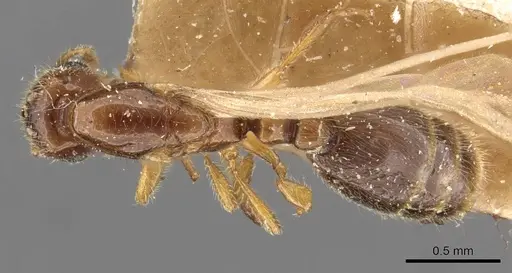
Literature
Loading distribution map...Loading products...