
Carebara reticapita
- Sci. Name
- Carebara reticapita
- Tribe
- Crematogastrini
- Subfamily
- Myrmicinae
- Author
- Xu, 2003
- Distribution
- Found in 1 countries
Introduction
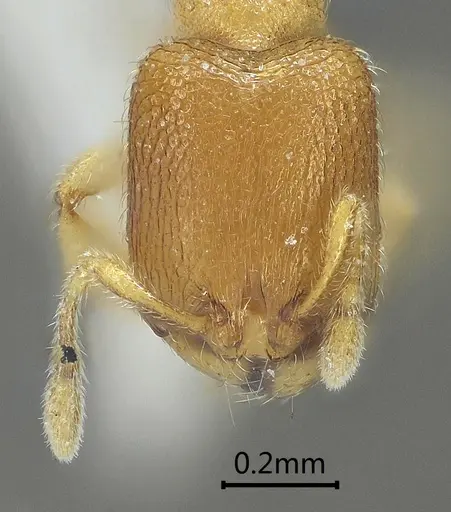
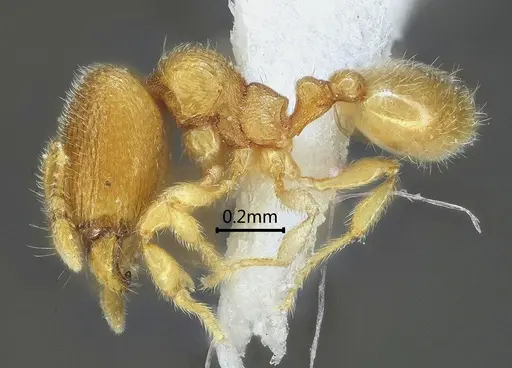
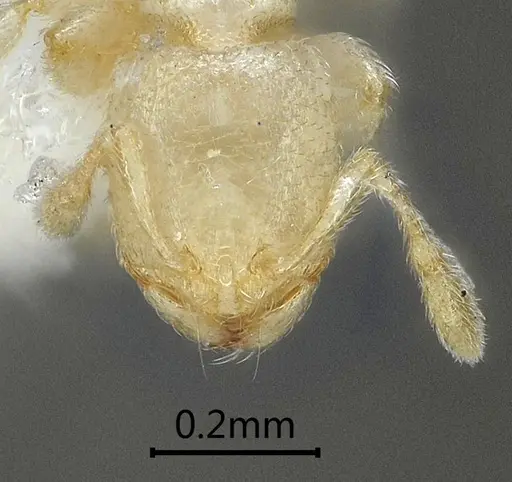
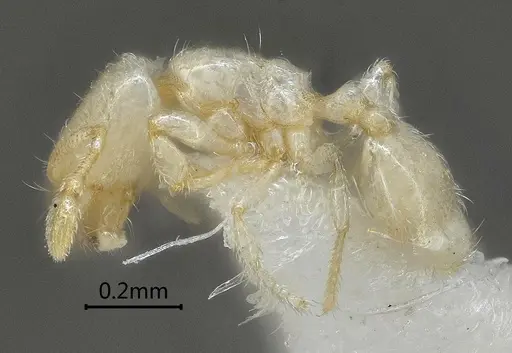
Carebara reticapita is a tiny yellow ant species native to southern China, specifically found in Yunnan Province at elevations between 1280-1600 meters. Workers are exceptionally small at just 1.1-2.0mm total length. The species has distinctive fine reticulations on the head and a pair of acute teeth on the propodeum. They have 9-segmented antennae with a 2-segmented club and very simple eyes with only 1-3 facets, suggesting they rely more on chemical cues than vision. This species was originally described as Oligomyrmex reticapitus before being transferred to Carebara in 2012 [AntWiki]. What makes this species unusual is its extremely small worker size and simple morphology. The minor workers measure just 1.1-1.2mm while major workers (soldiers) reach 1.5-2.0mm. Their native habitat in warm deciduous broad leaf forest at high elevation suggests they prefer mild conditions with moderate humidity.
Quick Summary
- Difficulty: Medium
- Origin & Habitat: Yunnan Province, China, warm deciduous broad leaf forest at 1280-1600m elevation [2].
- Colony Type: Unknown colony structure, likely small colonies based on related Carebara species patterns.
- Size & Growth:
- Queen: Size data unavailable, queen measurements have not been documented in primary literature.
- Worker: Minor workers: 1.1-1.2mm, Major workers (soldiers): 1.5-2.0mm total length [2].
- Colony: Likely small, under 500 workers based on typical Carebara patterns.
- Growth: Unknown, likely moderate based on small worker size.
- Development: Unconfirmed, no specific development data exists for this species. (No direct development data exists for this species.)
- Antkeeping:
- Temperature: Keep around 22-26°C, they come from warm subtropical highland forests in Yunnan where temperatures are mild year-round.
- Humidity: Maintain moderate to high humidity, forest floor ants need damp substrate. Keep nest substrate moist but not waterlogged.
- Diapause: Unknown, no specific data on overwintering requirements. Yunnan experiences cool winters at higher elevations.
- Nesting: Based on habitat data (forest floor in warm deciduous broad leaf forest), they likely nest in soil or under stones. In captivity, a small test tube setup or Y-tong nest with tight chambers scaled to their tiny size works well.
- Behavior: These are tiny, docile ants that likely form small colonies. Their very small size and simple eyes (1-3 facets) suggest they are not aggressive and rely on chemical communication. Escape prevention is critical due to their minute size, they can slip through standard mesh. They are likely omnivorous, feeding on small insects, honeydew, and organic matter.
- Common Issues: escape prevention is critical, their tiny 1.1mm size means they can slip through standard barriers, no specific development data makes timing predictions uncertain, wild-caught colonies may be difficult to locate due to small size and potentially cryptic nesting, very small colony sizes mean losses have bigger impact, humidity balance is tricky, too dry causes dehydration, too wet causes mold
Housing and Nest Setup
Carebara reticapita requires careful housing due to their extremely small size. Test tube setups work well for founding colonies, use a small test tube with a cotton barrier and water reservoir. The tube should have a tight fit to prevent escapes. For established colonies, a Y-tong nest with very small chambers is ideal, standard formicarium chambers are too large for these tiny ants. If using a naturalistic setup, provide a thin layer of substrate and keep it consistently moist. Avoid tall chambers or deep substrate layers since these ants stay close to the surface in nature. Escape prevention must be excellent, apply fluon or use fine mesh as standard barriers will not contain them. [2]
Feeding and Diet
Like other Carebara species, these ants are likely omnivorous with a preference for small protein sources. Offer small live prey such as springtails, fruit flies, or tiny crickets. They will also accept sugar sources like honey water or sugar water, though their small size means even a droplet of sugar water can drown them, offer on a tiny piece of cotton or sponge instead. Based on typical Myrmicinae diet patterns, they likely scavenge and hunt small arthropods in nature. Feed small prey items several times per week for established colonies, and keep a constant sugar water supply. Remove uneaten prey within 24 hours to prevent mold.
Temperature and Humidity
Maintain temperatures around 22-26°C, which matches their native Yunnan highland habitat. They come from warm deciduous broad leaf forest at 1280-1600m elevation where conditions are mild. Use a heating cable on one side of the nest to create a gentle gradient if room temperature is below 22°C. Place the heating on top of the nest, not underneath, to prevent excessive drying. For humidity, keep the nest substrate consistently moist, these are forest floor ants that need damp conditions. Mist the outworld occasionally and check that the substrate feels damp but not soggy. A small water dish in the outworld also helps maintain humidity. Ensure adequate ventilation to prevent stagnant air and mold growth. [2]
Colony Development and Growth
Little is known about the specific development timeline for Carebara reticapita. Based on the worker size and related Myrmicinae patterns, expect a relatively quick development compared to larger ants. The first workers will likely be smaller than normal workers. Colony growth is likely slow initially, small colonies build up gradually. The colony structure is unknown, but based on typical Carebara patterns, single-queen colonies are most likely. Be patient with founding colonies, it may take several months before the first workers appear, and several years to reach moderate colony sizes. Major workers develop in larger colonies and serve as defenders or food processors.
Handling and Observation
These ants are extremely small and docile, making them challenging to observe in detail but relatively safe to handle. Their tiny size means you will need good lighting and magnification to see them clearly. They are not aggressive and unlikely to sting, their small size makes stinging impractical. When observing, use a magnifying glass or macro lens for photography. Do not handle them unnecessarily as they can easily be crushed. Transfer colonies using gentle tapping to encourage workers into a new container. Due to their small size and potential escape ability, always work over a white tray or surface to spot any escapes. [2]
Frequently Asked Questions
How long does it take for Carebara reticapita to produce first workers?
The exact timeline is unconfirmed. Founding colonies may take several months to establish, so patience is essential.
What do Carebara reticapita ants eat?
They likely accept small live prey (springtails, fruit flies), and sugar sources (honey water, sugar water). Offer protein several times weekly and keep sugar water available constantly. Remove uneaten food within 24 hours.
Are Carebara reticapita ants dangerous?
No, these are tiny, docile ants that pose no danger to humans. Their small size makes stinging impractical, and they show no aggressive behavior toward keepers.
How do I prevent Carebara reticapita from escaping?
Escape prevention is critical due to their minute size. Use fluon on all container edges, fine mesh, and ensure all lids fit tightly. Check connections between nest and outworld regularly.
What temperature do Carebara reticapita ants need?
Keep them at 22-26°C. They come from warm subtropical highland forests in Yunnan, China. A gentle temperature gradient allows them to regulate their own conditions.
Do Carebara reticapita ants need hibernation?
Diapause requirements are unknown. Their native habitat experiences cool winters at 1600m elevation, so a brief cool period may be beneficial but is not required.
How big do Carebara reticapita colonies get?
Colony size is unconfirmed but likely small, under 500 workers based on typical Carebara patterns and their tiny worker size.
Can I keep multiple Carebara reticapita queens together?
Colony structure is unconfirmed. Combining unrelated queens is not recommended since this has not been documented and could result in fighting.
What humidity level do Carebara reticapita ants need?
Keep the nest substrate consistently moist but not waterlogged. These forest-floor ants need damp conditions, think damp forest floor, not wet swamp. Provide some drier areas for escape.
Are Carebara reticapita good for beginners?
This species is rated Medium difficulty. Their tiny size makes them challenging for beginners, escape prevention and humidity control require attention. Experienced antkeepers will have more success.
Report an Issue
The current care sheet is based fully on literature. See inconsistencies, or something that's incorrect? Please , it will be resolved after review from an admin. Contributing to the blogs tab also helps providing information, to make us be able to further improve the caresheets. Thank you for your support!
References

This caresheet is licensed under CC BY-SA 4.0 .
Community Blogs
ANTWEB1060562
View on AntWeb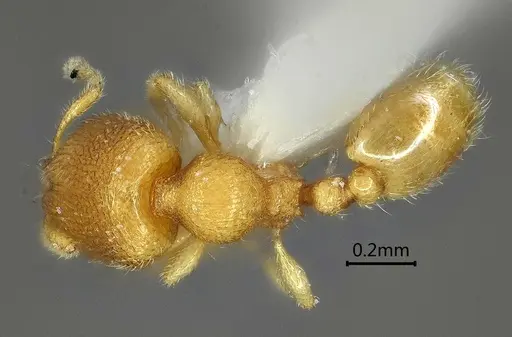
ANTWEB1060563
View on AntWeb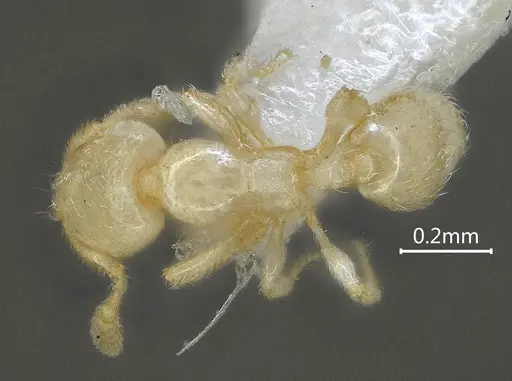
Literature
Loading distribution map...Loading products...