
Carebara osborni
- Sci. Name
- Carebara osborni
- Tribe
- Crematogastrini
- Subfamily
- Myrmicinae
- Author
- Wheeler, 1922
- Distribution
- Found in 1 countries
Introduction
Carebara osborni is a tiny myrmicine ant species endemic to the Democratic Republic of Congo, specifically recorded from the Niangara region in Haut-Uelé province . Workers are very small ants, with queens significantly larger - showing the pronounced size dimorphism typical of the genus. The species was described by W.M. Wheeler in 1922 from specimens collected during the American Museum Congo Expedition . As a poorly documented endemic species, most biological details remain unknown.
Quick Summary
- Difficulty: Unknown, insufficient data for reliable difficulty assessment
- Origin & Habitat: Endemic to the Democratic Republic of Congo, specifically the Niangara region in Haut-Uelé province. The natural habitat consists of tropical forest environments in central Africa [1][2].
- Colony Type: Colony structure is unconfirmed. No data exists on whether colonies have single or multiple queens, or if ergatoid replacement reproductives occur.
- Size & Growth:
- Queen: Size data unavailable, queens are significantly larger than workers based on original description [1]
- Worker: Size data unavailable, workers are very small ants typical of the genus [1]
- Colony: Unknown, no colony size data available
- Growth: Unknown, no development data available
- Development: Unknown, no development data exists for this species. (No specific development data exists for this species.)
- Antkeeping:
- Temperature: Keep at tropical room temperatures, roughly 24-28°C. This range reflects their natural habitat in central Africa.
- Humidity: Moderate to high humidity, 60-80%. Their native forest habitat suggests they prefer damp conditions.
- Diapause: Unknown, no data on overwintering requirements. As a tropical species from central Africa, they likely do not require hibernation.
- Nesting: Natural nesting is unconfirmed. Most Carebara species nest in soil or under stones in forest floor microhabitats. For captivity, a small test tube setup or mini Y-tong nest works well given their tiny size.
- Behavior: Behavior is poorly documented. Carebara species are generally non-aggressive foragers that scavenge and tend aphids for honeydew. Their tiny size makes them docile. Escape prevention is critical, their small size means they can squeeze through standard gaps easily. This species has a smear-type sting mechanism typical of Myrmicinae, using a modified stinger to apply venom rather than pierce flesh.
- Common Issues: very small size makes escape likely without fine mesh barriers, no species-specific care data exists, keepers must rely on genus-level estimates, tropical humidity requirements mean dry conditions can quickly stress colonies, slow growth potential means colonies may take months to establish, wild-caught colonies may carry parasites or diseases not well-documented
Species Overview and Distribution
Carebara osborni is one of the more poorly documented Carebara species, known only from its original description by W.M. Wheeler in 1922. The type locality is Niangara in what was then the Belgian Congo, now the Democratic Republic of Congo [1]. More recent surveys confirm its presence in Haut-Uelé province, making it an endemic species to this region of central Africa [2]. The original collection included workers, a queen, and males, providing the morphological basis for the species description [1]. Despite being described nearly a century ago, no ecological or behavioral studies have been published on this species.
Size and Morphology
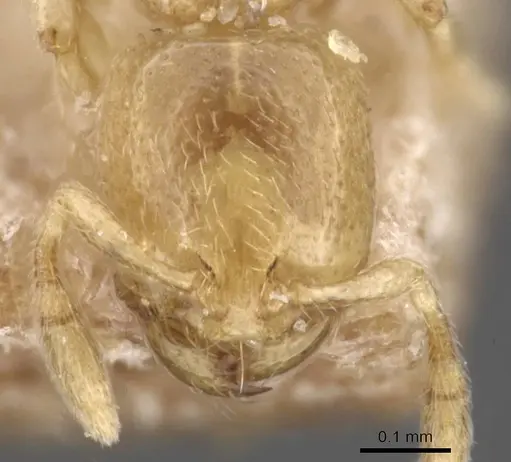
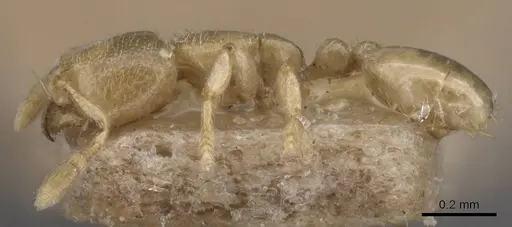
This is a very small ant species. Workers are significantly smaller than queens, showing the pronounced size dimorphism typical of the genus. The original description by Wheeler included figures of the worker, queen, and male castes [1]. Carebara workers are characterized by their small size, relatively large heads, and typical myrmicine body proportions. The species name 'osborni' honors someone from the original expedition.
Housing and Nesting
Given their very small size, Carebara osborni requires carefully scaled housing. A small test tube setup works well for founding colonies, use a narrow diameter tube with a water reservoir that maintains humidity without flooding. For established colonies, a mini Y-tong nest with small chambers or a small naturalistic setup with fine substrate works best. The nest material should remain consistently moist but never waterlogged. Escape prevention is critical, use fine mesh barriers and ensure all connections are tight.
Feeding and Diet
Diet is unconfirmed for this specific species, but Carebara ants are generally omnivorous scavengers. They likely forage for small insects, honeydew from aphids, and nectar. In captivity, offer small protein sources like fruit flies, pinhead crickets, or other tiny arthropods. Sugar water or honey can be offered occasionally. Feed small amounts every 2-3 days and remove uneaten food promptly to prevent mold.
Temperature and Humidity Requirements
As a tropical species from central Africa, Carebara osborni requires warm, humid conditions. Maintain temperatures between 24-28°C, with a slight gradient allowing workers to self-regulate. Humidity should be kept at 60-80%, mimicking the damp forest floor conditions of their native habitat. Monitor substrate moisture regularly, it should feel damp to the touch but not have standing water.
Colony Development and Growth
No specific development data exists for this species. Based on typical Carebara patterns, founding queens likely seal themselves in a small chamber and raise the first brood alone. The first workers will be smaller than normal workers. Colony growth is expected to be slow initially, as the queen can only lay a few eggs at a time while tending the first brood. Patience is essential, as small tropical species can take many months to establish.
Frequently Asked Questions
How long does it take for Carebara osborni to produce first workers?
The egg-to-worker timeline is unknown for this species. No specific development data exists. Expect several weeks at tropical temperatures, but this is a rough estimate.
What do Carebara osborni ants eat?
Diet is unconfirmed but likely follows typical Carebara patterns. They probably accept small live prey, small insects, and may scavenge. Offer protein sources 2-3 times weekly and sugar water occasionally. Remove uneaten food promptly.
Do Carebara osborni ants sting?
This species has a smear-type sting mechanism typical of Myrmicinae. The stinger is modified to wipe or smear venom onto enemies rather than pierce flesh. Given their very small size, any sting would be minimal.
Can I keep multiple Carebara osborni queens together?
Colony structure is unconfirmed. No data exists on whether multiple queens can establish together. Combining unrelated foundress queens is not recommended without evidence they can coexist peacefully.
What size colony does Carebara osborni reach?
Maximum colony size is unknown. Based on small worker size and typical Carebara patterns, colonies likely reach a few hundred workers at most.
Do Carebara osborni need hibernation or diapause?
As a tropical species from central Africa, they likely do not require hibernation. No data exists on diapause requirements. Keep them warm year-round.
How do I prevent Carebara osborni from escaping?
Escape prevention is critical due to their tiny size. Use fine mesh, tight-fitting lids, and barrier tape on all edges. Check connections regularly as they can squeeze through the smallest gaps.
Is Carebara osborni suitable for beginners?
Difficulty level cannot be reliably assessed due to limited species-specific data. Their tiny size and specific humidity requirements may make them challenging. Beginners may want to start with better-documented species.
What nest type is best for Carebara osborni?
A small test tube setup works well for founding colonies. For established colonies, a mini Y-tong nest with small chambers works best. Provide tight, small chambers scaled to their tiny size.
Where is Carebara osborni found in the wild?
This species is endemic to the Democratic Republic of Congo, specifically the Niangara region in Haut-Uelé province. It was originally described from specimens collected in the early 20th century and remains a poorly known endemic ant species [1][2].
Report an Issue
The current care sheet is based fully on literature. See inconsistencies, or something that's incorrect? Please , it will be resolved after review from an admin. Contributing to the blogs tab also helps providing information, to make us be able to further improve the caresheets. Thank you for your support!
References

This caresheet is licensed under CC BY-SA 4.0 .
Community Blogs
CASENT0913484
View on AntWeb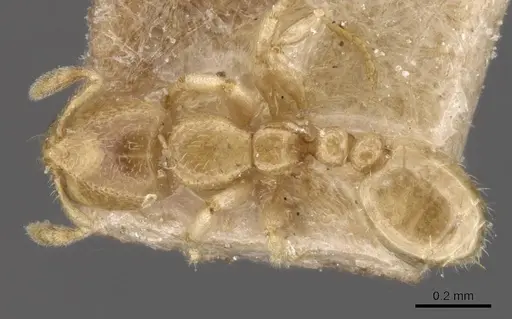
Literature
Loading distribution map...Loading products...