
Carebara nuda
- Sci. Name
- Carebara nuda
- Tribe
- Crematogastrini
- Subfamily
- Myrmicinae
- Author
- Fernández, 2004
- Distribution
- Found in 1 countries
Introduction
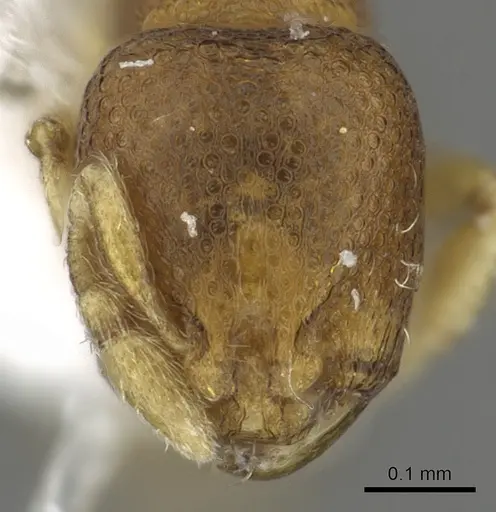
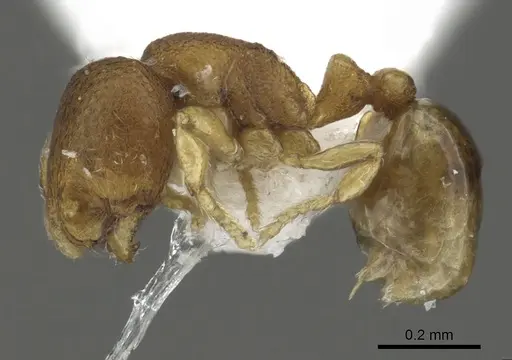
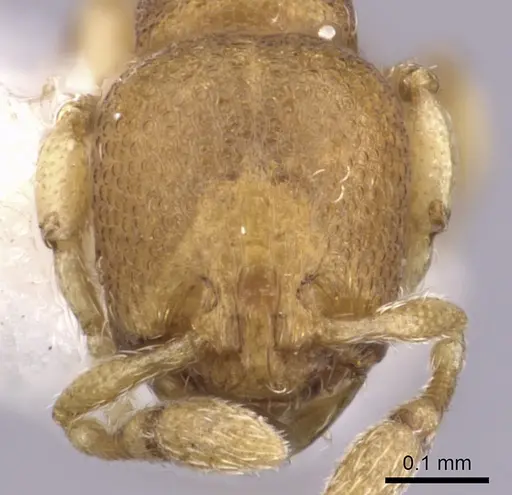
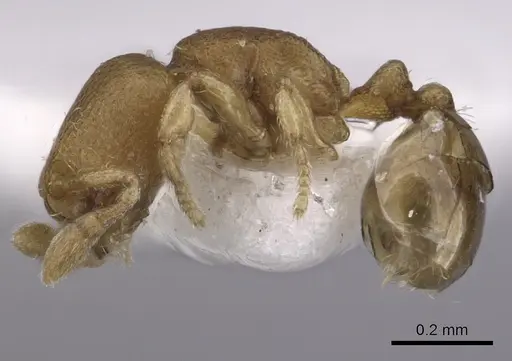
Carebara nuda is an extremely tiny ant from southern Brazil (Santa Catarina state). Workers measure just 1.25mm in total length, making them one of the smallest ants in the region . They belong to the *Carebara escherichi* species complex and are unique among American *Carebara* for having absolutely no long body hairs - the species name 'nuda' means 'naked' . Their eyes are reduced to a single lens (ommatidium), so they rely on chemical and tactile cues rather than sight . The body is yellow-brown with very little hair cover, and the head is densely sculptured with small punctures . Nothing is known about wild *Carebara nuda* colonies - no queen, diet, or behavior has been documented . Based on other *Carebara* species, they likely live underground in soil or rotting wood and feed on tiny invertebrates or honeydew, but this remains unconfirmed.
Quick Summary
- Difficulty: Unknown, likely requires experience with micro-ant keeping
- Origin & Habitat: Southern Brazil (Santa Catarina state) at 300-500m elevation in the Neotropical region [1][4]. The type locality (Nova Teutônia) is in subtropical humid forest. They likely nest in soil or rotting wood, like other *Carebara* species.
- Colony Type: Unknown, colony structure hasn't been documented. Most *Carebara* species are monogyne (single queen), but that hasn't been confirmed for *C. nuda* [3].
- Size & Growth:
- Queen: Undocumented, no queen caste has been described [1][3]
- Worker: 1.25mm total length (TL 1.25) [1][2]
- Colony: Unknown, no colony size data exists [3].
- Growth: Unknown, no development data available [3].
- Development: Unknown, no development data exists [3]. Based on their minute size, development may take several months, but this is only an estimate. (No direct measurements exist. Inferring from genus-level patterns suggests development might be slower than larger ants.)
- Antkeeping:
- Temperature: Unknown, no thermal studies exist. Based on their Brazilian origin (subtropical Santa Catarina), aim for warm conditions around 22-26°C. Watch colony activity and adjust if they seem sluggish [1].
- Humidity: Unknown, no humidity data. As a likely subterranean ant from humid subtropical Brazil, keep the nest substrate moderately moist, damp but not waterlogged, with some variation across the nest.
- Diapause: Unknown, no seasonal data exists. Southern Brazil has mild winters, so a reduced activity period may occur but hasn't been documented.
- Nesting: Based on genus patterns, they likely prefer moist soil or rotting wood. A test tube with a water reservoir works as a starter. Use fine mesh (≤0.5mm) because these ants are tiny. For established colonies, use small chambers in plaster or Y-tong nests, scaled to their minute size.
- Behavior: Not documented. As a member of tribe Crematogastrini, Carebara nuda is expected to have a modified flattened stinger used to smear venom rather than inject it, but this hasn't been observed for this species. Based on related *Carebara*, they are likely docile and non-aggressive. Their tiny size (1.25mm) and reduced eyes suggest a cryptic, subterranean lifestyle, they probably forage underground rather than on the surface. Escape prevention is critical because they can slip through very tiny gaps. Handle with extreme care to avoid crushing them.
- Common Issues: their tiny size (1.25mm) makes them extremely difficult to handle and observe., no biological data exists, keepers are pioneering captive care from scratch., escape prevention must be excellent, they can slip through standard mesh., subterranean lifestyle means they may spend most time hidden, making monitoring hard., no known diet preferences, experimental feeding is required., risk of accidentally killing them through improper humidity, temperature, or handling.
Why Carebara nuda Is a Challenge
Keeping Carebara nuda means working with a species that has zero documented biology [3]. The worker caste was described in 2004 from museum specimens collected in the 1950s, but no one has published observations of living colonies [1]. Every aspect of care, colony size, queen behavior, development time, diet, temperature tolerance, social structure, is completely unknown [3]. That makes C. nuda an expert-level ant for keepers who enjoy experimentation and careful documentation. You'll be pioneering the husbandry of this species.
Physical Characteristics and Identification
Worker Carebara nuda are among the smallest ants you could keep, just 1.25mm total length [1][2]. Their most distinctive trait is having absolutely no long hairs on the body, only short, curved pubescence (flattened hairs) concentrated on the head edges, with almost none on the middle body or abdomen [1]. The eyes are reduced to a single lens (ommatidium), meaning they have essentially no vision [1][2]. This extreme reduction is typical of ants that live underground in darkness. The body is yellow-brown, and the head surface is densely covered with tiny punctures [1]. These traits all point to a subersubterranean, blind lifestyle, navigating by smell and touch.
Housing and Setup
Since no published housing guidelines exist for Carebara nuda, the following suggestions are based on their tiny size (1.25mm) [1] and general micro-ant-keeping practice. Start with a standard test tube setup: a water reservoir behind a cotton plug provides humidity. Because these ants can fit through tiny gaps, use very fine mesh (≤0.5mm) on any ventilation holes, normal ant mesh will not contain them. Keep the nest area dark and quiet to mimic their likely subterranean lifestyle. If the colony grows, transfer them to a small nest with narrow chambers (plaster or Y-tong work well), wide spaces may stress them. Avoid acrylic nests, as they often have gaps and poor humidity control.
Feeding and Diet
Diet preferences are completely unknown for Carebara nuda [3]. As a starting point, offer tiny live prey like springtails or fruit flies (pinhead crickets are too big). You can also try a very small drop of diluted honey or sugar water. Because they likely forage underground, place food near the nest entrance rather than far away. Remove any uneaten food after 24 hours to prevent mold. Document exactly what they accept, that information will help future keepers.
Temperature and Seasonal Care
No specific temperature requirements are known for Carebara nuda [3]. Their origin in Santa Catarina, Brazil (300-500m elevation, subtropical climate) gives a rough guide: aim for 22-26°C and watch the ants. If they become sluggish, raise the temperature slightly. If they avoid one part of the nest, lower it. Keep conditions stable, sudden swings could harm them. Nothing is known about diapause (winter rest). The mild winters of their native range suggest a true dormant period might not be necessary, but this is unconfirmed.
Working with Unknown Species
Keeping Carebara nuda requires a scientific mindset. Since no care protocols exist, you will be the one generating new knowledge. Start small, perhaps a single test tube colony, and document everything: what foods they accept, where they cluster in the nest (temperature preference), how fast they grow, and any behaviors you see. Take photos with a scale. Share your findings with the ant-keeping community. Be prepared for losses, this is experimental husbandry. But if your colony thrives, your observations could become the foundation for future C. nuda keepers.
Frequently Asked Questions
How long does it take for Carebara nuda to develop from egg to worker?
Unknown, no development data exists. Based on their tiny size (1.25mm), development may take several months, but this is only an educated guess [1].
What do Carebara nuda ants eat?
Diet is unconfirmed. Offer tiny live prey like springtails or fruit flies, and a small drop of sugar water. Document what they accept [3].
What temperature should I keep Carebara nuda at?
Based on their Brazilian origin, start with 22-26°C and adjust according to their activity. No precise requirements are known [1].
Are Carebara nuda good for beginners?
No. This species has no documented care requirements, keeping them is experimental. They require experience with micro-ants and careful observation [3].
How big do Carebara nuda colonies get?
Unknown, no colony size data exists. Most Carebara colonies are relatively small, but we have no specific numbers for C. nuda [3].
Do Carebara nuda ants sting?
Their tiny size (1.25mm) means any sting would be negligible to humans, and stinging behavior hasn't been documented [1][3].
Can I keep multiple Carebara nuda queens together?
Unknown, colony structure hasn't been documented. Most Carebara are monogyne (single queen), but this is unconfirmed. Do not combine unrelated queens without data [3].
What makes Carebara nuda different from other Carebara species?
It's the only American Carebara in the escherichi group with absolutely no long body hairs. It also has extremely reduced eyes (one ommatidium) and is among the smallest ants in the region at 1.25mm [1][2].
Do Carebara nuda need hibernation?
Unknown, no seasonal data exists. Their native range in subtropical Brazil has mild winters, so a true diapause may not be needed, but this is unconfirmed [3].
Why are Carebara nuda so hard to keep?
They are among the smallest ants (1.25mm), require very fine escape prevention, have no documented care requirements, and likely live a cryptic subterranean lifestyle that makes observation and feeding challenging [1].
Report an Issue
The current care sheet is based fully on literature. See inconsistencies, or something that's incorrect? Please , it will be resolved after review from an admin. Contributing to the blogs tab also helps providing information, to make us be able to further improve the caresheets. Thank you for your support!
References

This caresheet is licensed under CC BY-SA 4.0 .
Community Blogs
CASENT0902393
View on AntWeb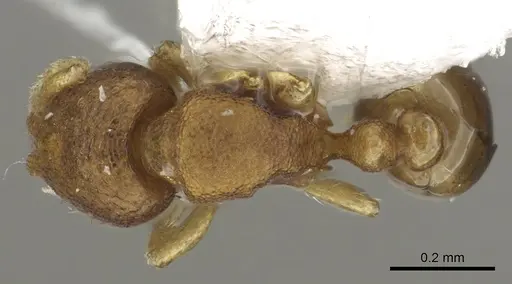
JTLC000003300
View on AntWeb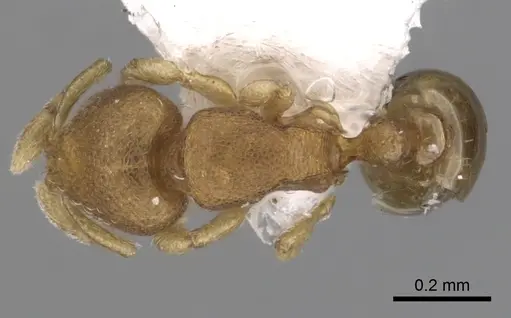
Literature
Loading distribution map...Loading products...