
Carebara hiragasy
- Sci. Name
- Carebara hiragasy
- Tribe
- Crematogastrini
- Subfamily
- Myrmicinae
- Author
- Azorsa & Fisher, 2018
- Distribution
- Found in 1 countries
Introduction
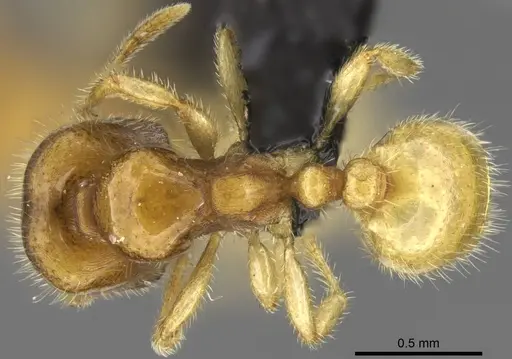
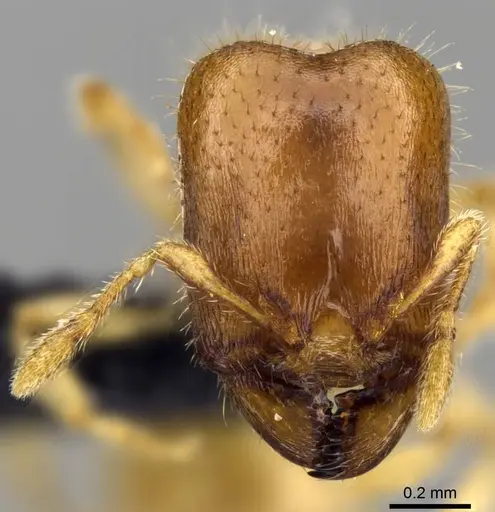
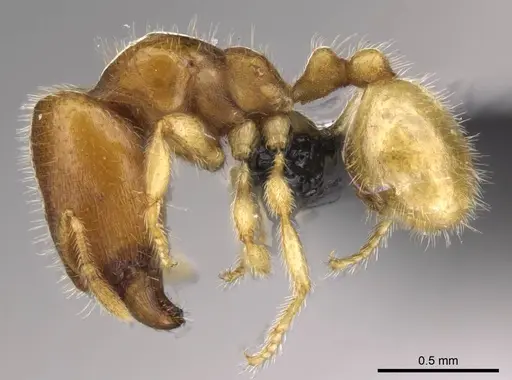
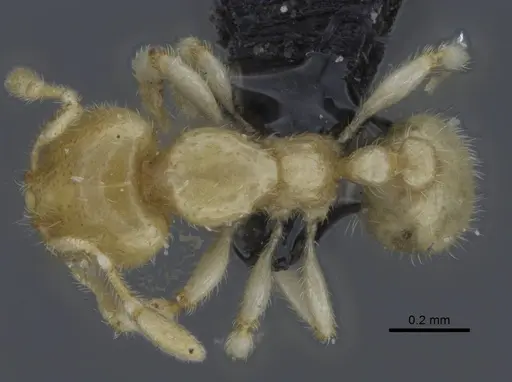
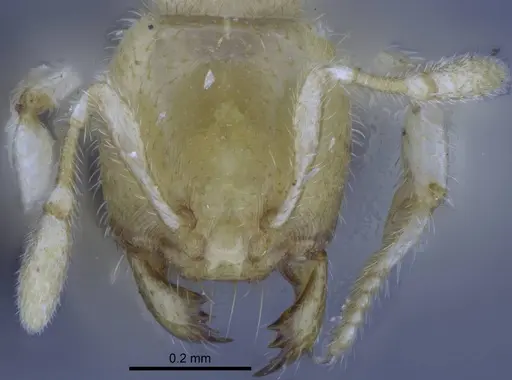
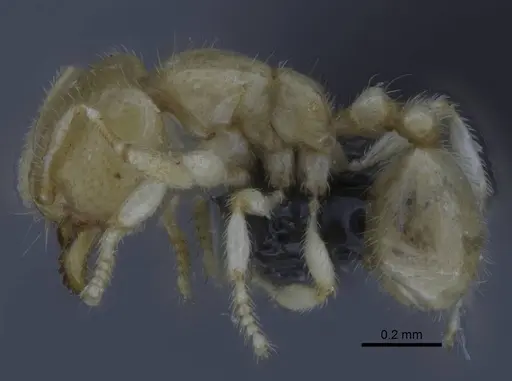
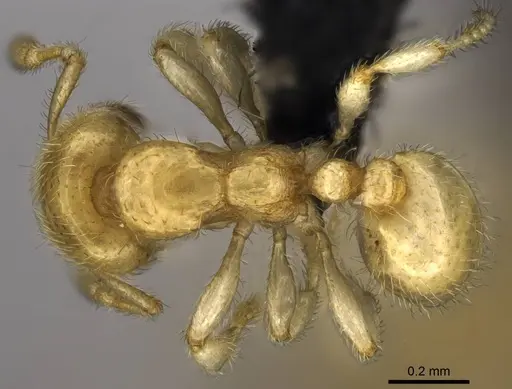
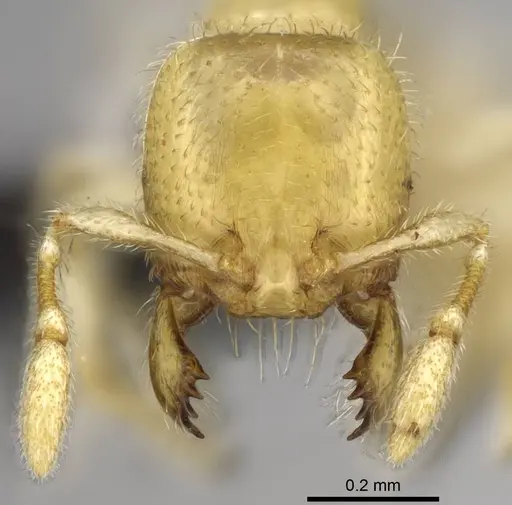
Carebara hiragasy is a tiny ant species endemic to Madagascar, described in 2018. These ants have major workers measuring roughly 2-3 mm and minor workers at approximately 1-2 mm in total length. They feature 10-segmented antennae, with major workers having a distinctive nearly rectangular head that is longer than wide, and both castes having an unarmed propodeum (no spines) and a thick petiolar node. The species displays a yellowish-ferruginous coloration. It is known only from two localities in southwestern and southeastern Madagascar, where they inhabit montane rainforest and transitional rainforest at elevations of 600-1100 meters. In the wild, they nest in soil and under stones . This species is unusual among Carebara ants because it has distinct major and minor worker castes with no intermediate forms - you won't see a range of worker sizes, only two discrete castes . This makes them relatively easy to identify among the nine Carebara species found in these Madagascar localities.
Quick Summary
- Difficulty: Medium
- Origin & Habitat: Endemic to southwestern and southeastern Madagascar, found in montane rainforest and rainforest (transition to montane forest) at 600-1100m elevation [1].
- Colony Type: Colony structure is unconfirmed. Based on typical Carebara patterns, likely single-queen colonies with major and minor worker castes but no intermediate forms [1].
- Size & Growth:
- Queen: Size data unavailable, queen was not described in the original species description
- Worker: Major workers: roughly 2-3 mm total length (inferred from head measurements), Minor workers: approximately 1-2 mm total length (inferred from head measurements) [1]
- Colony: Unknown, no documented colony sizes for this species
- Growth: Unknown
- Development: Unknown, specific development data not available for this species (Development timeline has not been documented in scientific literature.)
- Antkeeping:
- Temperature: Keep at 22-26°C. Based on Madagascar montane rainforest habitat at 600-1100m elevation, they prefer warm but not hot conditions [1].
- Humidity: High humidity preferred, keep substrate consistently moist but not waterlogged. Montane rainforest environments maintain high ambient humidity [1].
- Diapause: Unknown, Madagascar species may have reduced activity during cooler/drier seasons but full hibernation is unlikely.
- Nesting: In captivity, use test tubes for founding colonies. Once established, a small naturalistic setup with moist substrate or a Y-tong/plaster nest works well. They naturally nest in soil and under stones [1].
- Behavior: These are tiny, non-aggressive ants that forage in the leaf litter layer. Major workers have larger heads for specialized tasks, while minors handle general colony tasks. They possess a smear defense mechanism, using a flattened stinger to wipe venom onto enemies rather than piercing flesh. Escape prevention is critical due to their tiny size, standard test tube setups work well but ensure all connections are sealed.
- Common Issues: tiny size means escapes are likely without fine mesh barriers and sealed connections, high humidity requirements can lead to mold if ventilation is poor, colony size remains small, no documented growth rates available, wild-caught colonies may have parasites that kill them in captivity, limited species-specific care information exists, most guidance is based on genus patterns
Housing and Nest Setup
For founding colonies, a standard test tube setup works well. Fill a test tube one-third with water, plug with a cotton ball, and place the queen in the tube. The queen will seal herself into a chamber at the closed end. Keep the tube in darkness and avoid disturbing her for several weeks until the first workers emerge.
Once the colony reaches 20-30 workers, you can move them to a small formicarium. A Y-tong nest or a small plaster nest with narrow chambers works well for these tiny ants. The chambers should be appropriately scaled, tiny passages that the ants can easily navigate. A small outworld area allows for feeding. Alternatively, a naturalistic terrarium setup with moist soil and hiding spots like stones or leaf litter mimics their natural habitat under stones in Madagascar forests [1].
Whatever nest type you choose, ensure excellent escape prevention. These ants are tiny and can squeeze through remarkably small gaps. Use tight-fitting lids, seal any gaps with silicone or petroleum jelly, and consider using fluon on the edges of the outworld.
Feeding and Diet
Carebara ants are typically omnivorous, feeding on small insects, honeydew, and seeds. For this species, offer small live prey like fruit flies, pinhead crickets, or mealworms cut into tiny pieces. Springtails are an excellent choice given their small size.
Provide a constant sugar source like sugar water, honey, or diluted honey. Change these every few days to prevent mold. In the wild, these ants likely forage in the leaf litter layer for small arthropods and may tend aphids for honeydew. Their small size means they can only tackle prey that fits in their mandibles, focus on offering appropriately-sized food items.
Feed small amounts 2-3 times per week for established colonies. Remove any uneaten food after 24 hours to prevent mold issues in the humid environment they require.
Temperature and Humidity
Based on their Madagascar montane rainforest habitat at 600-1100m elevation, these ants prefer warm but not extreme temperatures. Aim for 22-26°C in the nest area. A slight temperature gradient allows the ants to choose their preferred spot. You can achieve this by placing the nest on one side of a shelf and using a low-wattage heating mat on that side, or simply using room temperature if it falls within this range.
High humidity is important, these ants come from humid rainforest environments. Keep the nest substrate consistently moist but not waterlogged. If using a test tube, ensure the water reservoir is adequate but not so large that it floods. For formicariums, mist the area occasionally and consider using a water reservoir or moisture gradient. Adequate ventilation is also important to prevent mold, aim for a balance between humidity and fresh air. [1]
Colony Development and Growth
The queen will lay eggs shortly after mating. In claustral species, the queen seals herself in a chamber and does not leave to forage, she lives entirely on her stored fat reserves while raising the first brood. The first workers (called nanitics) are typically smaller than mature workers and may have reduced functionality.
Development time from egg to worker is unknown for this species, specific development data has not been documented. The colony will grow slowly at first as the queen focuses her energy on producing workers. Once the first nanitics emerge, they take over foraging and brood care, and the colony growth typically accelerates.
This species has distinct major and minor worker castes with no intermediate forms, this is unusual among Carebara species and means you won't see a gradual spectrum of worker sizes [1]. Major workers (larger, with larger heads) likely specialize in certain tasks, while minor workers handle general colony tasks.
Seasonal Care and Overwintering
As a Madagascar species from montane rainforest, Carebara hiragasy does not experience harsh winters. However, Madagascar does have seasonal variation, the island has a warm, wet season (November-March) and a cooler, dry season (April-October). During the cooler months, you may notice reduced activity levels.
Full hibernation is not necessary or appropriate for this species. Instead, simply reduce feeding frequency slightly during cooler months and maintain stable temperatures above 18°C. If your room temperature drops significantly in winter, consider using a low-level heat source to keep the nest in the 20-24°C range.
Avoid sudden temperature changes, as these can stress the colony. Stable, warm conditions year-round best match their natural environment.
Frequently Asked Questions
How long does it take for Carebara hiragasy to produce first workers?
This is unknown, specific development data is not available for this newly described species. Development time likely varies with temperature but cannot be estimated from available literature.
What do Carebara hiragasy ants eat?
They likely accept small live prey like fruit flies, springtails, and tiny insects. Also offer sugar sources like honey water or sugar water. Their small size means food must be appropriately sized.
Are Carebara hiragasy ants good for beginners?
This species is rated as medium difficulty. While not the hardest species, the limited available care information and small size require attention to detail. Experienced antkeepers will have more success.
Do Carebara hiragasy ants sting?
They possess a smear defense mechanism, using a flattened stinger to wipe venom onto enemies rather than piercing flesh. Their small size means any potential sting would be negligible to humans.
How big do Carebara hiragasy colonies get?
Colony size is not documented in scientific literature. They have distinct major and minor castes but no intermediate forms.
What temperature do Carebara hiragasy ants need?
Keep them at 22-26°C. This Madagascar montane species prefers warmth but not extreme heat. A slight gradient allows them to regulate their temperature.
Can I keep multiple Carebara hiragasy queens together?
This is not recommended. While colony structure is unconfirmed for this species, combining unrelated queens has not been documented and could result in fighting. Start with a single queen for best results.
When should I move Carebara hiragasy to a formicarium?
Keep them in a test tube until the colony reaches 20-30 workers. Moving too early can stress the colony. Once established, a small acrylic or plaster nest works well for these tiny ants.
Do Carebara hiragasy ants need hibernation?
No. As a Madagascar species, they don't require true hibernation. Simply maintain stable temperatures above 18°C year-round and reduce feeding slightly during cooler months.
Why are my Carebara hiragasy ants escaping?
Their tiny size means they can squeeze through very small gaps. Use fine mesh, seal all connections with silicone or petroleum jelly, and ensure lids fit tightly. Escape prevention must be excellent.
Report an Issue
The current care sheet is based fully on literature. See inconsistencies, or something that's incorrect? Please , it will be resolved after review from an admin. Contributing to the blogs tab also helps providing information, to make us be able to further improve the caresheets. Thank you for your support!
References

This caresheet is licensed under CC BY-SA 4.0 .
Community Blogs

Literature
Loading distribution map...Loading products...