
Carebara elongata
- Sci. Name
- Carebara elongata
- Tribe
- Crematogastrini
- Subfamily
- Myrmicinae
- Author
- Fernández, 2004
- Distribution
- Found in 2 countries
Introduction
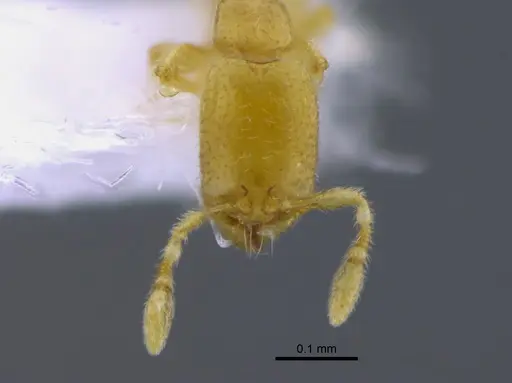
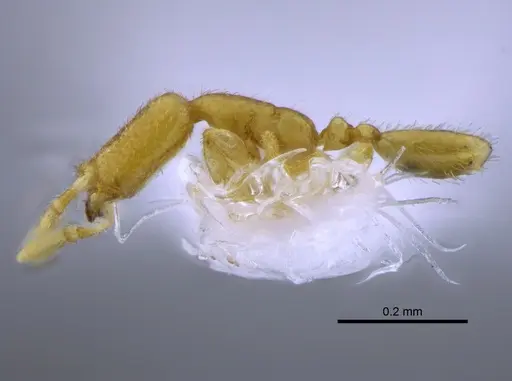
Carebara elongata is one of the smallest ants you can find - workers reach just 1.15 mm total length . They have an elongated body with a distinctly longer-than-wide head, very short antennae scapes, and a smooth, shining yellowish-brown cuticle covered in fine hairs of varying lengths . This species belongs to the Carebara lignata complex and was first described from Colombia's Sierra Nevada de Santa Marta region . It has since been recorded in French Guiana, where it lives in the leaf-litter layer of pristine lowland rainforest . Its extreme small size and mysterious natural history make it a challenging subject for antkeepers.
Quick Summary
- Difficulty: Expert
- Origin & Habitat: Tropical rainforest of Colombia (Magdalena, Sierra Nevada de Santa Marta) and French Guiana. Found in leaf-litter at low elevations (50-320 m) [1][3][4][5].
- Colony Type: Unconfirmed. No scientific data exists on colony structure or queen number.
- Size & Growth:
- Queen: Unknown, queen has not been described [1]
- Worker: ~1.15 mm total length [1]
- Colony: Unknown, no colony size data available
- Growth: Unknown
- Development: Unconfirmed, no development data exists for this species. Based on related Carebara species, expect 4-8 weeks at tropical temperatures. (No direct measurements. Estimate based on genus-level patterns for small tropical Myrmicinae.)
- Antkeeping:
- Temperature: Keep at 24-28 °C. This is a tropical species from Colombia and French Guiana where temperatures are consistently warm year-round [3][4]. Use a heating cable on one side of the nest to create a gentle gradient if room temperature is below this range.
- Humidity: High humidity is essential, these ants live in rainforest leaf-litter. Keep the nest substrate consistently moist but not waterlogged. The substrate should feel damp to the touch with occasional condensation visible on nest walls. Provide a water source for drinking.
- Diapause: Unlikely, being a tropical species from a consistent climate, they probably do not require diapause. A slight seasonal temperature reduction may occur naturally but is not needed.
- Nesting: Test tube setups or very small Y-tong (AAC) nests with narrow passages work best. Their tiny size means they can escape through standard gaps, use fine mesh (0.5 mm or smaller) and seal all connections carefully. The nest must retain moisture well.
- Behavior: These ants are extremely small, workers measure barely 1.15 mm. They likely flee rather than defend. Based on subfamily/tribe (Myrmicinae: Crematogastrini), their primary defense is smearing venom with a modified flattened stinger, though it is unlikely to affect humans. Escape prevention is critical, they can squeeze through gaps invisible to the naked eye. Due to their small size, handle them with minimal disturbance.
- Common Issues: escape prevention is critical, their tiny size allows them to squeeze through the smallest gaps, high humidity requirements can lead to mold if ventilation is poor, unknown biology means you must be prepared to adapt care without guidelines, their minute size makes feeding difficult, prey must be appropriately sized (springtails, fruit fly larvae), wild-caught colonies may bring parasites or fail to adapt to captivity due to specialized leaf-litter habitat
Housing and Escape Prevention
Housing Carebara elongata is tricky because of its extreme small size, workers are only 1.15 mm long. Standard ant setups often have gaps around lids, between tubes and outworlds, and in barrier applications that these ants can slip through. For founding colonies, a small test tube with a cotton plug separating the water reservoir from the ants works well. For larger colonies, use a small Y-tong (AAC) nest with narrow passages, ensuring all connections are sealed. Apply fluon or another barrier lubricant to potential escape points, and use fine mesh (0.5 mm or smaller) for ventilation openings. Double-check all seals before leaving the colony unattended. The nest should hold moisture well, acrylic nests with built-in water chambers or plaster nests are suitable. Avoid large open spaces where tiny workers could get lost or escape.
Feeding and Diet
Carebara species are usually predatory or omnivorous, feeding on small invertebrates and tending honeydew-producing insects. For C. elongata, offer appropriately sized prey, their tiny workers can only tackle prey much smaller than themselves. Live springtails are the ideal primary food source, as they occur naturally in leaf-litter habitats. Other small micro-arthropods like fruit fly larvae, booklice, or newly hatched pinhead crickets may be accepted. You can also offer diluted honey or sugar water occasionally, but the main diet should be protein-rich prey. Feed small amounts every 2-3 days and remove uneaten prey after 24 hours to prevent mold. Because of the ants' tiny size, even a single fruit fly larva is a substantial meal. If prey is ignored, try smaller items or a different type.
Temperature and Humidity Requirements
As a tropical species from Colombia and French Guiana, C. elongata needs warm, humid conditions. Maintain nest temperatures between 24 and 28 °C. Use a heating cable on top of the nest (never underneath) if room temperature is below this range. A thermometer helps monitor. Humidity is critical, these ants live in rainforest leaf-litter where conditions are constantly moist. Keep the nest substrate damp but not waterlogged. In test tube setups, ensure the water reservoir is adequate but not flooding the ants. For acrylic or plaster nests, mist occasionally and maintain a water chamber. The substrate should feel damp, and occasional condensation on nest walls is fine. Good ventilation prevents mold, but avoid direct airflow that could dry out the nest. [3][4]
Colony Establishment and Growth
Since the queen has never been described for this species, colony founding in captivity likely starts from a wild colony. The founding process is unconfirmed, no data exists on whether it is claustral or semi-claustral. Growth rates for such tiny ants are naturally slow. The first workers (nanitics) will be very small and few. Subsequent broods will grow gradually, but colonies may take months or years to reach significant numbers. Be patient, avoid disturbing the queen during founding if you manage to find one. Keep conditions stable and offer minimal food until workers appear. Once workers are active, you can gradually increase feeding.
Observation and Handling
Observing C. elongata requires good lighting and magnification because of their tiny size. They move slowly and are delicate, avoid vibrations or sudden movements near the nest. When connecting a new outworld or moving the colony, do so slowly and check all connections for potential escape routes. Their primary defense is smearing venom with a modified stinger (typical of Crematogastrini), but workers are so small they pose no threat to humans. They will likely flee rather than fight. Their small mandibles cannot break human skin.
Frequently Asked Questions
How long does it take for Carebara elongata to produce first workers?
The egg-to-worker timeline is unconfirmed for this species. Based on related Carebara species, expect approximately 4-8 weeks at optimal tropical temperatures (24-28 °C). Growth is naturally slow due to their minute size.
Can I keep Carebara elongata in a test tube?
Yes, test tubes work well for this species, especially for founding colonies. Use a small test tube with an adequate water reservoir for humidity. Ensure the cotton plug is packed firmly to prevent escape, and apply fluon around any connections to outworlds.
What do Carebara elongata ants eat?
They likely eat small invertebrates like springtails and other micro-arthropods, similar to other Carebara species. Offer live springtails as a primary food source, along with appropriately sized prey items. They may also accept sugar sources occasionally.
Are Carebara elongata ants dangerous?
No, they are not dangerous to humans. Workers are only 1.15 mm total length and their mandibles cannot penetrate human skin. They will likely flee from disturbance rather than attempt to defend.
Do Carebara elongata ants need hibernation?
Unlikely. This is a tropical species from Colombia and French Guiana where temperatures remain warm year-round. They probably do not require a diapause period.
Why are my Carebara elongata ants escaping?
Their extreme tiny size (1.15 mm) means they can squeeze through gaps invisible to the human eye. Check all connections, lids, and barrier applications. Use fine mesh (0.5 mm or smaller), apply fluon generously, and inspect all seams with a magnifying glass if possible.
How big do Carebara elongata colonies get?
Colony size is unknown, no scientific data exists on maximum colony size for this species. Given their tiny workers and leaf-litter habitat, colonies are likely smaller than many common ant species, possibly under 100 workers.
Are Carebara elongata good for beginners?
No, this is an expert-level species. Their extreme tiny size makes escape prevention difficult, and they require specific humidity and temperature conditions. They are best suited for experienced antkeepers who can provide the specialized care they need.
What temperature should I keep Carebara elongata at?
Keep nest temperatures between 24-28 °C. This tropical rainforest species requires warm conditions year-round. Use a heating cable on top of the nest if room temperature is below this range.
Can I keep multiple queens together?
This has not been documented. The colony structure (monogyne vs polygyne) is unconfirmed for this species. It is not recommended to combine unrelated queens without evidence they can coexist.
Report an Issue
The current care sheet is based fully on literature. See inconsistencies, or something that's incorrect? Please , it will be resolved after review from an admin. Contributing to the blogs tab also helps providing information, to make us be able to further improve the caresheets. Thank you for your support!
References

This caresheet is licensed under CC BY-SA 4.0 .
Community Blogs
CBUMAGENT41902
View on AntWeb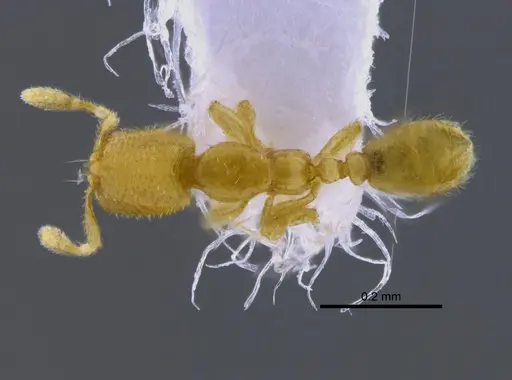
Literature
Loading distribution map...Loading products...