
Carebara alpha
- Sci. Name
- Carebara alpha
- Tribe
- Crematogastrini
- Subfamily
- Myrmicinae
- Author
- Forel, 1905
- Distribution
- Found in 0 countries
Introduction
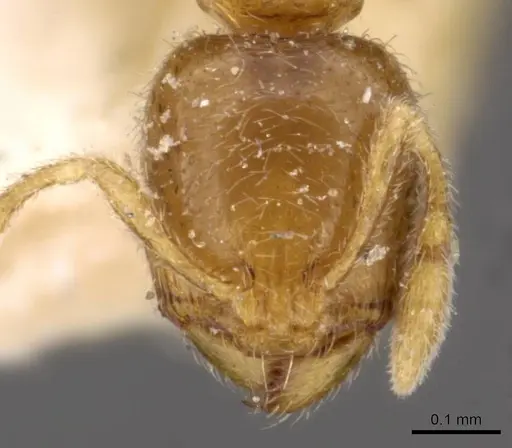
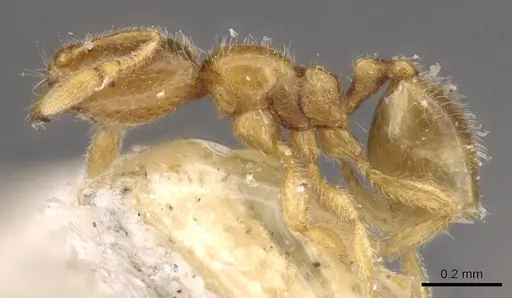
Carebara alpha is a tiny ant species originally described from Java, Indonesia, and recently recorded in Borneo (Brunei). Only the minor worker caste has been documented in scientific literature. These ants belong to the Myrmicinae subfamily and were formerly classified under Oligomyrmex before being moved to Carebara. In their natural habitat of lowland dipterocarp forest, they are collected via pitfall traps, indicating a ground-nesting, surface-active lifestyle. The genus Carebara contains many small, cryptic species that are often overlooked due to their tiny size. Defense mechanism involves a modified stinger used to smear venom onto enemies rather than piercing flesh. [AntWiki]
Quick Summary
- Difficulty: Unknown, limited data available
- Origin & Habitat: Java, Indonesia and Brunei (Borneo). Inhabits lowland dipterocarp forest [1].
- Colony Type: Unconfirmed, colony structure has not been documented for this species
- Size & Growth:
- Antkeeping:
- Temperature: Inferred: Keep at 24-28°C based on their tropical lowland forest origin. A gentle gradient allowing warmer and cooler areas is recommended.
- Humidity: Inferred: High humidity matching their dipterocarp forest habitat. Keep substrate consistently moist but not waterlogged.
- Diapause: Unknown, tropical species may not require formal diapause but may show reduced activity during cooler periods
- Nesting: Inferred: Use a naturalistic setup with moist substrate or a Y-tong/plaster nest. Their tiny size and ground-nesting behavior suggest they prefer tight, humid chambers.
- Behavior: Behavior is unstudied. Based on genus patterns, they are likely predatory on small arthropods and may be nocturnal or crepuscular. Their capture in pitfall traps suggests they forage on the forest floor. Escape prevention is critical due to their very small size, use fine mesh barriers. [1]
- Common Issues: very small size makes escape prevention challenging, tiny gaps must be sealed, no established care protocols exist, keepers are essentially pioneering husbandry, humidity control is critical, too dry causes colony failure, too wet causes mold, limited availability, this species is rarely available in the antkeeping hobby, lack of baseline data makes troubleshooting difficult, keepers must observe and adapt
Species Background and Distribution
Carebara alpha was originally described by Forel in 1905 from Java, Indonesia, under the name Carebara alpha. The type specimen was collected in Tjompea (now Ciawi) on Java in March 1904. Forel himself was uncertain whether C. alpha and the related C. beta represented separate species or simply different worker castes (minor and major) of a single species. This taxonomic ambiguity was later resolved when the species was transferred to the genus Carebara in 2004 by Fernández. The species remained known only from Java for many decades until Heterick and Kitching (2022) recorded it from Brunei, providing a new record for Borneo. This suggests the species may have a broader distribution in Southeast Asian lowland forests than previously recognized, though it remains rarely encountered due to its tiny size and cryptic habits. [1][2]
Natural Habitat and Ecology
In Brunei, Carebara alpha was collected in a lowland dipterocarp forest using a pitfall trap. Dipterocarp forests are characterized by tall trees of the family Dipterocarpaceae, dense canopy, and a humid understory. The use of pitfall traps indicates these ants are ground-dwelling and active on the forest floor surface. The lowland tropical environment suggests they experience warm temperatures year-round and high humidity. Unlike some Carebara species that are strictly subterranean, this species appears to forage at ground level. Their tiny size makes them difficult to detect, which likely explains why they have been so rarely recorded despite potentially wide distribution. [1]
Housing and Nest Setup
Due to limited data on this species, housing recommendations must be inferred from related Carebara species and their natural habitat. A naturalistic setup with moist, loose substrate (a mix of soil and sand or peat) would best replicate their lowland forest floor environment. The substrate should remain consistently damp but never waterlogged. Y-tong nests with narrow chambers can also work, provided humidity is maintained through a water reservoir or regular misting. Given their tiny size, escape prevention is paramount. Provide a darkness option, many tiny ants prefer to nest in darker areas of the setup. A small outworld with minimal space is appropriate for these small colonies.
Feeding and Nutrition
The diet of Carebara alpha has not been documented. Based on related species in the genus, they are likely predatory on small arthropods and other micro-invertebrates. They may also consume honeydew from aphids or small amounts of sugar water, though this is less certain. For a newly established colony, offer small live prey such as springtails, fruit flies, and other tiny insects every few days. Remove uneaten prey after 24-48 hours to prevent mold. As the colony grows, prey size can be gradually increased. Sugar sources can be offered experimentally, but do not rely on them as a primary food source for this genus.
Temperature and Humidity Requirements
As a tropical lowland forest species from Java and Borneo, Carebara alpha likely requires warm and humid conditions. Target temperatures in the range of 24-28°C, with a slight gradient allowing the ants to self-regulate. Room temperature (around 24°C) may be suitable in most homes, but additional heating may be needed in cooler climates. A heating cable placed on top of the nest can provide gentle warmth if needed. Humidity should be high. This can be achieved by keeping the substrate moist and using a water reservoir connected to the nest. Monitor for condensation as an indicator of adequate humidity. Avoid placing the setup near air conditioning or heating vents that could cause rapid drying.
Colony Development and Growth
No specific data exists for Carebara alpha colony development. Colony growth is expected to be slow initially, as is typical for most ant species during the founding phase. Colonies likely remain small to moderate in size, as is typical for the genus. Patience is essential, as tiny ant species often take months or even years to establish robust colonies. Avoid disturbing the queen during the founding stage, she should be left in darkness with minimal vibration or light exposure.
Frequently Asked Questions
How long does it take for Carebara alpha to raise their first workers?
The exact timeline is unknown for this species. The founding queen will remain in her chamber and not forage, she survives on stored fat reserves until her first workers emerge.
What do Carebara alpha ants eat?
Their diet is unconfirmed but likely consists of small live prey such as springtails, fruit flies, and other tiny arthropods. Based on related species in the genus, they are predatory. You can offer small live insects and occasionally test sugar water, but do not rely on sugar sources as a primary food.
Can I keep Carebara alpha in a test tube?
Test tubes can work for founding colonies if properly set up with a water reservoir and cotton barrier. However, due to their tiny size, escape prevention is critical, ensure the cotton is packed tightly and consider adding a fluon barrier to the test tube opening. A small naturalistic setup may be more suitable for established colonies.
What temperature do Carebara alpha ants need?
Based on their tropical lowland forest origin, keep them at 24-28°C. A slight temperature gradient allowing the colony to choose their preferred zone is ideal. Room temperature is often suitable, but additional heating may be needed in cooler environments.
Are Carebara alpha ants good for beginners?
This species is not recommended for beginners due to the complete lack of established care protocols. The tiny size, high humidity requirements, and limited availability make it a species for experienced antkeepers who can adapt to changing conditions. Beginners should start with more documented species like Lasius, Camponotus, or Messor.
Do Carebara alpha ants sting?
Stinging behavior has not been documented for this species. Given their very small size, any sting would likely be negligible to humans even if present. Myrmicinae ants typically have stingers, but they are often too small to penetrate human skin effectively.
How big do Carebara alpha colonies get?
Colony size is unknown but is likely small to moderate based on genus patterns. Related species typically reach a few hundred workers at maturity. This is not a species that produces massive colonies.
Do Carebara alpha ants need hibernation?
Hibernation requirements are unknown. As a tropical species from Java and Borneo, they likely do not require a formal diapause period. However, they may show reduced activity during cooler periods. If you keep them in a temperate climate, maintain stable warm temperatures year-round.
Why is Carebara alpha so rarely available?
This species has been documented in very few locations (Java and Brunei) and was only recently confirmed in Borneo. Their tiny size makes them difficult to detect and collect. Additionally, they are not a pest species and have no commercial value, so they are rarely sought after by collectors.
How do I prevent Carebara alpha from escaping?
Escape prevention is critical due to their very small size. Use fine mesh barriers (standard mesh may not be sufficient), seal all gaps with fluon or similar barriers, and ensure all connections between nest and outworld are tight. Check setups regularly as tiny ants can squeeze through impossibly small gaps.
Report an Issue
The current care sheet is based fully on literature. See inconsistencies, or something that's incorrect? Please , it will be resolved after review from an admin. Contributing to the blogs tab also helps providing information, to make us be able to further improve the caresheets. Thank you for your support!
References

This caresheet is licensed under CC BY-SA 4.0 .
Community Blogs
CASENT0908894
View on AntWeb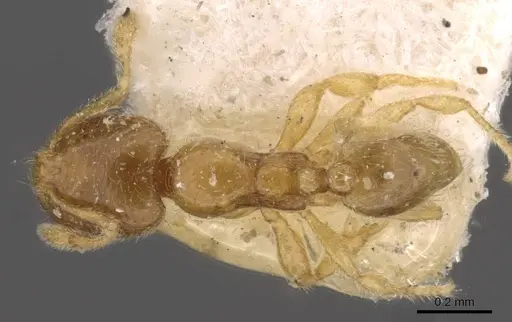
Literature
Loading distribution map...Loading products...